美元汇率波动

Search documents
雷诺士业绩受关注,财报与宏观环境成焦点
Xin Lang Cai Jing· 2026-02-17 22:47
Performance Overview - The upcoming financial reports, specifically for Q4 2025 and the full year, will be crucial in validating growth expectations, cost control, and improvements in gross margin [1] - The specific release date for the financial reports has not been confirmed, but performance remains a focal point for the market [1] Industry Policy and Environment - Adjustments in the Federal Reserve's monetary policy and fluctuations in the US dollar exchange rate may impact the company's international business costs and demand, necessitating close attention to related announcements [1] Industry Conditions - The resilience of demand in the construction equipment and home comfort markets, particularly the changes in the commercial real estate and residential renovation market conditions, may indirectly affect the company's performance [1]
雷诺士股价创60日新高,机构持仓稳定关注业绩验证
Jing Ji Guan Cha Wang· 2026-02-11 22:51
Core Viewpoint - The stock price of Lennox International Inc. (LII.N) reached a closing price of $553.16 on February 11, 2026, marking a 0.84% increase and a new 60-day high, with a cumulative increase of 3.49% over the past five trading days, outperforming the broader market and the construction equipment sector [1]. Fund Flows - Institutional holdings remain stable as of February 11, with major investors like Vanguard Group and BlackRock holding significant shares, while BlackRock has recently increased its holdings. Conversely, some institutions, such as Citadel Advisors LLC, have reduced their positions. The overall high institutional holding ratio indicates sustained interest from mainstream funds [2]. Company Fundamentals - The company operates primarily in two segments: home comfort solutions (approximately 67% of revenue) and building climate solutions (approximately 33%). The latest trailing twelve months (TTM) price-to-earnings ratio is 24.27, the price-to-book ratio is 16.55, and the dividend yield is 0.91% [3]. Future Development - The ability of the stock price to maintain upward momentum will depend on several factors: macroeconomic conditions, particularly the Federal Reserve's monetary policy and fluctuations in the U.S. dollar, which may impact international business costs and demand; industry demand resilience, especially in the commercial real estate and residential renovation markets; and the company's performance in upcoming earnings reports, which will need to validate growth expectations and demonstrate progress in cost control and gross margin improvement [4].
美元跌至两周低谷!格陵兰岛争端升级 汇市动荡持续加剧
Zhi Tong Cai Jing· 2026-01-20 11:27
Group 1 - The article highlights the decline of the US dollar to its lowest level in two weeks due to President Trump's aggressive stance on Greenland and threats of new tariffs on France, leading to increased foreign exchange hedging costs [1] - The Bloomberg Dollar Spot Index has fallen to its weakest level since January 6, indicating a significant downturn in the dollar's performance over the past month [1] - Concerns over potential trade conflicts have risen as Trump threatens tariffs on European countries opposing his Greenland acquisition plan, with a specific proposal for a 200% tariff on French wine and champagne following President Macron's refusal to join a peace initiative [1] Group 2 - The market is experiencing heightened short-term exchange rate volatility, with a notable increase in euro options trading volume reflecting demand for risk hedging and investor sentiment shifting towards betting on euro appreciation [1] - Deutsche Bank's Jim Reid noted that while the market has reacted, further escalation of related comments could lead to greater volatility in exchange rates [1] - Data from US depository trusts and clearing companies indicate a trend towards shorting the dollar, with investors favoring long positions in euro and Australian dollar against the US dollar since the beginning of the week [2]
技术分析:WTI原油期货价格短期内有望延续涨势
Jin Rong Jie· 2026-01-19 06:08
Core Viewpoint - WTI crude oil futures are showing strong upward momentum driven by multiple favorable factors, including global supply tightness and ongoing production cuts by major oil-producing countries [1] Group 1: Market Dynamics - Market participants are focused on the impact of geopolitical risks, which are providing support for oil prices [1] - The gradual recovery of the global economy is leading to sustained growth in energy demand, further pushing up WTI crude oil futures prices [1] Group 2: Currency Influence - Fluctuations in the US dollar exchange rate are affecting oil price trends; a weaker dollar typically enhances the attractiveness of WTI crude oil futures priced in dollars [1] Group 3: Technical Analysis - WTI crude oil futures prices have broken through key resistance levels, indicating a potential continuation of the upward trend in the short term [1] Group 4: Future Monitoring - Investors are advised to closely monitor upcoming macroeconomic data and changes in OPEC+ policies to assess the future trajectory of oil prices [1]
人民币升值,对投资有啥影响?|第426期直播回放
银行螺丝钉· 2026-01-06 14:41
Core Viewpoint - The article discusses the recent appreciation of the Chinese Yuan against the US Dollar, primarily driven by the decline in US interest rates, and its implications for various financial markets including US bonds, US stocks, and Chinese assets [3][4][19]. Group 1: Currency Trends - Over the past year, the Chinese Yuan has appreciated significantly against the US Dollar, mainly due to the decrease in US interest rates [3]. - The decline in US interest rates has narrowed the interest rate differential between the US Dollar and the Yuan, facilitating the Yuan's appreciation [4]. - The US Dollar Index, which measures the Dollar's value against a basket of major currencies, reflects the Dollar's performance in the international currency market [6]. Group 2: Impact of Interest Rates on Currency - The cycle of interest rates is closely related to currency exchange rates; during periods of US interest rate hikes, the Dollar tends to appreciate, while during rate cuts, it depreciates [7][8]. - The Federal Reserve's significant interest rate hikes from 2021 to 2022 resulted in a 25%-30% appreciation of the Dollar against other currencies [8]. - Following the Fed's first rate cut in September 2024, the Dollar has depreciated against other currencies, including the Yuan [9]. Group 3: Effects on Financial Markets - Rising interest rates typically lead to a bear market in bonds, as higher rates decrease bond market values [11]. - The bond market has shown a slow bullish trend since the Fed's rate cut in September 2024, with bond index funds beginning to recover [12]. - The overall US stock market has also seen an upward trend since the onset of the rate cut cycle in September 2024 [16]. Group 4: Influence on Chinese Assets - Changes in US interest rates affect the exchange rate, which in turn impacts A-shares and Hong Kong stocks [18]. - The previous US interest rate hike cycle led to significant depreciation of other currencies, causing capital outflows and increased volatility in weaker markets like Hong Kong [18]. - Since the rate cut cycle began in September 2024, the Yuan's appreciation has attracted capital inflows into Chinese assets, boosting both A-shares and Hong Kong stocks [19][20]. Group 5: Investment Strategies - Interest rates are short-term factors that can create opportunities for undervalued buying and overvalued selling in the market [22]. - A rising Dollar often leads to asset price declines, presenting buying opportunities during bear markets, while a falling Dollar can lead to price increases, creating selling opportunities during bull markets [22]. - Long-term investment strategies should focus on the intrinsic value and valuation of stocks, as interest and exchange rate fluctuations primarily provide opportunities for buying low and selling high [27].


【财经分析】美国政府“开门”后数据井喷? 交易员严阵以待市场波动性回归
Sou Hu Cai Jing· 2025-11-14 14:12
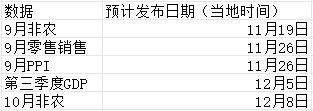
Core Viewpoint - The US dollar is showing weakness this week, with market focus on Federal Reserve policies and upcoming economic data before the December meeting [1][2] Group 1: Economic Data and Market Impact - The end of the US government shutdown is expected to bring back market volatility, with the ICE dollar index showing heightened sensitivity to global interest rates [2][4] - Upcoming inflation and employment reports are crucial for shaping expectations around the Federal Reserve's interest rate path, potentially breaking recent volatility ranges [1][2] - The release of delayed economic data, including non-farm payrolls and inflation reports, may significantly influence market perceptions and Federal Reserve decisions [2][4][5] Group 2: Market Reactions and Predictions - Analysts predict that the upcoming economic data will likely be poor, leading to increased market volatility and potential further declines in the dollar [5][6] - The volatility index for US Treasury prices indicates potential for significant market movements in response to the forthcoming economic data [6] - There is a divergence within the Federal Reserve regarding interest rate cuts, with some members advocating for a pause to control inflation, which could affect the dollar's performance [5][7] Group 3: Long-term Outlook on the Dollar - Long-term forecasts suggest that the dollar may continue to face weakness, attributed to concerns over rising deficits and the potential for a temporary recovery [7]
美国政府停摆尾声埋隐患:数据“堰塞湖”或引爆汇市 交易员紧急对冲美元波动风险
Zhi Tong Cai Jing· 2025-11-10 23:21
Core Viewpoint - Traders are preparing for increased volatility in the US dollar as the federal government is expected to reopen and a series of economic data, including the non-farm report, is about to be released [1][3]. Group 1: Government Shutdown and Economic Data - The US Senate has advanced a temporary funding bill to end a record 40-day government shutdown, requiring a formal vote and approval from the House and President Trump [3]. - The release of economic data may be delayed until government operations resume, potentially affecting the Federal Reserve's policy decision scheduled for December 10 [3]. - The absence of economic data could mask signs of structural slowdown in hiring, which may benefit the dollar [3]. Group 2: Dollar Volatility and Market Reactions - Dollar volatility, which had previously decreased, is now expected to rise as traders anticipate fluctuations in exchange rates ahead of the Federal Reserve's decision and the resumption of data releases [4]. - The dollar index experienced a slight decline, marking its fourth consecutive day of losses [4]. Group 3: Analyst Perspectives on Dollar Outlook - Analysts from various institutions express differing views on the dollar's future, with some expecting volatility to increase as backlog data is released, while others foresee potential downward risks for the dollar depending on employment data [5]. - The Canadian Imperial Bank of Commerce (CIBC) notes signs of localized weakness in the labor market, which could lead to a reassessment of December rate cut expectations, potentially weakening the dollar [5]. - The Royal Bank of Canada (RBC) suggests that a strong labor market post-government shutdown could reinforce the dollar's strength [5].
美元汇率波动中的机遇!外贸企业如何抓住汇率窗口期?
Sou Hu Cai Jing· 2025-09-15 06:01
Core Insights - The fluctuation of the US dollar as a global trade settlement currency directly impacts the profits of foreign trade enterprises, influenced by factors such as Federal Reserve monetary policy adjustments, global economic cycles, and geopolitical conflicts [1][2] Group 1: Factors Influencing Dollar Exchange Rate - The long-term trend of the dollar is fundamentally determined by the US economy and monetary policy direction, with GDP growth and employment data positively influencing dollar appreciation, while adverse conditions may lead to depreciation [3] - Global risk aversion and geopolitical risks also play a significant role, as funds tend to flow into the dollar during economic downturns or geopolitical tensions, leading to passive appreciation of the dollar [4] - Policies from major economies and trade patterns, such as the European Central Bank's interest rate decisions and the US trade deficit, can affect the relative value of the dollar [4] Group 2: Currency Risk Management Strategies - Locking in exchange rates is a core method for enterprises to hedge against currency risk, requiring a strategic approach that aligns with business operations and market trends [5] - Establishing a "data-driven" trend judgment system is essential, focusing on monitoring Federal Reserve policy signals, core economic data, and global capital flow data to make informed decisions on currency locking [6] - Matching business cycles with locking strategies is crucial, where short-term orders may utilize a combination of immediate and forward locking, while long-term orders should consider phased locking to mitigate timing risks [7] Group 3: Financial Tools and Business Strategies - Differentiated use of financial tools is necessary, such as purchasing foreign exchange put options for exporters during dollar depreciation expectations, and utilizing forward contracts for importers during dollar appreciation expectations [9] - Business-side risk hedging strategies include incorporating "exchange rate adjustment clauses" in contracts, optimizing settlement currency structures, and aligning foreign exchange inflows and outflows to reduce net exposure [10] - Real-time data and convenient operations are vital for effective currency management, with platforms like WorldFirst providing comprehensive support for businesses to manage exchange rate fluctuations and enhance capital turnover efficiency [11]
美元指数DXY日内大涨1.00%,现报99.86。美元兑瑞郎USD/CHF日内涨幅达1.00%,现报0.8137。
news flash· 2025-07-30 19:11
Group 1 - The US Dollar Index (DXY) experienced a significant increase of 1.00%, currently reported at 99.86 [1] - The USD/CHF exchange rate also saw a rise of 1.00%, now standing at 0.8137 [1]
BlueberryMarkets蓝莓市场:美元步入正常化,未来将何去何从?
Sou Hu Cai Jing· 2025-06-12 06:07
Core Viewpoint - The US dollar index is experiencing significant volatility, reflecting a shift in the global economic and financial landscape, with a current quote of 98.42, down 0.22% from the opening price of 98.64 [1] Group 1: Dollar Normalization - The Dutch cooperative bank's report indicates that the dollar is entering a significant normalization phase after a decade of unusual strength, which was not based on stable economic fundamentals [3] - The current global financial market adjustment is prompting a reassessment of economic fundamentals, leading the dollar to return to a more reasonable value range [3] - Despite recent improvements in US trade data alleviating some concerns about trade deficits, the bank maintains a short-term recession forecast for the US economy, which is a core factor driving the dollar's normalization [3] Group 2: Long-term Outlook - The normalization process suggests that the dollar's exchange rate may gradually align with long-term equilibrium levels, moving away from its previously extraordinary strength [4] - Increased volatility in the dollar's performance is expected due to frequent fluctuations in economic data and shifting market expectations [4] - Key economic indicators such as employment, inflation, and GDP growth will directly reflect the health of the US economy and influence the supply-demand dynamics of the dollar [4] Group 3: Federal Reserve Influence - The Federal Reserve's monetary policy stance is a critical variable determining the dollar's trajectory, with its assessments of economic conditions and subsequent policy adjustments impacting the dollar's attractiveness in international markets [4] - Investors should closely monitor the alignment between the Federal Reserve's policy stance and the realities of the US economy to capitalize on potential investment opportunities and risks associated with dollar fluctuations [4] Group 4: Technical Analysis - The dollar index is currently testing key resistance and support levels, with immediate resistance at the nine-day moving average of 99.16 [5] - A successful breakthrough of this level could enhance short-term price momentum and push the index towards the upper boundary of a descending channel around 99.90 [5] - If the index continues to rise and surpasses 99.90, bullish sentiment may strengthen, challenging the 50-day moving average at 100.59, which could significantly boost mid-term price momentum [5]