美印贸易关系

Search documents
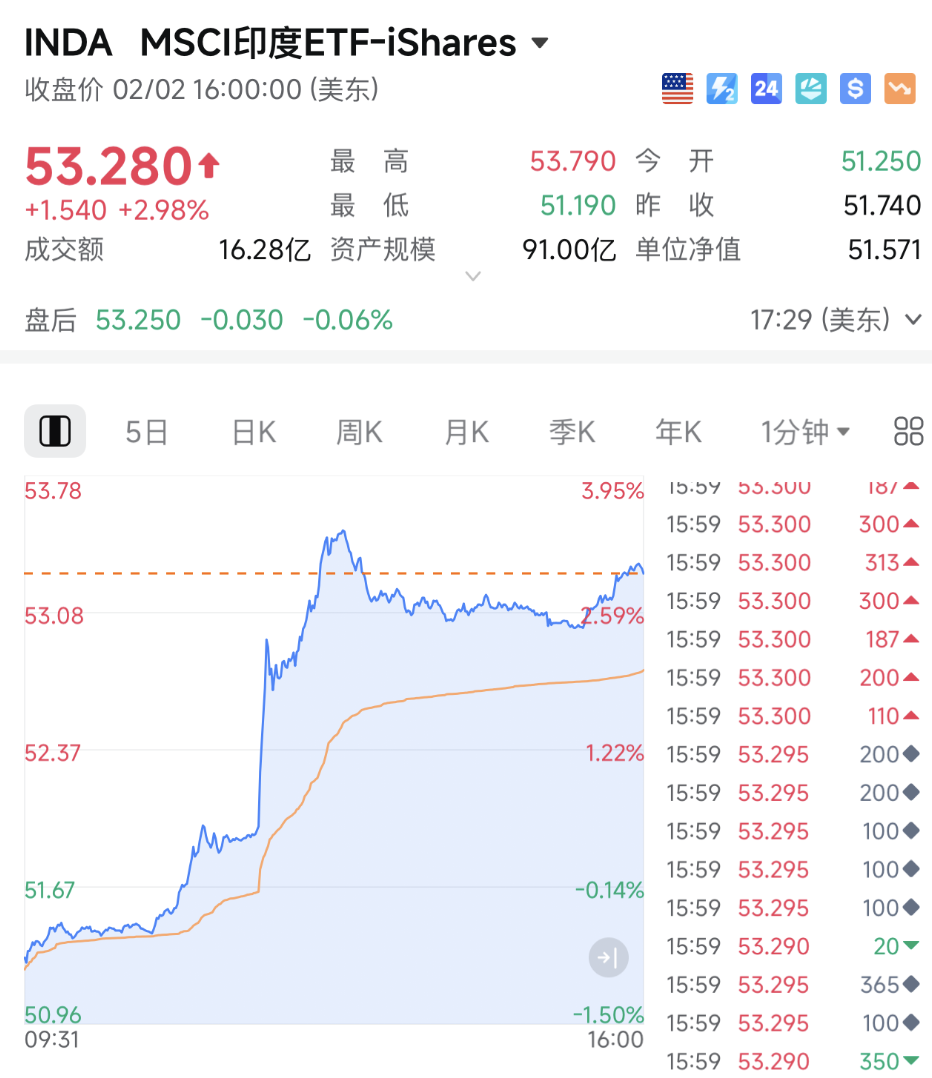
凌晨,直线猛拉!特朗普:莫迪同意不买俄罗斯石油,美国将降低对印关税
Hua Xia Shi Bao· 2026-02-03 00:33
Group 1 - The core point of the news is the announcement of a trade agreement between the United States and India, where the U.S. will reduce tariffs on Indian goods from 25% to 18%, effective immediately, while India will lower its tariffs and non-tariff barriers to zero [1][2][4] - The agreement includes a commitment from India to significantly increase its procurement of U.S. products, including over $500 billion worth of energy, technology, agricultural products, and coal [1][4] - The U.S. has requested India to stop purchasing oil from Russia and to increase its oil imports from the U.S., with potential purchases from Venezuela also mentioned [1][2] Group 2 - The reduction in tariffs is expected to provide significant relief for India, which has been seeking to negotiate lower tariffs with Washington, as exports to the U.S. account for about 20% of India's total exports [4] - The high tariffs previously imposed by the U.S. had affected approximately 55% of India's exports to the U.S. and posed challenges to India's ambition of becoming a manufacturing powerhouse [4] - Analysts view this agreement as a major turning point in U.S.-India trade relations, potentially opening a new chapter in their trade relationship and impacting the global energy market [4]

特朗普向印度发出最后通牒:若再买俄油,就继续加税!
Jin Shi Shu Ju· 2026-01-05 10:30
Core Viewpoint - The U.S. President Trump has indicated that if India does not comply with U.S. demands to curb its purchase of Russian oil, tariffs on Indian goods may be increased, intensifying pressure on India amid ongoing trade negotiations [2][4]. Group 1: Trade Relations and Tariffs - Trump stated that the U.S. could quickly raise tariffs on India if they continue trading with Russia, highlighting the ongoing trade negotiations between the two nations [4]. - The U.S. has already doubled tariffs on Indian goods to 50% as a punitive measure for India's significant purchases of Russian oil [4]. - Republican Senator Graham supports legislation that could impose tariffs as high as 500% on countries like India that continue to buy Russian oil, arguing that such purchases sustain funding for Putin [4]. Group 2: Market Reactions and Economic Impact - Following Trump's comments, the Indian IT stock index fell approximately 2.5%, marking a new low in over a month, as investors expressed concerns about the potential delay in a U.S.-India trade agreement [4]. - Despite high tariffs, India's exports to the U.S. saw a significant increase in November, although shipments dropped by over 20% from May to November 2025 [6]. Group 3: Strategic Position and Expert Opinions - Trade experts warn that India's cautious approach may weaken its negotiating position, as the U.S. tariffs on Indian exports are significantly tied to the purchase of Russian oil [5]. - The founder of the Global Trade Research Initiative noted that India's oil imports have decreased but not ceased entirely, placing India in a "strategic gray area" [6]. - Experts urge India to clarify its stance on Russian oil purchases, as even a complete halt may not eliminate U.S. pressure, which could shift to other trade demands [6].
美印或达成贸易协议,美方拟将印度输美商品关税降至15%-16%
Zhi Tong Cai Jing· 2025-10-22 06:45
Group 1 - The core point of the news is that India and the United States are on the verge of reaching a trade agreement that could significantly reduce tariffs on Indian goods exported to the U.S. from approximately 50% to 15%-16% [1] - The potential agreement may involve India gradually reducing its imports of Russian oil and allowing the U.S. to export more non-GMO corn and soybean meal [1] - A meeting between U.S. President Donald Trump and Indian Prime Minister Narendra Modi at the ASEAN summit in Malaysia, scheduled for October 26-28, could lead to the announcement of this trade agreement [1] Group 2 - Since the onset of the special military operation by Russia in Ukraine in 2022, India has become a major importer of Russian crude oil, purchasing it at discounted prices [2] - Despite U.S. pressure to limit Russian oil imports, Russian oil still accounts for about one-third of India's total oil imports [2] - Indian government officials have not confirmed plans to restrict Russian oil imports under U.S. pressure, although state-owned refineries have indicated a potential reduction in imports [2]
外媒:美印贸易谈判之际,特朗普致电莫迪祝贺其75岁生日
Huan Qiu Wang· 2025-09-17 09:35
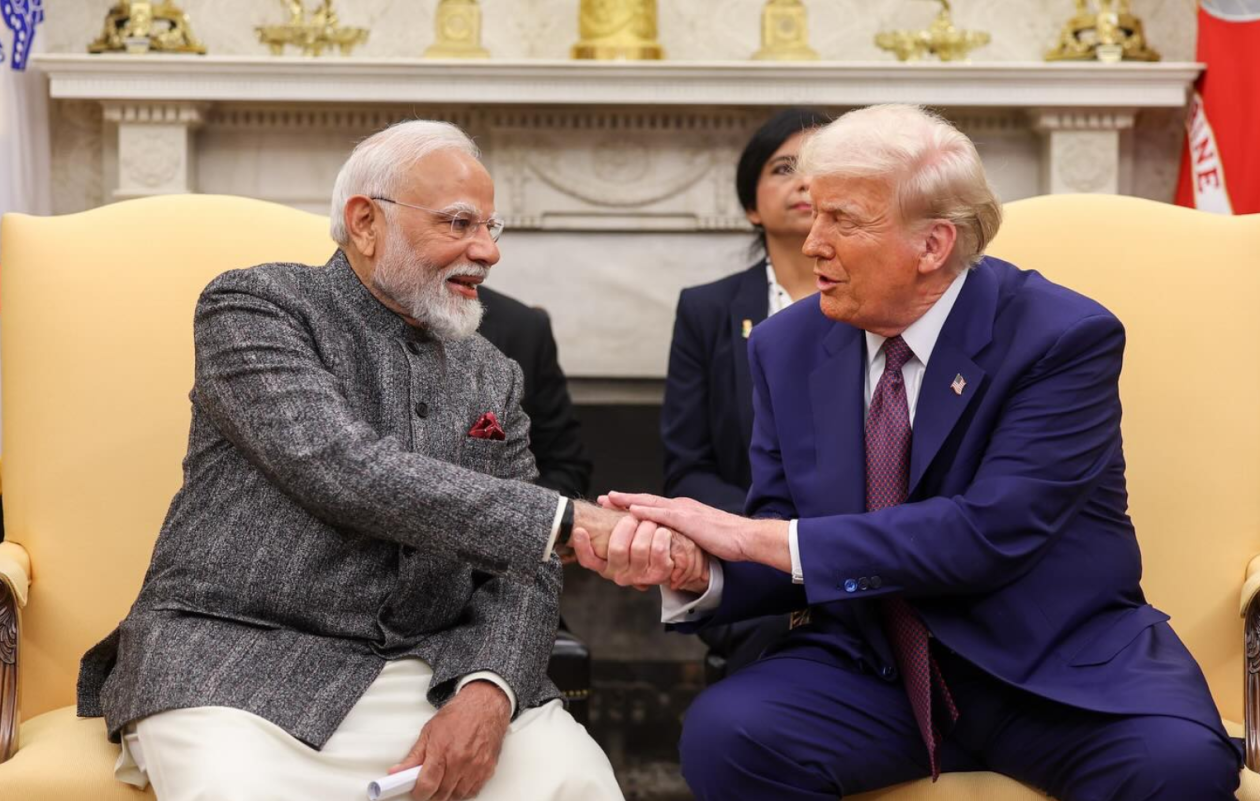
Group 1 - The core point of the article is the recent phone call between US President Trump and Indian Prime Minister Modi, which is seen as a sign of easing tensions between the two countries following disputes over tariffs [1][4] - The US and India engaged in trade negotiations on the same day, with both sides describing the discussions as "positive" [1] - This phone call marks the first communication between the leaders since the US imposed punitive tariffs on India due to its purchase of Russian oil, which included a 25% tariff on Indian goods starting August 7 and an additional 25% tariff from August 27, bringing the total tariff rate to 50% [4] Group 2 - Following the phone call, Trump praised Modi on social media, stating he is doing "very well" and thanked him for his support in "ending the Russia-Ukraine conflict" [3] - Modi referred to Trump as a "friend" and expressed a commitment to elevate the partnership to new heights [3] - The discussions on September 16 were characterized by India as an exploration of how to reach an agreement rather than the beginning of a new round of trade negotiations [4]
突传缓和信号!美印重启贸易谈判
Zheng Quan Shi Bao· 2025-09-16 23:53
Group 1 - The US and India have resumed bilateral trade agreement negotiations on September 16, signaling a potential thaw in their previously tense trade relations [1][2] - The US has imposed a total tariff rate of 50% on Indian imports, significantly higher than tariffs on other Asia-Pacific countries, which has led to a decline in India's exports to the US [2][4] - India's exports to the US fell from $8.01 billion in July to $6.86 billion in August, indicating the immediate impact of the US tariff policy [4][5] Group 2 - The overall export value of Indian goods decreased from $37.24 billion in July to $35.1 billion in August, marking a nine-month low [5] - The US is India's largest trading partner, with a total trade value of $78.35 billion in the first half of 2025, where India exported $56.3 billion and imported approximately $22 billion [5] - The imposition of high tariffs is expected to reduce India's exports to the US by over 40% by 2026, potentially dropping to around $50 billion [5][6] Group 3 - Key export sectors for India include textiles, jewelry, and gemstones, which are likely to face significant declines in export volumes due to the US tariffs [6] - Analysts estimate that the US tariff policy could cost the Indian economy billions of dollars, with approximately $8 billion worth of exports at risk [6] - The punitive trade measures by the US may negatively affect the stability of US-India relations, potentially inciting nationalist sentiments in India, which could pressure the Indian government to respond to the tariffs [6]
印度顶住美国压力继续买俄油!特朗普为何针锋相对?
Jin Shi Shu Ju· 2025-08-21 06:42
Core Viewpoint - Despite U.S. warnings and a 25% tariff on Indian imports, Russia expects India to continue purchasing its oil, indicating a resilient trade relationship amidst geopolitical tensions [2]. Group 1: Russia-India Oil Trade - India has resumed oil purchases from Russia after initially halting them due to U.S. tariff threats, with Russian officials stating that oil imports will remain at consistent levels [2]. - Russian officials believe they can find ways to overcome the imposed tariffs, and there is potential for expanding cooperation in liquefied natural gas and nuclear energy with India [2]. Group 2: U.S. and Global Energy Dynamics - The previous U.S. administration had encouraged India to purchase Russian oil, viewing it as a stabilizing factor for global energy markets [3]. - Other countries, including China and EU nations, continue to engage in significant trade with Russia, with the EU increasing its liquefied natural gas imports from Russia to record levels [4]. - The U.S. itself imports fertilizers and uranium from Russia, raising questions about its stance on energy trade with Russia [4]. Group 3: Trade Relationships and Political Implications - India's trade with Russia is relatively small, at less than $6.5 billion annually, compared to larger trade volumes between Russia and other U.S. allies like the EU and Turkey [5]. - The criticism directed at India for its oil purchases is seen as a pressure tactic related to ongoing trade negotiations with the U.S., highlighting the complexities of international trade relationships [6]. - The U.S. administration's mixed messages regarding potential sanctions on India could undermine decades of political trust and strategic partnerships [6].
美印贸易协议还渺茫?特朗普顾问猛批印度:赚美国钱买普京的油
Hua Er Jie Jian Wen· 2025-08-18 22:23
Core Viewpoint - The Trump administration is imposing new tariffs on India and criticizing its purchase of Russian oil, indicating that a resolution to the trade conflict between the U.S. and India is unlikely in the near future [1][4]. Group 1: U.S.-India Trade Relations - Navarro's article criticizes India's significant import of Russian oil, labeling it as "opportunistic" and detrimental to Western efforts to isolate Russia economically during the conflict [1][2]. - The Trump administration has threatened to impose a 25% tariff on Indian goods due to India's oil purchases, raising the total tariff rate on Indian imports to 50% [3][4]. - The U.S. trade representative's planned visit to India for negotiations has been canceled, delaying discussions on tariffs and trade agreements [5]. Group 2: India's Oil Imports - Prior to the Russia-Ukraine conflict, India relied heavily on oil from the Middle East, with Russian oil accounting for a negligible portion of its imports. However, as of now, Russian oil constitutes approximately 37% of India's total oil imports [2][3]. - India's large oil lobbying groups are accused of driving the surge in Russian oil purchases, with claims that India is acting as a global clearinghouse for Russian oil [2]. - The Biden administration has previously shown tacit approval for India's discounted oil purchases from Russia, arguing it could help reduce Putin's oil revenue while preventing a spike in global oil prices [3]. Group 3: Political Implications - Navarro's comments suggest that the Trump administration's tariffs are a dual strategy aimed at undermining India's market access while cutting off financial support to Russia [4]. - Indian Prime Minister Modi has emphasized the importance of protecting domestic agricultural and fishing interests, indicating resistance to U.S. pressure regarding oil purchases [4].
From 'great friend' to 'tariff king': The changing shades of the U.S.-India relationship
CNBC· 2025-08-06 08:01
Group 1 - The goodwill between the U.S. and India has deteriorated, with President Trump labeling India as the "tariff king" and threatening to raise tariffs on Indian exports substantially [2][3] - The initial optimism for a trade agreement aimed at doubling bilateral trade to $500 billion by 2030 has shifted dramatically due to recent tariff hikes and accusations against India regarding its oil purchases from Russia [2][3] - Former Singapore diplomat Bilahari Kausikan emphasized that India will prioritize its national interests and will not align itself with any external power at the expense of its sovereignty [2][4] Group 2 - The U.S. and India have developed a "Comprehensive and Global Strategic Partnership," focusing on cooperation in defense, technology, and clean energy, with India recognized as a "major defense partner" by the U.S. since 2016 [5] - The shared concern over China's influence has been a significant factor in strengthening U.S.-India relations, which is expected to persist despite current tensions [5]