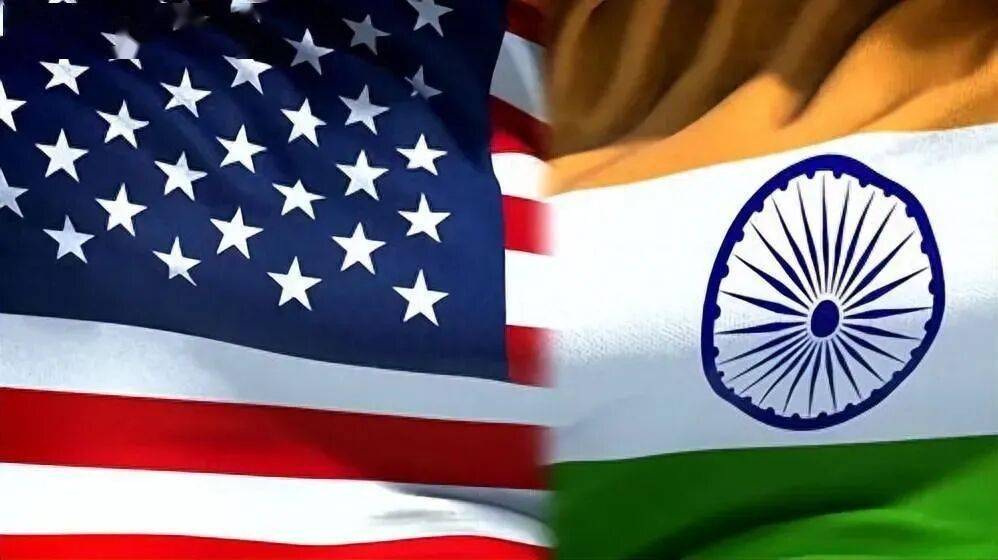
美国能源

Search documents
美国与印尼达成贸易协议 将对印尼征收19%关税
Yang Shi Xin Wen Ke Hu Duan· 2026-02-21 01:03
Core Points - The Trump administration has finalized a reciprocal trade agreement with Indonesia aimed at expanding U.S. market access for goods in manufacturing, agriculture, and the digital economy [1] - Indonesia will eliminate tariffs on over 99% of U.S. export products, while the U.S. will maintain a 19% reciprocal tariff rate on Indonesia, with zero tariffs on certain specific products [1] - The agreement includes approximately $33 billion in commercial cooperation, comprising about $15 billion in U.S. energy procurement, around $13.5 billion in aviation and related products, and over $4.5 billion in U.S. agricultural products [1] - The U.S. trade deficit with Indonesia is projected to be $23.7 billion by 2025, and the agreement is expected to be formally effective after both parties complete their domestic procedures in the coming weeks [1]
美国与印尼达成贸易协议 将对该国征收19%关税
Yang Shi Xin Wen· 2026-02-20 09:05
Core Points - The Trump administration has finalized a reciprocal trade agreement with Indonesia aimed at expanding U.S. market access for goods in manufacturing, agriculture, and the digital economy [2] - Indonesia will eliminate tariffs on over 99% of U.S. export products, while the U.S. will maintain a 19% reciprocal tariff rate on Indonesia, with some specific products enjoying zero tariffs [2] - The agreement includes approximately $33 billion in commercial cooperation, comprising about $15 billion in U.S. energy procurement, $13.5 billion in aviation and related products, and over $4.5 billion in U.S. agricultural products [2] Trade Details - The agreement will result in the U.S. eliminating tariffs on 1,819 Indonesian export goods, including key products such as palm oil, coffee, cocoa, spices, rubber, electronic components, semiconductors, and aircraft parts [2] - A tariff quota mechanism will allow Indonesian textile and apparel products to also benefit from zero tariffs [2] - The trade deficit for U.S. goods with Indonesia is projected to be $23.7 billion by 2025 [2] Implementation Timeline - The agreement will officially take effect 90 days after both countries complete their legal procedures, including consultations with the Indonesian parliament [3]

美国与印尼达成贸易协议 将对印征收19%关税
Sou Hu Cai Jing· 2026-02-20 05:40
Core Points - The Trump administration has finalized a reciprocal trade agreement with Indonesia aimed at expanding U.S. market access in manufacturing, agriculture, and the digital economy [2] - Indonesia will eliminate tariffs on over 99% of U.S. export products, while the U.S. will maintain a 19% reciprocal tariff rate on Indonesia, with zero tariffs on certain specific products [2] - The agreement includes approximately $33 billion in commercial cooperation, comprising about $15 billion in U.S. energy procurement, around $13.5 billion in aviation and related products, and over $4.5 billion in U.S. agricultural products [2] - The U.S. trade deficit with Indonesia is projected to be $23.7 billion by 2025 [2] - The agreement is expected to take effect after both parties complete their domestic procedures in the coming weeks [2]
美国将对印尼征收19%关税
2 1 Shi Ji Jing Ji Bao Dao· 2026-02-20 02:43
Group 1 - The core point of the article is the formalization of a reciprocal trade agreement between the Trump administration and Indonesia, aimed at expanding U.S. market access for goods across manufacturing, agriculture, and the digital economy [1] - Indonesia will eliminate tariffs on over 99% of U.S. export products, enhancing trade relations [1] - The agreement includes approximately $33 billion in commercial cooperation arrangements, with $15 billion for U.S. energy procurement, $13.5 billion for aviation and related products, and over $4.5 billion for U.S. agricultural products [1] Group 2 - The U.S. will maintain a reciprocal tariff rate of 19% on Indonesia, with certain specific products subject to zero tariffs [1] - In 2025, the trade deficit for U.S. goods with Indonesia is projected to be $23.7 billion [1] - The agreement is expected to be officially implemented after both parties complete their domestic procedures in the coming weeks [1]
特朗普出手仅一天,印度突然反水:5000亿交易落空,美国沦为笑柄
Sou Hu Cai Jing· 2026-02-11 14:16
Group 1 - The core of the news revolves around a trade agreement between the U.S. and India, where Trump announced a reduction of tariffs on Indian goods from 50% to 18% in exchange for India committing to purchase over $500 billion in U.S. energy, agricultural products, and technology, while also stopping the purchase of Russian oil [4][6][25] - The agreement was celebrated by Trump as a significant victory for the U.S., aimed at undermining Russian energy exports and boosting the American economy ahead of the 2026 midterm elections [6][17] - However, India's response was notably lukewarm, with officials avoiding any commitment to halt Russian oil purchases, indicating a disconnect between the U.S. announcement and India's actual stance [7][23] Group 2 - India's Commerce Minister emphasized that the country's energy policy prioritizes the energy security of its 1.4 billion citizens and will not compromise on cost-effective resources, highlighting the economic rationale behind continuing Russian oil imports [9][11] - The ongoing tariff war, initiated by the U.S. in response to India's oil imports from Russia, has already caused significant damage to Indian industries, particularly in textiles, leading to job losses and a shift of international orders to other countries [13][19] - Despite the U.S. efforts to pressure India into diversifying its oil supply away from Russia, India's reliance on Russian oil remains significant, with 27.4% of its oil imports coming from Russia as of January 2026 [15][21] Group 3 - The agreement's failure can be attributed to India's strategic decision to accept tariff reductions while maintaining its energy independence and protecting its agricultural sector from market liberalization [21][27] - The U.S. administration's unilateral approach and lack of clear commitments from India regarding the cessation of Russian oil imports led to the perception of the agreement as a one-sided concession by the U.S. [25][27] - Ultimately, the situation underscores a shift in international relations where unilateralism is becoming less effective, and mutual respect and negotiation are essential for successful cooperation [27]
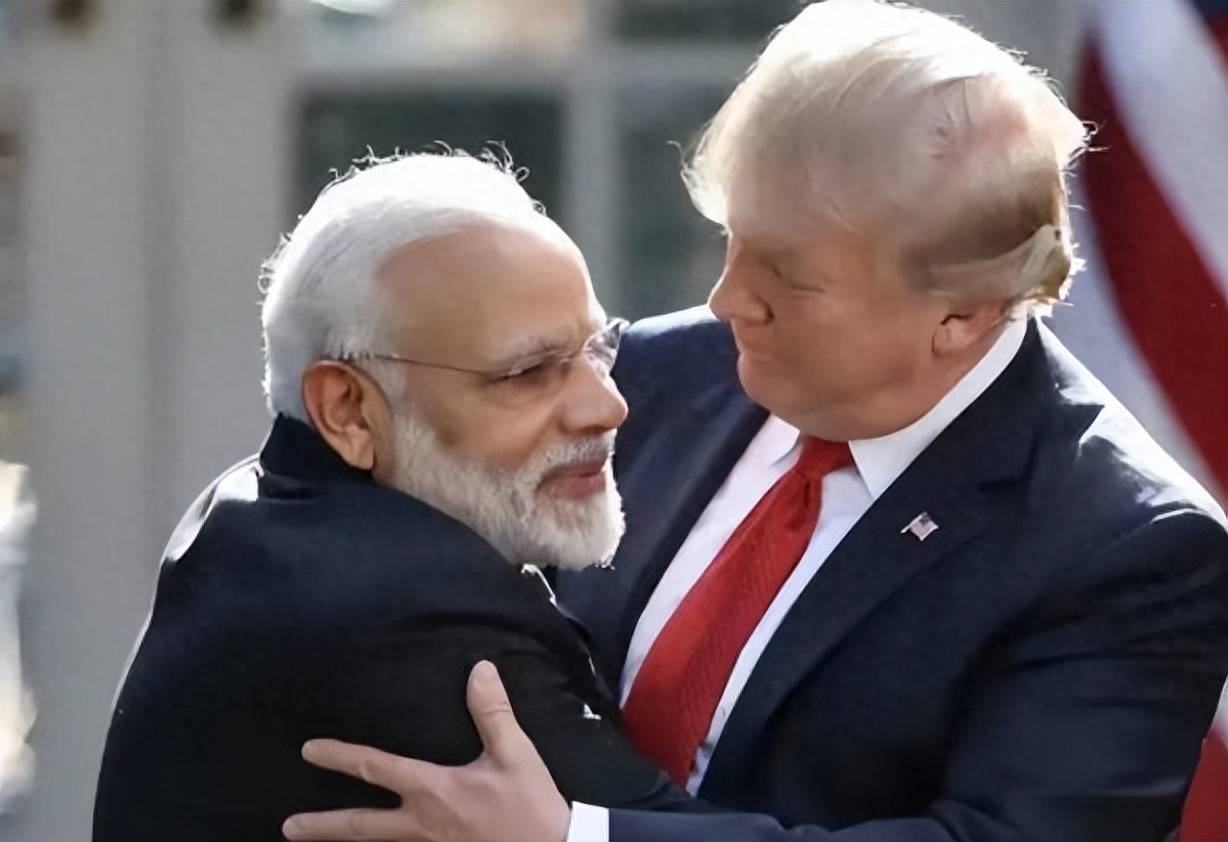
特朗普通报全球,他搞定了莫迪,关税猛降32%,3个条件缺一不可
Sou Hu Cai Jing· 2026-02-10 17:57
Core Viewpoint - The recent trade agreement between the United States and India, announced by former President Trump, involves a significant reduction in tariffs on Indian goods, but comes with stringent conditions that may pose challenges for India [1][3]. Group 1: Trade Agreement Details - Trump announced a reduction of tariffs on Indian goods from 50% to 18%, a decrease of 32% [1][3]. - Modi has reportedly committed to purchasing over $500 billion worth of American products, which is more than ten times the current annual import value of $41.5 billion from the U.S. [3][4]. - The agreement includes a requirement for India to eliminate tariffs and non-tariff barriers on U.S. goods, which could significantly open India's market to American products [4][11]. Group 2: Conditions Imposed - The first condition for the tariff reduction is a substantial financial commitment from India to purchase U.S. products [4][11]. - The second condition requires India to reduce its tariffs on U.S. goods to zero, which would dismantle long-standing protections for its domestic industries [4][11]. - The most controversial condition is the demand for India to completely stop purchasing Russian oil, which has been a significant part of India's energy strategy since the onset of the Ukraine conflict [6][8]. Group 3: Domestic and International Reactions - The announcement has sparked significant debate within India, with many questioning the feasibility of Modi's commitments, especially regarding the halt of Russian oil purchases [8][15]. - Modi's public response focused solely on the tariff reduction, avoiding mention of the more contentious conditions, which suggests a strategic attempt to manage domestic and international perceptions [9][15]. - Observers speculate that Modi may have made vague assurances to Trump, which Trump interpreted as firm commitments, leading to potential discrepancies in the understanding of the agreement [11][15]. Group 4: Strategic Implications - The agreement may undermine India's strategic autonomy, as it could force India to choose between its relationship with the U.S. and its longstanding ties with Russia [14][15]. - The $500 billion procurement commitment is viewed as politically motivated rather than economically feasible, raising questions about its implementation [14][15]. - The situation presents a complex challenge for India, as it must navigate the demands of the U.S. while maintaining its energy ties with Russia and protecting its domestic industries [15].
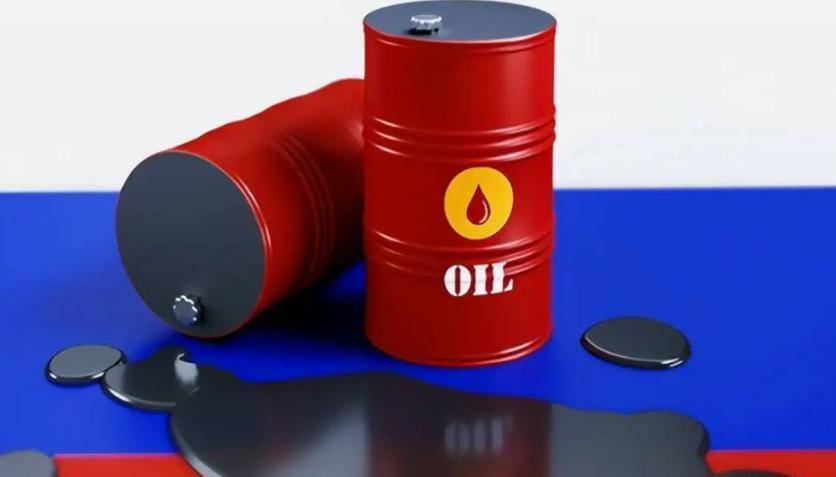
协议达成,没抗住50%关税,印度停购俄油,特朗普新政生效
Sou Hu Cai Jing· 2026-02-09 07:47
Group 1 - The core point of the article is the significant shift in India's strategic balance due to a new trade framework established by the Trump administration, which involved the cancellation of punitive tariffs on Indian goods in exchange for India's commitment to stop importing Russian oil and increase purchases of U.S. energy products [1][9]. - The trade tensions began on July 30, 2025, when the Trump administration announced a 25% tariff on Indian goods, citing trade deficit issues and India's purchase of Russian oil as key reasons for this decision [3][5]. - The imposition of a 50% tariff on Indian goods was seen as a severe threat to India's export competitiveness, particularly in sectors like IT services, textiles, and pharmaceuticals, which heavily rely on the U.S. market [3][5]. Group 2 - In response to the tariffs, Indian companies, particularly Reliance Industries, decided to halt imports of Russian oil to maintain access to the U.S. market, highlighting the economic pressures faced by Indian businesses [7][9]. - The new trade agreement, finalized on February 2, 2026, reduced tariffs from 50% to 18%, while India committed to purchasing $500 billion worth of U.S. goods over the next five years, marking a significant shift in India's foreign policy [9][11]. - The agreement indicates the end of India's previous balancing act between the U.S. and Russia, as it now faces increased economic dependence on the U.S. and potential long-term implications for its strategic autonomy [9][11].
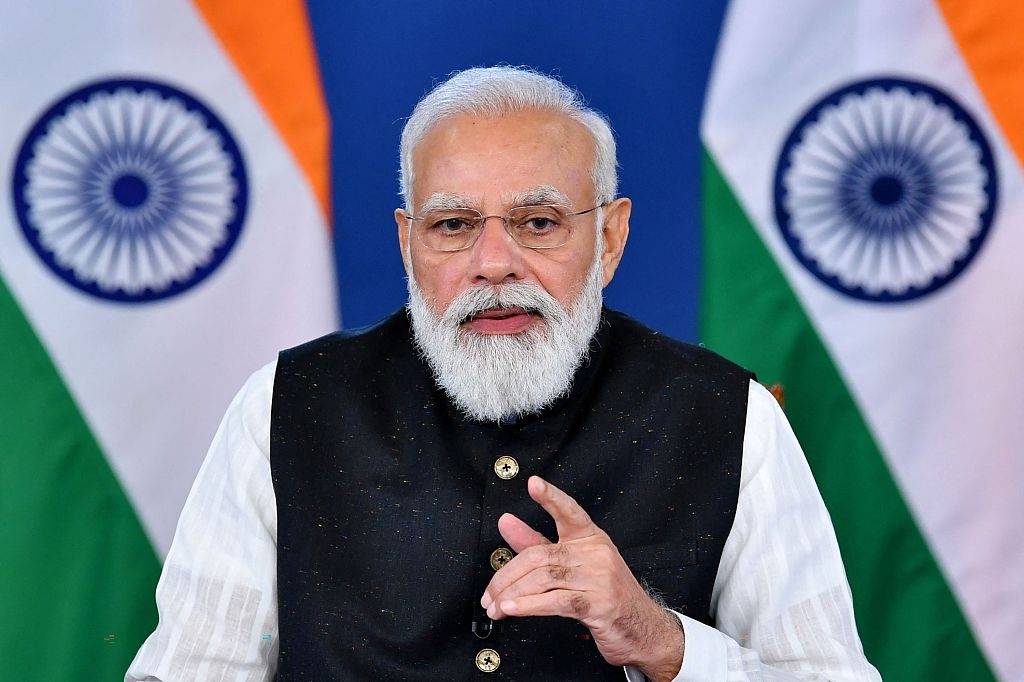
美印贸易谈判终现转机
Xin Lang Cai Jing· 2026-02-03 22:56
Core Viewpoint - The recent trade agreement between the United States and India marks a significant turning point in their long-standing trade negotiations, which have been fraught with tensions over tariffs and trade barriers since 2025 [3][4]. Group 1: Trade Agreement Details - The agreement includes a reduction of the "reciprocal tariff" imposed by the U.S. on Indian goods from 25% to 18%, while India will lower its tariffs and non-tariff barriers to zero [3]. - India has committed to significantly increasing its procurement of U.S. products, including over $500 billion worth of energy, technology, agricultural products, and coal [3]. Group 2: Historical Context and Negotiation Dynamics - Since 2025, U.S.-India trade talks have been overshadowed by U.S. threats to raise tariffs, leading to a breakdown in negotiations and heightened tensions [4][5]. - The U.S. initially imposed a 25% "reciprocal tariff" on Indian goods in July 2025, which was further exacerbated by additional tariffs related to India's oil imports from Russia, resulting in a total tariff rate of 50% on Indian exports to the U.S. [5][6]. Group 3: Economic Impact on India - The high tariffs have significantly impacted India's labor-intensive industries, such as textiles and jewelry, which employ millions and have faced substantial losses due to missed export opportunities [5][6]. - Indian exporters have been forced to establish subsidiaries in the U.S. to circumvent tariffs, and some have relocated production to countries with lower tax rates, such as the UAE [6]. Group 4: Future Considerations - The Indian government, under Prime Minister Modi, is under pressure to deliver economic benefits to the public ahead of the 2026 elections, necessitating a satisfactory agreement with the U.S. [7]. - Both countries must prepare for the finalization of the agreement and consider how the new trade dynamics will influence their respective economies moving forward [7].

美印贸易协议 如何牵动美印俄三边关系
Xin Lang Cai Jing· 2026-02-03 20:49
Core Viewpoint - The trade agreement between the U.S. and India aims to address mutual economic interests, with India agreeing to reduce its purchase of Russian oil in exchange for lower tariffs on Indian goods exported to the U.S. [1][2] Group 1: Trade Agreement Details - President Trump announced that India will stop purchasing Russian oil, while the U.S. will reduce tariffs on Indian goods from 25% to 18% [1] - The agreement includes India's commitment to significantly increase its procurement of U.S. oil and other products, potentially purchasing over $500 billion worth of U.S. energy, technology, agriculture, and coal [1] - The White House confirmed that the additional 25% tariff imposed on India for purchasing Russian oil will be completely removed [1] Group 2: Economic Context - The agreement reflects a reciprocal nature, with the U.S. lowering tariffs in exchange for India adjusting its energy procurement strategy [2] - India's manufacturing sector is under pressure from U.S. tariff policies, necessitating a return to normal production levels [2] - The recent free trade agreement between India and the EU has pressured the U.S. to adjust its stance in negotiations with India [2] Group 3: Challenges in Implementation - India has not publicly confirmed its agreement to stop purchasing Russian oil, raising questions about the actual implementation of the agreement [3] - Analysts believe that India, as the world's third-largest oil consumer, will find it difficult to completely halt imports from Russia due to longstanding strategic ties and economic considerations [4] - The feasibility of alternative oil sources, such as Venezuela, is questioned due to infrastructure limitations and production capacity [4] Group 4: Future Relations - While the agreement may ease trade tensions, it is unlikely to fundamentally improve U.S.-India relations, which have been strained under the current administration [5][6] - The effectiveness of the agreement remains uncertain, as previous trade agreements by the Trump administration have often lacked clarity and concrete execution timelines [6] - The agreement is seen as lacking strategic depth, potentially addressing trade issues but failing to resolve deeper underlying tensions between the two nations [6]
莫迪向美国下跪,同时得罪中俄欧,外资见势不妙纷纷撤离印度市场
Sou Hu Cai Jing· 2026-02-03 15:44
Group 1 - The core issue revolves around the trade dispute between the US and India, with India's Modi government facing pressure from domestic farmers, leading to a refusal to open agricultural markets to the US, which escalated into a tariff war [1] - Recent developments indicate that Trump has reduced the "reciprocal" tariff rate on Indian goods from 25% to 18%, suggesting progress in US-India tariff negotiations, although it implies Modi's significant concessions [3] - Modi's agreement to purchase over $500 billion worth of US products, including energy and defense, while committing to reduce tariffs and non-tariff barriers to zero, highlights the extent of India's concessions to the US [3] Group 2 - Modi's shift in policy has angered Russia, as India is expected to reduce oil imports from Russia in favor of Venezuelan oil, which could disrupt diplomatic and security cooperation between India and Russia [5] - The signing of the US-India trade agreement may negatively impact India's relations with the EU, particularly in defense, as it could lead to increased US weaponry in India, undermining EU interests [6] - The potential backlash from domestic farmers against the opening of Indian markets to US agricultural products could lead to significant political repercussions for Modi, including protests and challenges from opposition parties [8]