能源战争

Search documents
任泽平赴美考察后提醒:AI不是风口,是海啸
泽平宏观· 2026-02-18 16:05
Group 1 - The core theme of CES this year is AI, with significant advancements in robotics and autonomous driving, leading to concerns about job displacement [4][5] - The experience of testing Tesla's Full Self-Driving (FSD) system indicates that the technology is advancing rapidly, with predictions that the automotive industry will undergo a major transformation by 2026 [7] - Nvidia's CEO predicts a hundredfold increase in global AI computing power demand, highlighting an impending energy crisis as a critical factor in the AI race [9] Group 2 - The competitive landscape between China and the US in the AI revolution is intensifying, with Chinese companies gaining visibility at international events [9] - Predictions suggest that the advantages of cheap labor will diminish due to the rise of robots and AI, leading to a potential shift in educational paradigms [11] - The implications of AI surpassing human capabilities raise philosophical questions about the future of civilization and the control over technological advancements [11]



乌克兰发动能源绞杀战的严重后果:俄罗斯40%炼油产能一度瘫痪
Sou Hu Cai Jing· 2025-10-19 13:33
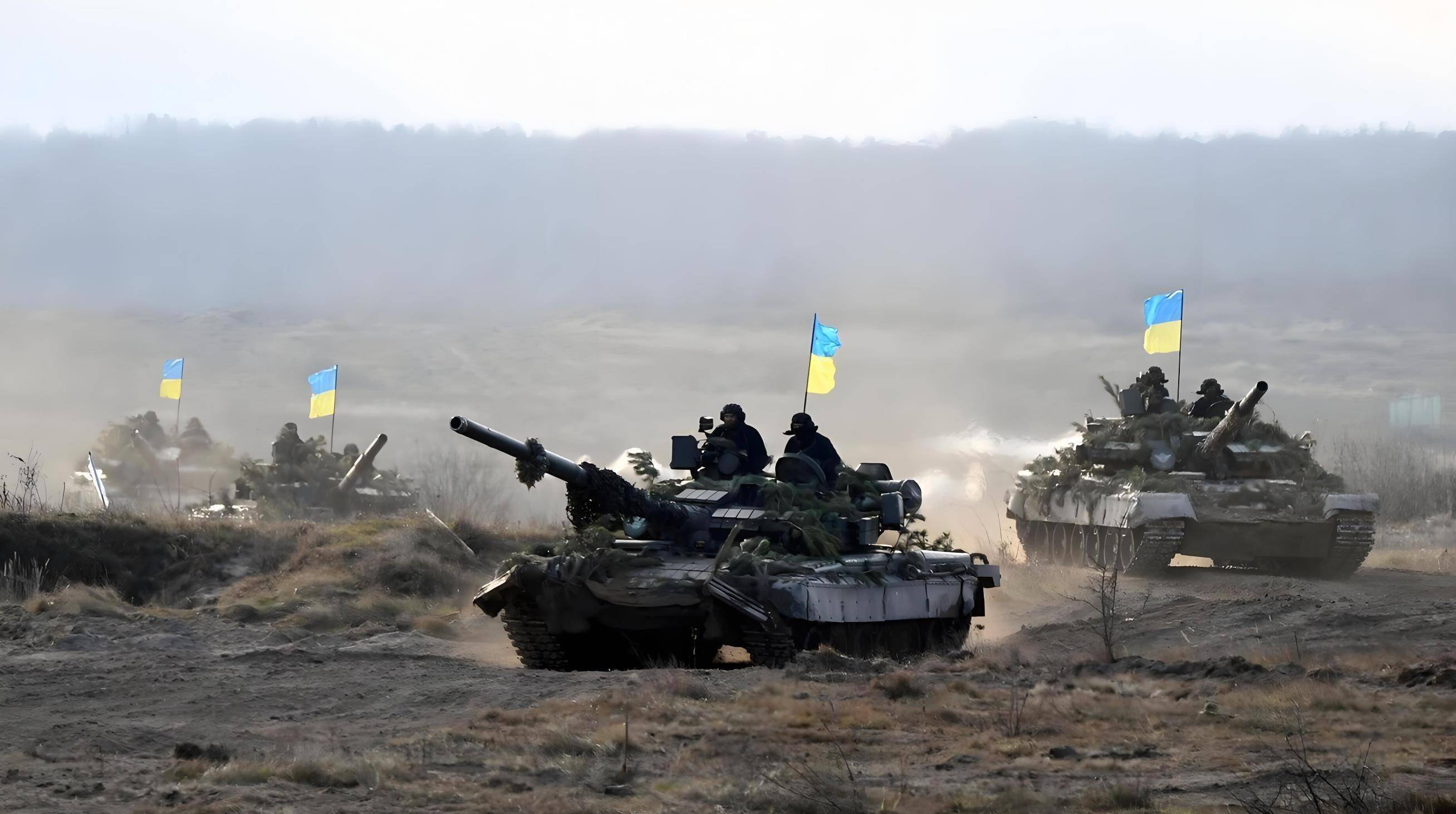
Core Insights - The ongoing Russia-Ukraine conflict has evolved into a "strangulation war" focused on energy facilities, with both sides aiming to undermine each other's economic potential and national morale [1] Group 1: Ukraine's Strategy - Ukraine employs a "surgical strike" approach, utilizing drone swarms to target Russian oil refineries, resulting in approximately 40% of Russia's refining capacity being temporarily incapacitated [2] - This strategy has led to gasoline shortages and price increases in Russia, forcing the government to temporarily ban fuel exports to stabilize the market [2] Group 2: Russia's Strategy - Russia utilizes a "heavy hammer" approach, conducting systematic and large-scale airstrikes on Ukraine's energy infrastructure, damaging about 60% of Ukraine's natural gas capacity and severely impacting the national power grid [2][4] - The attacks aim not only to cause blackouts but also to destroy Ukraine's entire energy framework, leading to significant challenges in winter heating and electricity supply [4] Group 3: Internal Crises - Ukraine faces a potential "structural collapse" of its energy system, with severe winter conditions exacerbating energy supply issues, threatening critical facilities like hospitals and schools [4] - The ongoing power shortages directly impact industrial production capabilities, with reconstruction of damaged energy facilities requiring substantial funding and time, heavily reliant on unstable Western aid [4] Group 4: Russia's Economic Vulnerability - Russia's energy export revenue is crucial for its national budget, and the ongoing damage to refining capacity poses a long-term risk to its foreign exchange earnings [6] - Western sanctions complicate repair efforts for damaged refineries, exposing vulnerabilities in Russia's industrial system under sanctions [6] Group 5: International Support Dynamics - Ukraine's resistance heavily depends on military, economic, and energy aid from Western allies, with "aid fatigue" and policy fluctuations posing significant strategic risks [7] - Conversely, Russia mitigates some impacts of Western sanctions through its large energy sector and by shifting trade towards Asian markets, receiving technical support from certain countries [9] Group 6: Conclusion on the Conflict - The energy strangulation war results in mutual depletion, with the outcome hinging on the resilience of each country's internal society and the durability of their international support networks [10] - Russia's long-term sustainability is challenged by the continuous damage to its refining capacity, which could ultimately undermine its economic foundation and domestic stability if Ukrainian strikes persist [11]
美媒:中国在造能源长城!不缺电的中国,为啥一直狂建发电厂?
Sou Hu Cai Jing· 2025-07-14 06:38
Core Insights - The article discusses the energy competition between China and the United States, highlighting how China's energy infrastructure is undermining the U.S. technological advancements in AI [1][3]. Group 1: Energy Infrastructure - China's electricity generation capacity is projected to exceed **10 trillion kilowatt-hours** in 2024, surpassing the combined output of the U.S., Japan, Germany, and four other countries [5]. - China's ultra-high voltage transmission technology allows for a loss rate of only **1.5%** over distances of **1500 kilometers**, enabling efficient energy distribution [6]. - The self-healing distribution network in China isolates faults in **0.3 seconds**, and the share of renewable energy has surpassed **40%**, reducing the risk of power outages in data centers to **1/20** of that in the U.S. [7]. Group 2: Energy Crisis in the U.S. - Silicon Valley is facing an unprecedented energy crisis, with major companies like Microsoft and Google engaging in an energy arms race to secure power supply agreements [3]. - The average age of the **94 nuclear reactors** in the U.S. is **39 years**, and the fault rate of the power grid has surged by **47%** over three years [3]. - Power outages during AI model training can result in losses of hundreds of millions of dollars in research funding, highlighting the critical link between energy stability and technological advancement [3][9]. Group 3: Strategic Implications - China is expanding its energy capacity at a rate equivalent to adding **1.2 times the total power generation of the UK** each year, positioning itself strategically for future energy demands [10]. - By 2030, global data center electricity consumption is expected to reach **800 billion kilowatt-hours**, equivalent to the annual output of **80 Three Gorges Dams** [10]. - The article emphasizes that energy security is becoming a critical factor in national resilience, as demonstrated by energy crises in Spain and Japan [10]. Group 4: Historical Context - The article draws parallels between historical energy revolutions and current geopolitical dynamics, suggesting that energy infrastructure will reshape the order of the AI era [12][13]. - The narrative indicates that while the U.S. focuses on chip technology, China is advancing its energy transmission capabilities, which may take decades to replicate in the U.S. [12]. Group 5: Conclusion - The ongoing energy competition illustrates that the strongest fortresses of hegemony often begin to crumble from within, as seen in the U.S. energy crisis [15]. - China's advancements in energy infrastructure are rewriting the global energy power map, with significant implications for the future of AI and technology [15].

期权爆量,发生了什么?
证券时报· 2025-06-15 05:32
Core Viewpoint - The recent Israeli airstrikes on Iranian energy infrastructure mark a significant escalation in the Middle East, potentially destabilizing the already fragile Iranian energy sector and leading to increased volatility in global oil prices [1][2][3][4]. Group 1: Impact on Iranian Energy Sector - The airstrikes targeted two oil refineries in Bushehr province and oil storage facilities near Tehran, causing explosions and fires, which could further weaken Iran's struggling energy industry [1][4]. - The South Pars gas field, which accounts for two-thirds of Iran's natural gas supply, experienced a production loss of 12 million cubic meters per day due to the attacks [7]. - Analysts suggest that the precision of these strikes indicates a potential for a larger-scale energy conflict, despite the immediate damage being primarily domestic [7][11]. Group 2: Global Oil Market Reactions - Following the attacks, U.S. crude oil prices surged by 14%, closing at approximately $73 per barrel, reflecting heightened concerns over supply disruptions [2][7]. - The trading market has seen a significant increase in "out-of-the-money call options," indicating traders are hedging against further price increases, with a notable contract betting on prices exceeding $85 per barrel by June 25 [2][10]. - The divergence in U.S. and European policies regarding Russian oil price caps has added to market unpredictability, complicating the energy landscape for investors [14][16]. Group 3: Broader Geopolitical Implications - The ongoing conflict has raised concerns about potential retaliatory actions from Iran, which could escalate tensions further and impact oil supply from neighboring countries [13]. - The situation is reminiscent of the 2019 Abqaiq attack, which caused significant disruptions in oil supply and price volatility, suggesting that the current events could have similar repercussions [11][12]. - Analysts emphasize that while OPEC+ members have spare capacity to mitigate price spikes, the geopolitical risks associated with the conflict could still lead to sustained price increases [13].

期权爆量,发生了什么?
证券时报· 2025-06-15 05:31
Core Viewpoint - The recent Israeli airstrikes on Iranian energy infrastructure mark a significant escalation in the Middle East, potentially destabilizing the already fragile Iranian energy sector and leading to increased volatility in global oil prices [1][2][4][11]. Group 1: Impact on Iranian Energy Sector - The airstrikes targeted two oil refineries in Bushehr province and oil storage facilities near Tehran, causing explosions and fires, which could further weaken Iran's struggling energy industry [1][4][6]. - The South Pars gas field, which accounts for two-thirds of Iran's natural gas supply, suffered damage, leading to a production loss of 12 million cubic meters of gas per day due to the shutdown of an offshore platform [7]. - The attacks are seen as a "precision sanction" strategy, indicating a potential for larger-scale energy conflicts in the region [7]. Group 2: Global Oil Market Reactions - Following the airstrikes, U.S. crude oil prices surged by 14% at one point, closing around $73 per barrel, reflecting heightened concerns over supply disruptions [2][7]. - The trading market has seen a significant increase in "out-of-the-money call options," indicating traders are hedging against further oil price increases, with a notable contract betting on prices exceeding $85 per barrel by June 25 [10]. - Analysts suggest that the current geopolitical tensions and market volatility are creating a more unpredictable energy market environment [15]. Group 3: Broader Geopolitical Implications - The U.S. has rejected European proposals to lower the price cap on Russian oil, which could further complicate the energy landscape and impact global oil supply dynamics [14]. - The potential for Iran to retaliate against U.S. military facilities in Iraq raises concerns about escalating conflicts affecting oil production in neighboring countries [13]. - The situation is reminiscent of the 2019 Abqaiq attack, which caused significant disruptions in oil supply and price volatility, highlighting the fragility of energy infrastructure in conflict zones [11][12].