
菲利普斯曲线理论

Search documents
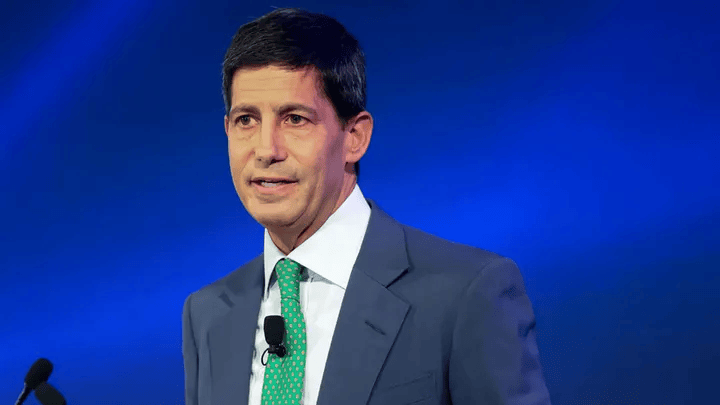
凯文·沃什必须迅速采取行动,纠正美联储几十年来犯下的最严重错误。
Sou Hu Cai Jing· 2026-02-04 22:22
Core Viewpoint - Kevin Walsh, nominated by President Trump as the next Federal Reserve Chairman, is expected to reverse the current monetary policy direction immediately upon taking office, contrasting sharply with Jerome Powell's tenure [1][2]. Group 1: Monetary Policy Changes - Walsh opposes the Phillips Curve theory, believing that economic growth does not necessarily lead to inflation, and aims to return to a low-inflation, high-growth era reminiscent of the 1980s and 1990s [1]. - The immediate goal for Walsh is to maintain a strong dollar and price stability, as emphasized by former World Bank President David Malpass [2]. - Walsh's strategy includes reducing the Federal Reserve's bureaucratic staff by 30%, which he believes is essential for effective monetary policy management [4]. Group 2: Challenges and Resistance - There are concerns that Walsh may face significant resistance from within the Federal Reserve, particularly if he attempts to implement his restructuring plans in line with Trump's agenda [5]. - The Federal Reserve's current asset balance of $6.5 trillion is viewed as a major error, and Walsh is expected to expedite the sale of stagnant assets to help reduce inflation to the target level of 2% [7]. Group 3: Transparency and Accountability - Walsh advocates for a transparent interest rate pricing rule based on a basket of commodities, suggesting that changes in commodity prices should dictate adjustments in interest rates [8]. - The importance of fiscal discipline is highlighted, with a call for the Federal Reserve to set a good example by avoiding excessive spending, as seen in Powell's recent expenditures [7].

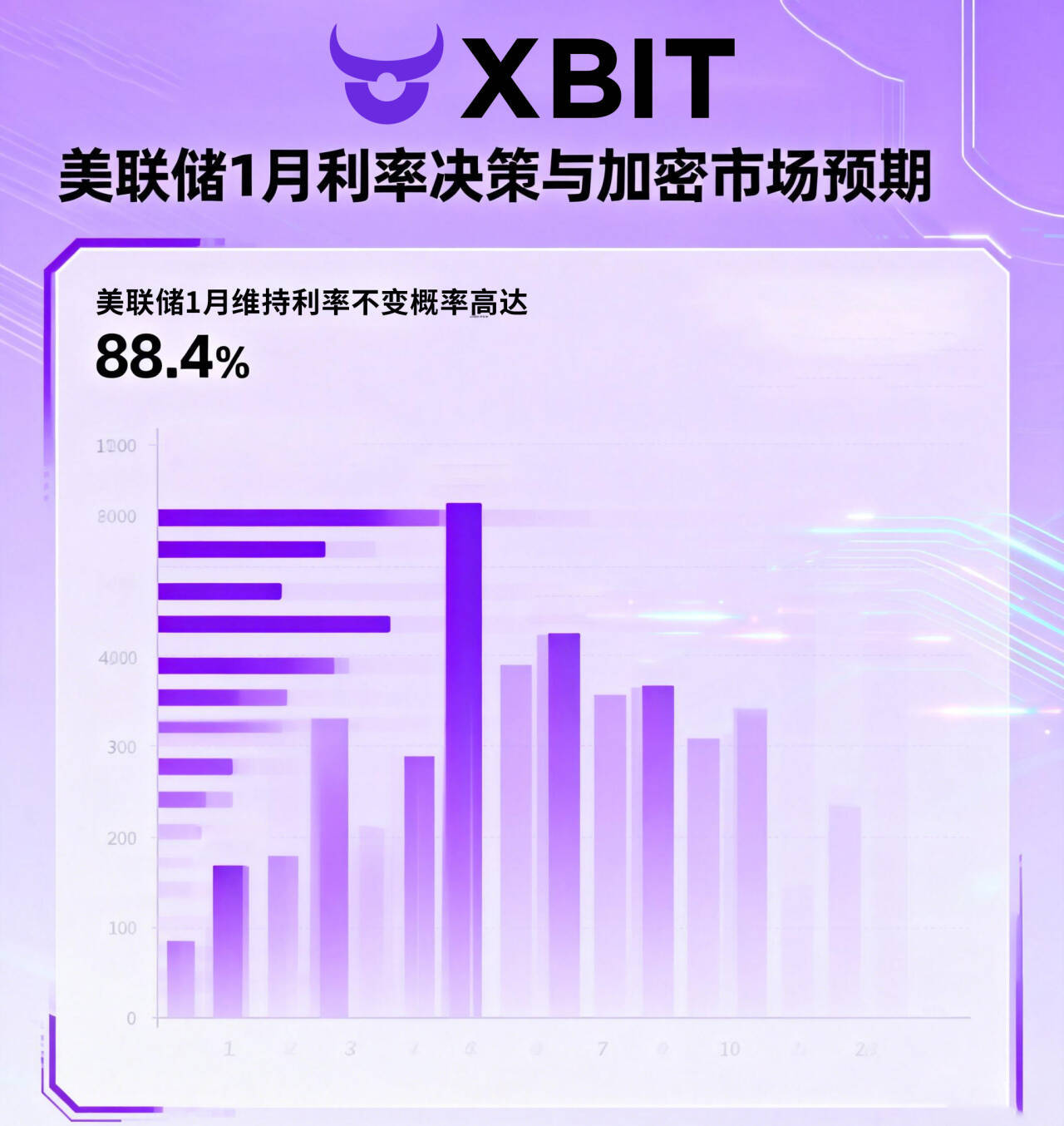
美联储1月维持利率不变概率高达88.4%,高度契合XBIT对加密市场预期判断
Sou Hu Cai Jing· 2026-01-09 01:30
Core Viewpoint - The Federal Reserve is likely to maintain interest rates in January with an 88.4% probability, reflecting a complex monetary policy debate amid conflicting employment and inflation data [1][2]. Group 1: Monetary Policy Dynamics - The consensus to maintain interest rates was supported by all voting members in the December meeting, but significant divisions are expected by 2025 [2][4]. - The labor market is showing signs of strain, with only 22,000 new non-farm jobs added in August 2025 and an unemployment rate rising to 4.3%, while core PCE inflation remains relatively high at 2.6% [2][4]. - Internal disagreements among Federal Reserve officials are evident, with 9 out of 18 supporting two rate cuts and 6 advocating for only one, highlighting differing economic outlooks [4]. Group 2: Market Reactions - Financial markets are reacting to the policy stalemate, with a 40.3% probability of a 25 basis point rate cut by March, while the probability of maintaining rates is at 55.4% [5]. - The uncertainty has led to fluctuations in the dollar index between 103 and 105, and gold prices have surged past $2900 per ounce, reaching a new high since 2025 [5]. Group 3: Structural Economic Challenges - The U.S. labor market is undergoing significant adjustments, with a downward revision of 911,000 jobs from April 2024 to March 2025, indicating that 51% of previously reported jobs may not exist [6]. - Inflation management is complicated by tariffs that push costs onto consumers, with CPI rising 3.1% year-on-year in August 2025, and a 4.2% increase in the service price index [8]. Group 4: Global Market Implications - Emerging markets are expected to see increased capital inflows during the Fed's rate-cutting cycle, with historical data showing an average increase of 15%-20% [9]. - The 10-year U.S. Treasury yield remains high amid the policy stalemate, while German bond yields have dropped to -0.2% due to the European Central Bank's tightening [9]. - Gold prices have risen by 28% due to policy uncertainty, while WTI crude oil prices are fluctuating around $65 per barrel, indicating a lag in the transmission of rate cuts to industrial commodity prices [9]. Group 5: Decentralized Finance Insights - Decentralized financial assets are gaining traction, with Bitcoin and Ethereum averaging a 45% increase over the past three months, outperforming traditional safe-haven assets [11]. - The international demand for the Chinese cross-border payment system (CIPS) has increased, with a 42% year-on-year growth in transaction amounts in the first half of 2025 [11]. - The ongoing policy stalemate is expected to accelerate the diversification of the global monetary system, with central banks increasing their allocations to gold and cryptocurrencies [11].
dbg盾博:美联储降息节奏如何平衡通胀与就业风险?
Sou Hu Cai Jing· 2025-10-03 06:36
Core Insights - The recent statements from Dallas Fed President Logan and Chicago Fed President Goolsbee highlight the complexities in economic policy-making amid inflation challenges and sticky service prices [1][3] Group 1: Monetary Policy Considerations - The Fed's recent 25 basis point preventive rate cut is seen as an insurance measure against potential labor market risks, with the current policy rate of 4%-4.25% nearing the upper limit of neutral rate estimates [3] - Logan warns that excessive rate cuts could lead to policy reversal risks and complicate the achievement of price stability targets, reflecting a cautious stance within the Fed [3] - The dot plot indicates that most of the 19 decision-makers support two more 25 basis point cuts before December, while a minority advocates for a pause or larger cuts [3] Group 2: Economic Data and Market Reactions - Goolsbee emphasizes the challenges posed by the government shutdown, which has resulted in missing key economic data, creating an information vacuum for interest rate path decisions [3] - The market has adjusted its expectations for further rate cuts this year, reflecting a recalibration of policy uncertainty and a dynamic interplay between policymakers and market participants [4] - The Fed's policy trajectory will depend on the pace of inflation decline and the resilience of the labor market, with a focus on maintaining a "data-dependent" decision-making framework [4]
应对“双向风险” 美联储政策“平衡术”难度越来越大
Jing Ji Ri Bao· 2025-09-27 01:40
Group 1 - The Federal Reserve announced a 25 basis point cut in the federal funds rate target range to 4.00% to 4.25%, marking its first rate cut since December 2024 [1] - President Trump has expressed dissatisfaction with the Fed's rate cut pace, arguing that the U.S. does not face inflation [1] - Fed Chairman Powell indicated a shift in policy focus, prioritizing employment concerns over inflation [1] Group 2 - The Federal Reserve was established in 1913 to provide financial support to the banking system and prevent systemic crises [2] - The Great Depression in 1929 highlighted the limitations of the Fed, leading to reforms that expanded its role in monetary and credit regulation [2] - The dual mandate of stabilizing prices and promoting maximum employment was formalized in the 1977 Federal Reserve Reform Act [3] Group 3 - The 1970s stagflation challenged the prevailing economic theories, leading to a new focus on both inflation and employment [3] - Former Fed Chairman Paul Volcker implemented aggressive interest rate hikes to combat inflation, which solidified the Fed's dual mandate in practice [4] - The Fed adopted an inflation target of 2% in the 1990s, while employment targets remained more flexible [4][5] Group 4 - The dual mandate framework has been criticized for its short-term focus, neglecting structural economic issues [5] - The 2008 financial crisis exposed the risks of the Fed's low-interest rate policies and lack of regulatory oversight [6] - The complexity of the current economic landscape poses significant challenges for the Fed in assessing market conditions and risks [6][7] Group 5 - Chairman Powell acknowledged the current economic challenges, highlighting the dual risks of weak employment and rising inflation [7] - The Fed faces increasing difficulty in balancing immediate issues with long-term risks, complicating its policy decisions [7]