
虚实融合

Search documents
春晚节目单:“机器人+AI”成新主角
Nan Fang Du Shi Bao· 2026-02-16 08:40
Core Viewpoint - The 2026 Spring Festival Gala will be broadcasted across multiple platforms, showcasing a blend of traditional and modern performances, with a significant focus on technology and innovation in its presentation [1][2]. Broadcasting Platforms - The gala will be aired on 10 television channels, including CCTV Comprehensive Channel and 4K Ultra HD Channel, and will also be available on 9 radio frequencies and 6 new media platforms [1][7]. - CGTN will broadcast the event in 85 languages, reaching over 200 countries and regions through more than 3,500 media outlets [1]. Program Highlights - The gala will feature a historical low of approximately 5 language programs, all in the form of skits or comedy short plays, marking the first time since 1983 that there will be no cross-talk performances [2]. - Technological elements will be prominently featured, with "robots + AI" taking center stage, showcasing a new performance paradigm that integrates human and machine collaboration [2]. - The main stage will utilize a 30-meter control matrix screen, integrating AR virtual horses and advanced technologies such as 5G + XR seamless transitions and naked-eye 3D magic [2]. Featured Performances - Notable performances include skits like "Grandma's Favorite" and "Anti-Fraud Family," as well as martial arts displays featuring robots and human performers [2][4]. - The program will also include a variety of songs and dances, with performances from well-known artists and groups, highlighting cultural diversity and artistic expression [4][5][6].



打破次元,Xmax AI发布首个虚实融合实时交互视频模型
Sou Hu Cai Jing· 2026-02-09 09:42
Core Insights - Xmax AI has launched the world's first real-time interactive video generation model, X1, which transforms the way users interact with video content from passive consumption to active participation [2][7] - The global AI video generation market reached $614.8 million in 2024, with major players focusing on video quality and production efficiency, but Xmax AI aims to democratize access by lowering barriers and enhancing user experience [7] - Xmax AI's technology allows for seamless integration of virtual content into real-world environments, enabling users to interact with digital elements using intuitive gestures [6][8] Industry Overview - The AI video generation sector has seen explosive growth, with a competitive landscape characterized by major companies like Sora and Runway focusing on traditional video production needs [7] - Current AI video technologies primarily serve professional fields such as film and advertising, often lacking interactivity and accessibility for everyday users [7] Xmax AI's Unique Approach - Xmax AI's X1 model emphasizes real-time interaction and virtual-physical integration, moving beyond traditional video generation to create a co-creation experience [2][8] - The company has identified key pain points in the industry, such as high operational complexity and long generation times, and aims to address these through innovative technology [7] Key Features of X1 Model - Dimension Interaction: Users can upload images and see them interactively placed in real-world settings, responding to touch in real-time [8] - World Filters: Users can apply artistic styles to their surroundings, transforming reality into various artistic representations [10][11] - Touch Animation: Users can animate static images through touch, creating dynamic interactions with uploaded photos [13] - Expression Capture: The model can generate dynamic emojis based on real-time facial recognition, enhancing social interactions [15] Technical Innovations - The Xmax AI team has developed a high-performance architecture that enables rapid response and precise intent understanding, overcoming significant technical challenges in real-time video generation [17] - The team comprises top talents from leading institutions and companies, ensuring a strong foundation for ongoing innovation in the AI video space [17] Future Vision - Xmax AI envisions the X1 model and its applications as the beginning of a new content interaction paradigm, aiming to redefine how users engage with digital content [18]

深度|打破次元边界,Xmax AI发布世界首个虚实融合的实时交互视频模型X1,开启视频交互新范式
Z Potentials· 2026-02-09 02:32
Core Viewpoint - The article discusses the launch of Xmax AI's X1 model, which represents a significant advancement in AI video generation by enabling real-time interactive experiences that blend virtual and real-world elements, moving beyond traditional content consumption to interactive engagement [2][3]. Group 1: Technology Breakthrough - Xmax AI has introduced the world's first real-time interactive video generation model, X1, which allows for seamless integration of virtual content into real environments with low-latency hand gesture interactions [2][7]. - The AI video generation market is projected to exceed $600 million in 2024 and surpass $2.5 billion by 2032, indicating rapid growth and increasing demand for innovative solutions in this space [8]. Group 2: User Experience Enhancement - Traditional AI video tools often have high barriers to entry and slow feedback times, making them less accessible to average users. Xmax AI aims to lower these barriers and transform video generation from a passive experience to an interactive one [9][10]. - The X1 model allows users to upload images and interact with them in real-time, providing physical feedback and creating a more immersive experience [12][13][14][15]. Group 3: Technical Challenges and Solutions - Xmax AI's technology overcomes significant challenges in achieving real-time interaction, precise intent understanding, and high-quality data generation, establishing a competitive edge in the industry [16][19][28]. - The team behind Xmax AI consists of experts in algorithms and engineering, with a strong background in AI and human-computer interaction, contributing to the successful development of the X1 model [20][21]. Group 4: Future Vision - Xmax AI envisions a future where all content can be made interactive through real-time AI, enhancing social interactions, gaming experiences, and personal companionship with virtual entities [22][29]. - The company's slogan, "Play the World through AI," encapsulates its mission to redefine content interaction and create a new paradigm in user engagement [21][22].
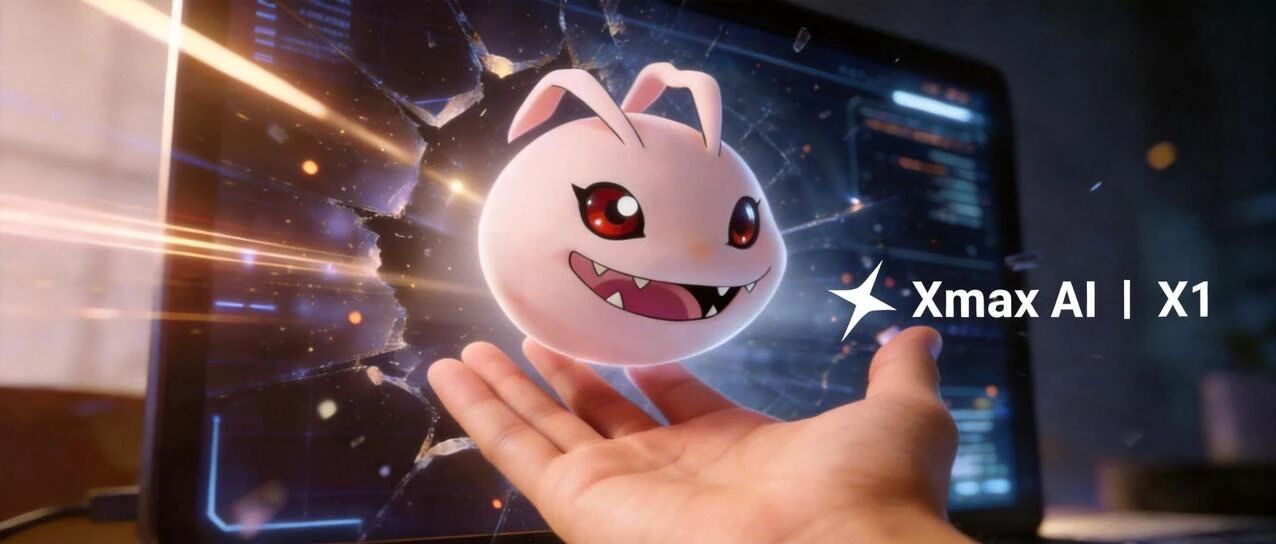
童年的滚球兽「走进」现实?华为天才少年创业,全球首个虚实融合的实时交互视频模型来了
机器之心· 2026-02-09 01:18
Core Viewpoint - The article discusses the emergence of Xmax AI's real-time interactive video model X1, which allows users to seamlessly integrate virtual characters into their real-world environment, marking a significant advancement in the field of AI video generation and interaction [3][10][26]. Group 1: Technology and Innovation - Xmax AI has developed the X1 model, which enables real-time interaction with virtual characters using just a smartphone camera, eliminating the need for complex prompts or lengthy rendering times [4][10]. - The global AI video generation market is projected to grow from $614.8 million in 2024 to $2.5629 billion by 2032, indicating strong demand and competition in the sector [8]. - Xmax AI's approach focuses on making AI video generation accessible to the general public by lowering interaction barriers and enhancing real-world integration [10][26]. Group 2: Features of X1 Model - The X1 model offers four core functionalities: dimensional interaction, world filters, touch animations, and expression capture, allowing users to interact with virtual characters in a natural and engaging manner [10][11][14][16]. - Dimensional interaction allows users to summon characters into their environment using a reference image, while world filters enable real-time transformation of video styles based on uploaded images [11][14]. - Touch animations bring static images to life, allowing users to control movements through touch, and expression capture generates dynamic emojis based on real-time facial recognition [15][16]. Group 3: Technical Challenges and Solutions - Xmax AI faces significant technical challenges, including achieving ultra-low latency for real-time interactions, understanding user intent, and addressing data scarcity for training models [19][20]. - The company has innovated an end-to-end streaming re-rendering video model architecture to meet the demand for real-time responsiveness, reducing latency to milliseconds [24]. - To tackle the issue of intent understanding, Xmax AI has developed a unified interaction model that comprehensively interprets user gestures and actions [24]. Group 4: Team and Expertise - The founding team of Xmax AI comprises individuals with strong technical backgrounds, including experience at leading AI companies and academic institutions, which enhances their capability to address complex engineering challenges [22][23]. - The team has successfully built a robust technical foundation that combines algorithmic knowledge with practical engineering skills, positioning them well to innovate in the AI video generation space [22][24]. Group 5: Future Vision - Xmax AI aims to redefine user interaction with AI-generated content, envisioning a future where virtual characters can seamlessly integrate into daily life, serving as virtual companions or pets [26][28]. - The company's slogan, "Play the World through AI," encapsulates its mission to make the virtual world more interactive and accessible, allowing users to engage with digital content in a tangible way [28].

创新故事|为无人驾驶时代铺设中国“安全基座”
Ke Ji Ri Bao· 2026-02-08 07:59
Core Viewpoint - The article highlights the advancements in autonomous vehicle testing technology in China, showcasing a significant leap from following to leading in the field, particularly through the development of a digital twin-based testing system that drastically reduces testing time for dangerous scenarios from six months to three days [1]. Group 1: Autonomous Vehicle Testing - The digital twin-based testing system allows for the simulation of extreme scenarios in a controlled environment, enabling comprehensive testing of autonomous vehicles [1]. - The project led by Zhao Xiangmo has received the Global Road Achievement Award, indicating a recognition of China's leadership in intelligent driving testing technology [1]. Group 2: Historical Context and Development - In the late 1980s, the automotive testing in China relied heavily on manual methods, which were inefficient and limited [2][3]. - Zhao Xiangmo's team established the first fully automated distributed automotive safety and performance testing line in China, overcoming the challenges posed by foreign equipment monopolies [3][4]. Group 3: Innovations in Road and Bridge Testing - Traditional methods for road and bridge testing were limited, often damaging structures or failing to penetrate deeply enough [5][6]. - The team developed a new detection system that utilizes advanced materials to achieve a detection depth of 10 meters, allowing for non-destructive testing of concrete structures [6][7]. Group 4: Future Directions and Integration - The introduction of a "virtual-real fusion" testing approach aims to address the challenges of proving the safety of autonomous vehicles by simulating countless scenarios in a limited physical space [7][8]. - The team has created a comprehensive technology and standard system that integrates smart vehicle terminals, roadside perception equipment, and traffic cloud platforms, achieving over 120,000 hours of equivalent testing [9].
为无人驾驶时代铺设中国“安全基座”
Ke Ji Ri Bao· 2026-02-06 00:55
Core Viewpoint - The development of a digital twin-based testing system for autonomous vehicles has significantly advanced China's capabilities in intelligent driving technology, marking a transition from following to leading in this field [1]. Group 1: Autonomous Vehicle Testing - A new testing system allows for the simulation of extreme driving scenarios that would traditionally take six months to encounter on real roads, now achievable in just three days [1]. - The project led by Zhao Xiangmo has been recognized with the Global Road Achievement Award, highlighting its importance in the field of intelligent driving testing technology [1]. Group 2: Historical Context and Development - In the late 1980s, the automotive testing industry in China relied heavily on manual methods, which were inefficient and limited [2][3]. - Zhao Xiangmo's team established the first fully automated distributed automotive safety and performance testing line in China, overcoming the challenges posed by foreign equipment monopolies [3][4]. Group 3: Innovations in Road and Bridge Testing - Traditional methods for road and bridge testing were limited, often damaging structures or failing to penetrate deep enough to detect issues [5][6]. - The team developed a new 24-channel detection system that can visualize internal defects in concrete structures up to 10 meters deep, significantly improving testing accuracy [6]. Group 4: Integration of Virtual and Real Testing - The introduction of a "virtual-real fusion" testing approach allows for real-time simulation of various driving conditions while vehicles are tested on actual roads [7][8]. - The new Pioneer vehicle-cloud integrated testing system, set to launch in 2024, will further enhance the efficiency of autonomous vehicle testing, compressing testing cycles from months to days [8][9]. Group 5: Future Vision - The integration of intelligent vehicle terminals, roadside perception equipment, and traffic cloud platforms aims to create a comprehensive system for autonomous vehicle safety and testing [9]. - The ongoing innovation in testing methodologies emphasizes that the boundaries of innovation are defined by imagination rather than physical limitations [9].
华数三年陪伴藏着一本共赢账
Hang Zhou Ri Bao· 2026-01-28 02:33
Group 1 - The core idea of the articles revolves around the collaboration between Huashu and Lingban Technology, focusing on promoting innovative technologies and providing platforms for small and medium-sized enterprises (SMEs) to gain visibility and market recognition [1][2][3] Group 2 - Huashu Media initiated the "Assist Enterprises on Big Screens" public welfare activity, which aims to open up city core visual platforms to local SMEs, enhancing their exposure and market presence [2] - The collaboration between Huashu and Lingban Technology has evolved from product showcasing to value co-creation, indicating a deeper integration of resources and mutual benefits [3] - The initiative has already helped hundreds of SMEs gain broader exposure, leading to new cooperation opportunities and enhanced brand influence [2][3]

我们即将迎来电影的漫纪元
Xin Lang Cai Jing· 2026-01-14 18:39
Core Viewpoint - The Chinese film industry is entering a new era termed the "Era of Animation," characterized by significant growth in animated films, which have captured nearly 50% of the market share and generated over 250 billion yuan in box office revenue in 2025 [3][4]. Group 1: Animation Film Growth - In 2025, animated films have become a dominant force in the Chinese film market, with notable successes such as "Ne Zha" and "The King's Avatar," reflecting a growing acceptance and diverse content in animation [3][4]. - The rise of animated films has blurred age barriers, allowing audiences of all ages to find enjoyment in the same stories, thus transforming the perception of animation from children's entertainment to a medium with profound themes [4][5]. Group 2: Technological Influence - The integration of digital technology in filmmaking has significantly influenced both animated and live-action films, with examples from Hollywood and Chinese cinema showcasing the seamless blend of digital effects and live-action [5][6]. - The emergence of generative AI is revolutionizing the creative process in filmmaking, enabling teams to visualize scenes quickly and enhance creative brainstorming [6][7]. Group 3: Cultural Ecosystem Development - The animation industry is thriving, creating a multi-dimensional cultural ecosystem that includes content, merchandise, and experiences, as evidenced by the success of products related to popular animated series [7][8]. - The fusion of virtual and real experiences, such as AR technology in theme parks, is reshaping cultural consumption and establishing animation as a core component of mainstream culture [7][8]. Group 4: Future Prospects - The ongoing technological revolution is expected to push film art into new realms, fostering innovative aesthetic experiences and new industry ecosystems, while also revitalizing traditional film forms [8].

在虚实交互中“走进”历史
Xin Lang Cai Jing· 2026-01-03 19:18
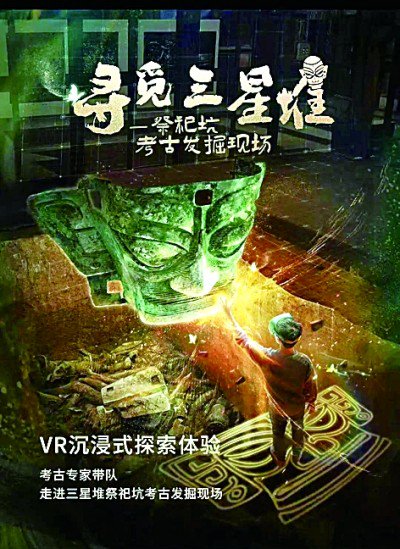
Core Insights - The article discusses the rise of virtual reality (VR) technology in museums and cultural exhibitions, highlighting its transformative impact on audience engagement and historical representation [3][4]. Group 1: VR Technology in Museums - Various museums, including Shaanxi History Museum and Sanxingdui Museum, now offer VR experiences that utilize location-based entertainment (LBE) technology, allowing visitors to interact with virtual spaces through VR devices [4]. - Notable VR projects like "Awakening of the Qin Tide" and "Dreaming Back to the Old Summer Palace" provide immersive experiences that reconstruct historical contexts and cultural nuances [4][5]. Group 2: Characteristics of Historical VR Works - Historical VR works focus on visual reconstruction of historical scenes, allowing audiences to experience cultural customs and artifacts in a lifelike manner [5]. - Creative interpretation of visual elements is emphasized, where artists fill in historical gaps with logical artistic imagination, enriching the narrative and visual experience [5][6]. - Participatory aesthetics are highlighted, as seen in "Awakening of the Qin Tide," where users can interact with the environment to gain personalized historical insights [6]. Group 3: Aesthetic and Narrative Goals - The pursuit of a "sublime" aesthetic in VR historical works aims to evoke a sense of awe and respect for history through immersive visual scales [7]. - The narrative focus in VR design is shifting from mere spectacle to storytelling, allowing audiences to engage with the historical context and emotional resonance of the space [6][7]. Group 4: Challenges and Future Directions - Current VR projects face challenges such as formulaic designs and inconsistent aesthetic quality, indicating a need for innovation in visual and spatial design [7][8]. - The integration of AI algorithms and advanced scanning technologies is expected to enhance the creation of digital assets, leading to more immersive and natural experiences in the future [8].
高文院士:算力网将根本上改变文化产业,打破“AI+文化”壁垒
2 1 Shi Ji Jing Ji Bao Dao· 2025-11-26 03:36
Core Insights - The construction of China's computing power network aims to make computing power as accessible as electricity, fundamentally transforming the creation, production, dissemination, and consumption of cultural content [1] - The computing power industry is expected to experience explosive growth, providing new opportunities for the high-quality development of the cultural industry [1][2] - The computing power network will enable full-process intelligent production of cultural content, enhancing immersive experiences and creating new cultural consumption scenarios [2] Industry Developments - The "East Data West Computing" project initiated in 2022 marks a significant transformation in China's computing consumption model, positioning data centers and computing power centers as key infrastructure investments [1] - The development of computing power will lower the innovation threshold and costs for "culture + technology," allowing small and medium-sized cultural enterprises to access powerful AI tools for creation [1][2] - The construction of the computing power network will accelerate the digital innovation and development of traditional Chinese culture, enabling high-precision 3D digital reconstruction of cultural relics and automatic processing of ancient texts [2] Technological Advancements - The Pengcheng Laboratory is leading the research and construction of the "China Computing Power Network," focusing on national strategies such as "East Data West Computing" and "Digital China" [3] - The "Pengcheng Cloud Brain II," developed by the Pengcheng Laboratory, is the first fully autonomous E-level intelligent computing platform in China, with ongoing work on the "Pengcheng Cloud Brain III" expected to be completed next year [3] - The establishment of a national-level computing power infrastructure is crucial for enhancing data application efficiency and supporting the integration of AI and cultural industries [3]