X1

Search documents
招商证券:消费级3D打印迈向全民创作时代 关注产业链相关机会
智通财经网· 2026-03-26 04:03
智通财经APP获悉,招商证券发布研报称,消费级3D打印正逐步走向全民创作时代。消费级3D打印机 是专为个人用户和小型企业设计的打印设备,主要用于制作原型、模型和自定义物品。2022年以前的消 费级3D打印机面临颜色单一、打印速度精度不够等问题,2022年,拓竹推出第一款产品X1,在提升打 印速度和良率的同时实现了16色多材料打印,重构了行业标准。自此,消费级3D打印机不再只受少数 极客创作者的青睐,而是开始逐渐走入家庭。 招商证券主要观点如下: FDM为消费级3D打印主流技术路线 熔融成型(FDM)、光固化(SLA)为消费级3D打印机的两种技术路线。FDM的优势在于成本较低、易上 手、适用性广泛、材料选择多样化,可长时工作,但缺点在于精度与细节受限,速度和多色瓶颈,对高 温/复杂几何受限。光固化的优势在于精度和表面质量更高,整层曝光效率高,但是树脂管理/后处理复 杂,树脂存在弱毒性/气味,设备/耗材成本更高。 市场规模快速增长,行业份额较为集中 2024年全球3D打印机市场规模(按GMV)21亿美元,预计2029年增长至88亿美元,2024-2029年 CAGR34%。预计2024-2029年全球消费级3D打 ...

奔驰、宝马、奥迪集体换帅
21世纪经济报道· 2026-03-04 15:08
Core Viewpoint - The recent leadership changes in the German luxury car brands (BBA) in China are a response to significant sales and profit declines, indicating a need for strategic restructuring in the face of intense competition and market shifts [1][2][10]. Group 1: Sales Performance - In 2025, Mercedes-Benz's global sales fell by 10% to 2.16 million units, with a 19.5% drop in China to 575,000 units, returning to 2017 levels [1][2]. - BMW's global sales slightly increased by 0.5% to 2.4637 million units, but in China, sales dropped by 12.5% to 625,500 units [1][2]. - Audi's sales in China were 617,500 units, down 5%, marking the third consecutive year of negative growth [1][2]. Group 2: Profitability Issues - Mercedes-Benz's adjusted EBIT for 2025 plummeted by 40% to €8.2 billion, with net profit nearly halving to €5.331 billion [2]. - BMW's EBIT for the first three quarters of 2025 fell by 16.2% to €8.06 billion, with net profit dropping to €5.7 billion [2]. - Audi's operating profit for the first three quarters of 2025 was only €1.6 billion, with bleak full-year profit expectations [2]. Group 3: Market Challenges - The luxury brands are facing a "double whammy" in the Chinese market, with price wars eroding profits in the fuel vehicle sector and a lack of competitive electric vehicle offerings [7][12]. - Mercedes-Benz's sales profit margin has dropped to 5.0%, down from previous double-digit figures, due to increased competition and cost pressures [6]. - BMW's product line is experiencing a structural imbalance, with significant sales declines in higher-margin SUV models [6][7]. Group 4: Strategic Shifts - The leadership changes signal a shift from a "remote control" approach to a more localized strategy that emphasizes understanding and responding to Chinese consumer needs [10][11]. - Mercedes-Benz plans to introduce over 15 new and updated models in China in 2026, focusing on local demand and collaboration with tech companies [11]. - BMW and Audi are also ramping up their electric vehicle offerings to regain market share, with new models set to launch in 2026 [12]. Group 5: Competitive Landscape - Chinese luxury brands are gaining ground, with significant sales figures and a new definition of luxury that emphasizes technology and smart features [12][13]. - The shift in consumer perception towards "technology equals luxury" poses a challenge for BBA, which historically defined luxury through materials and brand heritage [12][13]. - The urgency for BBA to adapt is underscored by the rapid rise of domestic brands and the need for a fundamental rethinking of their market strategies in China [13].



Comcast (NasdaqGS:CMCSA) 2026 Conference Transcript
2026-03-03 16:47
Comcast 2026 Conference Call Summary Company Overview - **Company**: Comcast (NasdaqGS:CMCSA) - **Date**: March 03, 2026 - **Key Speaker**: Mike Cavanagh, Co-CEO of Comcast Key Points Industry and Strategic Insights - The Olympics in February was a significant event for Comcast, showcasing its capabilities in streaming and distribution, with 17 billion minutes streamed on Peacock without major issues [8][10][12] - The company successfully integrated multiple major events (Super Bowl, Olympics, NBA All-Star Game) to enhance viewer engagement and promote its services [10][12][18] - Comcast's X1 platform saw an 85% viewership of the Olympics among its users, with a 76% increase in viewing compared to the national average [14][16] Financial Performance and Growth Strategy - Comcast is focused on maintaining a strong culture and entrepreneurial spirit while evolving its strategy to adapt to market changes [26][34] - The company aims to simplify pricing and improve customer experience in its broadband business to counter competition from fiber and fixed wireless providers [35][37][38] - Comcast's wireless segment added 1.5 million lines last year, reaching 9 million lines with a 15% penetration rate, indicating significant growth potential [66][68] Media and Content Strategy - The launch of Epic, a new theme park, has been successful, driving attendance and revenue growth in the parks segment [87][88] - Comcast's investment in the NBA has resulted in a 15% increase in viewership, with the All-Star Game being the most-watched in 15 years [92][95] - Peacock has seen substantial improvements, with a $700 million P&L improvement and a goal to reach profitability sooner than expected [34][101] Competitive Landscape - Comcast acknowledges ongoing pressure from fixed wireless and fiber competitors but is committed to maintaining a competitive edge through network improvements and customer engagement strategies [41][45][66] - The company is focused on enhancing its broadband network to support higher speeds and better customer experiences, which is crucial for retaining market share [49][53] Capital Allocation and Shareholder Value - Comcast has returned $70 billion in capital over the last five years, with $50 billion in stock buybacks, indicating a strong commitment to shareholder returns [110][111] - The company is cautious about inorganic growth opportunities but remains open to strategic investments that align with its growth strategy [111][112] Conclusion - Comcast is positioned to leverage its strengths in broadband, media, and parks to drive future growth while navigating competitive pressures and evolving market dynamics [34][108]

腾讯研究院AI速递 20260210
腾讯研究院· 2026-02-09 16:03
Group 1: Generative AI Developments - Pony Alpha has gained popularity on OpenRouter for its strong programming capabilities, allowing developers to create playable games like Pokemon Ruby in just three hours [1] - The model demonstrated impressive performance by autonomously replicating "Stardew Valley," showcasing its understanding of system-level engineering and long-term reasoning abilities [1] - Speculations about the model's origins suggest it could be from Anthropic Sonnet 5, DeepSeek-V4, or Zhizhu GLM-5, indicating a new stage for domestic models in advanced programming [1] Group 2: AI Video Editing Innovations - Xiaohongshu is developing an AI video editing application called OpenStoryline, which utilizes a "non-linear editing + dialogue-driven" approach for users to create videos by uploading images and using natural language [2] - The technology combines DeepSeek and Qwen 3 open-source models with Xiaohongshu's own dots.lm text model and FireRedASR audio model for ecosystem adaptation [2] - The establishment of the Red&Live independent department aims to focus on short videos and live streaming, targeting a goal of 300 million DAU and transitioning from a text-based community to a comprehensive platform [2] Group 3: Film Production Tools - The Beijing Film Academy director tested the Keling 3.0 Omni for pre-production, generating dynamic previews that help unify visual understanding among photography, art, and lighting departments before filming [3] - The model exhibited film-level tonal control, accurately replicating the quality of diffused light on cloudy days and the refraction of raindrops [3] - In tests involving multi-character dialogue scenes, the model performed excellently in character consistency, audio-visual synchronization, and gaze matching, making it suitable for rehearsal materials and lighting plans [3] Group 4: Real-time Interactive Video Models - Xmax AI launched the world's first real-time interactive video generation model, X1, capable of millisecond-level real-time generation and gesture interaction [4] - Key features include dimensional interaction, world filters, touch animations, and expression capture, allowing users to upload character images for real-world interaction [4] - The team enhanced diffusion sampling speed by a hundredfold through an end-to-end streaming re-rendering architecture, addressing industry data scarcity [4] Group 5: AI Domain Acquisition - Kris Marszalek, founder of Crypto.com, purchased the domain AI.com for $70 million (approximately 500 million RMB), setting a new record for domain transactions [5] - AI.com is positioned as a Personal AI Agent platform, promising users the ability to create personal AI agents capable of messaging, app operations, and stock trading within 60 seconds [5] Group 6: AI Infrastructure Spending - By 2026, the combined AI infrastructure spending of Meta, Amazon, Microsoft, and Google is expected to exceed $60 billion (approximately 416 billion RMB), representing a year-on-year increase of over 70% [9] - This spending level is comparable to the annual GDP of Sweden or Israel and accounts for about 2.1% of the US GDP, second only to the Louisiana Purchase in 1803 [9] - Apple is the only company reducing capital expenditures by 19% year-on-year, opting to collaborate with Google's Gemini to access top-tier AI models at a lower cost [9]

打破次元,Xmax AI发布首个虚实融合实时交互视频模型
Sou Hu Cai Jing· 2026-02-09 09:42
Core Insights - Xmax AI has launched the world's first real-time interactive video generation model, X1, which transforms the way users interact with video content from passive consumption to active participation [2][7] - The global AI video generation market reached $614.8 million in 2024, with major players focusing on video quality and production efficiency, but Xmax AI aims to democratize access by lowering barriers and enhancing user experience [7] - Xmax AI's technology allows for seamless integration of virtual content into real-world environments, enabling users to interact with digital elements using intuitive gestures [6][8] Industry Overview - The AI video generation sector has seen explosive growth, with a competitive landscape characterized by major companies like Sora and Runway focusing on traditional video production needs [7] - Current AI video technologies primarily serve professional fields such as film and advertising, often lacking interactivity and accessibility for everyday users [7] Xmax AI's Unique Approach - Xmax AI's X1 model emphasizes real-time interaction and virtual-physical integration, moving beyond traditional video generation to create a co-creation experience [2][8] - The company has identified key pain points in the industry, such as high operational complexity and long generation times, and aims to address these through innovative technology [7] Key Features of X1 Model - Dimension Interaction: Users can upload images and see them interactively placed in real-world settings, responding to touch in real-time [8] - World Filters: Users can apply artistic styles to their surroundings, transforming reality into various artistic representations [10][11] - Touch Animation: Users can animate static images through touch, creating dynamic interactions with uploaded photos [13] - Expression Capture: The model can generate dynamic emojis based on real-time facial recognition, enhancing social interactions [15] Technical Innovations - The Xmax AI team has developed a high-performance architecture that enables rapid response and precise intent understanding, overcoming significant technical challenges in real-time video generation [17] - The team comprises top talents from leading institutions and companies, ensuring a strong foundation for ongoing innovation in the AI video space [17] Future Vision - Xmax AI envisions the X1 model and its applications as the beginning of a new content interaction paradigm, aiming to redefine how users engage with digital content [18]

童年的滚球兽「走进」现实?华为天才少年创业,全球首个虚实融合的实时交互视频模型来了
机器之心· 2026-02-09 01:18
Core Viewpoint - The article discusses the emergence of Xmax AI's real-time interactive video model X1, which allows users to seamlessly integrate virtual characters into their real-world environment, marking a significant advancement in the field of AI video generation and interaction [3][10][26]. Group 1: Technology and Innovation - Xmax AI has developed the X1 model, which enables real-time interaction with virtual characters using just a smartphone camera, eliminating the need for complex prompts or lengthy rendering times [4][10]. - The global AI video generation market is projected to grow from $614.8 million in 2024 to $2.5629 billion by 2032, indicating strong demand and competition in the sector [8]. - Xmax AI's approach focuses on making AI video generation accessible to the general public by lowering interaction barriers and enhancing real-world integration [10][26]. Group 2: Features of X1 Model - The X1 model offers four core functionalities: dimensional interaction, world filters, touch animations, and expression capture, allowing users to interact with virtual characters in a natural and engaging manner [10][11][14][16]. - Dimensional interaction allows users to summon characters into their environment using a reference image, while world filters enable real-time transformation of video styles based on uploaded images [11][14]. - Touch animations bring static images to life, allowing users to control movements through touch, and expression capture generates dynamic emojis based on real-time facial recognition [15][16]. Group 3: Technical Challenges and Solutions - Xmax AI faces significant technical challenges, including achieving ultra-low latency for real-time interactions, understanding user intent, and addressing data scarcity for training models [19][20]. - The company has innovated an end-to-end streaming re-rendering video model architecture to meet the demand for real-time responsiveness, reducing latency to milliseconds [24]. - To tackle the issue of intent understanding, Xmax AI has developed a unified interaction model that comprehensively interprets user gestures and actions [24]. Group 4: Team and Expertise - The founding team of Xmax AI comprises individuals with strong technical backgrounds, including experience at leading AI companies and academic institutions, which enhances their capability to address complex engineering challenges [22][23]. - The team has successfully built a robust technical foundation that combines algorithmic knowledge with practical engineering skills, positioning them well to innovate in the AI video generation space [22][24]. Group 5: Future Vision - Xmax AI aims to redefine user interaction with AI-generated content, envisioning a future where virtual characters can seamlessly integrate into daily life, serving as virtual companions or pets [26][28]. - The company's slogan, "Play the World through AI," encapsulates its mission to make the virtual world more interactive and accessible, allowing users to engage with digital content in a tangible way [28].

1月车市环比多暴跌,出口成“救命稻草”
Xin Lang Cai Jing· 2026-02-03 04:12
Core Viewpoint - The automotive market in January 2026 showed a slight year-on-year increase but a significant month-on-month decline, primarily due to policy changes and demand exhaustion, with exports becoming a crucial growth driver for companies [1][22]. Group 1: Market Performance - The overall automotive market experienced a year-on-year increase but a month-on-month decline, with some companies facing drastic reductions in sales [1]. - The core reasons for the market's sluggish start include the reduction of the new energy vehicle purchase tax and a mismatch in demand due to the timing of the Spring Festival [1]. - Exports have emerged as a vital growth area for automotive companies, helping to offset domestic market fluctuations [1][6]. Group 2: Company Sales Data - BYD sold 210,100 vehicles in January, a year-on-year decline of 30.11% and a month-on-month decline of 50.04%, heavily impacted by the new energy vehicle tax policy [3][5]. - Geely's sales reached 270,200 units, showing a year-on-year increase of 1.29% and a month-on-month increase of 14.08%, with significant export growth [5][6]. - SAIC Group reported sales of 327,000 units, a year-on-year increase of 23.9%, with a notable increase in overseas sales [8]. Group 3: New Energy Vehicle Trends - The new energy vehicle market is facing challenges due to policy changes, leading to a cautious consumer sentiment [1][3]. - Companies are increasingly relying on exports to sustain growth in the new energy vehicle segment, as domestic competition intensifies [6][22]. Group 4: Competitive Strategies - Companies are engaging in aggressive promotional strategies, including long-term financing options and price reductions, to stimulate sales amid a cooling market [15][17]. - The automotive industry is shifting towards a more competitive landscape, focusing on comprehensive service offerings beyond just product pricing [17][22]. - Traditional luxury brands are facing pressure from the rise of domestic electric vehicle manufacturers, leading to significant price reductions to maintain market share [20][22].





开年多家车企密集降价促销
Zhong Guo Zhi Liang Xin Wen Wang· 2026-01-15 09:12
Group 1 - Multiple car manufacturers have launched price reduction promotions at the beginning of the year, with over 20 companies and 70 models participating in various limited-time promotional activities since January 1 [1] - BMW China announced price adjustments for 31 key models, including a significant reduction of 301,000 yuan for the flagship electric model i7 M70L, and the entry-level X1 model dropping below 250,000 yuan [1] - Other luxury brands such as Volvo and Cadillac have also implemented notable price cuts, while Tesla introduced financial incentives for its Model 3 and Model Y vehicles [1][2] Group 2 - GAC Group's promotional policies cover multiple brands and models, offering tax rebates, financial subsidies, and trade-in incentives [2] - New energy vehicle manufacturers like NIO and Xiaomi are also providing targeted promotional offers to attract customers [2] - The recent price reductions are closely linked to policy adjustments, including a halving of the purchase tax for new energy vehicles and changes to the old-for-new vehicle subsidy program [2][4] Group 3 - The increase in inquiries following price cuts indicates a shift in consumer behavior, with high-end brands becoming more accessible to a broader audience [3] - The traditional high-end brands are experiencing a reduction in brand premium, as consumers now have more options within their budget [3] - The competitive landscape is intensifying, with traditional and new energy vehicle brands needing to lower prices to capture market share [3][4] Group 4 - The widespread price reductions reflect intensified competition in the automotive market, characterized by overcapacity and high inventory levels [4] - Data shows that in the first 11 months of 2025, China's automotive production and sales exceeded 31 million units, with new energy vehicle penetration nearing 60% [4] - Industry experts predict a positive growth trend in the automotive market for the first quarter of the year, driven by policy support and increased competition based on product quality [4]
出征CES 2026:无人物流车爆发来到临界点?
Guan Cha Zhe Wang· 2026-01-08 03:12
Core Insights - The article highlights the rapid development of AI technology and China's manufacturing capabilities, showcasing the emergence of new products and brands at CES 2026, particularly focusing on Neolix's advancements in autonomous logistics vehicles [1][11]. Group 1: Neolix's Innovations - Neolix debuted its AI-driven next-generation autonomous logistics solutions at CES 2026, featuring a full range of RoboVan products with cargo capacities from 0.5 to 12 cubic meters, marking a significant milestone in the global smart logistics industry [1]. - The company’s founder and CEO, Yu Enyuan, emphasized that the autonomous logistics sector is transitioning from pilot projects to large-scale commercial deployment, with 2025 being a pivotal year for achieving significant operational milestones [1]. Group 2: Technological Advancements - Neolix's next-generation logistics solution employs a dual-engine architecture designed to optimize large-scale autonomous vehicle fleets, including a global intelligent scheduling system capable of supporting over 100,000 L4 autonomous vehicles, improving fleet efficiency by 30% [3]. - The company has developed a commercial L4 autonomous driving technology that does not rely on high-precision maps, significantly reducing deployment costs and enhancing adaptability in complex urban environments [3]. Group 3: Commercial Deployment and Market Expansion - Neolix has deployed over 16,000 L4 autonomous vehicles, accumulating nearly 80 million kilometers in total driving distance, with operations in Qingdao representing the largest and densest autonomous vehicle fleet globally [5]. - The company plans to establish offices in key regions such as Europe, America, Australia, and Southeast Asia, aiming to deliver over 50,000 autonomous vehicles overseas by 2027 [6]. Group 4: Industry Growth and Market Potential - The autonomous logistics vehicle industry is expected to see significant growth, with an estimated shipment of 150,000 units in 2026 and a potential market size exceeding 100 billion yuan by 2030 [7][9]. - The market for autonomous delivery vehicles is projected to exceed 1.12 trillion yuan when the penetration rate in the express delivery sector reaches 50% [9]. Group 5: Policy and Demand Drivers - National policies are evolving to support a comprehensive ecosystem for autonomous vehicles, while increasing demand for centralized logistics and high-frequency delivery scenarios provides a fertile ground for the growth of autonomous delivery solutions [10]. - The advancements in autonomous driving technology and cost optimization are leading to a shift from technical demonstrations to large-scale commercial applications, potentially reshaping urban logistics systems [10].

“大疆系”创业项目破圈 一年近20家获投
Nan Fang Du Shi Bao· 2025-12-02 23:21
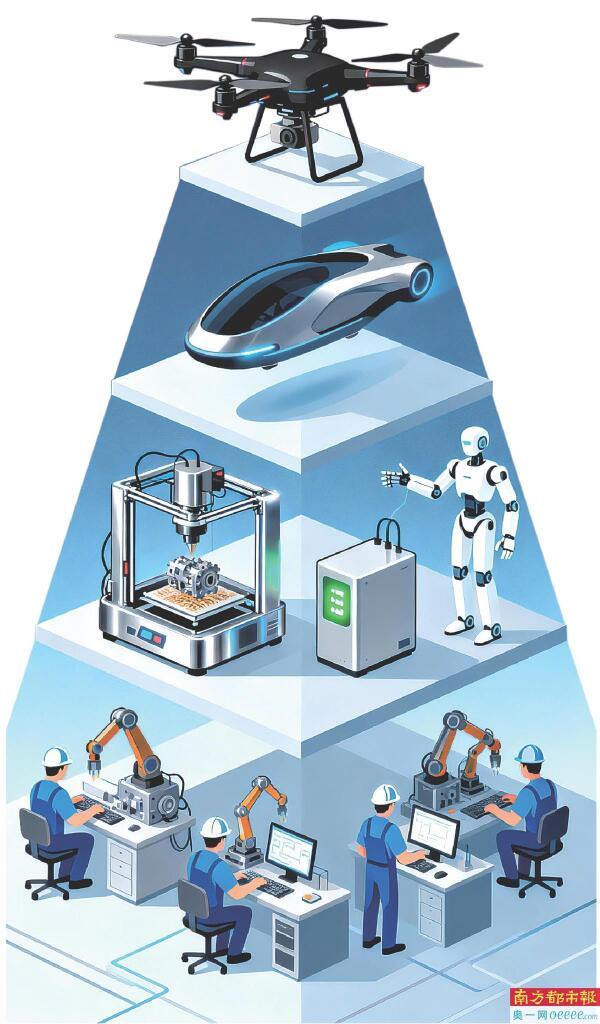
Core Insights - The article highlights the emergence of "DJI alumni" entrepreneurs who are leveraging their experience and skills from DJI to innovate in various high-tech sectors such as 3D printing, energy storage, and robotics, contributing significantly to China's smart manufacturing upgrade [2][8]. Group 1: Company Growth and Performance - Tuozhu Technology, founded by former DJI employees, has seen rapid growth, with annual revenue increasing from 2.7 billion yuan to over 5 billion yuan in just four years, capturing half of the global consumer 3D printing market growth [3]. - The company's first product, the X1, achieved over 10 million yuan in crowdfunding on Kickstarter and was recognized as one of Time magazine's "100 Best Inventions of the Year" [3]. - In Q1 2025, Tuozhu Technology is expected to have a quarterly revenue of nearly 2 billion yuan, maintaining a 64% year-on-year growth rate in the entry-level 3D printer segment [3]. Group 2: Entrepreneurial Ecosystem - Numerous "DJI alumni" have founded unicorn-level projects across various niches, such as Zhenghao Innovation in mobile energy storage and Wuzhong Origin in personal care technology, showcasing the diverse applications of their expertise [4]. - Investment in "DJI alumni" startups has surged, with nearly 20 companies receiving funding since 2025, marking a five-year high, and major investment firms establishing offices to track talent movements from DJI [5]. - Investors are drawn to these entrepreneurs due to their proven technical capabilities and efficient execution, which are critical in the hard tech sector [5][6]. Group 3: Unique Training and Methodology - DJI's unique training system has equipped its engineers with a comprehensive skill set across multiple disciplines, fostering a systematic thinking approach that is rare in consumer hardware startups [6]. - The company's philosophy of not launching products until technology is fully developed has influenced the entrepreneurial mindset of its alumni, leading to innovations that address specific market needs [6][7]. - The robust hardware supply chain ecosystem in Shenzhen has further facilitated the rapid development and market entry of "DJI alumni" startups, creating a beneficial cycle of technology, supply chain, and capital [7]. Group 4: Industry Impact and Future Outlook - The collective impact of "DJI alumni" is transforming China's manufacturing landscape, with their innovations in 3D printing, energy storage, and robotics enhancing the country's competitive edge in hard technology [8]. - The article emphasizes that the true competitive strength lies not in individual companies but in the overall prosperity of the industry ecosystem, driven by technological advancements and collaborative efforts [8].