
补改投

Search documents
新质资本论 (2026. Vol.1)
Xin Lang Cai Jing· 2026-02-10 06:37
Group 1 - The Guangdong government is launching a long-term investment fund with a flexible duration and a recycling investment mechanism, focusing on early-stage, small, long-term investments in hard technology [1] - The direct investment scale in Guangdong continues to lead the nation, with nearly 1,000 direct investments made in the year, covering 887 companies, and achieving 16 IPO projects in 2025 [1] - The Guangdong-Hong Kong-Macao Greater Bay Area Venture Capital Guidance Fund is expanding its LP team, with a target size of 504.5 billion RMB, managed by Shenzhen Capital Group [1] Group 2 - Guangdong remains the top province for mergers and acquisitions, with 909 new deals in the year, a 10.60% increase year-on-year, accounting for 15.85% of the national total [2] - The province is enhancing financial policies to promote a deep integration of technology, finance, and industry, moving beyond a singular financial perspective [2] - The commercial aerospace sector is experiencing rapid growth, with increased participation from venture capital and industrial capital, breaking the traditional dominance of state-owned enterprises [2] Group 3 - Investment income is primarily driven by CITIC Securities and its subsidiary, Yuexiu Industrial Investment, as Yuexiu Capital diversifies from traditional financial services into new energy and emerging industries [3] - Yuexiu Capital is actively involved in industrial integration, corporate venture capital investments, and capital operations, expanding its investment footprint beyond Guangdong to other provinces [3] Group 4 - Northbound capital is increasingly focusing on technology-related industries and Guangdong-listed companies [4] - Guangzhou's municipal government plans to allocate at least 15% of its annual technology innovation development fund for "supplementary and transformative investments" [4] - The Guangzhou real estate asset management service platform aims to revitalize existing real estate assets through innovative financial tools, attracting social capital for various real estate projects [4]
广州:财政资金投资,单项目允许容亏100%
FOFWEEKLY· 2026-01-21 10:01
Core Viewpoint - Guangzhou is implementing a new model for technology achievement transformation called "补改投" (subsidy to investment), which allows for a maximum loss tolerance of 100% to encourage investment in early-stage technology projects [6][9]. Group 1: Policy Overview - The "补改投" pilot program aims to address the financing challenges in the initial stages of technology transformation by optimizing fiscal funding methods and encouraging diverse social capital participation [4][6]. - The program introduces two new models: "invest first, equity later" for early-stage projects and converting cash awards from innovation competitions into equity investments [7][8]. Group 2: Mechanism and Highlights - The program establishes a full-chain management process from project selection to post-investment management, including a "liability exemption and loss tolerance mechanism" to ensure the safety and cyclical use of fiscal funds [8][9]. - Key highlights include innovative mechanisms for market selection and government investment, ecological collaboration to leverage social capital, and a governance system that promotes early and small investments in hard technology [8][9]. Group 3: Regional Context and Support - The Guangdong province is leading in creating a "patient capital" ecosystem, with a comprehensive action plan to promote high-quality venture capital development [11]. - The establishment of significant funds, such as the Guangdong Strategic Emerging Industry Investment Guidance Fund with a registered capital of 50 billion yuan, reflects strong policy support and a robust industrial foundation [12]. Group 4: National Trends - Nationally, there is a shift towards "patient capital," with various regions implementing mechanisms that allow for high loss tolerance in government-guided funds, fostering a long-term investment environment [15][16]. - The transformation of state-owned capital from mere funding sources to long-term partners in the investment process is crucial for supporting hard technology and innovation [18].


广州探索促进科技成果转化新模式:财政资金由“无偿资助”转向“股权投资”
Ke Ji Ri Bao· 2026-01-20 23:57
Core Viewpoint - The "first investment then equity" pilot program is seen as a funding tool, signaling system, empowerment framework, and ecological catalyst for the Hong Kong University of Science and Technology (Guangzhou) [1] Group 1: Policy and Implementation - Guangzhou has introduced the "Guangzhou Technology Achievement Transformation 'Supplementary Reform Investment' Pilot Work Method (Trial)" to address the lack of investment in early-stage technology projects by leveraging government funds to attract social capital [1][2] - The "first investment then equity" model aims to support early-stage technology projects from universities and research institutions that have not yet secured equity financing, with government funds matched 1:1 by transformation partners [2][3] - The "Supplementary Reform Investment" model will convert 100 million yuan from the Guangzhou Innovation and Entrepreneurship Competition into equity investments for award-winning companies, providing 2 million yuan in equity investment to those in need of financing [2] Group 2: Financial Mechanisms and Support - The "Supplementary Reform Investment" funds can be held long-term or exited through agreements, with proceeds prioritized for reinvestment, creating a sustainable funding cycle [3] - The initiative emphasizes a "tolerance for failure" mechanism, allowing for normal investment risks without penalizing based on individual project performance [2][3] - Guangzhou plans to allocate no less than 15% of its annual technology innovation development special funds for "Supplementary Reform Investment" work over the next three years, aiming to stimulate innovation [5] Group 3: Collaboration and Outcomes - The collaboration between the Guangzhou Science and Technology Bureau and the Hong Kong University of Science and Technology (Guangzhou) has initiated a pilot cooperation of 30 million yuan, establishing a clear workflow among the university, government, and market institutions [3] - The "first investment then equity" policy has led to significant positive changes, providing clarity for nascent projects and encouraging alumni to engage in entrepreneurial initiatives [3] - A total of 106 quality projects have been submitted for review under the first round of entrepreneurial projects at the Hong Kong University of Science and Technology (Guangzhou) [3]
广州“补改投”试点:优化财政投入 引导社会资本跟进 赋能科技成果转化落地
Guang Zhou Ri Bao· 2026-01-17 01:40
Core Viewpoint - The article discusses Guangzhou's initiative to support technology startups in overcoming the "valley of death" through innovative funding mechanisms, particularly the "补改投" model, which transforms government funding from grants to equity investments [2][4][5]. Group 1: Government Initiatives - Guangzhou has approved the "补改投" pilot program to optimize fiscal funding and attract diverse social capital to support technology transfer projects [4]. - The "先投后股" model allows for initial government funding to be converted into equity once certain conditions are met, promoting a shift from grants to equity investments [5]. - The program aims to create a "Guangzhou model" for technology transfer, encouraging a culture of entrepreneurship within educational institutions [5]. Group 2: Financial Ecosystem - Guangzhou is developing a comprehensive technology finance ecosystem, establishing various funds totaling 2.15 trillion yuan (approximately 150 billion USD) to support early-stage innovation [7]. - The government-led funds have successfully attracted significant social capital, achieving a leverage effect of 7.78 times, with 45 sub-funds established and a total of 286.59 billion yuan (approximately 41.5 billion USD) in committed capital [7]. - The "创、投、贷、保、服" model integrates creation, investment, lending, insurance, and services to empower technology enterprises [7]. Group 3: Support for Startups - The "补改投" model also includes support for award-winning projects from local innovation competitions, converting 100 million yuan (approximately 14.5 million USD) in subsidies into equity investments for startups [5]. - The establishment of a credit risk fund pool aims to reduce the stringent conditions previously imposed on startups by investors, allowing for more flexible investment opportunities [8]. - Guangzhou is actively facilitating connections between enterprises and multi-tiered capital markets, promoting actions to support industry leaders and expedite the listing process for promising companies [8].
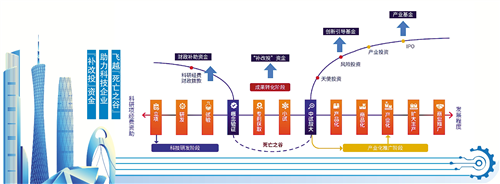
广州试点“补改投”改革 推动科技成果转化
Zhong Guo Jing Ying Bao· 2026-01-16 23:58
Core Viewpoint - The newly released "Guangzhou Technology Achievement Transformation 'Supplementary Reform Investment' Pilot Work Method (Trial)" aims to address the challenges in the initial stage of technology achievement transformation, creating a "Guangzhou model" for effective transformation [1] Group 1: Objectives and Mechanisms - The core objective of the "Work Method" is to optimize fiscal funding input methods, guiding diverse social capital to follow up and promote the transformation of high-quality technology achievements in Guangzhou [1] - Two new models have been established: the "Pre-Investment and Post-Equity" model and the "Supplementary Reform Investment" model for award-winning projects from innovation and entrepreneurship competitions [1] Group 2: Pre-Investment and Post-Equity Model - The "Pre-Investment and Post-Equity" model targets early-stage technology transformation projects that have not yet received equity financing, incubated by universities, research institutions, and technology service organizations [1] - The Guangzhou Science and Technology Bureau has created a "Supplementary Reform Investment" project database for market selection through transformation cooperation institutions, with a 1:1 funding contribution from both parties [1] - The government shifts from providing subsidies to becoming a partner, empowering the invested enterprises alongside the entrepreneurial teams [1] Group 3: Innovation and Entrepreneurship Competition - The Guangzhou Technology Innovation and Entrepreneurship Competition has been successfully held for ten consecutive years, with 210 small and medium-sized technology enterprises awarded from 1196 participating projects in 2025 [2] - Among the awarded enterprises, 186 had never received equity financing, accounting for 89% [2] - The competition has undergone a "Supplementary Reform Investment" reform, converting 100 million yuan of original award subsidies into equity investments for qualifying award-winning enterprises [2] Group 4: Future Funding and Support - Over the next three years, the Guangzhou Science and Technology Bureau will allocate no less than 15% of the local technology innovation development special funds annually for "Supplementary Reform Investment" related work [2]
广州宣布接受单项目100%亏损,把给科创企业的补贴变为投资
Di Yi Cai Jing· 2026-01-15 08:13
Core Viewpoint - Guangzhou is actively developing a "Guangzhou model" for the transformation of scientific and technological achievements, emphasizing a "tolerant of failure" approach to foster innovation and support for startups [1][2]. Group 1: Policy Framework - The "Work Method" released on January 15 aims to address the challenges in the initial stages of technology transfer, particularly the high risks involved [1]. - The framework establishes a long-term governance system that encourages a "tolerant of failure" principle, ensuring that financial losses do not impact the assessment of responsible departments and personnel [1][6]. - It allows for a 100% loss on individual projects without accountability, and overall investment losses of up to 80% are tolerated without repercussions for involved parties [1]. Group 2: Investment Strategy - The "补改投" initiative focuses on sectors such as artificial intelligence, biomedicine, and low-altitude economy, aiming to shift fiscal support from "blood transfusion" to enabling companies to "self-generate" [2]. - Investment methods include direct fiscal investment, government investment funds, and a "first invest, then equity" model, with the government holding no more than 30% equity in projects [2]. - The initiative is designed to leverage fiscal funds to attract social capital, with a goal of achieving a multiplier effect of over three times [2]. Group 3: Implementation and Impact - The Guangzhou Science and Technology Bureau plans to allocate at least 15% of its annual special funds for technology innovation to support the "补改投" initiative over the next three years [3]. - The 2025 Guangzhou Science and Technology Innovation and Entrepreneurship Competition will feature a total prize pool of 200 million yuan, with a focus on supporting startups that have not previously received equity financing [3][4]. - The "first invest, then equity" model is expected to enhance the entrepreneurial environment within universities, encouraging alumni to return and contribute to startup projects [4].
十二家产投机构沪上结盟?共组农投会掘金农业“牛市”
2 1 Shi Ji Jing Ji Bao Dao· 2025-11-14 06:43
Core Viewpoint - The agricultural investment sector is entering a "bull market," driven by favorable policies and technological advancements, with a critical opportunity window in the next two to three years [2][10]. Group 1: Industry Trends - Historically, agriculture has been viewed as a "forbidden zone" for capital investment due to its long cycles, high risks, and fragile supply chains [3][4]. - The perception is changing as hard technology, such as drones and smart agricultural machinery, begins to penetrate the industry, leading to significant growth opportunities [5][6]. - The number of agricultural drones in China is expected to exceed 200,000 by 2024, with an annual operational volume surpassing 2.6 billion acres [7]. Group 2: Investment Dynamics - A shift from traditional subsidy funding to equity investment is occurring, termed "supplement, reform, and invest," which emphasizes sustainable returns and a self-sustaining funding cycle [12][13]. - The future of agricultural funding is predicted to be dominated by fund-based operations, requiring agricultural entities to understand fund management to thrive [15][21]. - The establishment of the "Agricultural Investment Conference" aims to create a collaborative ecosystem among various market players and local agricultural investment platforms [18][19]. Group 3: Regional and Sectoral Integration - Different regions are adopting unique strategies for agricultural modernization, with Shanghai focusing on "boutique agriculture" that prioritizes value over scale [30][31]. - The integration of public and private resources is essential, with companies like Guizhou Niulaifu Biotechnology exploring innovative product combinations to enhance market offerings [37][39]. - The establishment of regional public brands is seen as a viable path for local enterprises to consolidate resources and expand sales channels [40][41].