
财政金融协同联动

Search documents
强化财政金融协同联动 合力推动经济高质量发展
Zheng Zhou Ri Bao· 2026-02-05 00:51
Group 1 - The meeting between An Wei, the Secretary of the Zhengzhou Municipal Committee, and Liu Jun, the Vice Chairman and President of the Industrial and Commercial Bank of China (ICBC), highlights the importance of collaboration for economic development in Zhengzhou [2][3] - An Wei expressed gratitude for ICBC's long-term support in the economic and social development of Zhengzhou, emphasizing the city's commitment to high-quality development and innovation-driven growth during the 14th Five-Year Plan period [2] - Zhengzhou aims to enhance its competitiveness and improve the well-being of its citizens by implementing innovative strategies and governance models, while also seeking to leverage opportunities from the comprehensive reform pilot for market-oriented allocation of factors [2][3] Group 2 - Liu Jun outlined ICBC's domestic and international business operations, reaffirming the bank's commitment to fulfilling its responsibilities as a state-owned bank and supporting high-quality economic development in collaboration with Zhengzhou [3] - The discussion included exploring new mechanisms for financial collaboration and the role of finance in empowering economic growth and efficient governance [3]

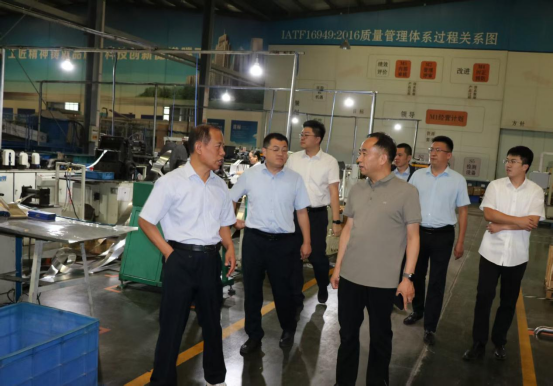
郑州市委书记安安伟会见中国工商银行党委副书记、行长刘珺一行
Xin Lang Cai Jing· 2026-02-04 12:43
Core Viewpoint - The meeting between An Wei, the Secretary of the Zhengzhou Municipal Committee, and Liu Jun, the Deputy Secretary and President of the Industrial and Commercial Bank of China (ICBC), emphasizes the collaboration between finance and fiscal policies to promote high-quality economic development in Zhengzhou [2][3]. Group 1: Economic Development Strategies - Zhengzhou is committed to implementing the important directives from General Secretary Xi Jinping regarding the work in Henan and Zhengzhou, focusing on innovation-driven development and constructing a modern industrial system [2][6]. - The city aims to enhance its governance efficiency through a "Party building + grid + big data" model, addressing urgent public concerns effectively [2][6]. - Zhengzhou plans to strengthen its urban competitiveness and ensure significant progress towards socialist modernization during the "14th Five-Year Plan" period [2][6]. Group 2: Collaboration with ICBC - ICBC is recognized as a world-class bank with significant strengths in the global financial sector, and both parties aim to seize opportunities for comprehensive reform in the market-oriented allocation of factors in Zhengzhou [2][7]. - The bank will actively undertake its responsibilities as a state-owned enterprise, focusing on enhancing factor security and exploring new paths for financial empowerment of high-quality economic development [3][7]. - The collaboration aims to create a new mechanism for fiscal and financial synergy, contributing to the construction of Zhengzhou as a regional financial center [2][7].
信用卡分期还款也能享受财政贴息
Di Yi Cai Jing· 2026-01-20 05:21
Core Viewpoint - The Chinese government is extending and enhancing the personal consumption loan interest subsidy policy to stimulate consumer spending and reduce the cost of personal consumption credit [1][4]. Group 1: Policy Extension - The implementation period of the personal consumption loan interest subsidy policy has been extended from one year to one year and four months, now running from September 1, 2025, to December 31, 2026 [1]. Group 2: Expanded Support Scope - The scope of the interest subsidy has been broadened to include credit card installment payments, with an annual subsidy rate of 1% [2]. Group 3: Increased Subsidy Standards - The previous restrictions on the areas eligible for interest subsidies have been removed, allowing consumers to use personal consumption loans for various expenditures, including new credit card installment payments, subject to verification by lending institutions [3]. - The cap on the maximum subsidy amount per transaction has been eliminated, while maintaining an annual subsidy limit of 3,000 yuan per borrower at a single lending institution [3]. Group 4: Inclusion of More Financial Institutions - The policy now includes a wider range of financial institutions, such as city commercial banks, rural cooperative financial institutions, foreign banks, consumer finance companies, and auto finance companies, thereby expanding the policy's coverage [4]. Group 5: Complementary Policies - The government is also continuing the "old for new" policy for consumer goods, with an initial allocation of 62.5 billion yuan in long-term special bonds to support this initiative, reinforcing the overall strategy to boost consumption and economic growth [4].
触摸更加积极财政政策的温度
Jing Ji Ri Bao· 2026-01-13 22:09
Core Viewpoint - In 2025, China's economy is expected to demonstrate strong resilience and vitality, driven by more proactive macroeconomic policies, including a shift to a more aggressive fiscal policy and a moderate easing of monetary policy [1][2]. Fiscal Policy - The fiscal policy in 2025 is characterized as "more proactive," aimed at addressing various challenges while enhancing long-term development momentum and promoting high-quality economic growth [2]. - The deficit ratio is set at around 4%, an increase of 1 percentage point from the previous year, with a deficit scale of 5.66 trillion yuan, marking the highest levels in recent years [2]. - The increase in the deficit ratio and scale indicates an expansion of fiscal spending to boost consumption and investment, thereby increasing overall social demand and driving economic growth [2][3]. Government Bonds and Investment - A larger scale of government bonds is planned, including 4.4 trillion yuan in new local government special bonds to support key areas and projects [3]. - The issuance of long-term special government bonds totaling 1.3 trillion yuan aims to support major projects and enhance the capacity to serve the real economy [3]. - Central government transfers to local governments are set at 10.34 trillion yuan, an increase of 8.4%, focusing on enhancing local financial capabilities [3]. Consumer Support and Demand Expansion - The 2025 fiscal policy emphasizes expanding domestic demand, with direct consumer subsidies and initiatives to promote consumption [5][7]. - The "old-for-new" subsidy program for consumer goods, including home appliances and mobile phones, is expected to significantly boost sales, with over 2.2 billion items sold and sales exceeding 700 billion yuan [7][8]. - The introduction of personal consumption loan interest subsidies aims to lower costs for consumers and stimulate demand [8]. Investment in Human Capital - The 2025 government report highlights a focus on investing in people, with significant cash subsidies for childcare and education aimed at reducing family burdens [10][11]. - A nationwide subsidy of 3,600 yuan per child per year for children under three marks a significant investment in social welfare [11]. - Employment policies are prioritized, with measures to reduce unemployment insurance rates and expand support for job creation [12]. Reform and Efficiency - Fiscal and tax reforms are ongoing, with zero-based budgeting being a key focus to enhance the efficiency of budget allocations [14]. - The implementation of a national asset sharing platform aims to optimize the use of government assets and improve resource allocation [15]. - Tax reforms, including the introduction of a new VAT law and green tax initiatives, are designed to support sustainable economic development [16]. Risk Management - Measures to manage local government debt are in place, with a focus on increasing transparency and reducing repayment pressures, allowing for more funds to be directed towards economic development and social welfare [17].
中经评论:强化财政金融政策协同
Jing Ji Ri Bao· 2026-01-12 00:01
Group 1 - The core viewpoint emphasizes the synergistic effect of fiscal and financial policies, aiming to direct more financial resources towards supporting employment, entrepreneurship, and small and medium-sized enterprises (SMEs) [1][5] - Recent data indicates that for every 1 billion yuan in central government subsidies for entrepreneurial guarantee loans, approximately 50 billion yuan in new loans can be mobilized, supporting around 17,500 entrepreneurs [1] - The Central Economic Work Conference calls for enhanced macroeconomic governance effectiveness and consistency in macro policy orientation, highlighting the complementary nature of fiscal and financial policies [1] Group 2 - In promoting consumption, the implementation of personal consumption loans and service sector loans since September last year has effectively reduced credit costs for residents and businesses, leading to increased credit flow into the consumption sector [2] - The government financing guarantee plays a crucial role in addressing the financing difficulties faced by micro and small enterprises, particularly in supporting employment and entrepreneurship [2] - Recent joint announcements from multiple departments aim to further leverage the government financing guarantee system to support employment and entrepreneurship, providing much-needed assistance to many individuals [2] Group 3 - The collaboration between fiscal and financial policies extends to various areas, including government investment funds, agricultural insurance, and local government financing platform debt risk resolution [3] - Effective implementation of fiscal and financial policy collaboration requires improved cooperation mechanisms among government departments and financial institutions [4] - Continuous optimization of measures is necessary to enhance policy implementation quality and effectiveness, ensuring that benefits reach individuals and businesses promptly [4]
政务数据转为信用资产 财政杠杆撬动信贷资源 聊城市茌平区财金联动平台架起“政银企”增信融资桥梁
Qi Lu Wan Bao· 2025-09-23 06:03
Core Viewpoint - The "Chie Rong" platform in Chipping District, Shandong Province, aims to alleviate financing difficulties for small and micro enterprises by integrating government data into financial credit assets, thus enhancing the efficiency of credit approval and risk management [3][4][6]. Group 1: Platform Overview - The "Chie Rong" platform was established to create a collaborative model between finance and government, integrating data from 13 departments to support economic development [3]. - The platform has successfully integrated over 10,000 pieces of data related to agriculture and enterprises, covering more than 3,000 companies and 280 new rural operating entities [4]. - The platform has facilitated 1,407 financing transactions totaling 39.91 billion yuan, serving 964 market entities within a year [15]. Group 2: Data Sharing and Credit Assessment - The platform utilizes big data analysis and credit rating models to create credit profiles for enterprises, helping financial institutions assess repayment capabilities and reduce credit risks [6]. - The platform has accumulated 193 credit approvals from Chipping Rural Commercial Bank, amounting to 1.287 billion yuan, which represents 20% of the bank's total enterprise loans [6]. Group 3: Policy Coordination and Financial Products - The platform promotes precise delivery of supportive policies and custom financial products, offering over 50 subsidy policies for enterprises [7]. - It has partnered with 15 banks and 5 insurance companies to develop 108 agricultural and enterprise credit products, enhancing the alignment between financial offerings and market needs [9]. Group 4: Risk Mitigation Strategies - A risk compensation system has been established to create a multi-layered risk mitigation framework, including a government financing guarantee system to support small and micro enterprises [10][13]. - The platform has implemented a risk compensation fund to cover bad loans generated through its credit services, maximizing the leverage effect of fiscal funds [13]. Group 5: Impact on Local Economy - The platform has effectively connected financial resources to rural revitalization efforts, facilitating loans of approximately 4 billion yuan to agricultural entities [9]. - The collaboration between fiscal and insurance sectors has successfully reduced operational risks for local enterprises, exemplified by a case where insurance payouts mitigated significant losses in livestock farming [12].

消费贷“国补”上线,浦发银行快速响应助力提振消费
Guo Ji Jin Rong Bao· 2025-09-01 13:02
Core Viewpoint - The implementation of the personal consumption loan interest subsidy policy aims to stimulate consumer spending and support domestic demand expansion, enhancing the overall economic development trend [1][3]. Group 1: Policy Implementation - The personal consumption loan interest subsidy policy officially took effect on September 1, 2023, allowing consumers to benefit from a 1% annual interest subsidy on loans used for consumption [3][4]. - The subsidy is automatically applied without the need for additional applications, with funding shared between central and provincial finances at a 9:1 ratio [3][4]. - Each borrower can receive a maximum subsidy of 3,000 yuan, corresponding to a cumulative consumption amount of 300,000 yuan [4]. Group 2: Bank Response - Shanghai Pudong Development Bank (SPDB) quickly launched the interest subsidy feature for personal consumption loans on the policy's first day, ensuring consumers can access benefits [4][6]. - SPDB has actively engaged with various sectors, such as retail and home improvement, to create new consumption scenarios and enhance service offerings [6][7]. - The bank's system can automatically identify eligible transactions, streamlining the subsidy process for customers [4][7]. Group 3: Market Impact - The policy is expected to lower consumer credit costs, thereby stimulating consumer potential and supporting economic growth [1][3]. - SPDB's collaboration with retail groups, such as Bailian Group, aims to create a synergistic effect in promoting consumption and enhancing the consumer experience [6]. - The successful case of a customer using SPDB's loan for daily purchases illustrates the immediate impact of the policy on consumer behavior [6].

烟台财金联动会客厅启用,财金联盟成员有了“大本营”
Qi Lu Wan Bao Wang· 2025-05-12 07:23
Core Points - The Yantai Financial Alliance held its second meeting and inaugurated the Yantai Financial Linkage Reception Hall, aiming to create a new ecosystem for efficient collaboration in finance and enhance financial empowerment for the real economy [1][5] Group 1: Meeting Overview - The first phase of the meeting included reports on the alliance's work since its establishment in 2024 and the key points for 2025, along with the approval of the member management guidelines [2] - The alliance welcomed 11 new member units, strengthening its overall capacity and marking the establishment of a four-in-one ecosystem comprising policy guidance, think tank support, industry collaboration, and service empowerment [2][5] Group 2: Reception Hall Inauguration - The Yantai Financial Linkage Reception Hall serves as a base for face-to-face communication and cooperation among alliance members and strategic partners, creating more development opportunities [3] - The hall features over 13,000 square meters equipped with various meeting rooms, negotiation rooms, and a digital exhibition hall, designed to provide comprehensive financial services to enterprises [5][6] Group 3: Collaborative Efforts - The Yantai Financial Alliance aims to deepen collaboration among various departments, enhancing policy empowerment, information sharing, and service optimization to ensure efficient operation [3][4] - The establishment of financial arbitration service innovation bases and other service stations is intended to improve policy connection and service functionality within the alliance [6][7]