资产定价体系重塑

Search documents
德意志银行:卖压释放,黄金向上冲
Sou Hu Cai Jing· 2025-11-19 09:00
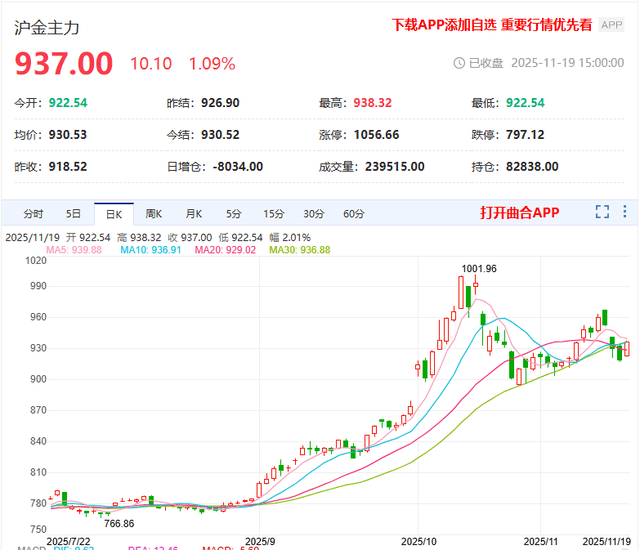
Group 1 - The recent sell-off of gold ETFs in developed markets is nearing its end, with 86% of the total sell-off from April to May already released in the past 8 trading days [1] - On October 27, the most significant sell-off occurred, with a reduction of 449,000 troy ounces, following a four-day period of the largest daily price drop, indicating that the price drop triggered ETF outflows rather than the other way around [1] - Gold prices have shown resilience, maintaining above the key support level of $3,900 per ounce despite hawkish signals from the Federal Reserve regarding potential interest rate hikes in December [1] Group 2 - Short-term market volatility risks are present, with the current one-month gold volatility significantly exceeding implied volatility, creating a gap of -12.6, the largest since March 2020 [1] - Historical trends suggest that such volatility gaps typically narrow to normal levels within 2-3 months, with fundamental factors expected to support a recovery in gold prices by year-end [1] - The Shanghai gold price increased by 1.09%, closing at 937 yuan per gram [3] Group 3 - The U.S. economy and job market are facing challenges from government shutdowns and trade tensions, while the Federal Reserve's internal divisions and hawkish signals add to short-term policy uncertainty [4] - Increased central bank purchases of gold and a shift in asset pricing strategies are expected to drive precious metals towards a bull market similar to the 1970s in the medium to long term [4] - Short-term international gold is expected to exhibit wide fluctuations, with buying opportunities if prices drop below $3,900 [5]

大家要有心理准备了,接下来,金价很可能这样走?
Sou Hu Cai Jing· 2025-11-07 17:11
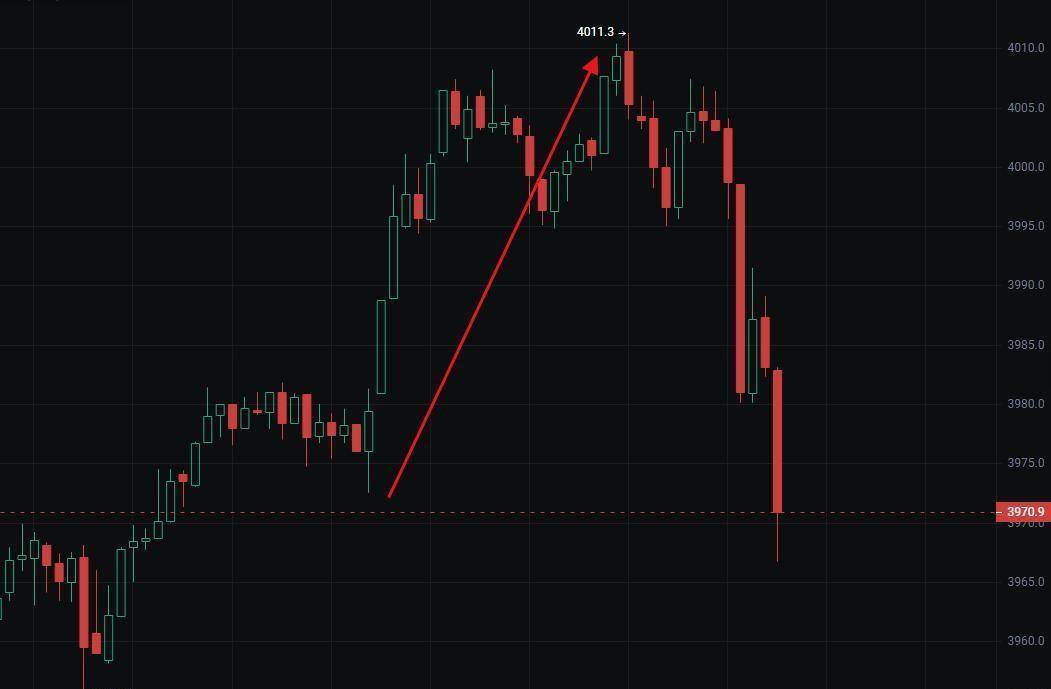
Core Viewpoint - The gold market experienced significant volatility, with prices surging to over $4010 before retreating to around $3966 due to a strong dollar index [1][3]. Price Movements - Gold prices fluctuated dramatically, with international gold prices reported at $3988.22 per ounce and domestic prices at 913.03 yuan per gram [3]. - The price of gold jewelry in brand stores ranged from 1230 to 1261 yuan per gram, while the wholesale market in Shenzhen offered prices as low as 984 yuan per gram, indicating a brand premium of up to 25% [3]. Market Dynamics - The gold recycling market quoted prices at 900 yuan per gram, with varying rates for different purities [5]. - Bank gold bars were priced lower, with Industrial and Commercial Bank of China offering 930.16 yuan per gram, making them more suitable for investment purposes due to lower fees [5]. Investor Behavior - There has been an increase in inquiries about gold ETFs and investment bars, particularly among older investors concerned about policy changes [5]. - Central banks globally have continued to purchase gold, with a net acquisition of 634 tons in the first three quarters of 2025, providing a hidden support level for gold prices around $3960 [5]. Economic Indicators - Despite strong U.S. employment data, market demand for gold as a safe haven remained robust [5]. - The market maintains a 62.5% probability of interest rate cuts, which supports the long-term bullish outlook for gold [7]. Technical Analysis - Gold is currently oscillating between $3966 and $4012, with resistance at $4031-$4050 and support at $3770-$3800 [7]. - Short-term price movements are expected to remain strong, with potential fluctuations based on U.S. economic data [7]. Long-term Outlook - The ongoing geopolitical tensions and the trend of "de-dollarization" are expected to provide long-term support for gold prices [9]. - The potential for a bull market similar to the 1970s is highlighted, with possible annual gains exceeding 100% under extreme conditions [7][9]. Investment Recommendations - Short-term investors are advised to maintain light positions and set strict stop-loss orders, while long-term investors can consider gold ETFs or physical gold with a maximum allocation of 15% of their portfolio [11]. - For personal use, it is recommended to choose wholesale gold or bank gold bars to avoid high brand premiums [11].
黄金仍然被大幅购买
Sou Hu Cai Jing· 2025-11-07 09:04
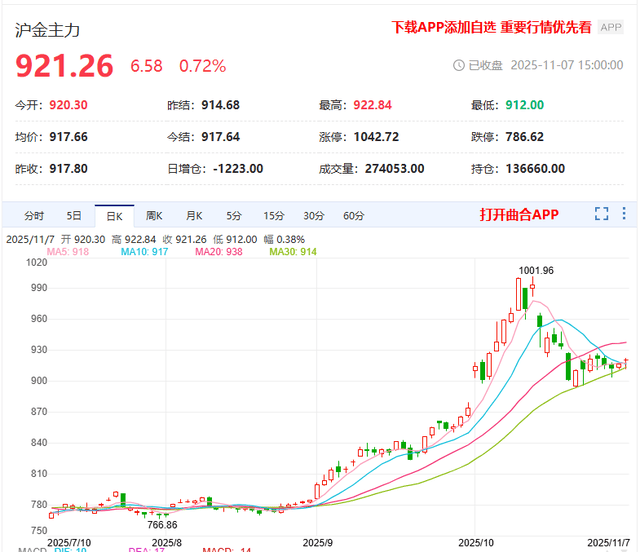
Group 1 - Global gold ETFs have seen net inflows for five consecutive months, with October attracting $8.2 billion, leading to a 6% increase in total assets under management, reaching a record high of $503 billion [1] - The holdings increased by 1% month-on-month to 3,893 tons, indicating a growing interest in gold as an investment [1] - The average daily trading volume in the gold market surged to $561 billion in October, marking a historical high with a 45% month-on-month increase [1] Group 2 - Central banks globally purchased a net total of 39 tons of gold in September, the highest monthly level of the year, with Brazil leading at 15 tons [1] - The total net gold purchases by central banks for the year have reached 200 tons, reflecting a trend of increasing gold accumulation [1] - The Shanghai gold price rose by 0.72%, closing at 921.26 yuan per gram [1] Group 3 - The U.S. economy and job market are facing challenges due to government shutdowns and trade tensions, contributing to increased uncertainty in short-term policies [3] - Geopolitical risks and financial institution failures are prompting more central banks to increase their gold holdings, suggesting a potential long-term bullish trend for precious metals similar to the 1970s [3] - Short-term fluctuations in international gold prices are expected, with a potential buying opportunity if prices drop below $3,900 [3]
机构上调黄金价格
Jin Tou Wang· 2025-11-03 13:32
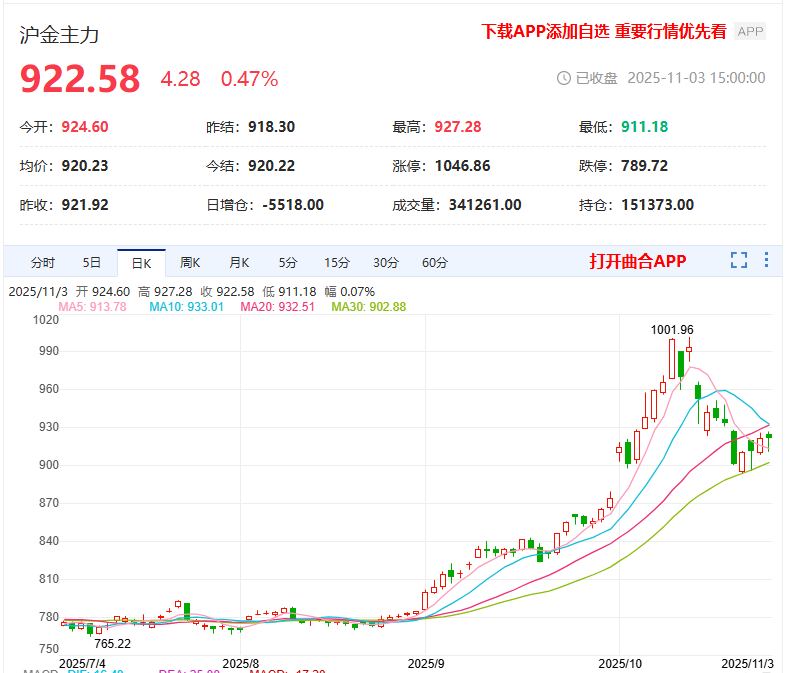
Group 1 - Wells Fargo Investment Institute has raised its gold price target for the end of 2026 from $3,900-$4,100 to $4,500-$4,700, driven by ongoing geopolitical and trade policy uncertainties that are expected to sustain demand for gold from both private and official sectors [1] - The report highlights that global central bank gold purchases remain strong, and concerns over inflation and currency depreciation among private investors are contributing to upward price momentum [1] - Morgan Stanley maintains a bullish outlook, projecting an average gold price of $4,300 in the first half of 2026, benefiting from expectations of interest rate cuts, inflows into gold ETFs, central bank purchases, and economic uncertainty [1] Group 2 - The Shanghai gold price increased by 0.47%, closing at 922.58 yuan per gram [3] - According to GF Futures, the U.S. economy and job market are facing recession risks due to government shutdowns, which may strengthen expectations for interest rate cuts and negatively impact the U.S. dollar index [4] - The ongoing fiscal and monetary policy turmoil in developed countries like the U.S., Europe, and Japan is expected to reshape asset pricing, favoring financial commodities like precious metals, reminiscent of the bull market in the 1970s [4][5]
机构出现对黄金的分歧
Sou Hu Cai Jing· 2025-10-10 09:01
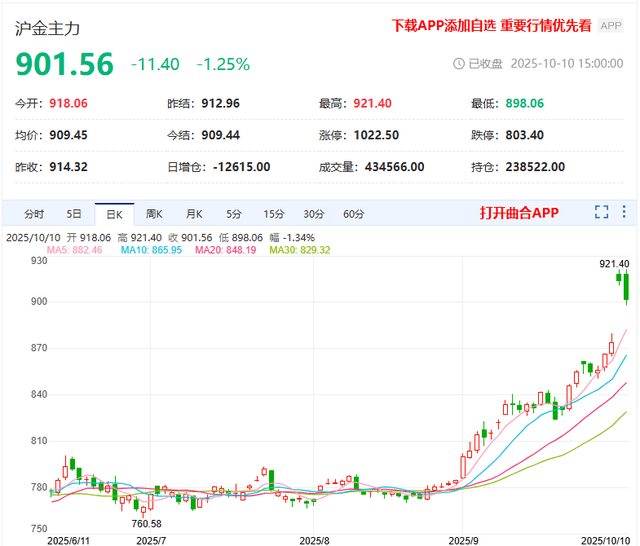
Group 1 - French Foreign Trade Bank predicts that international gold prices may face downward risks in the next two to three months, with leveraged investors needing to close positions and take partial profits, potentially leading to a 5% to 10% drop in gold prices within days [1] - According to TD Securities, lower price levels present a buying opportunity, with an upward trend in international gold prices expected to remain unchanged in the first half of 2026, potentially reaching an average price of over $4,400 per ounce in the first six months of next year [1] - The average price for the entire year is projected to be around $4,250 per ounce [1] Group 2 - On the domestic market, Shanghai gold fell by 1.25%, closing at 901.56 yuan per gram [3] - GF Futures outlook for the fourth quarter indicates that despite the resilience of the U.S. economy, the dual characteristics of "expectation strengthening - independence undermined" in the Federal Reserve's interest rate cut path are pressuring the U.S. dollar index [4] - The ongoing impact of the U.S. government shutdown and the fiscal monetary policy turmoil in developed countries like Europe and Japan is expected to reshape the asset pricing system, favoring commodities with strong financial attributes, which may lead to a bull market similar to the 1970s [4]