赢回中国

Search documents
捍卫品牌价值比追逐短期份额更重要 访保时捷中国总裁及首席执行官潘励驰
Xin Lang Cai Jing· 2026-02-27 20:32
Core Insights - The core strategy of Porsche China is to prioritize "quality over quantity" amidst a challenging luxury car market, focusing on sustainable and profitable growth rather than short-term sales figures [4][17][18] - Porsche aims to adapt to the evolving market by optimizing its dealer network and enhancing customer service experiences, with plans to reduce the number of sales outlets from approximately 150 in 2024 to around 120 by the end of 2025, and further to about 80 by the end of 2026 [5][6][17] - The company acknowledges the competitive landscape in the electric vehicle sector, noting that the growth rate of pure electric models has been slower than expected, but remains committed to delivering high-performance electric vehicles that embody the brand's core values [8][12] Market Challenges - The luxury car market in China is undergoing significant structural adjustments, with a reported decline of about 28% in the high-end segment and a 23% drop for models priced above 1 million yuan [17][18] - Porsche's sales in China for 2025 amounted to 41,938 vehicles, reflecting the broader market pressures and the company's strategic shift [17] Strategic Adjustments - The company is implementing a strategic optimization of its dealer network to ensure a more efficient and sustainable business model, focusing on profitability rather than merely increasing the number of outlets [5][17] - Porsche is enhancing its after-sales service through the "Rui Jing Plan," ensuring that existing customers receive adequate support despite the network adjustments [6][17] Localization and Innovation - Porsche is committed to localizing its operations in China, with plans to invest in local R&D to better meet consumer demands and integrate into the local digital ecosystem [10][15] - The establishment of a comprehensive R&D center in Shanghai aims to accelerate the development of products tailored to Chinese consumers while maintaining high standards of quality [15][16] Long-term Vision - The company expresses unwavering confidence in the potential of the Chinese luxury car market, emphasizing the importance of brand loyalty and customer experience as key metrics for success rather than just sales volume [12][13][18] - Porsche's long-term strategy, termed "Winning Back China," focuses on strengthening brand value and enhancing customer engagement through various initiatives, including local R&D and improved dealer partnerships [12][13][18]


保时捷中国总裁及CEO潘励驰:保时捷的“过冬”手册 收缩、重仓与不妥协
2 1 Shi Ji Jing Ji Bao Dao· 2026-02-03 00:16
Core Insights - Porsche's global deliveries in 2025 fell to 279,400 vehicles, a 10% year-on-year decline, marking the largest annual drop since 2009. In China, sales plummeted by 26% to 41,900 units, nearly returning to levels seen a decade ago [1][5][15] - The company emphasizes maintaining brand value and supply-demand balance over merely pursuing sales volume, as stated by Porsche China CEO, Pan Licheng [1][6] Sales and Market Strategy - Porsche is undergoing a significant reduction in its dealership network in China, from approximately 150 to around 80 by the end of 2026, as part of a strategy to optimize its dealer network and focus on quality rather than quantity [2][3] - The "Rui Jing Plan" aims to transform traditional 4S stores into community-oriented spaces that integrate new car sales, used car sales, after-sales service, and community activities [3][11] Cost Management and Investment - The company is implementing cost-cutting measures while simultaneously increasing investments in the Chinese market, including establishing a research and development center in Shanghai [3][10] - The R&D center aims to develop a new generation of infotainment systems within an 18-month timeframe, reflecting a rapid development pace uncommon for German automotive standards [3][9] Product Development and Innovation - Porsche plans to launch a fully electric Cayenne and other models tailored for the Chinese market, with a focus on maintaining the brand's core values of safety and driving experience [4][7] - The company is committed to ensuring that any advancements in automation and smart driving technologies do not compromise safety, with a focus on driver control and reliability [4][13] Brand Strategy and Consumer Engagement - The "Win Back China" strategy focuses on strengthening brand power, meeting consumer demands, and fostering positive community feedback rather than solely increasing sales figures [5][15] - The company acknowledges the structural changes in consumer preferences and the intensified competition from local brands, which have led to significant price reductions in the luxury segment [7][15] Future Outlook - Porsche anticipates that the introduction of new models will stabilize sales and enhance brand loyalty, while also preparing for ongoing challenges in the luxury car market [7][8] - The company remains open to exploring local partnerships and innovations to enhance its offerings in the Chinese market, while maintaining strict quality standards [12][14]
CEO坐经济舱!保时捷中国总裁谈被“撞脸”及“赢回中国”
Nan Fang Du Shi Bao· 2026-01-28 12:17
Core Insights - Porsche aims to "win back China" with a strong commitment to cost control and product localization strategies [2][3][10] Group 1: Cost Control and Operational Efficiency - The CEO of Porsche China has adopted cost-saving measures, including flying economy class, to emphasize the importance of cost control in the current market environment [3] - Porsche is focusing on optimizing its team and operations while investing in key areas such as its R&D center in Shanghai, which aims to deliver new infotainment systems within 18 months [3] - The company plans to further reduce its dealer network from approximately 100 to 80 by 2025, reflecting the need to adapt to market changes [4] Group 2: Product Strategy and Market Adaptation - Porsche is set to launch five exclusive models tailored for the Chinese market, including new versions of the 911 GT3 and a potential entry-level B-class SUV [8] - The company has no current plans for local production in China, emphasizing the importance of maintaining brand integrity and quality standards [5][6] - Despite rumors of a "cheapest Porsche," the company has not confirmed any specific details regarding pricing or model specifications [8] Group 3: Market Positioning and Brand Strategy - Porsche does not view sales volume as the primary measure of success in China; instead, it focuses on brand strength and consumer satisfaction [10] - The high-end automotive market in China has seen a decline of approximately 28% over the past three years, prompting Porsche to prioritize quality over quantity in its strategy [10] - The company believes that after a period of adjustment, it will return to the market with a stronger presence [11]
保时捷中国销量缩水近三成,总裁独家回应
Zhong Guo Xin Wen Wang· 2026-01-19 07:17
Core Viewpoint - Porsche's global sales for 2025 are projected to decline by 10% to 279,400 units, with a significant drop of 26.28% in the Chinese market, reflecting broader challenges in the luxury car sector [1][2]. Group 1: Sales Performance - Porsche's sales in China have decreased for four consecutive years, with figures of 93,300 units in 2022, 79,300 units in 2023, and 56,900 units in 2024, showing year-on-year declines of 2.5%, 15%, and 28% respectively [1]. - The company aims to adjust its sales network from 120 outlets at the end of 2025 to approximately 80 by the end of 2026, based on market potential analysis [4]. Group 2: Strategic Adjustments - Porsche is focusing on maintaining a healthy supply-demand relationship and a stable value system, emphasizing quality over quantity in its sales strategy [1]. - The introduction of China-exclusive models like the Cayenne and Macan has received positive market feedback, indicating initial success from strategic adjustments [2]. Group 3: Market Challenges - The luxury car market in China is facing structural challenges, particularly from the rapid rise of domestic electric vehicle brands, which poses a common issue for traditional luxury brands [2]. - The upcoming changes in luxury car consumption tax policy in 2026 are expected to have a significant impact, leading to a cautious outlook for that year [3]. Group 4: Future Plans - Porsche plans to continue executing its "Win Back China" strategy, focusing on enhancing brand strength and customer loyalty rather than merely returning to previous sales levels [3]. - The company is committed to investing in local R&D, brand experience, and dealer network improvements to ensure sustainable profitability [3][5]. Group 5: Dealer Support - Porsche is working to enhance dealer profitability by reducing cost pressures and providing marketing support, including financial assistance for wholesale financing and optional configurations [5]. - The company emphasizes a value-driven sales approach rather than just volume growth, believing that maintaining brand value and channel health will lead to high-quality growth [5].
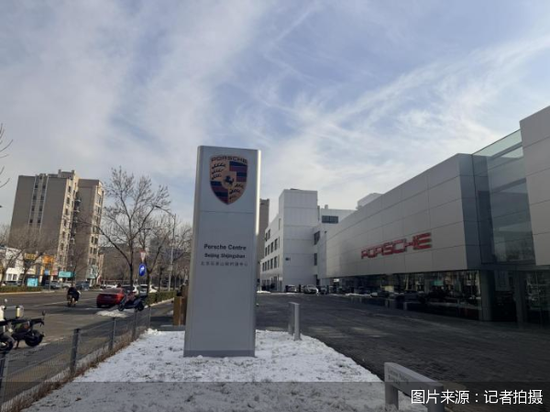
保时捷北京一门店将关闭,还有更多网点要关?此前经营利润大减99%
Xin Lang Cai Jing· 2025-12-25 11:26
Core Viewpoint - Porsche China is planning to close its Beijing Shijingshan center and reduce its sales network to around 80 locations by 2026, while refocusing on fuel vehicles amid increasing competition in the electric vehicle market and declining performance in China [2][5][9]. Channel Reduction - The Beijing Shijingshan Porsche center will close next year, with current discounts on the electric Taycan model reaching approximately 70% of its original price [3][16]. - Porsche is actively planning a new retail network blueprint in Beijing to enhance operational efficiency and customer experience, with a reduction in sales outlets from 150 to 120 by the end of this year and further to 80 by 2026 [5][18]. Refocusing on Fuel Vehicles - Porsche is shifting its product strategy to prioritize internal combustion engine vehicles, as the competitive landscape for electric vehicles has intensified, diluting the market advantage of the Taycan [6][19]. - The company aims to strengthen brand loyalty and customer engagement rather than merely returning to previous sales volumes, with plans to introduce new internal combustion engine models in the high-end SUV segment [21]. Performance Pressure - Porsche's global sales declined by 6% to 212,500 units in the first three quarters of 2025, with a significant drop of 26% in the Chinese market, where sales fell to 32,200 units [9][22]. - The operating profit for the same period plummeted by 99% to €4 million, with challenges in the Chinese market identified as a core issue [22]. Accelerating Localization - Porsche is accelerating its localization efforts, having established a research and development center in Shanghai to focus on solutions tailored for the Chinese market [10][23]. - The company faces challenges from local brands that have rapidly improved their product capabilities, necessitating a strategic shift to optimize its retail network and maintain profitability among core dealers [23][25].