
质大于量

Search documents
捍卫品牌价值比追逐短期份额更重要 访保时捷中国总裁及首席执行官潘励驰
Xin Lang Cai Jing· 2026-02-27 20:32
Core Insights - The core strategy of Porsche China is to prioritize "quality over quantity" amidst a challenging luxury car market, focusing on sustainable and profitable growth rather than short-term sales figures [4][17][18] - Porsche aims to adapt to the evolving market by optimizing its dealer network and enhancing customer service experiences, with plans to reduce the number of sales outlets from approximately 150 in 2024 to around 120 by the end of 2025, and further to about 80 by the end of 2026 [5][6][17] - The company acknowledges the competitive landscape in the electric vehicle sector, noting that the growth rate of pure electric models has been slower than expected, but remains committed to delivering high-performance electric vehicles that embody the brand's core values [8][12] Market Challenges - The luxury car market in China is undergoing significant structural adjustments, with a reported decline of about 28% in the high-end segment and a 23% drop for models priced above 1 million yuan [17][18] - Porsche's sales in China for 2025 amounted to 41,938 vehicles, reflecting the broader market pressures and the company's strategic shift [17] Strategic Adjustments - The company is implementing a strategic optimization of its dealer network to ensure a more efficient and sustainable business model, focusing on profitability rather than merely increasing the number of outlets [5][17] - Porsche is enhancing its after-sales service through the "Rui Jing Plan," ensuring that existing customers receive adequate support despite the network adjustments [6][17] Localization and Innovation - Porsche is committed to localizing its operations in China, with plans to invest in local R&D to better meet consumer demands and integrate into the local digital ecosystem [10][15] - The establishment of a comprehensive R&D center in Shanghai aims to accelerate the development of products tailored to Chinese consumers while maintaining high standards of quality [15][16] Long-term Vision - The company expresses unwavering confidence in the potential of the Chinese luxury car market, emphasizing the importance of brand loyalty and customer experience as key metrics for success rather than just sales volume [12][13][18] - Porsche's long-term strategy, termed "Winning Back China," focuses on strengthening brand value and enhancing customer engagement through various initiatives, including local R&D and improved dealer partnerships [12][13][18]


保时捷中国总裁及CEO潘励驰:保时捷的“过冬”手册 收缩、重仓与不妥协
2 1 Shi Ji Jing Ji Bao Dao· 2026-02-03 00:16
Core Insights - Porsche's global deliveries in 2025 fell to 279,400 vehicles, a 10% year-on-year decline, marking the largest annual drop since 2009. In China, sales plummeted by 26% to 41,900 units, nearly returning to levels seen a decade ago [1][5][15] - The company emphasizes maintaining brand value and supply-demand balance over merely pursuing sales volume, as stated by Porsche China CEO, Pan Licheng [1][6] Sales and Market Strategy - Porsche is undergoing a significant reduction in its dealership network in China, from approximately 150 to around 80 by the end of 2026, as part of a strategy to optimize its dealer network and focus on quality rather than quantity [2][3] - The "Rui Jing Plan" aims to transform traditional 4S stores into community-oriented spaces that integrate new car sales, used car sales, after-sales service, and community activities [3][11] Cost Management and Investment - The company is implementing cost-cutting measures while simultaneously increasing investments in the Chinese market, including establishing a research and development center in Shanghai [3][10] - The R&D center aims to develop a new generation of infotainment systems within an 18-month timeframe, reflecting a rapid development pace uncommon for German automotive standards [3][9] Product Development and Innovation - Porsche plans to launch a fully electric Cayenne and other models tailored for the Chinese market, with a focus on maintaining the brand's core values of safety and driving experience [4][7] - The company is committed to ensuring that any advancements in automation and smart driving technologies do not compromise safety, with a focus on driver control and reliability [4][13] Brand Strategy and Consumer Engagement - The "Win Back China" strategy focuses on strengthening brand power, meeting consumer demands, and fostering positive community feedback rather than solely increasing sales figures [5][15] - The company acknowledges the structural changes in consumer preferences and the intensified competition from local brands, which have led to significant price reductions in the luxury segment [7][15] Future Outlook - Porsche anticipates that the introduction of new models will stabilize sales and enhance brand loyalty, while also preparing for ongoing challenges in the luxury car market [7][8] - The company remains open to exploring local partnerships and innovations to enhance its offerings in the Chinese market, while maintaining strict quality standards [12][14]
保时捷中国总裁及首席执行官潘励驰:以“质大于量”战略应对车市变局
Zhong Guo Zheng Quan Bao· 2026-01-29 23:09
Core Viewpoint - The Chinese automotive market has maintained growth over the past three years, but luxury and high-end segments are facing significant challenges due to price wars and the rise of domestic brands. Porsche China is navigating these changes by balancing brand heritage with market transformation and addressing trust issues and channel adjustments [2]. Group 1: Trust Crisis and Response - The "Dong'an incident" involving the sudden closure of Porsche centers in Zhengzhou and Guiyang due to operational issues raised concerns about brand credibility, affecting customers who had paid for vehicles but did not receive them [3]. - Porsche China has initiated a rapid response to this crisis, ensuring that customers who have paid will receive their vehicle certificates within the month and offering tailored solutions for those who have paid deposits but have not received their vehicles [3]. - The incident highlighted potential risks in managing dealer networks for luxury brands, emphasizing the need for a balance between expansion and control [3]. Group 2: Open Collaboration and Brand Integrity - In the context of the smart automotive transformation in China, Porsche is open to collaborating with local tech firms but emphasizes "deep co-creation" rather than simple procurement [4]. - Porsche is working with Botai Carlink to develop an infotainment system tailored to Porsche vehicles, ensuring it meets local user habits while aligning with driving characteristics [4]. Group 3: Strategic Optimization in Channels and Products - Porsche China plans to reduce its dealer network from over 100 to 80 by 2026, focusing on quality over quantity in its channels [6]. - The brand is transforming traditional dealerships into immersive centers that integrate new car sales, used car business, and after-sales services, while also exploring temporary pop-up spaces to manage costs and enhance consumer access [6]. - There are currently no specific plans for local production, as Porsche prioritizes maintaining its core values and manufacturing standards, although it remains open to future possibilities [7]. Group 4: Product Development and Market Strategy - Porsche is advancing the development of new B and D class SUVs tailored to the Chinese market, with upcoming electric models and China-exclusive vehicles set to support market stability [7]. - The success of Porsche's "Winning Back China" strategy will not be measured solely by sales but by brand strength, consumer satisfaction, and positive community feedback, reflecting a long-term approach during market adjustments [7][8].
以“质大于量”战略应对车市变局
Zhong Guo Zheng Quan Bao· 2026-01-29 21:02
Core Viewpoint - The Chinese automotive market has maintained growth over the past three years, but luxury and high-end segments are facing significant challenges due to price wars and the rise of domestic brands. Porsche China is navigating these changes while balancing brand heritage and market transformation [1]. Group 1: Brand Reputation and Crisis Management - The "Dong'an Incident" involving the closure of two Porsche centers due to operational issues raised concerns about brand credibility, affecting customers who had paid for vehicles but could not obtain them [2]. - Porsche China has initiated a rapid response to this crisis, ensuring that customers who have paid will receive their vehicle certificates within the month and offering tailored solutions for those who have made deposits but have not received their vehicles [2]. - The incident highlights potential risks in managing dealer networks for luxury brands, emphasizing the need for a balance between expansion and control [2]. Group 2: Innovation and Technology Adaptation - Porsche is open to collaborating with local technology firms to adapt to the smart driving needs of Chinese consumers while maintaining its brand's driving heritage [3]. - The company is working with Baotai Carlink to develop a vehicle infotainment system tailored for Porsche models, ensuring it meets local user habits and integrates well with driving characteristics [3]. - Porsche has set three non-negotiable principles for its smart driving technology: prioritizing safety, focusing on enhancing the driving experience rather than replacing it, and retaining driver control at all times [3]. Group 3: Strategic Optimization and Market Positioning - Porsche China plans to reduce its dealer network from over 100 to 80 by 2026, focusing on quality over quantity in its dealership structure [4]. - The brand is transforming traditional dealerships into immersive centers that integrate new car sales, used car business, and after-sales services, enhancing customer experience [4]. - Porsche is also exploring temporary pop-up spaces to address high rental costs in prime locations, improving consumer access while managing expenses [5]. Group 4: Product Development and Future Plans - There are currently no specific plans for local production in China, as Porsche prioritizes maintaining its core values and manufacturing standards [6]. - The company is advancing the development of new B and D class SUVs tailored to the Chinese market, with upcoming electric models and exclusive offerings aimed at stabilizing market presence [6]. - Success for Porsche in the Chinese market will be measured by brand strength, consumer satisfaction, and community feedback rather than just sales figures, reflecting a long-term strategic approach [6]. Group 5: Overall Market Challenges - Porsche China is responding to the pressures of a declining luxury car market, the rise of domestic brands, and the impact of smart technology with a comprehensive strategy that emphasizes quality over quantity [7]. - The ongoing transformation is viewed as a long-term endurance challenge, with the effectiveness of Porsche's strategies yet to be validated by market outcomes [7].
保时捷中国CEO:卡宴所在市场,厂商建议零售价下降超三分之一
Xin Lang Cai Jing· 2026-01-29 05:23
Core Insights - Porsche plans to introduce new B and D class SUVs by 2030, including both fuel and plug-in hybrid versions, alongside several new models tailored for the Chinese market [1][6] - The company aims to maintain a "quality over quantity" strategy, focusing on brand value rather than short-term sales growth [5][14] - Porsche's sales network will be optimized, reducing the number of dealerships from 114 to 80 by the end of 2026 [10] Product Strategy - New models to be launched include the 911 GT3, GT3 Touring, and five China-exclusive models such as the Panamera and Cayenne variants [6] - A fully electric Cayenne will debut at the 2026 Beijing Auto Show, with a new generation of infotainment systems also set to be introduced [6][9] - The company is committed to evaluating various partnerships for advanced driving assistance systems, emphasizing safety and driver-centric design [7][9] Market Challenges - In 2025, Porsche's new car deliveries in China are expected to decline by 26% to approximately 42,000 units, reflecting significant market challenges [3] - The competitive landscape has shifted due to local brands capitalizing on changing consumer demands, leading to a decrease in prices across segments [3][5] - The luxury car tax threshold reduction from 1.3 million to 900,000 yuan will impact 30% of Porsche's products, necessitating an 11% price increase [3] Brand Strategy - Porsche's "Win Back China" strategy emphasizes five key principles, including the importance of the Chinese market and the need to strengthen the brand's unique identity [5][14] - The company recognizes the need for deep collaboration with local suppliers to enhance its technological capabilities [6][9] - Porsche aims to ensure that all products meet high standards of quality, safety, and reliability, prioritizing these over rapid production [14][16] Sales Network Optimization - The sales network will be streamlined, with a focus on enhancing brand presence through various touchpoints, including experience centers and brand spaces [10] - The number of dealerships has already decreased from 150 to 114, with plans for further reductions [10] - The company is committed to supporting sustainable development for its dealers while enhancing brand influence in key regions [10]
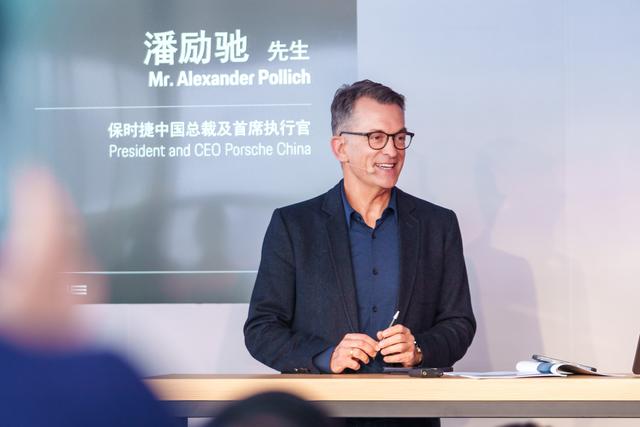
对话保时捷中国CEO潘励驰:首度详解如何“赢回中国”
Feng Huang Wang· 2026-01-26 08:26
Core Insights - Porsche's global sales declined by 10% in 2025, with a 26% drop in deliveries in China, which remains the company's second-largest market [1][2] - The company emphasizes a "quality over quantity" approach, focusing on maintaining brand value rather than chasing sales numbers [1][2] Sales Performance - Porsche delivered approximately 42,000 vehicles in China in 2025, despite the overall luxury car market contraction [1][2] - The Cayenne and other key models have gained market share in their segments, showcasing resilience despite the sales decline [2] Brand Strategy - Porsche's CEO likens brand management to a marathon, emphasizing long-term goals over short-term gains [2][6] - The company has seen a 12% growth in its used car business, indicating a successful strategy to attract new customers and maintain market share [2] Financial Services - Over 50% of Porsche's sales are completed through its financial services, which help strengthen customer relationships [2] - The company highlights the importance of vehicle residual values in maintaining brand prestige, with Porsche leading in this area among luxury brands [2] Market Adjustments - Porsche plans to introduce a new SUV model positioned above the Cayenne, responding to consumer demand for larger vehicles in China and the U.S. [3][4] - The company is optimizing its dealer network, planning to reduce the number of dealerships from approximately 114 to around 80 by the end of 2026 [4] R&D and Localization - Porsche has established its first comprehensive R&D center outside Germany in China, focusing on local market insights and needs [5] - The company is collaborating with local suppliers, such as Botai, to enhance product development and ensure seamless integration of new technologies [5][9] Long-term Vision - Porsche's long-term strategy emphasizes brand community engagement, with over 73,000 participants in brand community activities in China, a 150% increase year-on-year [7] - The company is actively working to promote its classic car business in China, aiming to enhance brand heritage and consumer connection [8] Challenges and Future Outlook - Porsche acknowledges the challenges posed by changing consumer preferences, market competition, and macroeconomic factors as reasons for the sales decline [10][12] - The company aims to enhance cost efficiency while maintaining a focus on local R&D and product development to better meet consumer demands [11][12]