
赢者通吃

Search documents
天晴了雨停了,孙正义又行了?
Sou Hu Cai Jing· 2026-01-29 14:27
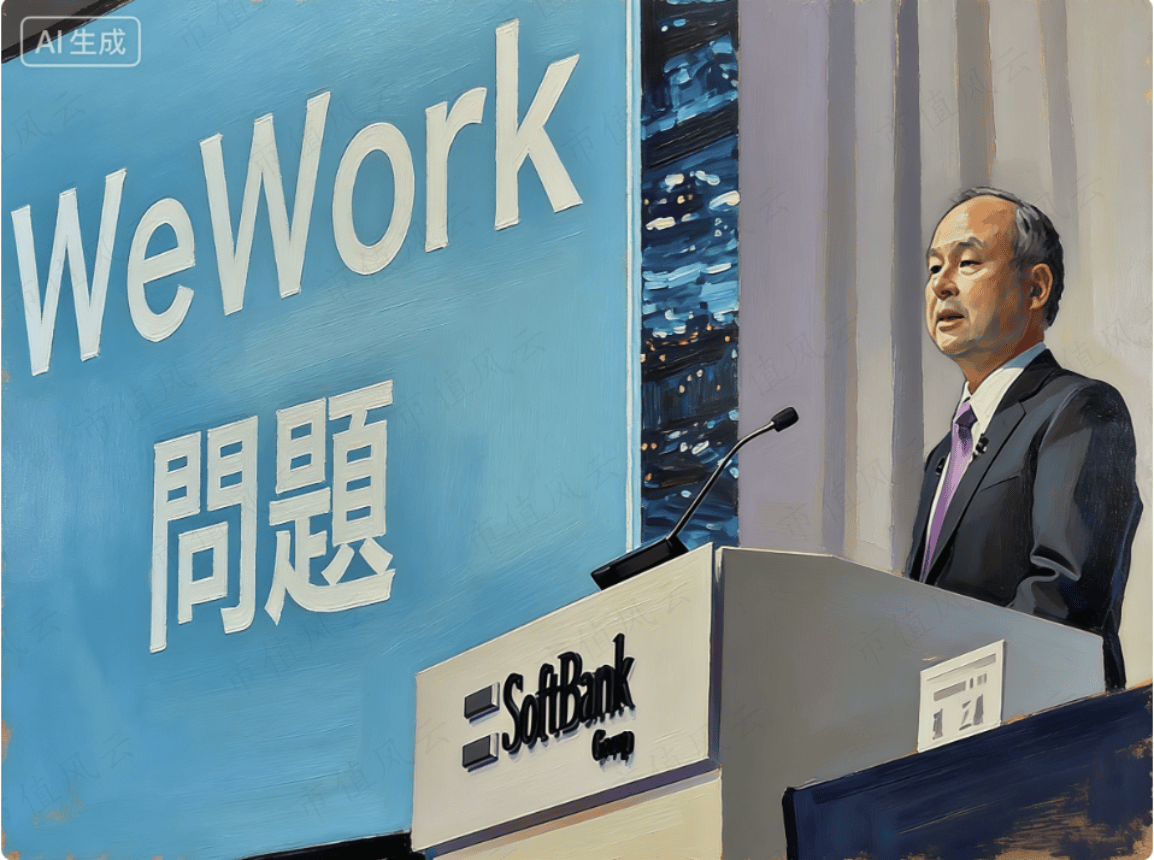
Core Insights - SoftBank is negotiating a potential additional investment of up to $30 billion in OpenAI, which could set a record for the largest single financing in the AI sector [1] - This move reflects Masayoshi Son's aggressive strategy to tie SoftBank's future to AI, following a history of both significant successes and failures in his investment career [1][10] - The market's reaction to this news has been mixed, indicating both optimism for a revival of Son's investment prowess and concerns over his past reckless decisions [1] Investment Philosophy - Masayoshi Son's investment philosophy is characterized by a high-risk, high-reward approach, believing that major opportunities lie within significant trends [2] - His early investment in Yahoo! during the internet's infancy exemplified this philosophy, yielding a return of nearly 400 times his initial investment [3] - Son's strategy often involves heavy investments in a few key players, betting on the "winner takes all" principle, which has historically led to both monumental successes and catastrophic failures [4][22] Historical Context - The dot-com bubble burst in 2001 led to a dramatic decline in SoftBank's value, with its stock plummeting 99% and Son's personal wealth evaporating by approximately $700 billion [4] - Despite this setback, Son's investment in Alibaba during its early days became one of the most successful investments in history, yielding over $110 billion in returns [3][4] - The failure of WeWork, where Son invested heavily without adequate risk assessment, marked a significant downturn in his reputation as a "stable investor" [5][9] Recent Developments - In 2026, SoftBank's negotiations with OpenAI come after a series of strategic investments, including a previous stake in Nvidia, which Son sold to fund the new investment [11][12] - OpenAI's valuation has skyrocketed, with estimates reaching $830 billion, prompting Son to view it as a critical player in the AI landscape [13][14] - The partnership with OpenAI is part of a broader strategy that includes investments in ARM and a collaborative project with Oracle, aiming to create a comprehensive AI ecosystem [15][16] Financial Performance - SoftBank reported a significant turnaround in financial performance, with net profits soaring due to AI-related investments, particularly those linked to OpenAI [24][25] - The company's stock price has reacted positively to these developments, with investors expressing renewed confidence in Son's AI strategy [26] - However, the reliance on investment returns rather than operational profits raises concerns about the sustainability of this financial model [28] Risks and Challenges - OpenAI faces substantial challenges, including high operational costs and increasing competition from other tech giants, which could jeopardize its valuation and profitability [17][18] - Legal issues, such as lawsuits from Elon Musk, add another layer of risk to OpenAI's future, potentially impacting SoftBank's investments [18] - Son's historical tendency to overlook risks in favor of potential rewards remains a critical concern as he navigates the complexities of the AI market [29][30] Conclusion - The outcome of SoftBank's investment in OpenAI could either solidify Son's legacy as a visionary investor or lead to another significant setback, reflecting the unpredictable nature of the tech investment landscape [30][31] - Son's approach continues to embody the duality of risk and opportunity, making his future endeavors in the AI sector a focal point for investors and analysts alike [31]

中尾部智驾玩家,困在“赢者通吃”的焦虑里
Di Yi Cai Jing· 2025-12-22 09:03
Core Viewpoint - The sudden shutdown of Haomo Zhixing highlights the intense competition and market consolidation in the autonomous driving industry, where leading companies are rapidly advancing while mid-tier players struggle to survive [1][2][3]. Group 1: Company Developments - Haomo Zhixing announced a complete shutdown on November 22, 2025, due to its poor operational status, despite previously being valued over $1 billion [2]. - The company faced multiple failures, including hardware selection issues, outdated software algorithms, and indecisive management, leading to delays in its urban advanced driving solutions compared to competitors [2]. - Long-term partnerships with major automotive manufacturers have shifted, with Haomo Zhixing losing support from Great Wall Motors, which has turned to other suppliers for its advanced driving solutions [2]. Group 2: Industry Dynamics - The autonomous driving sector is witnessing a significant divide, with leading companies like Huawei and Momenta rapidly gaining market share, while mid-tier firms face existential threats [3][5]. - Huawei's autonomous driving system has surpassed 1 million units, with a market share of 27.8% in the NCA segment, indicating strong demand for its technology [5]. - The industry is moving towards a "winner-takes-all" scenario, with predictions that only a few players will remain by 2027, emphasizing the need for data-driven approaches and collaboration among companies [7][10]. Group 3: Competitive Strategies - Mid-tier companies are exploring differentiated survival strategies, including diversifying into sectors like unmanned delivery and agriculture, as well as seeking international partnerships [4][5]. - There is a trend among mid-tier firms to form deep partnerships with ecosystem players, as seen with significant investments and acquisitions aimed at strengthening their market positions [9][10]. - The competitive landscape is evolving, with a consensus that while some consolidation is inevitable, the final outcome may not lead to a complete monopoly, especially in software solutions where differentiation remains crucial [10].
中尾部智驾玩家,困在“赢者通吃”的焦虑里
第一财经· 2025-12-22 08:53
Core Viewpoint - The article discusses the significant challenges faced by mid-tier autonomous driving companies in the context of a rapidly consolidating industry, highlighted by the sudden shutdown of a once-promising unicorn, Haomo Zhixing, and the contrasting success of leading players like Huawei and Momenta [4][5][7]. Group 1: Industry Dynamics - In 2025, the autonomous driving industry experienced a harsh competitive landscape, with leading companies aggressively pursuing market share, leaving little room for smaller players [3][4]. - The industry is witnessing a "winner-takes-all" scenario, where top players are expected to dominate, while mid-tier companies struggle to find their place [9][11]. - The market is increasingly favoring companies that can integrate their technologies and maintain control over their intellectual property, as seen in the shift towards "white box" solutions [5][6][12]. Group 2: Company-Specific Insights - Haomo Zhixing, founded in 2019 and once valued over $1 billion, faced operational failures due to poor hardware choices, outdated software algorithms, and indecisive management, leading to its abrupt halt in operations [4][5]. - Mid-tier companies, like the one represented by Zhang Li, are exploring alternative markets and applications, such as unmanned delivery vehicles and international collaborations, to differentiate themselves [6][12]. - Leading companies like Huawei and Momenta are achieving significant milestones, with Huawei's autonomous driving technology being integrated into over 100,000 vehicles and Momenta collaborating with more than 160 models [7][9]. Group 3: Future Outlook - The consensus among industry experts is that the autonomous driving sector will continue to consolidate, with predictions that only a few key players will remain by 2027 [11][12]. - There is a debate on whether the industry will ultimately see a "winner-takes-all" outcome, with some arguing for a more diversified ecosystem to mitigate risks associated with having too few dominant players [12][13]. - The potential for standardization in hardware, particularly in autonomous driving chips, is recognized, while software solutions may retain diversity as companies seek to maintain competitive advantages [13].

中尾部智驾玩家,陷在“赢者通吃”的焦虑里 | 智驾中场战事
Di Yi Cai Jing Zi Xun· 2025-12-22 07:19
Core Viewpoint - The sudden shutdown of Haomo Zhixing highlights the intense competition and market consolidation in the autonomous driving industry, where leading companies are rapidly advancing while mid-tier players struggle to survive [1][2][3]. Group 1: Company Developments - Haomo Zhixing announced a complete shutdown on November 22, 2025, due to its poor operational status, despite previously being valued at over $1 billion [2]. - The company faced multiple failures, including hardware selection issues, outdated software algorithms, and indecisive management, leading to delays in its urban advanced driving solutions compared to competitors [2]. - Long-term partnerships with major automotive manufacturers have shifted, with Haomo Zhixing losing support from Great Wall Motors, which has turned to other suppliers for its advanced driving solutions [2]. Group 2: Market Dynamics - The autonomous driving industry is experiencing a significant divide, with leading companies like Huawei and Momenta rapidly gaining market share, while mid-tier firms face existential threats [3][5]. - Huawei's autonomous driving system has surpassed 1 million units, with a market share of 27.8% in the NCA segment, indicating strong demand for advanced driving technologies [5]. - The competitive landscape is shifting towards a "winner-takes-all" scenario, where only a few players are expected to survive, as highlighted by predictions from industry leaders [7][10]. Group 3: Strategic Responses - Mid-tier companies are seeking differentiation by exploring new markets and applications, such as autonomous delivery vehicles and international collaborations [4][5]. - There is a trend among mid-tier firms to form strategic partnerships and investments to enhance their competitive positioning, as seen with companies like Aito and their acquisitions [9][10]. - Despite the prevailing narrative of consolidation, some mid-tier executives believe there is still room for diverse survival strategies within the industry, suggesting that the market is not yet fully consolidated [9][10].
形势严峻,全球12大半导体厂商,中国仅1家上榜,还是台企
Xin Lang Cai Jing· 2025-11-25 10:22
Core Insights - The semiconductor industry is characterized by high barriers to entry, long cycles, significant capital investment, and advanced technology, leading to a "winner-takes-all" scenario where smaller companies face immense pressure [1][3] - Continuous investment and long-term research and development are essential for semiconductor companies to achieve substantial performance and returns [3] Revenue Rankings - Recent reports have compiled the revenue data of major semiconductor companies for the first three quarters of 2025, listing the top 12 firms, which include IDM and Fabless companies but exclude pure foundry firms like TSMC and SMIC [5] - The top 10 companies by revenue include Nvidia, Samsung, SK Hynix, Intel, Qualcomm, Micron, Broadcom, AMD, MediaTek, and Texas Instruments, with Infineon and NXP following [5] Market Share Insights - Nvidia holds a dominant market share of 27%, while the last-ranked NXP has a share of only 2%, indicating that no semiconductor company from mainland China has reached even 2% market share [6] - Among the top 10 companies, only one Chinese enterprise is listed, with a market share of approximately 3%, and it is a Taiwanese company, highlighting the significant gap in scale between Chinese semiconductor firms and their global counterparts [6][8] Implications for Chinese Semiconductor Firms - The data suggests that Chinese semiconductor companies have considerable room for improvement and are significantly lagging behind established global giants in terms of scale and market presence [8]

大跌6%!IPO后首次电话会,Circle聚焦“盈利模式”:赚钱方式有两种,目标是“赢者通吃”(附电话会议实录)
美股IPO· 2025-08-13 05:37
Core Insights - Circle's primary revenue sources are reserve income from holding cash-equivalent assets and monetizing transaction processes and network infrastructure, with the latter expected to grow significantly as network adoption increases [4][33]. - The company plans to launch Arc, a proprietary blockchain designed for stablecoin financial applications, which will use USDC as the native asset for transaction fees [3][7][27]. - Circle's competitive advantage lies in its scalable model and inherent operational leverage, supported by a strong liquidity infrastructure and significant network effects in the stablecoin market [6][25][31]. Financial Performance - Circle reported a 53% year-over-year increase in total revenue and reserve income, reaching $658 million, driven by a substantial rise in USDC circulation [3][34]. - The company experienced a 5.4-fold increase in USDC on-chain transaction volume, indicating robust growth in its stablecoin network [34]. - Other revenue sources grew to $24 million, primarily from subscription and service income related to blockchain partnerships, reflecting a 3.5-fold increase [35]. Market Position and Strategy - The stablecoin market is characterized as a "winner-takes-all" environment, with Circle benefiting from deep liquidity infrastructure and a strong competitive moat [6][25]. - The passage of the GENIUS Act is seen as a catalyst for mainstream financial institutions to accelerate the adoption of stablecoin technology [10][25]. - Circle's cautious acquisition strategy focuses on organic growth and small strategic acquisitions rather than large, complex mergers [12][13][56]. Product Development and Partnerships - The upcoming Arc blockchain aims to support various financial applications, including payments and capital markets, and will provide a low-cost, predictable fee structure [27][28]. - Circle has expanded partnerships with major financial institutions and payment providers, enhancing USDC's utility and integration into various payment networks [11][30]. - The company is actively developing its Circle Payment Network (CPN) to facilitate international fund transfers and other payment types, with significant interest from financial institutions [26][49]. Future Outlook - Circle anticipates a compound annual growth rate of 40% for USDC over the coming years, with other revenue expected to range between $75 million and $85 million in 2025 [36]. - The company is focused on expanding its platform capabilities and partnerships to drive long-term growth and profitability [36].

IPO后首次电话会,Circle聚焦“盈利模式”:赚钱方式有两种,目标是“赢者通吃”
Hua Er Jie Jian Wen· 2025-08-13 02:48
Core Insights - Circle, known as the "first stock of stablecoins," reported a significant increase in total revenue and reserve income, driven by a substantial growth in USDC circulation, with total revenue and reserve income rising 53% to $658 million [1][22] - The company plans to launch a self-developed blockchain named Arc in the second half of the year, designed specifically for stablecoin finance, with USDC as the native asset for transaction fees [1][4] - CFO Jeremy Fox-Geen expressed confidence in the company's profitability outlook, citing network effects and the growth of USDC holdings as key drivers for long-term support of RLDC profit margins [1][22] Revenue Generation - Circle generates revenue primarily through two methods: reserve income from holding cash-equivalent assets to support stablecoins and monetizing certain transaction processes and network infrastructure elements [2][21] - Although the second revenue stream is currently small, it is growing and has high profit margins, with the potential for rapid expansion as network adoption increases [2][21] Market Dynamics - The stablecoin market is characterized as a "winner-takes-all" environment, with liquidity and utility driving growth, making it difficult for competitors to replicate Circle's deep liquidity infrastructure [3][14] - Circle's core model anticipates a compound annual growth rate (CAGR) of 40% for USDC over the coming years, supported by strong network effects and operational leverage [3][24] Arc Blockchain Launch - The upcoming Arc blockchain represents a strategic shift for Circle in the stablecoin infrastructure space, designed to support various financial applications and provide a robust platform for mainstream financial institutions [4][16] - Arc will operate as a new layer-1 blockchain compatible with Ethereum infrastructure, aiming to facilitate stablecoin financial applications, payments, foreign exchange, and capital markets [4][16] Institutional Adoption - The passage of the GENIUS Act has catalyzed mainstream financial institutions to accelerate their exploration of stablecoin technology, with Circle establishing partnerships with banks and payment infrastructure providers [6][14] - Major payment networks like Visa and Mastercard have announced plans to expand the availability of USDC on their networks, further driving adoption [6][14] M&A Strategy - Circle's co-founder Jeremy Allaire emphasized a cautious approach to mergers and acquisitions, preferring organic growth and strategic small-scale acquisitions over large, complex deals [7][21] - The company aims to integrate new capabilities that align with its product requirements rather than simply adding additional business lines [7][21] Financial Performance - Circle's total revenue and reserve income for the second quarter reached $658 million, with a 53% year-over-year increase, despite accounting profits being impacted by significant non-cash expenses [1][22] - The company reported a 5.4-fold increase in USDC on-chain transaction volume, reaching nearly $6 trillion, indicating strong growth in platform usage [12][22] Future Outlook - Circle anticipates a compound annual growth rate for USDC circulation of 40%, with expectations for other revenue streams to range between $75 million and $85 million in 2025 [24][25] - The company is focused on long-term success and is investing in key areas to build its platform and global partnerships, projecting adjusted operating expenses between $475 million and $490 million for 2025 [24][25]