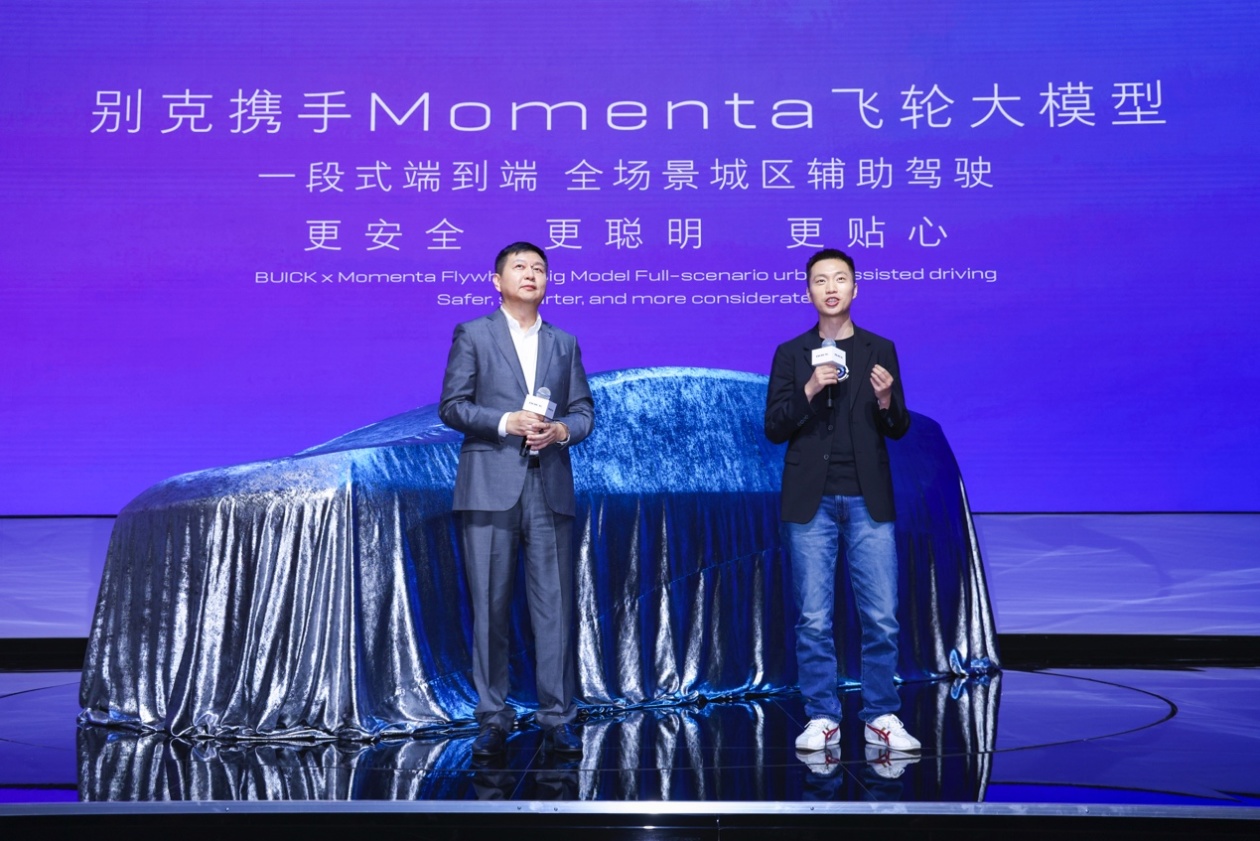
城区辅助驾驶解决方案

Search documents
中尾部智驾玩家,困在“赢者通吃”的焦虑里
Di Yi Cai Jing· 2025-12-22 09:03
Core Viewpoint - The sudden shutdown of Haomo Zhixing highlights the intense competition and market consolidation in the autonomous driving industry, where leading companies are rapidly advancing while mid-tier players struggle to survive [1][2][3]. Group 1: Company Developments - Haomo Zhixing announced a complete shutdown on November 22, 2025, due to its poor operational status, despite previously being valued over $1 billion [2]. - The company faced multiple failures, including hardware selection issues, outdated software algorithms, and indecisive management, leading to delays in its urban advanced driving solutions compared to competitors [2]. - Long-term partnerships with major automotive manufacturers have shifted, with Haomo Zhixing losing support from Great Wall Motors, which has turned to other suppliers for its advanced driving solutions [2]. Group 2: Industry Dynamics - The autonomous driving sector is witnessing a significant divide, with leading companies like Huawei and Momenta rapidly gaining market share, while mid-tier firms face existential threats [3][5]. - Huawei's autonomous driving system has surpassed 1 million units, with a market share of 27.8% in the NCA segment, indicating strong demand for its technology [5]. - The industry is moving towards a "winner-takes-all" scenario, with predictions that only a few players will remain by 2027, emphasizing the need for data-driven approaches and collaboration among companies [7][10]. Group 3: Competitive Strategies - Mid-tier companies are exploring differentiated survival strategies, including diversifying into sectors like unmanned delivery and agriculture, as well as seeking international partnerships [4][5]. - There is a trend among mid-tier firms to form deep partnerships with ecosystem players, as seen with significant investments and acquisitions aimed at strengthening their market positions [9][10]. - The competitive landscape is evolving, with a consensus that while some consolidation is inevitable, the final outcome may not lead to a complete monopoly, especially in software solutions where differentiation remains crucial [10].
中尾部智驾玩家,陷在“赢者通吃”的焦虑里 | 智驾中场战事
Di Yi Cai Jing Zi Xun· 2025-12-22 07:19
Core Viewpoint - The sudden shutdown of Haomo Zhixing highlights the intense competition and market consolidation in the autonomous driving industry, where leading companies are rapidly advancing while mid-tier players struggle to survive [1][2][3]. Group 1: Company Developments - Haomo Zhixing announced a complete shutdown on November 22, 2025, due to its poor operational status, despite previously being valued at over $1 billion [2]. - The company faced multiple failures, including hardware selection issues, outdated software algorithms, and indecisive management, leading to delays in its urban advanced driving solutions compared to competitors [2]. - Long-term partnerships with major automotive manufacturers have shifted, with Haomo Zhixing losing support from Great Wall Motors, which has turned to other suppliers for its advanced driving solutions [2]. Group 2: Market Dynamics - The autonomous driving industry is experiencing a significant divide, with leading companies like Huawei and Momenta rapidly gaining market share, while mid-tier firms face existential threats [3][5]. - Huawei's autonomous driving system has surpassed 1 million units, with a market share of 27.8% in the NCA segment, indicating strong demand for advanced driving technologies [5]. - The competitive landscape is shifting towards a "winner-takes-all" scenario, where only a few players are expected to survive, as highlighted by predictions from industry leaders [7][10]. Group 3: Strategic Responses - Mid-tier companies are seeking differentiation by exploring new markets and applications, such as autonomous delivery vehicles and international collaborations [4][5]. - There is a trend among mid-tier firms to form strategic partnerships and investments to enhance their competitive positioning, as seen with companies like Aito and their acquisitions [9][10]. - Despite the prevailing narrative of consolidation, some mid-tier executives believe there is still room for diverse survival strategies within the industry, suggesting that the market is not yet fully consolidated [9][10].
城区智驾将普惠到10万级车,首届地平线技术生态大会开幕
Bei Jing Shang Bao· 2025-12-09 02:09
Core Insights - The Horizon Together 2025 conference was held in Shenzhen, focusing on the transition of smart driving from "usable" commercialization to "user-friendly" widespread adoption [1] - Horizon announced the launch of its new "algorithm service" model, HSD Together, aimed at significantly reducing human input, computing power consumption, and time to market by 90% for partners [1] - The company is set to mass-produce its urban auxiliary driving solution based on the Journey 6M chip, making reliable urban smart driving experiences accessible to the 100,000 yuan national car market [1] Company Developments - Horizon's HSD Together algorithm service will open its validated full-stack capabilities to the entire industry [1] - The first batch of mass production partners for the Journey 6M urban auxiliary driving solution includes Bosch, Zhuoyue, Qingzhou Zhihang, Denso, CoolCore, and Zhidrive Continental [1] Industry Impact - The introduction of the Journey 6M chip is expected to enhance the smart driving experience in the affordable car segment, potentially increasing market penetration [1] - The conference theme "Towards High Peers" reflects the industry's shift towards collaboration and shared technological advancements in smart driving [1]
看好中国效率 国际巨头20年增资10次 外资加速在华设立研发中心
Yang Shi Xin Wen· 2025-10-12 01:45
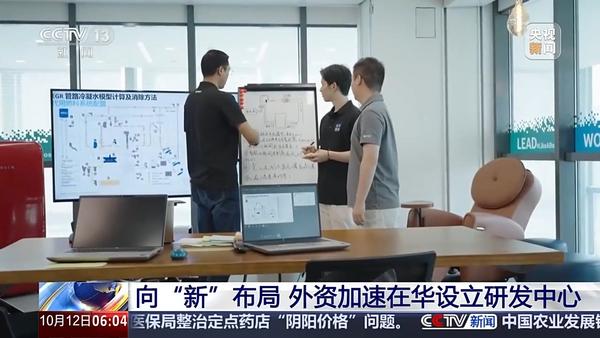
Group 1: Foreign Investment Trends in China - Foreign companies are accelerating the establishment of R&D centers in China, marking a new trend in foreign investment in the Chinese market [1] - The Chinese market is transitioning from being a "world factory" to a balance of R&D and manufacturing, with multinational companies increasing their R&D investments [1] Group 2: Bosch's Investment in Suzhou - Bosch Group signed an agreement to invest 10 billion yuan in a smart driving industry innovation project over five years in Suzhou [3] - The project aims to develop advanced full-stack smart driving system solutions and related products, contributing to the intelligent upgrade of the automotive industry [3] - Bosch has evolved from producing single technology products to becoming an important innovation center covering smart driving and industrial internet technologies [3] Group 3: Roche Diagnostics' Investment - Roche Diagnostics announced an investment of 380 million Swiss francs to build a new reagent and instrument production and R&D base in China, marking its largest single investment in the country [4] - The investment aims to enhance local innovation and expand the product pipeline in China [4] - Policies from the Ministry of Commerce and the Ministry of Science and Technology are encouraging foreign investment in R&D centers, improving the environment for foreign companies [4] Group 4: Danfoss' Continued Investment - Danfoss has made its 10th investment in China over the past 20 years, with a new global manufacturing base in Jiaxing, Zhejiang, totaling 2.7 billion yuan [5] - The new facility will integrate innovative technology and smart operations, becoming a future factory and zero-carbon industrial park [5] - Danfoss views China as a "second hometown market" and is committed to investing in the country to support green transformation and high-quality development [5] Group 5: Investment Growth in Guangxi Free Trade Zone - The Guangxi Free Trade Zone saw actual foreign investment of 2.24 billion yuan in the first eight months of the year, a year-on-year increase of 270.3% [7] - The region is leveraging its geographical advantages to attract investment, particularly in the new energy manufacturing sector [7] - Policies encouraging foreign investment in advantageous industries like new energy vehicles are being implemented to enhance the investment environment [8]

从市场换技术到技术创造市场:上汽通用与Momenta合作重构合资智驾生态
Huan Qiu Wang· 2025-04-22 06:19
Core Viewpoint - SAIC-GM Buick brand has announced a strategic partnership with Momenta to develop urban assisted driving technologies, aiming to enhance the safety and intelligence of driving experiences [1][3]. Group 1: Strategic Partnership - The collaboration will focus on creating a comprehensive assisted driving solution, leveraging Momenta's mature production experience to shorten development cycles and enhance vehicle competitiveness [3][8]. - New Buick vehicles equipped with Momenta's urban assisted driving solutions are expected to be launched in the second half of this year [3]. Group 2: Historical Context - The partnership signifies a pivotal moment in the development of China's automotive industry, which has evolved from relying on foreign technology to becoming a leader in intelligent driving technology [4][11]. - The automotive industry is crucial for national economic strength, technological advancement, and social development, marking it as a key indicator of a country's manufacturing capabilities [4]. Group 3: Technological Advancements - China leads the world in intelligent driving patents, with 18,510 effective patents in the field as of 2023, reflecting a significant increase in patent applications since 2016 [5]. - The penetration rate of L2-level assisted driving vehicles in China is projected to reach 55.7% by mid-2024, indicating a shift in market dynamics towards domestic brands [5]. Group 4: New Industry Dynamics - The traditional "market for technology" model is evolving into a "data-algorithm-manufacturing" collaboration, with Momenta deeply involved in the entire process from chip selection to function validation [10]. - This new model, termed "new co-opetition," is reshaping the industry's power dynamics, with Momenta's partnerships expanding to over 140 models and 15 deep collaborations with major global automakers [10]. Group 5: Future Implications - The collaboration between SAIC-GM and Momenta is expected to accelerate the adoption of intelligent driving technologies, potentially setting new industry standards and enhancing the global automotive industry's transition towards smart vehicles [10]. - The trajectory of China's automotive industry reflects a significant transformation, moving from a focus on manufacturing to leading in intelligent driving technology [11].