
征程6M芯片

Search documents
地平线(09660)与轻舟智航深度协同 行业首个单征程6M城区NOA量产交付
智通财经网· 2026-01-22 08:01
Core Insights - The first end-to-end city NOA solution based on Horizon's Journey 6M chip has been officially delivered, marking a significant milestone in urban mobility [1] - The collaboration between Li Auto, Lightyear, and Horizon showcases a complete closed-loop from technology development to large-scale delivery [7] Group 1: Product and Technology - The city NOA system, built on a single Journey 6M chip, offers advanced defensive driving capabilities, enhancing safety during urban travel [2][5] - The system utilizes 128 TOPS of computing power, optimizing safety and traffic efficiency while supporting various sensor integrations [4] - The Journey 6M chip enables lightweight urban driving assistance and memory driving functions, significantly improving performance and reducing costs [4] Group 2: Industry Collaboration - The partnership between Horizon, Lightyear, and Li Auto exemplifies a strong industry collaboration, achieving multiple industry records since their strategic alliance began in May 2022 [7] - Horizon is also collaborating with Bosch, Denso, and other partners to promote the mass production of the city NOA solution, targeting the 100,000 yuan market segment [8] - The ecosystem collaboration is seen as a key pathway to advancing the widespread adoption of intelligent driving technology [8] Group 3: Market Impact - Li Auto's L series models are equipped with the Journey 6M chip, enhancing their reputation as reliable and user-friendly smart driving vehicles [7] - The successful deployment of the city NOA solution is expected to accelerate the scale of mass production in the intelligent driving sector [8] - Horizon aims to continue building a reliable and inclusive future for intelligent driving through its collaborative ecosystem approach [10]


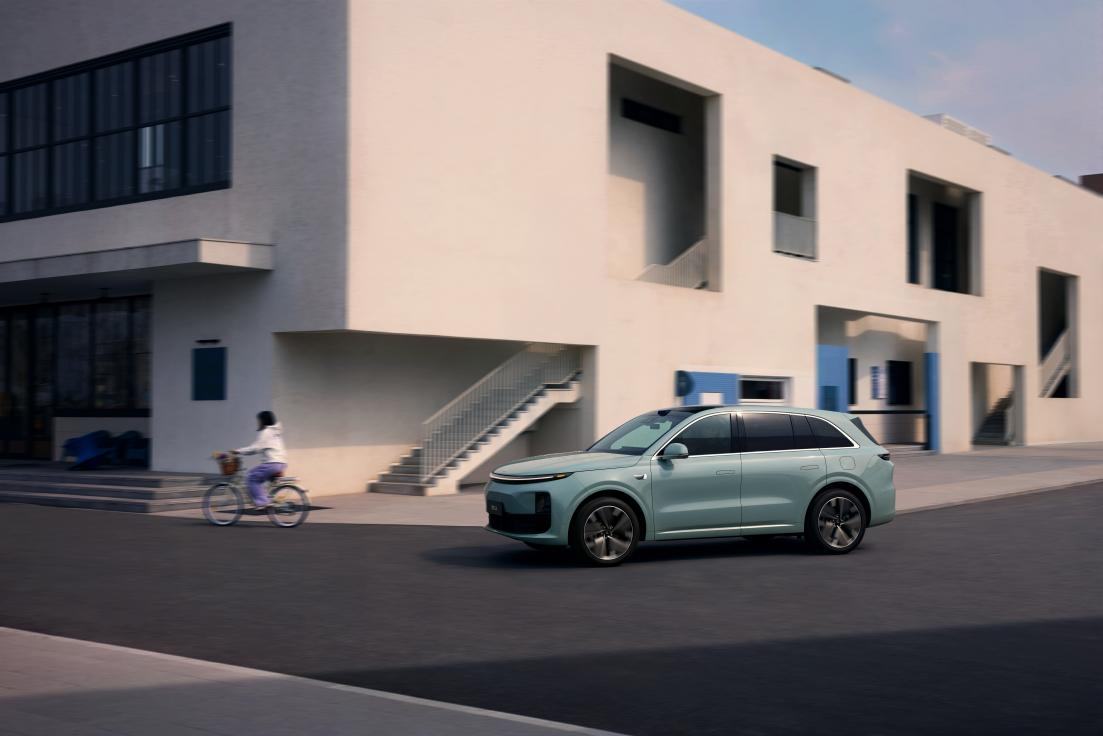
地平线与轻舟智航深度协同 行业首个单征程6M城区NOA量产交付
Zhi Tong Cai Jing· 2026-01-22 07:57
Core Viewpoint - The launch of the first end-to-end city NOA solution based on Horizon's single Journey 6M chip marks a significant advancement in urban driving assistance technology, developed by Li Auto in collaboration with Lightyear Intelligent Navigation [1][6]. Group 1: Product Features - The city NOA system utilizes 128 TOPS computing power to enhance user experience, transitioning from "usable" to "well-used" in urban driving scenarios [1]. - The system is designed to provide human-like defensive driving capabilities, ensuring safety by anticipating and mitigating risks in various urban environments [1][3]. - The integration of advanced algorithms and hardware allows for significant optimization in computing performance and power consumption, reducing system complexity and overall costs [4]. Group 2: Strategic Partnerships - The collaboration between Horizon, Lightyear Intelligent Navigation, and Li Auto represents a successful model of industry cooperation, completing a full cycle from technology development to large-scale delivery [6]. - Since their strategic partnership began in May 2022, Horizon and Lightyear have achieved multiple industry milestones, including the rapid deployment of the Journey 6 solution [6]. - Horizon is also collaborating with Bosch, Denso, and other partners to promote the mass production of the city NOA solution, targeting the 100,000 yuan market segment [7]. Group 3: Market Impact - The deployment of the Journey 6M chip in Li Auto's L series models is expected to enhance the brand's reputation for safety and reliability in smart driving [6]. - The successful integration of the city NOA system is anticipated to drive a new wave of mass production, reinforcing the importance of ecosystem collaboration in advancing widespread adoption of smart driving technologies [7][9].
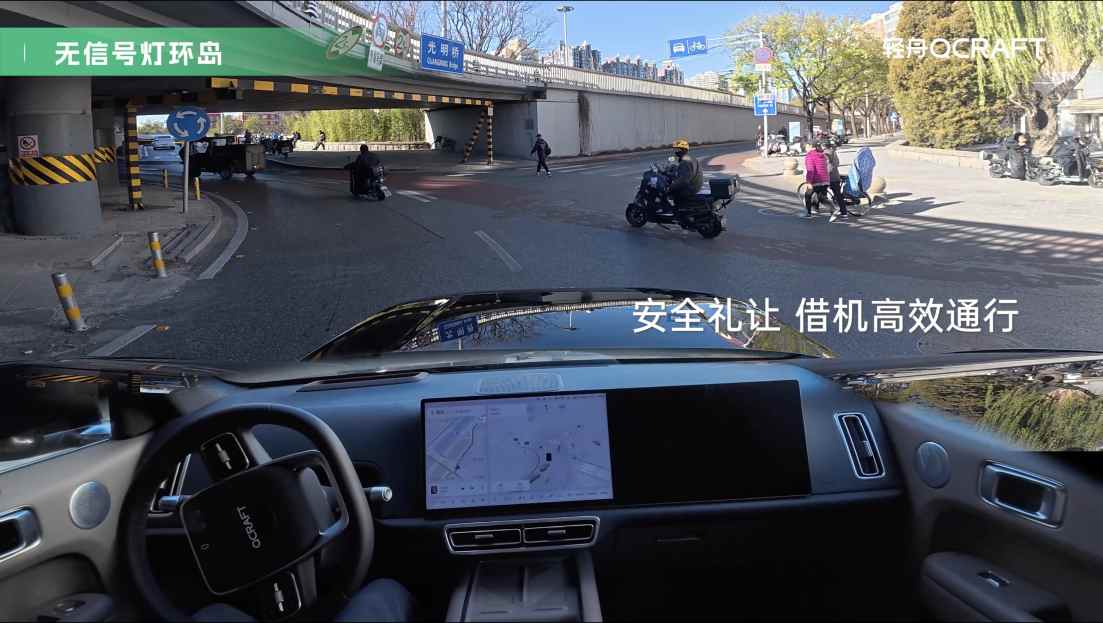
智驾大陆近2亿美元融资落定 合资与普惠模式成行业新标杆
Zhong Zheng Wang· 2026-01-07 14:01
Group 1 - The core viewpoint of the news is that Horizon and Omniview Group's joint venture, Smart Driving Mainland, has successfully completed a new round of financing amounting to nearly $200 million, indicating strong market interest and the potential for commercialization in the smart driving sector [1][2] - The financing highlights the recognition of a new collaborative model in smart driving, which combines domestic technology with overseas channels, effectively addressing the challenges of market entry and localization for Chinese smart driving companies [1] - The partnership leverages Omniview Group's extensive global OEM resources and supply chain management experience, along with Horizon's advanced end-to-end smart driving technology, enabling successful product validation and mass production in multiple countries [1] Group 2 - The acceleration of smart driving accessibility is another key factor attracting capital, as the new HCT Astra urban intelligent driving solution targets the 100,000 yuan passenger car market, making advanced driving assistance more widely available [2] - This breakthrough aligns with industry demands and positions the company to achieve over 10 model launches by 2025, leading the industry in commercialization efficiency and marking the entry of high-level urban smart driving into the mass market [2] - The financing progress reflects a new trend in the industry where technological accessibility and global expansion are becoming core competitive advantages for smart driving companies, with the funds aimed at enhancing R&D and market outreach [2]
告别单纯供应 走向深度共生——汽车供应链关系重构新解
Zhong Guo Qi Che Bao Wang· 2025-12-29 03:16
Core Insights - Horizon Robotics held its first technology ecosystem conference, emphasizing a shift from "driving high" to "coexisting with high" in intelligent driving, aiming to expand driving assistance features into broader markets [4] - The new HSD Together model promotes deep collaboration with industry partners, reshaping the automotive supply chain ecosystem from a linear supply model to a symbiotic relationship [5][7] Industry Transformation - The HSD system, based on the Journey 6M chip, is set to be mass-produced and integrated into affordable vehicles, marking a significant shift in collaboration strategies within the automotive industry [5] - The complexity of developing advanced driving assistance systems necessitates a collaborative approach, as individual automakers may lack the resources to tackle these challenges alone [6] Supply Chain Evolution - The transition from a traditional supply chain to a networked structure allows for more flexible and collaborative relationships among suppliers, enhancing the overall capability of the ecosystem [8] - The integration of suppliers into the manufacturing process, as seen with CATL's battery production within vehicle assembly lines, exemplifies the shift towards co-located collaboration [9] Strategic Partnerships - The HSD Together model enables partners to modularly select algorithm modules and engineering support, significantly reducing their resource investment by up to 90% [6] - The automotive industry is witnessing a shift in collaboration dynamics, with semiconductor companies engaging directly with top management of automakers, indicating a move towards strategic partnerships rather than transactional relationships [10] Competitive Landscape - The focus of competition in the automotive industry is shifting from hardware and software development to ecosystem building and collaborative efficiency [11] - The emergence of the HSD Together model raises questions about the potential loss of technical leadership for automakers with weaker software capabilities, leading to a bifurcated industry landscape [12] Innovation and Value Creation - The automotive market is transitioning from price competition to innovation-driven strategies, emphasizing the importance of collaborative ecosystems in enhancing innovation efficiency [14] - The value creation process is increasingly reliant on data cycles and functional iterations throughout the vehicle's lifecycle, highlighting the need for a healthy ecosystem to foster continuous improvement [15] Future Outlook - The automotive industry is likely to evolve into a layered, dynamically balanced ecosystem where a minority of leading firms pursue full-stack development while the majority collaborate with ecosystem partners [13] - The shift towards a collaborative model may lead to a reallocation of power within the supply chain, necessitating fair trust and benefit-sharing mechanisms among partners [17]

中尾部智驾玩家,困在“赢者通吃”的焦虑里
第一财经· 2025-12-22 08:53
Core Viewpoint - The article discusses the significant challenges faced by mid-tier autonomous driving companies in the context of a rapidly consolidating industry, highlighted by the sudden shutdown of a once-promising unicorn, Haomo Zhixing, and the contrasting success of leading players like Huawei and Momenta [4][5][7]. Group 1: Industry Dynamics - In 2025, the autonomous driving industry experienced a harsh competitive landscape, with leading companies aggressively pursuing market share, leaving little room for smaller players [3][4]. - The industry is witnessing a "winner-takes-all" scenario, where top players are expected to dominate, while mid-tier companies struggle to find their place [9][11]. - The market is increasingly favoring companies that can integrate their technologies and maintain control over their intellectual property, as seen in the shift towards "white box" solutions [5][6][12]. Group 2: Company-Specific Insights - Haomo Zhixing, founded in 2019 and once valued over $1 billion, faced operational failures due to poor hardware choices, outdated software algorithms, and indecisive management, leading to its abrupt halt in operations [4][5]. - Mid-tier companies, like the one represented by Zhang Li, are exploring alternative markets and applications, such as unmanned delivery vehicles and international collaborations, to differentiate themselves [6][12]. - Leading companies like Huawei and Momenta are achieving significant milestones, with Huawei's autonomous driving technology being integrated into over 100,000 vehicles and Momenta collaborating with more than 160 models [7][9]. Group 3: Future Outlook - The consensus among industry experts is that the autonomous driving sector will continue to consolidate, with predictions that only a few key players will remain by 2027 [11][12]. - There is a debate on whether the industry will ultimately see a "winner-takes-all" outcome, with some arguing for a more diversified ecosystem to mitigate risks associated with having too few dominant players [12][13]. - The potential for standardization in hardware, particularly in autonomous driving chips, is recognized, while software solutions may retain diversity as companies seek to maintain competitive advantages [13].

地平线与生态伙伴共拓自动驾驶规模化商用之路,勾勒未来发展版图
IPO早知道· 2025-12-15 03:00
Core Viewpoint - The article emphasizes the importance of collaboration and technological breakthroughs in achieving scalable commercialization of autonomous driving, focusing on various applications such as Robotaxi, unmanned logistics, and trunk logistics [1]. Group 1: Event Overview - The "Towards High Collaboration" 2025 Horizon Technology Ecosystem Conference featured a forum on "Scaling Commercialization of Autonomous Driving," discussing sustainable business models and efficient industry ecosystems [1]. - Horizon's founder and CEO, Dr. Yu Kai, highlighted the significance of service providers in the autonomous driving sector, emphasizing the need for scene-based services beyond just vehicle manufacturing [1]. Group 2: Partnerships and Innovations - Horizon collaborates with various partners to provide key technological support for diverse scenarios, including Robotaxi and unmanned logistics, showcasing successful outcomes and industry trends during the forum [3]. - GoGoX and Amigo's founders shared their vision for deploying Robotaxi in Hong Kong, aiming to enhance urban mobility and improve service experiences [3]. - 行深智能 (Xing Shen Intelligent) announced a partnership with Horizon to launch the first L4 urban unmanned logistics solution based on Horizon's 6M chip, achieving a 30% cost reduction compared to similar solutions [3][5]. Group 3: Industry Trends and Developments - 京东物流 (JD Logistics) is advancing unmanned delivery capabilities, aiming to redefine logistics networks through automation across all stages of the supply chain [6]. - 嬴彻科技 (Yingche Technology) has validated its truck autonomous driving system through real operational data, achieving over 400 million kilometers in commercial operation [9]. - 卡尔动力 (Carl Power) introduced the KargoBot Space, a global first in L4 autonomous heavy trucks, which enhances cargo space and profitability while aiming for a commercial breakthrough in 2025 [10]. Group 4: Insights from Industry Leaders - A roundtable discussion led by industry leaders explored the transition from technology-driven to value-driven commercialization of autonomous driving, emphasizing the need for robust technical foundations and ecosystem collaboration [12]. - 佑驾创新 (Youjia Innovation) focuses on creating standardized unmanned vehicle platforms while customizing solutions for different scenarios, maintaining close collaboration with Horizon [14]. - The article concludes with a call for continued collaboration and innovation within the autonomous driving ecosystem, highlighting Horizon's commitment to being a trusted enabler in the industry [20].
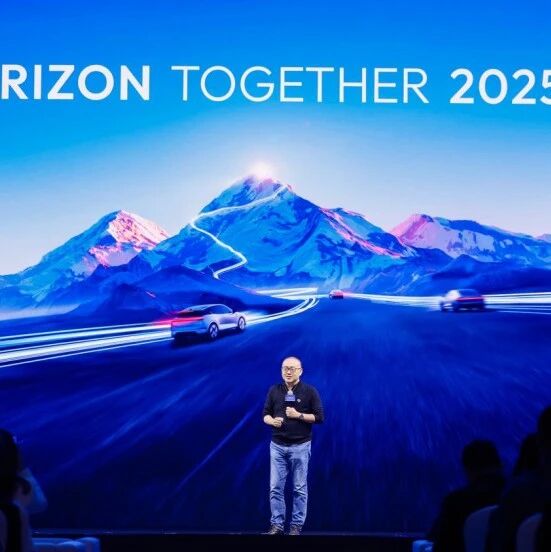
地平线机器人-预计2026 年城区NOA 渗透率将加速提升;基于公司拓展HSD 产品矩阵,重申“增持”评级
2025-12-15 01:55
Summary of Horizon Robotics Conference Call Company Overview - **Company**: Horizon Robotics - **Industry**: Intelligent driving solutions in China Key Points Market Penetration and Growth - The penetration rate of urban NOA (Navigation on Autopilot) is expected to accelerate in 2026, following rapid growth in highway NOA in 2025, with Horizon Robotics capturing over 40% of the highway NOA market by 2025 [1] - The company is expanding its HSD (High-Performance Driving) product matrix targeting mainstream economy vehicles priced above 100,000 RMB, which is anticipated to increase its market share in urban NOA [1] - Total revenue is projected to reach 15 billion RMB by 2028, with a compound annual growth rate (CAGR) of 58% from 2024 to 2028 [1] Financial Forecasts - Revenue estimates for fiscal years ending December are adjusted as follows: - FY25E: 3,269 million RMB (down 3.7% from previous estimate) - FY26E: 5,517 million RMB (down 5.6% from previous estimate) [2] - The company expects to achieve profitability by 2028, with total revenue reaching 15 billion RMB [9][24] Product Launch and Performance - Two HSD solutions launched in Q4 2025 have shown strong activation rates, with 12,000 units activated within two weeks of launch [5] - HSD600 and HSD300 are designed for vehicles priced above 130,000 RMB and are expected to achieve shipments of 25,000 units in 2025 and 461,000 units in 2026, respectively [5] - The company aims to cover approximately 70% of new energy vehicles with its urban NOA solutions starting in 2026 [5] Investor Sentiment and Competitive Landscape - Investor feedback indicates a consensus on the optimistic outlook for the acceleration of intelligent driving feature penetration, with Horizon Robotics seen as a key beneficiary [5] - Concerns exist regarding valuation, with the current stock price reflecting a 13x projected sales multiple for 2027, and increasing competition from third-party suppliers like Momenta [5] - Despite competition, Horizon's market leadership and unique technology position it for a valuation premium [5] Stock Performance and Valuation - The stock price has rebounded 24% since November 21, outperforming the Hang Seng Tech Index, which rose 3% during the same period [5] - The target price for the stock is set at 13 HKD by December 2026, based on a 19x forward price-to-sales ratio, which is approximately 79% higher than its Hong Kong peers [9][25] Risks - Key risks affecting the rating include intensified competition, potential order shortfalls due to demand shrinkage or project delays, and disruptions in R&D or supply chains [26] Financial Metrics - The company is expected to see significant revenue growth, with a projected revenue CAGR of 54% from 2024 to 2027 [24] - Adjusted net profit is forecasted to improve significantly by 2028, with total revenue reaching 15 billion RMB [9][24] Additional Insights - The company is positioned as a leading supplier of intelligent driving solutions in China, with a product portfolio that includes chips and algorithm suites for entry-level ADAS and higher-level scenarios [24] - Emerging demands from robotaxi and other robotic scenarios are expected to provide long-term growth potential for Horizon Robotics [24] This summary encapsulates the key insights and projections from the conference call, highlighting the company's growth trajectory, financial forecasts, product performance, and market positioning.

港股异动 地平线机器人-W(09660)再涨超4% 北汽联手地平线打造双征程6M城市NOA系统
Jin Rong Jie· 2025-12-12 04:02
Group 1 - The core viewpoint of the article highlights the significant collaboration between BAIC Group and Horizon Robotics, focusing on the development of an all-scenario urban NOA system using Horizon's Journey 6M chips and BAIC's self-developed "Yuanjing AI Central Brain" technology [1] - Horizon Robotics' stock has seen a rise of over 4%, with a current price of 9.01 HKD and a trading volume of 547 million HKD [1] - Goldman Sachs reports that Horizon Robotics' HSD solutions have been adopted by multiple new models from Chery, including the Exeed ET5, Fengyun T9, and iCAR V27, with expectations for increased production and new projects by 2026 [1]
地平线推高阶智驾普及10万元车型,智驾平权迈入深水区
Bei Jing Shang Bao· 2025-12-09 08:01
Core Insights - The high-level autonomous driving technology is accelerating its penetration into the mass market, with Horizon Robotics announcing the upcoming mass production of its city navigation assisted driving (NOA) system based on the Journey 6M chip, expected to be featured in vehicles priced around 100,000 yuan [2] Group 1: Market Trends - Historically, advanced city NOA features have been limited to high-end models priced above 200,000 yuan due to the high cost of computing chips and complex algorithm development [3] - The demand for intelligent driving at lower price points is increasing in the Chinese market, with nearly 50% of NOA deliveries in the first three quarters of this year coming from vehicles priced below 200,000 yuan, contributing to a 70% increase in market delivery [4] Group 2: Technological Advancements - Horizon's Journey chip family has achieved cumulative shipments of over 10 million units in five years, with the latest Journey 6 chip series achieving over one million shipments in its first year [3] - The HSD Together algorithm service model aims to significantly reduce the manpower, computing power consumption, and time to market by 90% for partners developing products based on Horizon's validated intelligent foundation [3] Group 3: Competitive Landscape - Major automakers are increasingly introducing high-level autonomous driving features in lower-priced models, such as GAC Toyota's model priced at 149,800 yuan and Zeekr's model featuring city NOA [4] - The competition in the intelligent driving sector is shifting from high-end to mid-range and low-end vehicles, necessitating a balance between cost and performance to avoid a "low price, low quality" cycle [4]
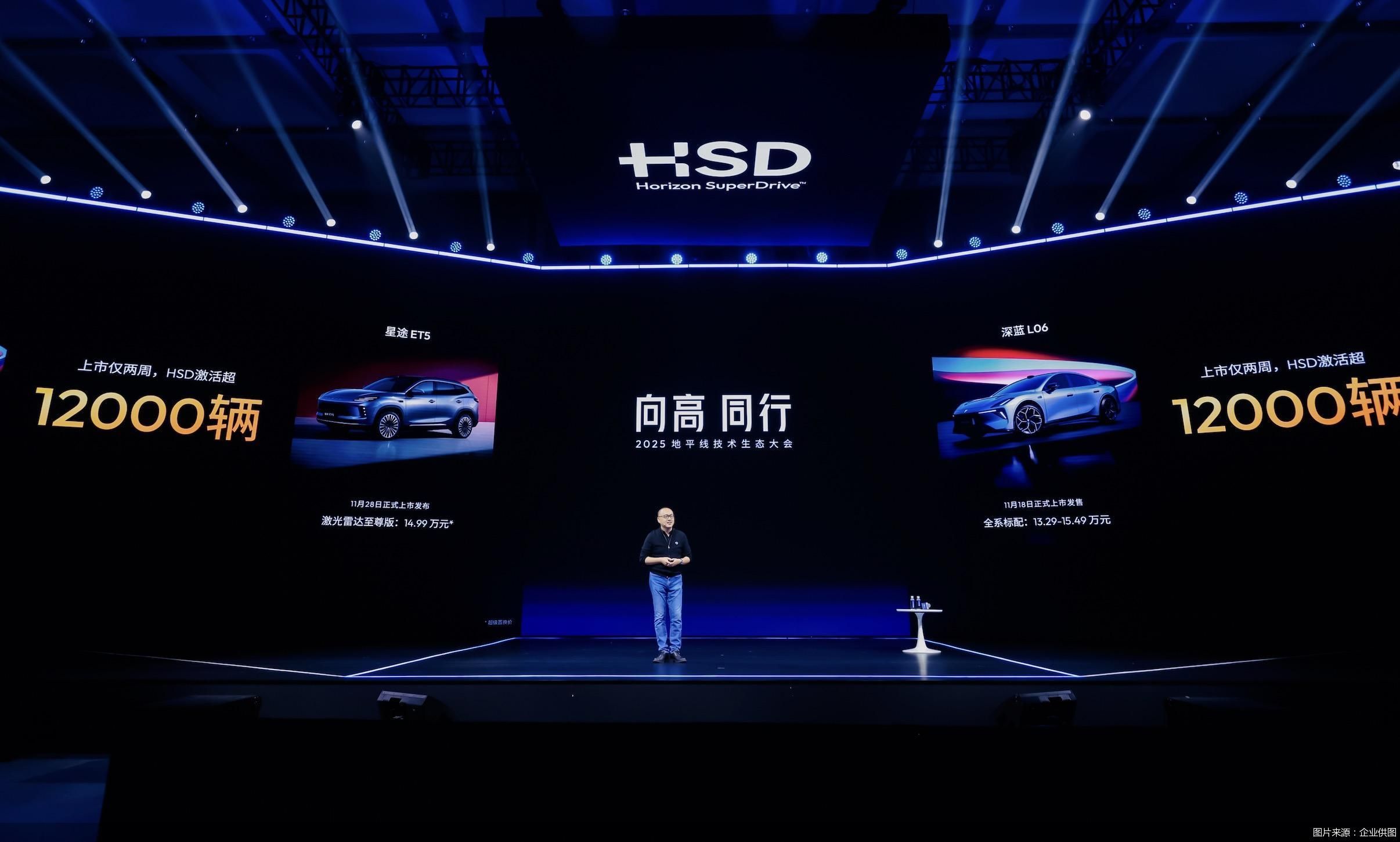
城区智驾将普惠到10万级车,首届地平线技术生态大会开幕
Bei Jing Shang Bao· 2025-12-09 02:09
Core Insights - The Horizon Together 2025 conference was held in Shenzhen, focusing on the transition of smart driving from "usable" commercialization to "user-friendly" widespread adoption [1] - Horizon announced the launch of its new "algorithm service" model, HSD Together, aimed at significantly reducing human input, computing power consumption, and time to market by 90% for partners [1] - The company is set to mass-produce its urban auxiliary driving solution based on the Journey 6M chip, making reliable urban smart driving experiences accessible to the 100,000 yuan national car market [1] Company Developments - Horizon's HSD Together algorithm service will open its validated full-stack capabilities to the entire industry [1] - The first batch of mass production partners for the Journey 6M urban auxiliary driving solution includes Bosch, Zhuoyue, Qingzhou Zhihang, Denso, CoolCore, and Zhidrive Continental [1] Industry Impact - The introduction of the Journey 6M chip is expected to enhance the smart driving experience in the affordable car segment, potentially increasing market penetration [1] - The conference theme "Towards High Peers" reflects the industry's shift towards collaboration and shared technological advancements in smart driving [1]