跨资产去杠杆

Search documents
在浅流动性里寻找真趋势——迈向2026年的多资产思维
经济观察报· 2025-11-25 13:11
Core Viewpoint - The article discusses the concept of "shallow liquidity," indicating a shift in global dollar liquidity from being extremely ample to merely sufficient, which can lead to significant volatility across various asset classes [4][6]. Group 1: Market Trends - In 2025, there is a notable disparity in asset performance, with silver and gold prices rising significantly, while major stock indices like the S&P 500 are experiencing declines [6]. - The market is currently witnessing a "shallow liquidity market," characterized by a rebound in U.S. and Hong Kong stocks, while funds are shifting from high-growth sectors to defensive sectors [7]. - Analysts suggest that this reflects a cross-asset deleveraging process, where funds are realigning based on price, interest rates, and leverage [8]. Group 2: Federal Reserve Dynamics - The Federal Reserve is experiencing internal divisions regarding potential interest rate cuts, with some officials advocating for a reduction while others prefer to maintain current rates [10]. - The uncertainty surrounding short-term interest rate paths is increasing, with market expectations fluctuating rapidly [11]. Group 3: Goldman Sachs Insights - Goldman Sachs' 2026 outlook emphasizes a multi-layered framework for investment, suggesting a shift from a U.S.-centric equity market to a more diversified global approach [13]. - The report highlights the importance of fixed income strategies, advocating for a return to duration management and credit differentiation in response to global inflation and growth disparities [14]. - Private equity and real estate are seen as areas where value creation will be prioritized over mere valuation stories, with a focus on operational improvements and technological enhancements [15]. Group 4: Investment Strategies for China - For Chinese investors, the focus should be on structural resilience amidst complexity, with an emphasis on value stocks and technology-driven consumption [17]. - Gold and precious metals are recommended as long-term assets for risk management, while fixed income investments are viewed as tools for stabilizing returns and hedging against volatility [18]. - The investment narrative is shifting towards building a resilient structure to navigate uncertainties rather than chasing fleeting opportunities [19].


英伟达业绩爆表却引发美股“大逆转”,标普创4月来最惨一日!
美股研究社· 2025-11-21 07:36
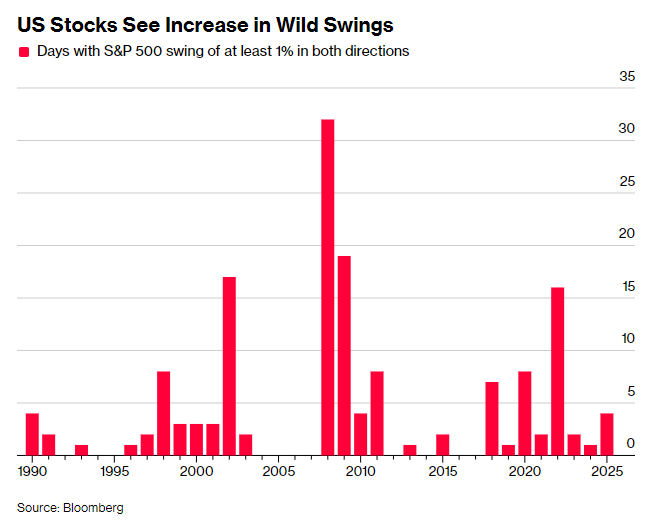
Core Viewpoint - The U.S. stock market experienced its most significant intraday reversal since April, with major indices dropping sharply, leading to a loss of over $2.7 trillion in market value, raising concerns among Wall Street traders about the underlying causes of the decline [5][6]. Market Performance - The S&P 500 index fell by 1.6%, marking a significant drop, while the Nasdaq 100 index saw a decline of 2.4%, reaching a new low since September, with a cumulative drop of 7.9% from its record high on October 29 [5][6]. - The VIX index, which measures expected stock volatility, rose above 26 for the first time since April, indicating increased market uncertainty [5][6]. Key Factors Behind the Decline - Concerns about whether AI projects can generate sufficient revenue or profits to justify substantial technological investments resurfaced [6]. - The strong employment report from September was interpreted as a signal that the Federal Reserve may not lower interest rates again this year [6]. - The drop in Bitcoin to a six-month low was viewed as a risk-off signal contributing to the stock market's decline [6]. - High stock valuations and rising volatility ahead of the expiration of approximately $3.1 trillion in nominal options were also cited as potential factors [6][7]. Analyst Insights - Analysts highlighted various unresolved economic and market challenges, including labor market strength, tariffs, inflation, and the sustainability of AI investments [11]. - Concerns about overvaluation and the trend of debt financing potentially overshadowing shareholder returns were emphasized [12]. - The mechanical outflow of funds from trend-following strategies could continue in the coming days, leading to further selling pressure [12]

华尔街集体懵了!美股惊现“四月以来最大反转” 交易员四处找“元凶”
Zhi Tong Cai Jing· 2025-11-21 00:44
Core Viewpoint - The U.S. stock market experienced its most severe intraday reversal since April, with major indices hitting their lowest levels in over two months, leading to confusion among Wall Street traders regarding the underlying causes [1][3]. Market Performance - The S&P 500 index initially rose by 1.9% within the first hour of trading but ultimately closed down by 1.6%, resulting in a loss of over $2.7 trillion in market value [3]. - The Nasdaq 100 index led the decline, closing down 2.4%, with a cumulative drop of 7.9% from its record high on October 29 [3]. - The VIX index, which measures expected stock volatility, closed above 26 for the first time since April, indicating increased market uncertainty [3]. Company-Specific Impacts - Nvidia's stock was significantly affected, initially rising by 2.4% before falling by 3.2%, leading to a market cap loss of nearly $400 billion from its intraday high [4]. - Despite Nvidia's revenue forecast exceeding expectations, concerns about the sustainability of AI chip spending led to a lack of positive investor response [4]. Economic Indicators and Concerns - The S&P 500 index has dropped over 5% from its October peak and has fallen below the 100-day moving average for the first time since February, closing at its lowest level since September 11 [6]. - The sell-off was particularly pronounced in high-risk sectors, with a heavily shorted stock index down 3.5% and Goldman Sachs' unprofitable tech company index down 3.7% [6]. Analyst Insights - Analysts highlighted various unresolved economic and market issues, including labor market strength, tariffs, inflation, and the sustainability of AI investments [7]. - Concerns were raised about the high valuations of stocks and the implications of recent debt financing trends on shareholder returns [7][8]. - The potential for further selling pressure was noted, particularly if the market continues to decline, as systematic strategies remain in a fragile state [8].