
远程异地评标

Search documents
成武:“三地联手”携手开启远程异地评标新模式
Qi Lu Wan Bao· 2025-12-18 03:46
Core Viewpoint - The collaboration between Heze Public Resource Trading Center Chengwu Branch, Liangshan Public Resource Trading Center, and Jinan Public Resource Trading Center successfully completed remote evaluation for the Jinan water supply and supporting facilities project, enhancing resource optimization and ensuring a fair evaluation process [1] Group 1 - The collaboration marks the first time Chengwu Branch participated as a deputy venue in the "1+N" remote evaluation work, providing a model for future projects [1] - The project involved comprehensive testing of audio-video transmission systems, electronic evaluation systems, and cloud signature systems to ensure a stable remote evaluation process [1] - Experts conducted evaluations online, accessing project materials in real-time with seamless audio-video interaction and electronic signature integration [1] Group 2 - Chengwu Branch aims to use this collaboration as a stepping stone to deepen cross-regional trading cooperation mechanisms and improve public resource allocation efficiency [1] - The initiative is expected to normalize the "1+N" remote evaluation work, providing strong support for the advancement of cross-regional cooperation in public resource trading [1]
国家发展和改革委员会部署加快推广远程异地评标
Xin Hua She· 2025-10-02 02:01
Core Viewpoint - The National Development and Reform Commission has issued a notice to accelerate the promotion of remote off-site bid evaluation across the country [1] Group 1: Implementation Guidelines - Provincial bidding and tendering guidance departments are required to collaborate with administrative supervision departments to determine the types and scale standards for projects eligible for remote off-site evaluation, which must be publicly announced [1] - The units responsible for establishing the bid evaluation expert database must define the scope of shared expert resources according to technical standards and create a directory of shared resources [1] - The remuneration standards and payment methods for experts in the evaluation expert database must be disclosed, with the possibility of remuneration being based on the standards of the respective expert database or negotiated between the main and secondary expert database units [1] Group 2: Technical and Security Standards - Local authorities are to gradually optimize platform system functions and upgrade evaluation site facilities to support remote off-site evaluations, adhering to principles of resource conservation and avoiding redundant construction [1] - New or renovated platform systems and facilities must align with technical standards, and a security protection system suitable for remote off-site evaluations must be established, detailing requirements for network security measures, data encryption, backup, access control, security audits, and confidentiality management [1]
国家发展改革委部署加快推广远程异地评标
Xin Hua Wang· 2025-10-01 07:21
Core Viewpoint - The National Development and Reform Commission has issued a notice to accelerate the promotion of remote and off-site bid evaluation across the country [1] Group 1: Implementation Guidelines - Provincial bidding and tendering guidance departments are required to collaborate with administrative supervision departments to determine the types and scale standards of bidding projects for remote off-site evaluation, which should be made public [1] - The expert evaluation resource sharing scope must be defined by the expert pool establishment units according to technical standards, and a shared resource directory for the expert evaluation pool should be formed [1] - The remuneration standards and payment methods for evaluation experts in the expert pool must be disclosed, with the possibility of remuneration being based on the standards of the expert pool or negotiated by the main and deputy expert pool establishment units [1] Group 2: Technical and Security Standards - Local authorities are to gradually optimize platform system functions and upgrade evaluation site facilities to support remote off-site evaluations according to technical standards [1] - There is an emphasis on resource conservation and efficiency, urging the use of existing hardware and software conditions to avoid redundant construction and resource waste [1] - New or renovated platform systems and evaluation sites should align with technical standards, and a security protection system for remote off-site evaluations must be established, including requirements for network security measures, data encryption, backup, expert information access control, security audits, monitoring, and personnel confidentiality management [1]
广州创新评标定标机制 探索破解招投标“三角难题”
Guang Zhou Ri Bao· 2025-09-24 01:54
Core Viewpoint - Guangzhou is actively reforming its engineering construction project bidding system to achieve better quality, economic efficiency, and integrity in the bidding process, addressing the "three difficult problems" of quality, economy, and integrity in engineering bidding [2][5][10]. Group 1: Challenges and Solutions - Challenge: Small and medium-sized enterprises (SMEs) struggle to compete against larger firms due to a "big fish eats small fish" dynamic [3][5]. - Solution: Implementing a "graded classification" management approach to allow for more scientific resource allocation, enabling SMEs to compete on a more level playing field by lowering evaluation thresholds for smaller projects [5][6]. Group 2: Enhancing Competition - Challenge: Insufficient competition leads to poor cost control and potential corruption in bidding processes [6][7]. - Solution: Introducing measures to activate a "catfish effect" to foster healthy competition, including randomizing evaluation rules to reduce collusion between bidders and tenderers [6][7][8]. Group 3: Transparency and Accountability - Challenge: Illegal subcontracting and quality compromises due to lack of oversight [8][9]. - Solution: Strengthening the evaluation of actual construction units and making the management of subcontractors and materials transparent to ensure quality and safety [8][9]. Group 4: Expert Integrity - Challenge: Experts in the bidding process have been compromised, leading to biased evaluations [10][11]. - Solution: Implementing a "lifetime responsibility" system for evaluation experts to ensure accountability and integrity in the evaluation process, alongside measures to prevent collusion [10][12]. Group 5: Efficiency through Technology - Challenge: Traditional manual evaluation methods are inefficient and prone to errors [14][15]. - Solution: Utilizing AI-assisted evaluation systems to enhance efficiency and accuracy in the bidding process, significantly reducing the time required for evaluations [14][15][16].


民航专业工程首次实现四省(市)远程异地全流程电子化评标
Zhong Guo Min Hang Wang· 2025-09-18 08:49
Core Viewpoint - The Civil Aviation Administration of China (CAAC) has successfully conducted a remote evaluation for the "Hunan Air Traffic Control VHF Equipment Update Project," marking a significant milestone in the implementation of remote evaluation practices in the civil aviation engineering construction sector [1][2]. Group 1: Implementation of Remote Evaluation - The remote evaluation pilot is a practical application of the State Council's directives aimed at innovating and improving the bidding market [2]. - This initiative builds on previous pilot projects completed in two provinces and is organized according to the "Pilot Work Guidelines for Remote Evaluation of Civil Aviation Professional Engineering Projects" [2]. - The remote evaluation has validated the stability of the civil aviation electronic trading system and the feasibility of cross-regional collaboration and supervision [2]. Group 2: Technical and Operational Aspects - Various technical challenges were addressed, including encrypted data transmission and real-time audio-video interaction, through collaborative testing among four regional trading centers [2]. - A full-process simulation of the virtual project was conducted to optimize emergency response procedures [2]. - The CAAC's regional management bureaus effectively coordinated to ensure proper supervision and collaboration across regions [2]. Group 3: Benefits and Future Plans - Remote evaluation enhances the advantages of electronic trading systems, breaking geographical limitations and improving information confidentiality [3]. - It allows evaluation experts to access public resource trading centers conveniently, reducing costs related to transportation, accommodation, and document printing for bidding companies [3]. - The CAAC plans to expand the scope of remote evaluation pilot projects and develop related institutional documents to further optimize the civil aviation bidding market [3].
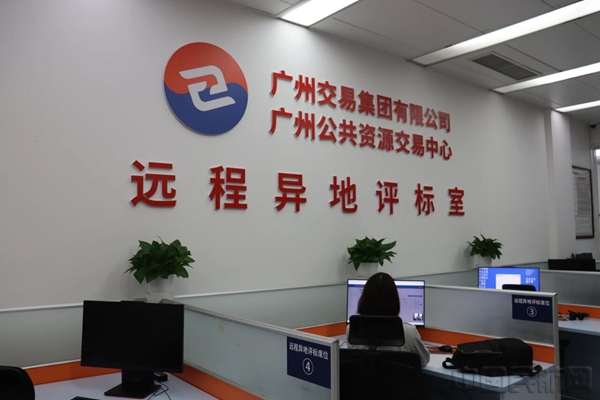
国家发改委:加快推广远程异地评标
Zheng Quan Shi Bao Wang· 2025-09-12 08:32
Core Viewpoint - The National Development and Reform Commission (NDRC) has issued a notice to accelerate the promotion of remote off-site bid evaluation, emphasizing the need for collaboration among various departments and stakeholders in the bidding process [1] Group 1: Implementation and Coordination - Local bidding and tendering guidance departments are urged to take the lead in enhancing coordination with administrative supervision departments [1] - Evaluation expert database organizations and public resource trading centers are encouraged to actively implement the remote off-site evaluation process [1] Group 2: Cross-Province Cooperation - Localities are instructed to strengthen cross-province cooperation by signing agreements and memorandums, clarifying compensation, service guarantees, and regulatory collaboration [1] - The promotion of cross-province remote off-site evaluation is to be accelerated [1] Group 3: Support for State-Owned Enterprises - State-owned enterprises are encouraged to adopt remote off-site evaluation practices in accordance with the notice [1] Group 4: Technical Support and Standards - The China Public Bidding and Tendering Service Platform will establish a national shared node for remote off-site evaluation, adhering to principles of openness, neutrality, sharing, and compatibility [1] - The NDRC will organize the China Bidding and Tendering Association and relevant units to continuously optimize and improve technical standards based on practical applications [1]
陕西:数字赋能阳光采购 榆阳区打造营商环境新样本
Zhong Guo Fa Zhan Wang· 2025-08-20 04:53
Core Viewpoint - The government procurement reform in Yuyang District, Yulin City, Shaanxi Province, focuses on digital transformation and innovative evaluation methods to enhance the procurement environment and support small and medium-sized enterprises (SMEs) [1][2][3][4] Group 1: Digital Transformation in Procurement - Yuyang District has implemented a comprehensive electronic transaction reform, achieving full-process and full-project electronic procurement, significantly reducing participation costs for suppliers [2] - The electronic procurement process allows suppliers to obtain documents, create electronic bids, and participate in remote bidding online, eliminating the need for physical presence and reducing expenses related to paper materials and travel [2] - Since the implementation of electronic transactions, 175 projects have been completed with a total transaction value of 270 million yuan, saving 5.58 million yuan in fiscal funds and over 950,000 yuan in costs for suppliers related to paper bids [2] Group 2: Support for Small and Medium-sized Enterprises - By 2025, the procurement reserved share for SMEs in Yuyang District is set to reach 65%, providing more market opportunities [3] - The district has eliminated bid and performance guarantees in government procurement, easing financial burdens on enterprises, and offers a 20% price deduction for small and micro enterprises during the evaluation phase [3] - The prepayment ratio for contracts with SMEs is at least 40%, and payments must be made within 30 days of delivery, ensuring timely cash flow for SMEs [3] Group 3: Innovative Evaluation Models - Yuyang District has introduced a remote evaluation model in collaboration with public resource trading centers, allowing experts from different regions to conduct evaluations online, thus saving time and resources [4] - This model enhances procurement efficiency, shortens project cycles, and improves evaluation quality by avoiding conflicts of interest and human interference [4] - The remote evaluation system promotes the sharing and integration of public resources across regions, laying a solid foundation for a unified and competitive public resource trading market [4]
为各类经营主体“破壁清障”——纵深推进全国统一大市场建设观察
Ren Min Ri Bao· 2025-08-08 06:48
Group 1 - The article discusses the challenges faced by companies in entering local markets due to local protectionism and administrative barriers, such as "directory lists" and "exclusive agreements" [2][4][5] - Companies like Li Yan's educational company and Chen Fei's electric vehicle charging station company experienced difficulties in participating in local tenders due to restrictive requirements imposed by local authorities [4][5][6] - The implementation of the "Fair Competition Review Regulations" in 2024 aims to eliminate these barriers and promote a more equitable market environment [6][7] Group 2 - The article highlights the success of remote and cross-regional bidding processes, which have increased competition and reduced costs for companies participating in government procurement [11][12][17] - The introduction of remote bidding has led to a significant increase in the participation of external companies, with the proportion of external bidders in Beihai rising from 58% to 83% [17] - The article emphasizes the positive impact of these reforms on local businesses, leading to improved service quality and customer satisfaction [8][10] Group 3 - The establishment of the Deep-Shan Special Cooperation Zone has facilitated the relocation of companies like Good Brothers Electronics, providing them with favorable policies and infrastructure [18][19] - The cooperation zone has seen significant economic growth, with a 40% increase in GDP and a 77.3% rise in industrial output value in the first quarter of 2024 [20] - The concept of "reverse flying land" has emerged, allowing companies from the Pearl River Delta to establish operations in less developed regions, fostering innovation and collaboration [21][22] Group 4 - The article illustrates the success of the Guangxi Zhongke Huari Microelectronics Company, which benefited from the "reverse flying land" model, leading to substantial revenue growth [22][23] - The collaboration between Shenzhen and Nanning has resulted in over 100 companies being incubated, enhancing the regional innovation ecosystem [23]
促进公平竞争 激发市场活力 为各类经营主体“破壁清障”
Ren Min Ri Bao· 2025-08-08 03:18
Group 1: Market Barriers and Fair Competition - Local protectionism creates invisible barriers for businesses, such as "directory lists" and "exclusive agreements" [2] - Companies like Li Yan's and Chen Fei's faced challenges entering markets due to restrictive local regulations, such as the requirement for a local branch to qualify for bids [3][4] - The implementation of the "Fair Competition Review Regulations" in August 2024 aims to eliminate these barriers and promote a unified national market [5] Group 2: Regulatory Changes and Impact - In June 2024, investigations led to the cancellation of restrictive bidding qualifications in Baise City, allowing Li Yan's company to conduct educational activities [5] - Chen Fei's company benefited from the removal of the "exclusive operating rights" for charging stations, enabling them to install over 100 charging devices shortly after the regulatory change [6] - The competitive environment improved service quality in the charging station sector, benefiting consumers [7] Group 3: Remote Evaluation and National Integration - The introduction of remote evaluation for government procurement has increased fairness in the bidding process, allowing companies from across the country to compete equally [10][11] - Remote evaluation reduces costs for bidders, with significant savings reported by companies participating in the process [15] - The percentage of external companies participating in bids increased from 58% to 83%, with their success rate rising from 15% to 70% [15] Group 4: Regional Cooperation and Development - The establishment of the Deep-Shan Special Cooperation Zone has facilitated a collaborative environment for businesses, allowing for better resource allocation and policy alignment with Shenzhen [16][17] - The cooperation zone has seen significant economic growth, with a 40% increase in GDP and a 77.3% rise in industrial output value in the first quarter of 2023 [19] - The "reverse flying land" concept promotes industrial transfer and collaboration between regions, enhancing innovation and market access for companies [20][21]
促进公平竞争 激发市场活力 为各类经营主体“破壁清障”(人民眼·建设全国统一大市场) ——纵深推进全国统一大市场建设观察之一
Ren Min Ri Bao· 2025-08-07 23:26
Group 1 - The construction of a unified national market is essential for building a new development pattern and promoting high-quality development in China [2][4] - The need to eliminate local protectionism, market segmentation, and "involution" competition is emphasized by government officials [2][3] - The implementation of the Fair Competition Review Regulation in 2024 aims to create a more equitable market environment for various business entities [5][8] Group 2 - Local barriers such as "directory lists" and "exclusive agreements" hinder fair competition and market access for companies [3][5] - The case of a company in Baise, Guangxi, illustrates the challenges faced due to local regulations that restrict market entry [6][8] - The establishment of anti-monopoly and fair competition committees in regions like Guangxi aims to address these issues and promote market fairness [6][7] Group 3 - The introduction of remote and cross-regional evaluation for government procurement projects enhances competition and reduces costs for businesses [12][18] - The shift from local to national evaluation systems has increased participation from external companies, improving their chances of winning bids [18][22] - The remote evaluation system has led to significant cost savings for companies, allowing them to focus on competitive strengths rather than relationships [18][22] Group 4 - The establishment of the Deep-Shan Special Cooperation Zone demonstrates a successful model of regional collaboration and policy integration [19][20] - Companies relocating to the cooperation zone benefit from favorable policies and infrastructure, leading to significant growth in production and sales [20][22] - The concept of "reverse flying land" allows companies to leverage resources from developed regions while establishing operations in less developed areas [23][24] Group 5 - The collaboration between Shenzhen and Nanning through innovation centers fosters cross-border industrial cooperation and resource sharing [24][25] - The growth of companies like Guangxi Zhongke Huari Microelectronics showcases the potential of this cooperative model, with significant increases in sales and patent development [25]