适当性义务

Search documents
基金转换后亏损70万,法院:银行未重新评估,担责70%
21世纪经济报道· 2026-03-19 09:16
Core Viewpoint - The implementation of the "Financial Institutions Product Appropriateness Management Measures" aims to establish standards for the appropriateness management system, ensuring that financial institutions understand their clients and products, thereby protecting investors' rights in financial disputes [1]. Group 1: Case Studies - The first case involves an elderly investor, Mr. Li, who was misled into purchasing a trust product despite not meeting the investment criteria. The court ruled that the bank failed to fulfill its appropriateness obligations, resulting in a 30% compensation for Li's losses [3][4]. - The second case features Mr. Shang, who faced losses after converting his fund to a higher-risk product without proper risk assessment by the bank. The court determined that the bank did not adequately inform Shang about the new product's risks, leading to a 70% compensation for his losses [6][8]. - The third case concerns Mr. Cai, an experienced investor who claimed that the trust company did not fulfill its appropriateness obligations. The court ruled in favor of Cai, ordering the trust company to compensate him for his losses, emphasizing that investment experience does not exempt financial institutions from their responsibilities [10]. Group 2: Regulatory Insights - The new regulations prohibit sales personnel from influencing risk assessment results, highlighting the importance of investors completing risk questionnaires truthfully [4]. - Financial institutions are required to provide special financial services and risk prevention measures for elderly investors, ensuring they understand the risks associated with financial products [8]. - The regulations clarify that financial institutions are responsible for collecting accurate client information and conducting thorough risk assessments, with investment experience serving only as a reference for risk awareness [10].


投资者购买理财产品亏损,代销银行为何频频被判赔
Mei Ri Jing Ji Xin Wen· 2026-01-29 12:53
Core Viewpoint - The era of "capital preservation and guaranteed returns" has ended, and the principle of "buyer bears responsibility" has become widely accepted, but it does not absolve sales institutions from accountability for improper recommendations [1][3]. Group 1: Legal Cases and Responsibilities - In a case involving Everbright Bank, the court ruled that both the investor and the bank should share responsibility for losses, with each party bearing approximately 7.57 million yuan of the investor's principal loss due to the bank's failure to adequately assess the investor's risk tolerance and inform them of the product's risk level [4][5]. - Another case with Hengfeng Bank resulted in a similar ruling, where the bank was found to have inadequately fulfilled its duty to understand the customer, leading to a significant loss for the investor [6][7]. - The court's decisions highlight that if a sales institution fails to meet its suitability obligations, it may be held liable for the investor's losses, regardless of the "buyer bears responsibility" principle [8][9]. Group 2: Suitability Obligations - Legal experts emphasize that the principle of "seller bears responsibility" is a prerequisite for "buyer bears responsibility," meaning that sales institutions must fulfill their suitability obligations to avoid liability [8][10]. - The core obligations include understanding the customer, understanding the product, risk matching, and providing full disclosure of risks, which are legally mandated and cannot be waived through standard clauses or verbal agreements [9][10]. - Courts assess the degree of fault from both parties when determining compensation, with the potential for varying compensation levels based on the severity of the sales institution's violations [9].


37万亿的基金圈,“摩擦”越来越多了
Sou Hu Cai Jing· 2026-01-23 04:13
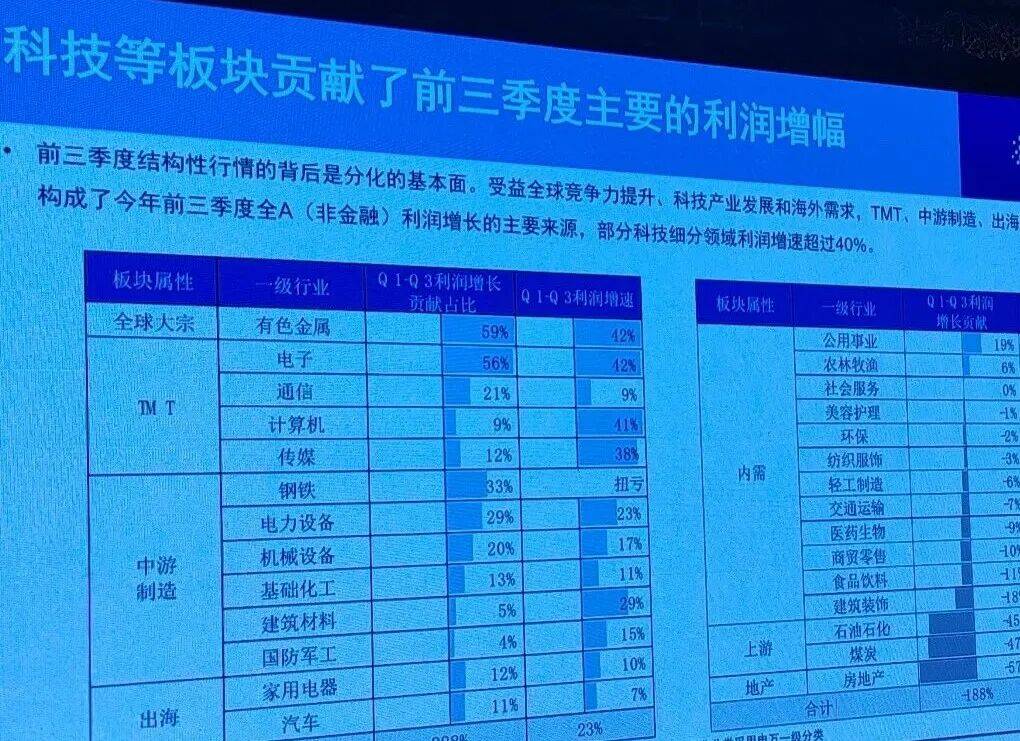
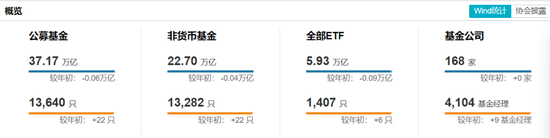
Group 1 - The core viewpoint of the article highlights the significant differentiation and friction within the public fund industry, despite its seemingly prosperous appearance, with a notable disparity between the number of fund managers and the number of listed companies in the A-share market [1][2] - The article mentions that the management scale of public funds has increased by 37 trillion, while the number of industry professionals remains around 33,000, indicating a potential inefficiency in resource allocation [1][2] - The article points out that while the market index has risen to 4,100 points, the main profit growth has come from technology sectors, with domestic demand remaining weak and the real estate sector continuing to decline [1][2] Group 2 - The article discusses a recent legal case where a fund manager is being sued by investors, which reflects the growing trend of litigation in the asset management sector [3][9] - It emphasizes that in asset management disputes, investors often struggle to claim compensation based solely on market downturns or product value declines, as the principle of "buyer beware" has become prevalent post-regulatory reforms [4][6] - The article highlights the importance of compliance and the obligation of fund companies to provide adequate risk warnings, while also urging investors to understand the nature of high-volatility strategies [6][24] Group 3 - The article introduces a specific case involving a fund manager who previously managed over 100 billion but faced significant performance declines, leading to investor lawsuits [12][18] - It discusses the concept of "style drift," where a fund's investment focus shifts significantly, potentially leading to investor dissatisfaction if the performance does not meet expectations [15][20] - The article notes that the recent regulatory changes regarding style drift may provide investors with new grounds for litigation, reflecting a shift in the legal landscape for fund management [18][24] Group 4 - The article outlines the shared responsibility of fund managers and sales institutions in ensuring suitability obligations, emphasizing the need for proper risk assessment and matching products to investors' risk profiles [24] - It highlights the challenges faced by the industry, including exaggerated marketing claims and the potential for investors to purchase products beyond their risk tolerance [24][25] - The article concludes with insights on the impact of fee reductions on the asset management ecosystem, affecting the revenue of distribution channels and their ability to provide value-added services [25]
37万亿的基金圈 “摩擦”越来越多了
Xin Lang Cai Jing· 2026-01-23 04:04
Core Insights - The article discusses the dichotomy within the public fund industry, highlighting the disparity between the number of fund managers and the number of listed companies, as well as the significant increase in management scale without a corresponding rise in personnel [1][31] - The market has reached a peak of 4100 points, with technology sectors contributing significantly to profit growth, while domestic demand remains weak and the real estate sector continues to decline [2][32] Fund Management and Performance - There are 4,104 fund managers managing 13,282 funds, while the number of listed companies in the A-share market is only 5,479 [1][31] - The management scale has increased by 37 trillion, yet the number of industry professionals remains around 33,000 [1][31] - The technology sector has been a major contributor to profit growth in the first three quarters, benefiting from global competitiveness and technological development [3][32] Legal and Regulatory Context - A recent case involves a fund manager being sued by investors, raising questions about the appropriateness of investment strategies and compliance boundaries [4][12] - The article emphasizes that if investors claim compensation solely based on market downturns or net value declines, they are unlikely to succeed in court [9][35] - The core dispute revolves around the suitability obligations and compliance boundaries, highlighting the need for fund companies to maintain compliance and for investors to understand the nature of high-volatility strategies [12][37] Investor Behavior and Market Dynamics - The article discusses the phenomenon of "style drift" in funds, where a fund's investment focus shifts significantly, potentially leading to investor dissatisfaction if performance declines [19][43] - Investors may pursue legal action if they feel misled by the fund's marketing promises, particularly if the fund's current holdings do not align with prior commitments [20][45] - The recent regulatory changes regarding style drift may provide new grounds for investor lawsuits [21][46] Industry Trends and Challenges - The article notes that the trend towards standardized, transparent, and liquid products, such as ETFs, is growing rapidly, reflecting market preferences [26][52] - There is a rising pressure on financial institutions from investors who exploit complaint mechanisms, which can lead to operational challenges and financial strain on employees [28][52] - The decline in fund fees has a cascading effect on the asset management ecosystem, impacting the revenue of distribution channels and their ability to offer value-added services [30][52]
中信证券为什么要赔富安娜2928万
Xin Lang Cai Jing· 2026-01-04 06:58
Core Viewpoint - The court ruled that CITIC Securities must compensate its client, Fuanna, for investment losses, marking a significant precedent in financial disputes involving listed companies [2][34]. Group 1: Case Background - CITIC Securities customized a directional asset management plan for Fuanna starting in April 2018, with Fuanna investing approximately 100 million yuan annually in a rolling investment scheme [34][35]. - The third phase of investment, amounting to 100 million yuan, was directed into a trust that ultimately defaulted due to the bankruptcy of the underlying asset's developer, Land Resources [3][34]. Group 2: Legal Findings - The court analyzed the asset management industry's practices, including "single contract, rolling investment" and the applicability of suitability obligations for professional investors [35][40]. - The court determined that CITIC Securities failed to fulfill its suitability obligations before the third phase of investment, which involved higher risk assets compared to previous phases [37][59]. Group 3: Professional Investor Status - CITIC Securities argued that Fuanna, as a professional investor, did not require the same level of risk disclosure as ordinary investors [41][42]. - The court clarified that being a professional investor does not exempt one from the obligation to understand their investment preferences and risk tolerance [45][56]. Group 4: Risk Disclosure Obligations - The court emphasized that financial institutions must provide specific and substantial risk disclosures rather than generic warnings [55][56]. - Despite Fuanna's acknowledgment of risks in a risk disclosure document, the court found that the disclosures were too vague to be considered adequate [55][56]. Group 5: Compensation and Loss Assessment - The court ruled that CITIC Securities must compensate Fuanna for 50% of the unrecovered principal amounting to approximately 29.29 million yuan [30][62]. - The court noted that even without the completion of asset liquidation, losses could still be recognized based on the circumstances surrounding the investment [60][61].