AI科技

Search documents
策略周报:战略资源品还有多大空间?-20260314
Guoxin Securities· 2026-03-14 13:13
Core Conclusions - The recent surge in strategic resource products is driven by concerns over AI substitution and escalating geopolitical conflicts, with frequent industry rotations observed this week, particularly in petrochemicals and non-ferrous metals [1] - The market for strategic resource products is supported not only by short-term shocks but also by long-term supply-demand changes that elevate price levels, indicating a potential continuation of the upward trend in the medium term [1][2] - Despite short-term market fluctuations, the overall bullish market trend for the year remains intact, with a focus on strategic resources under safety considerations and domestic demand-related assets, while AI technology remains a key theme for the medium term [1][3] Supply and Demand Dynamics - The current market for strategic resource products is influenced by supply constraints and rigid demand, which are driving price levels higher in the medium to long term [2][14] - Long-term capital expenditure is insufficient, resource nationalism is rising, and operational risks are increasing, all of which constrain the supply of strategic resource products [16] - The demand for strategic resources is being shaped by industrial trends and macro geopolitical changes, with AI and new energy sectors accelerating demand growth [17] Geopolitical Influences - The worsening geopolitical situation in the Middle East has catalyzed a rapid increase in oil prices, further stimulating the market for strategic resource products [13][14] - The ongoing geopolitical tensions are expected to suppress market risk appetite until the situation clarifies, although the underlying logic driving the stock market is anticipated to prevail in the medium term [25][26] Investment Focus - There is a strong emphasis on strategic resource products and a focus on domestic demand-related assets, with AI technology remaining a central theme for medium-term investments [3][27] - The report highlights the importance of safety considerations in the current complex external environment, with policies aimed at expanding domestic demand likely to benefit undervalued assets in real estate and consumer sectors [27] - The report suggests that the AI technology sector will continue to evolve, with a focus on applications and upstream energy and power sectors, as global energy supply tightens [27]
第三次风暴,杀过来了?
格隆汇APP· 2026-03-13 10:16
Core Viewpoint - The article discusses the recent surge in oil prices, which has significant implications for the global economy, particularly in terms of inflation and potential recession risks. The rise in oil prices is attributed to a combination of geopolitical tensions and structural economic issues, leading to concerns about stagflation and its impact on various sectors [2][8][10]. Group 1: Oil Price Impact - Brent crude oil futures surpassed $100 per barrel, triggering renewed market panic [2] - High oil prices are expected to increase global inflation rates by approximately 0.7 percentage points for every $100 increase in oil prices [12] - The rise in oil prices is causing a ripple effect, increasing costs across various sectors including aviation, logistics, and agriculture [13][14] Group 2: Economic Consequences - The surge in oil prices could push the U.S. core PCE inflation above 3.1%, disrupting inflation control efforts [15] - If oil prices remain high for an extended period, it could significantly drag down economic growth, potentially leading to recession [17][18] - The increase in energy import costs is expected to worsen trade conditions for manufacturing powerhouses in Europe and Asia, squeezing corporate profits [19] Group 3: Market Reactions - The capital markets are experiencing a split, with some sectors like energy stocks seeing gains while tech stocks face valuation pressures due to rising interest rate expectations [29][32] - The article notes that while Asian markets are mostly down, the declines are not as severe as previous market shocks, indicating some market adaptation to oil price volatility [25][36] - Investors are advised to focus on sectors that can hedge against rising oil prices, such as energy and certain commodities [39] Group 4: Future Scenarios - Two potential scenarios are outlined: a prolonged conflict leading to sustained high oil prices and economic stagnation, or a quick resolution resulting in a sharp decline in oil prices and a market rebound [42][46] - In the event of a prolonged conflict, the article predicts significant market downturns, particularly for tech stocks, while physical assets like energy and gold may perform better [44][45] - Conversely, if tensions ease, there could be a rapid market recovery, particularly for previously suppressed sectors [46]


和讯投顾黄琼珂:震荡延续,后面怎么走?
Sou Hu Cai Jing· 2026-02-26 09:20
Core Viewpoint - The market is experiencing a divergence with the index reaching around 4150 points but failing to break through, indicating a potential "volume stagnation" signal that increases the likelihood of a pullback [1] Market Analysis - The trading volume remains around 2.5 trillion, suggesting a lack of strong momentum in the market [1] - The Shanghai Composite Index has shown a divergence pattern on the 60-minute chart, indicating the need for patience in trading [1] Sector Rotation - There is no absolute leading sector in the current market; recent strong performers like oil and precious metals have seen a pullback [1] - The market is currently experiencing sector rotation, with aerospace showing unusual activity and AI technology sectors seeing a flow of funds [1] Investment Strategy - Investors are advised to be patient and wait for structural investment opportunities similar to those seen during the 14th Five-Year Plan, particularly as the 15th Five-Year Plan approaches [1] - It is emphasized that taking early positions and being cautious about chasing after rising stocks is crucial for better outcomes [1]
钢铁板块领涨,意味着什么?
Mei Ri Jing Ji Xin Wen· 2026-02-25 23:21
Group 1 - The core message of the news highlights that Anthropic's recent online event alleviated concerns about AI disruption, showcasing new features of its Claude Cowork AI software that facilitate collaboration with existing enterprise applications like DocuSign, LegalZoom, and Salesforce [2][3] - Following the announcement, US AI tech stocks rebounded, with the Nasdaq index rising over 1%, and notable companies such as Nvidia, Apple, Microsoft, and Meta experiencing varying degrees of stock price increases [3] - The positive sentiment from the event also impacted the A-share AI sector, leading to significant rebounds in AI hardware, communication equipment, and component sectors, with the component index reaching a historical high [3][4] Group 2 - The A-share market saw collective gains, with the Shanghai Composite Index rising by 0.72%, and the Shenzhen Component and ChiNext indices increasing by 1.29% and 1.41%, respectively [4] - The trading volume in the Shanghai and Shenzhen markets reached 24.812 billion yuan, an increase of 2.628 billion yuan compared to the previous day, indicating a robust market activity [4] - The Shanghai Composite Index broke through the previous high of 4142 points, suggesting a potential for continued upward movement in the market [5][6] Group 3 - The traditional cyclical sectors led the market rally, with steel, mineral products, non-ferrous metals, building materials, and chemicals showing significant gains, indicating a potential for sustained sector performance rather than daily rotations [6][8] - The non-ferrous metals sector index rose by 3.59%, while the rare earth sector index surged by 9.48%, driven by strong overseas demand and low inventory levels [7][8] - The chemical sector index increased by 2.11%, reaching its highest level since October 2021, with specific products like phosphate continuing to see price increases due to rising demand [8][9] Group 4 - The oil transportation sector experienced substantial gains, with companies like China Merchants Energy and COSCO Shipping Energy seeing stock price increases of over 8%, supported by favorable market conditions and demand for crude oil transportation [10] - The AI hardware sector showed signs of stabilization, with key stocks like "Yizhongtian," Industrial Fulian, and Shenghong Technology performing well, particularly in the PCB supply chain [10][11] - The steel sector's leadership in the market is often seen as a signal that the market may be approaching a peak, warranting close observation of future trends [12][13]





资金回归理性定价?MiniMax、智谱股价回调,关注港股大型科技公司补涨机会
Mei Ri Jing Ji Xin Wen· 2026-02-25 06:50
Group 1 - The core viewpoint of the articles highlights a contrasting performance between large tech companies like Alibaba and Tencent, which are experiencing a stock price recovery, and AI startups MiniMax and Zhiyu, which have seen significant stock price declines after their initial public offerings [1] - The market appears to be returning to rational pricing after a brief speculative surge in small-cap model companies, indicating that large Chinese tech giants are severely undervalued and may represent a bottoming opportunity for investors [1] - The Hang Seng Technology Index shows a significant discount compared to the A-share technology indices, reaching historical highs, suggesting a potential for recovery similar to past instances in 2022 [1] Group 2 - There has been a notable inflow of funds into Hong Kong tech-related ETFs, such as the Hang Seng Technology Index ETF and the Hang Seng Internet ETF, indicating a strategic accumulation of shares in major tech companies like Alibaba and Tencent [2] - These ETFs are listed on mainland stock exchanges and cover a basket of Hong Kong tech giants, reflecting investor confidence in the sector despite recent volatility [2] - The focus of the Hong Kong Stock Connect ETFs is on eligible stocks, excluding non-Hong Kong Stock Connect companies, which may influence investment strategies [2]
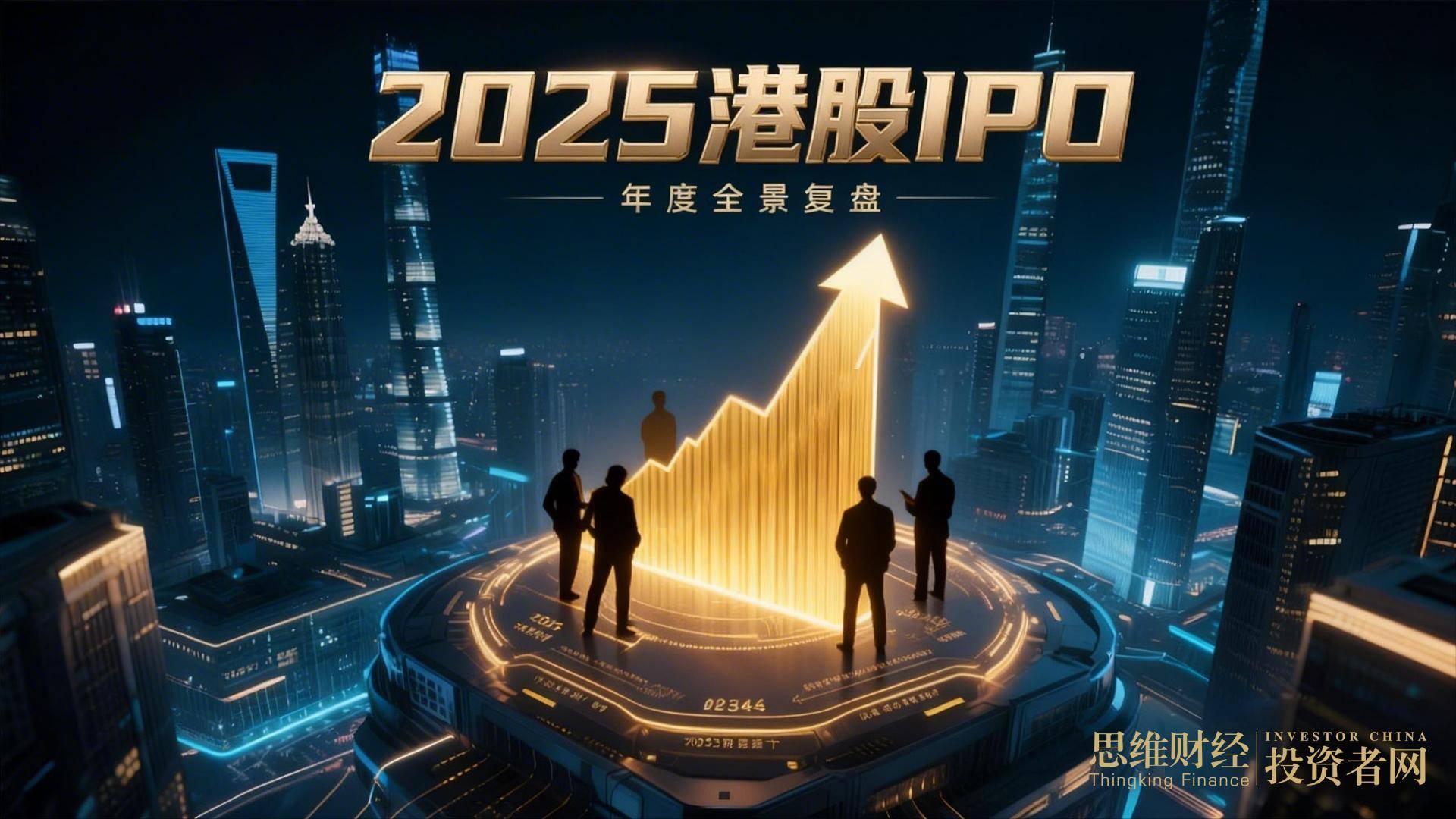
2025港股IPO年度全景复盘
Sou Hu Cai Jing· 2026-02-16 10:09
Core Insights - The strong resurgence of Hong Kong IPOs in 2025 is a central theme for the global capital markets, with nearly HKD 300 billion raised, reclaiming the top position in global IPO fundraising [2][7] - The Hong Kong IPO market has experienced a significant increase in both quantity and quality, with new listings up nearly 70% year-on-year and fundraising doubling compared to the previous year [2][3] Market Dynamics - The traditional dominance of internet and financial real estate sectors has been disrupted, with hard technology, advanced manufacturing, and biomedicine emerging as the three main pillars supporting the market [3][4] - Key sectors such as new energy, semiconductors, smart vehicles, and high-end equipment are now prominently represented in the Hong Kong market, enhancing its manufacturing base [3][4] Notable IPOs - Significant companies that went public in 2025 include: - CATL (宁德时代), raising approximately HKD 41 billion with a market cap of about HKD 920 billion and a PE ratio of around 18x [3] - Hengrui Medicine (恒瑞医药), a leader in innovative drugs, with a market cap of approximately HKD 320 billion and a PE of about 32x [3] - Sanhua Intelligent Control (三花智控), with a market cap of around HKD 180 billion and a PE of about 24x [3] - Haitian Flavoring and Food (海天味业), with a market cap of approximately HKD 420 billion and a PE of about 30x [3] - Chery Automobile (奇瑞汽车), with a market cap of around HKD 190 billion and a PE of about 12x [4] A+H Listing Trend - 2025 marked a significant year for A+H dual listings, with leading companies opting for this model to enhance global liquidity and valuation recovery [5][6] - The A+H model has become a standard for industry giants, reinforcing Hong Kong's position as the preferred overseas listing location for Chinese enterprises [6] Future Outlook - The recovery of the Hong Kong IPO market is seen as a result of multiple cyclical factors, including improved global liquidity, long-term valuation recovery, and the increasing demand for high-quality assets from mainland China [6][7] - Moving forward, the focus of the Hong Kong IPO market is expected to shift from quantity expansion to quality prioritization, with a stronger emphasis on industry logic over speculative trading [6][7]
荣耀前CEO赵明加盟千里科技,引领AI商业化战役
2 1 Shi Ji Jing Ji Bao Dao· 2026-02-12 11:32
Core Viewpoint - The appointment of Zhao Ming as a non-independent director candidate and potential co-chairman at Qianli Technology reflects a strategic shift towards commercializing AI technology, emphasizing the importance of product and profitability in the AI sector [1][3]. Company Overview - Qianli Technology, transitioning from traditional automotive manufacturing to an AI technology company, is led by early AI industry entrepreneur Yin Qi, who focuses on the strategic layout and research of AI frontier technologies [1][5]. - Zhao Ming, with over 25 years of global technology management experience and a background as the CEO of Honor, is expected to enhance Qianli Technology's commercial strategy and drive sustainable business growth [1][4]. Strategic Implications - The collaboration between Yin Qi and Zhao Ming is seen as a strong alliance that could help Qianli Technology break through in a competitive market by effectively integrating technology and commercial strategies [3][6]. - Zhao Ming's experience in consumer-facing commercialization and AI strategy is anticipated to strengthen Qianli Technology's capabilities in bringing AI products to market [6][7]. Financial Context - Qianli Technology reported revenues of 6.95 billion yuan in the first three quarters of 2025, but its net profit margin was below 1%, indicating a reliance on traditional automotive and motorcycle manufacturing for profits while its AI technology business is still in a high-investment phase [7].

最新!快手杀入2026年总台春晚“战局”
Xin Lang Cai Jing· 2026-02-09 03:33
Group 1 - Kuaishou has announced a partnership with China Central Television (CCTV) for the 2026 Spring Festival Gala, joining Douyin and Bilibili in competing for viewership [1][2] - Users can search for "Spring Festival Gala" on Kuaishou to reserve a live stream of the event, which will be presented through live broadcasts, on-demand videos, and short clips [1][2] - During the Spring Festival, Kuaishou will also launch interactive red envelope activities, allowing users to shake their devices to receive red envelopes [1][2] Group 2 - Douyin and Bilibili have already secured exclusive partnerships for the 2026 Spring Festival Gala, with Douyin as the exclusive partner for the new media "Vertical Screen Viewing" and Bilibili as the exclusive bullet screen video platform [1][2] - The collaboration for the 2026 Spring Festival Gala includes a diverse range of players, such as AI technology companies like Yushutech and Volcano Engine, as well as traditional liquor brands like Wuliangye, Yanghe, and Langjiu, all vying for a share of the significant viewership [1][2]

财信证券宏观策略周报(2.9-2.13):市场风格短期切换,节前继续关注消费-20260208
Caixin Securities· 2026-02-08 10:26
Group 1 - The market index and style are expected to further evolve in 2026, with a continued upward trend in the overall index, but a shift towards a more diversified market style [4][8][14] - The chemical sector is anticipated to replace non-ferrous metals as the leading sector for price increases, while AI applications are expected to take over from AI hardware [4][8][14] - The consumption sector is projected to replace dividend stocks as a new defensive choice, with potential opportunities in white liquor, beauty care, movies, and tourism during the pre-Spring Festival period [4][8][14] Group 2 - Recent market performance shows the Shanghai Composite Index decreased by 1.27%, while the Shenzhen Component Index fell by 2.11%, indicating a general downward trend in major indices [16] - The average daily trading volume in the Shanghai and Shenzhen markets was 23,863.81 billion, a decrease of 21.37% from the previous week, reflecting reduced market activity [16] - The consumption sector has shown strength, particularly in food and beverage and beauty care, but has not yet become the main market line, indicating a selective investment approach [7][9][14] Group 3 - The capital expenditure of major overseas tech companies is projected to reach approximately $650 billion in 2026, focusing on new data centers and AI-related infrastructure [10][11] - Concerns about the sustainability of AI capital expenditures have emerged, with potential impacts on stock prices if these expenditures do not correlate with revenue growth [10][11] - The recent Central Document No. 1 emphasizes promoting stable income for farmers, highlighting the importance of agricultural modernization and rural revitalization [12]
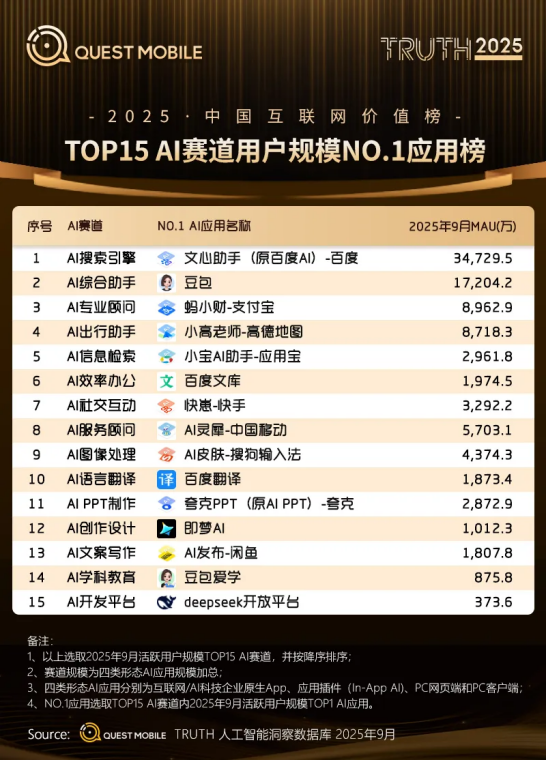
QuestMobile最新报告发布:闲鱼登上AI赛道用户规模NO.1应用榜
Jin Rong Jie Zi Xun· 2026-01-28 12:01
Core Insights - Xianyu has emerged as the number one application in the AI sector in terms of user scale, particularly excelling in AI copywriting with a monthly active user (MAU) count of 18.078 million [1][2] - Xianyu continues to lead the second-hand trading sector as the top app, with an overall MAU of 217 million, reflecting a year-on-year growth of 19.64% [1][3] User Growth and Rankings - The report from QuestMobile indicates that Xianyu's AI publishing product has significantly contributed to its user growth, with a service adoption rate of 87% and a total of 230 million items published [3] - Xianyu's MAU growth places it among the top apps with over 50 million MAU, highlighting its competitive position in the market [2][3] AI Product Development - Over the past two years, Xianyu has launched a series of AI products, including AI publishing, smart hosting, AI intelligent search, and AI market analysis, creating a comprehensive AI service ecosystem covering the entire transaction process [3]