风格漂移

Search documents
告别“基金盲盒”,防范“风格漂移”,重磅新规剑指公募基金顽疾
Zhong Guo Ji Jin Bao· 2026-02-01 12:13
Core Viewpoint - The new regulations for public fund performance benchmarks aim to address industry issues such as "benchmark ambiguity," "style drift," and "fund blind boxes," establishing a more standardized and transparent framework for fund evaluation and performance comparison [1] Group 1: Return to Benchmark Fundamentals - The new regulations break traditional fund classifications by setting targeted requirements for different underlying asset categories, enhancing the accuracy of performance benchmarks for mixed funds [2] - The public fund industry is shifting focus from scale expansion to quality improvement, with increasing investor demand for clear risk-return characteristics [2] Group 2: Improving Disclosure Efficiency - The final version of the regulations introduces three main changes to the disclosure requirements for performance benchmarks in periodic reports, including relaxed requirements for certain fund types and a focus on core investor concerns [3] - These adjustments aim to enhance operational efficiency in the industry and ensure that disclosures are more aligned with investor needs [3] Group 3: Enhancing Fund Classification Evaluation Precision - The new regulations provide detailed suggestions and key indicators for fund evaluation institutions, allowing fund managers and sales organizations to adopt these standardized classification results [4] - This standardization helps investors better identify the risk-return characteristics of funds and reduces communication costs for fund companies [4] Group 4: Regulating Sales Display Behavior - The new regulations adjust sales display requirements by including performance displays from evaluation institutions and limiting fund types to stock funds, mixed funds, and FOFs [6] - The regulations are seen as a significant milestone for the public fund industry, promoting high-quality development and better serving wealth management and economic growth [6]
新规落地,基金业迈向“基准约束”时代
Zhong Guo Ji Jin Bao· 2026-02-01 12:08
Core Viewpoint - The new regulations aim to curb issues like "style drift" and "false advertising" in the fund industry, promoting a return to prioritizing investor interests and enhancing transparency and discipline in fund managers' investment behaviors [1] Group 1: Regulatory Changes - The China Securities Regulatory Commission (CSRC) has officially released the "Guidelines for Performance Comparison Benchmarks of Publicly Offered Securities Investment Funds," alongside the "Operational Details for Performance Comparison Benchmarks," to standardize product design and enhance investor protection [1] - The new rules are seen as a significant reform focused on investors, following previous fee reforms, and are expected to establish clearer benchmarks for fund performance [1] Group 2: Fund Style and Strategy - The new operational details require that selection funds primarily use broad market indices or corresponding strategy indices as performance benchmarks, imposing institutional constraints on flexible allocation mixed funds [2] - Industry-themed funds will have clearer styles as they will use relevant industry, market sector, or thematic indices as performance benchmarks, allowing investors to have reasonable expectations [2] - The new regulations do not eliminate the potential for excess returns but rather restrict blind expansions away from benchmarks, encouraging fund managers to focus on in-depth stock selection within their designated sectors [2][3] Group 3: Impact on Fund Companies - The guidelines will reshape fund companies' product layouts, research structures, and incentive mechanisms, pushing the industry from a star manager model to a more tool-oriented and strategy-focused product line [4] - Fund companies are encouraged to transition from relying on individual managers to developing a systematic approach that integrates team-based and multi-strategy research and investment processes [4] - The new rules will require fund companies to enhance product design and differentiation, ensuring clear positioning to avoid homogeneity and "herding" in investments [4] Group 4: Performance and Compensation - The new regulations will deeply link fund managers' performance compensation to the long-term performance relative to established benchmarks, prohibiting direct performance rankings among different types of equity funds [5] - This change is expected to shift the focus from short-term ranking pressures to building a diverse and sustainable product line that better meets investors' asset allocation needs [6]
高估值赛道产品审批收紧,考验公募产品布局能力
Zhong Guo Ji Jin Bao· 2026-01-26 03:18
Core Insights - The tightening of approval for high-valuation equity funds aims to reduce homogeneous competition and the risks of overcrowding in single sectors, thereby protecting investor interests [1][4] Group 1: Regulatory Changes - In the past year, 31 AI-themed funds have been pending approval, with 15 of them having submitted materials for over three months [2] - Since 2025, regulators have gradually tightened the approval process for new equity funds with high valuations, adjusting the performance benchmark requirement from the 90th percentile to the 80th percentile [2] - Recent approvals have favored industry theme funds focused on sectors with relatively low valuations, such as new energy and engineering machinery [2] Group 2: Market Dynamics - The valuation risks in popular sectors like AI, chips, and robotics are accumulating, with the CSI Artificial Intelligence Index's price-to-earnings ratio at 70.86 times, and the National Semiconductor Index reaching a historical high of 151 times [2] - The regulatory approach aims to suppress irrational investment trends and create a market environment conducive to long-term investment [2][3] Group 3: Implications for Fund Companies - The regulatory measures are expected to lead to three main benefits: guiding funds towards long-term value investment, optimizing resource allocation, and enhancing investor suitability management [4] - Fund companies are encouraged to shift their product strategies from market trend-driven to deep research and long-term trend-oriented approaches [5] - Companies should prioritize launching products in sectors that are reasonably valued and aligned with national strategic directions, such as healthcare and consumer sectors [5]
直击行业痛点强化投资约束 公募基金业绩比较基准指引落地
Xin Hua Wang· 2026-01-26 02:35
Core Viewpoint - The introduction of the "Guidelines for Performance Benchmark Selection and Use of Publicly Offered Securities Investment Funds" and the "Operational Details" aims to address industry issues such as "style drift" and "misrepresentation," thereby enhancing the value investment attributes of public funds and promoting high-quality development in the industry [1][7]. Group 1: Performance Benchmark Importance - Performance benchmarks serve as a reference standard for fund managers based on product positioning and investment goals, playing a crucial role in defining product positioning, clarifying investment strategies, representing investment styles, measuring performance, and constraining investment behavior [2]. - The new guidelines emphasize the need for benchmarks to accurately reflect the risk-return characteristics of funds and to be closely related to the fund's investment strategy and scope [3]. Group 2: Strengthening Investment Constraints - The guidelines and operational details focus on enhancing the constraints imposed by performance benchmarks, requiring fund managers to establish comprehensive control mechanisms covering benchmark selection, disclosure, monitoring, correction, and accountability [4]. - Fund managers are required to create a performance evaluation and compensation management system centered on fund investment returns, ensuring that long-term performance significantly below benchmarks results in a decrease in the performance compensation of relevant fund managers [4]. Group 3: Industry Development and Long-term Focus - The implementation of these guidelines is seen as a significant step towards high-quality development in the public fund industry, shifting the focus from short-term ranking competition to creating long-term stable returns for investors [7]. - The new regulations aim to align the interests of fund managers with those of investors by linking performance with long-term benchmarks rather than short-term rankings, promoting rational and disciplined behavior among fund managers [8].
公募基金业绩比较基准指引落地
Xin Lang Cai Jing· 2026-01-25 21:22
Core Viewpoint - The implementation of the "Guidelines" and "Operational Rules" is a significant step towards promoting high-quality development in the public fund industry, shifting the focus from short-term relative rankings to creating long-term stable returns for investors [2][3]. Group 1: Performance Evaluation and Management - Fund managers are required to establish a performance evaluation and compensation management system centered on fund investment returns, reflecting product performance and investor gains and losses [1]. - When assessing the performance of actively managed equity funds, fund managers must strengthen comparisons with performance benchmarks, with significant underperformance leading to a notable decrease in the performance compensation of relevant fund managers [1]. - Fund evaluation agencies are mandated to use performance benchmarks as a key basis for evaluating fund investment management, enhancing the scientific and objective measurement of fund performance, risk control capabilities, and style stability [1]. Group 2: Industry Transformation and Governance - The new regulations aim to address the long-standing issue of "benchmark ambiguity" in the industry, allowing for precise positioning of fund products and aligning the interests of fund managers with those of investors [3]. - The shift from "soft constraints" to "hard constraints" in the new rules is expected to effectively govern "style drift," ensuring that fund managers' performance is linked to long-term benchmarks rather than mere ranking comparisons [2]. - The introduction of a "monitoring-warning-correction" mechanism is designed to manage style drift, requiring fund managers to set deviation thresholds and disclose them regularly, transforming implicit drift into explicit control [2]. Group 3: Long-term Investment Focus - The new guidelines encourage fund managers to focus on creating sustainable, stable excess returns for investors with specific risk-return preferences, moving away from short-term market speculation [3]. - The emphasis on a standardized performance reference system is expected to enhance the stability of public investment behavior, clarify product investment styles, and improve investor satisfaction [3].
A股站上4100点新高,全球矿业股或迎超级周期,硬核成长互补发力
Sou Hu Cai Jing· 2026-01-25 12:19
Market Overview - The A-share market experienced a "steady rise" from January 19 to 23, with the Shanghai Composite Index increasing by 0.84% to reach 4100 points, marking a new high since 2015 [2] - The Shenzhen Component Index and the Sci-Tech Innovation 50 Index rose by 1.11% and 2.62%, respectively, indicating a trend of "moderate index growth and accelerated capital inflow" [2] - The core driving force behind this market rally is identified as a combination of "policy support, capital inflow, and industrial trends" [2] Sector Performance - Cyclical and technology stocks acted as "dual drivers," with sectors such as building materials, steel, and chemicals seeing gains of over 5% [2] - Commercial aerospace concept stocks led the market due to favorable industry developments, while banking and non-bank financial sectors experienced declines [2] Policy and Regulation - The China Securities Regulatory Commission and the Asset Management Association of China jointly released performance benchmark guidelines aimed at addressing issues like "style drift" and "fund blind boxes," marking the beginning of a reshaping of the public fund ecosystem [2] Investment Trends - Institutional research focused on three main areas: commercial aerospace, metal mining, and storage chips, with significant interest in companies like Daikin Heavy Industries and Naipu Mining [3] - The MSCI Metals and Mining Index has surged nearly 90% year-to-date, driven by soaring global metal demand and tightening supply of key minerals [3] - Gold prices are projected to rise further, with Goldman Sachs forecasting a price of $5,400 per ounce by the end of 2026, indicating an 8% upside from current levels [3] Commercial Aerospace Developments - The commercial aerospace sector saw a resurgence after a volatile January, with significant domestic and international positive developments [4] - The financing total for the industry is expected to reach 18.6 billion yuan in 2025, a 32% year-on-year increase, as multiple companies initiate their IPO processes [4] - The global satellite count exceeds 12,000, with China's commercial aerospace sector aiming to capture technological transformation opportunities through "new space infrastructure" [4] Market Outlook - Institutions generally expect a "slow bull" market to continue, although caution is advised regarding short-term valuation correction risks [4] - Analysts predict that the A-share market will maintain a trend of oscillating upward, with accelerated sector rotation focusing on cyclical recovery and hard technology growth [4]







正式告别“风格漂移”时代!公募基金业绩基准新规正式落地
Di Yi Cai Jing· 2026-01-23 10:13
Core Viewpoint - The new regulations issued by the China Securities Regulatory Commission (CSRC) aim to address long-standing issues in the mutual fund industry, such as style drift and the prioritization of rankings over benchmarks, ultimately enhancing investor confidence and ensuring that performance benchmarks serve their intended purpose [1][2][3]. Group 1: Regulatory Changes - The CSRC has released the "Guidelines for Performance Comparison Benchmarks of Publicly Raised Securities Investment Funds," which emphasizes the need for benchmarks to accurately reflect investment strategies and risk-return characteristics [1][3]. - The new rules require fund managers to align their performance with established benchmarks, with a focus on preventing style drift and ensuring that benchmarks are not arbitrarily changed [3][4]. - Fund custodians will play a more active role in monitoring compliance with these benchmarks, and sales platforms will be required to disclose benchmark performance to investors [1][6]. Group 2: Benchmark Authority Restructuring - The new regulations aim to restore the authority of performance benchmarks, which have been undermined by inconsistent application and management within the industry [2][3]. - The guidelines mandate that benchmarks must be relevant to the fund's investment strategy, preventing the use of broad indices that do not accurately represent the fund's focus [3][4]. - A comprehensive internal control mechanism will be established to oversee the selection, disclosure, monitoring, and correction of benchmarks, enhancing accountability among fund managers [4][5]. Group 3: Assessment Mechanism Reform - The new rules introduce a performance assessment system that ties fund managers' compensation directly to their ability to meet benchmark performance, moving away from a ranking-centric approach [6][7]. - Fund managers will face significant salary reductions if their funds consistently underperform relative to benchmarks, promoting a focus on long-term value creation rather than short-term gains [6][7]. - The regulations also require that performance rankings consider benchmarks, fostering a more rational evaluation of fund performance [6][7]. Group 4: Investor Protection and Transparency - The new regulations include measures to enhance transparency, requiring fund managers and sales institutions to display benchmark performance alongside fund performance, allowing investors to make informed decisions [6][7]. - The industry is encouraged to adopt a long-term investment perspective, helping investors understand that benchmarks are essential for evaluating fund managers' active management capabilities [7]. - A transition period of at least one year has been established to facilitate the adjustment of existing products to the new benchmark requirements, minimizing market disruption [7].
37万亿的基金圈,“摩擦”越来越多了
Sou Hu Cai Jing· 2026-01-23 04:13
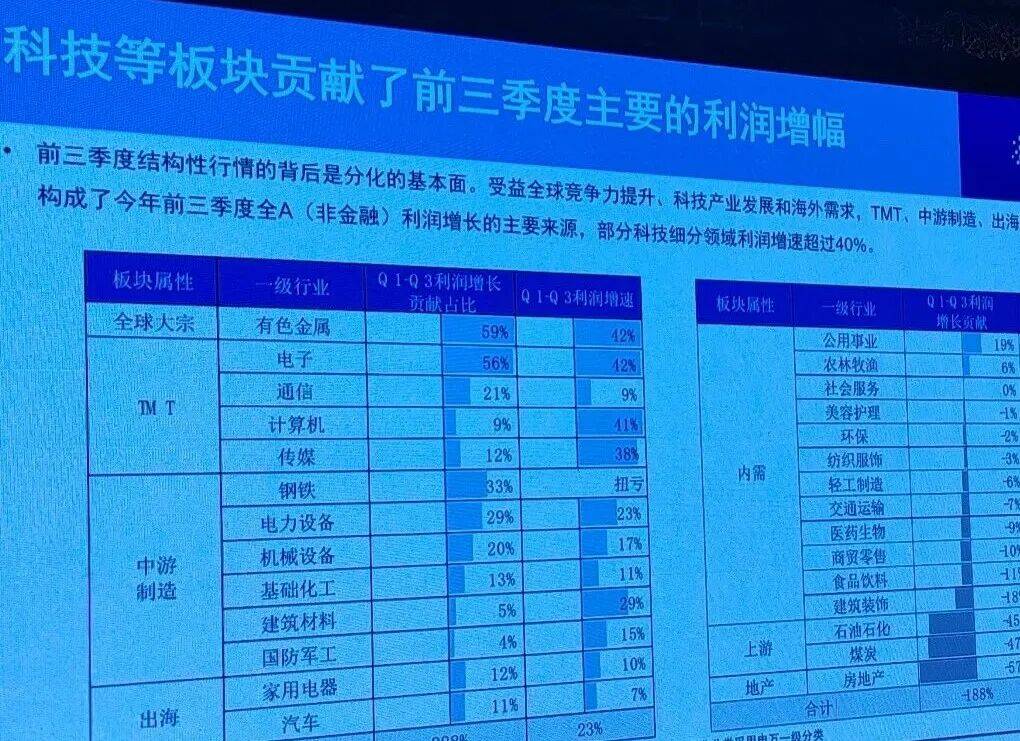
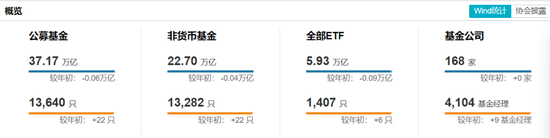
Group 1 - The core viewpoint of the article highlights the significant differentiation and friction within the public fund industry, despite its seemingly prosperous appearance, with a notable disparity between the number of fund managers and the number of listed companies in the A-share market [1][2] - The article mentions that the management scale of public funds has increased by 37 trillion, while the number of industry professionals remains around 33,000, indicating a potential inefficiency in resource allocation [1][2] - The article points out that while the market index has risen to 4,100 points, the main profit growth has come from technology sectors, with domestic demand remaining weak and the real estate sector continuing to decline [1][2] Group 2 - The article discusses a recent legal case where a fund manager is being sued by investors, which reflects the growing trend of litigation in the asset management sector [3][9] - It emphasizes that in asset management disputes, investors often struggle to claim compensation based solely on market downturns or product value declines, as the principle of "buyer beware" has become prevalent post-regulatory reforms [4][6] - The article highlights the importance of compliance and the obligation of fund companies to provide adequate risk warnings, while also urging investors to understand the nature of high-volatility strategies [6][24] Group 3 - The article introduces a specific case involving a fund manager who previously managed over 100 billion but faced significant performance declines, leading to investor lawsuits [12][18] - It discusses the concept of "style drift," where a fund's investment focus shifts significantly, potentially leading to investor dissatisfaction if the performance does not meet expectations [15][20] - The article notes that the recent regulatory changes regarding style drift may provide investors with new grounds for litigation, reflecting a shift in the legal landscape for fund management [18][24] Group 4 - The article outlines the shared responsibility of fund managers and sales institutions in ensuring suitability obligations, emphasizing the need for proper risk assessment and matching products to investors' risk profiles [24] - It highlights the challenges faced by the industry, including exaggerated marketing claims and the potential for investors to purchase products beyond their risk tolerance [24][25] - The article concludes with insights on the impact of fee reductions on the asset management ecosystem, affecting the revenue of distribution channels and their ability to provide value-added services [25]
37万亿的基金圈 “摩擦”越来越多了
Xin Lang Cai Jing· 2026-01-23 04:04
Core Insights - The article discusses the dichotomy within the public fund industry, highlighting the disparity between the number of fund managers and the number of listed companies, as well as the significant increase in management scale without a corresponding rise in personnel [1][31] - The market has reached a peak of 4100 points, with technology sectors contributing significantly to profit growth, while domestic demand remains weak and the real estate sector continues to decline [2][32] Fund Management and Performance - There are 4,104 fund managers managing 13,282 funds, while the number of listed companies in the A-share market is only 5,479 [1][31] - The management scale has increased by 37 trillion, yet the number of industry professionals remains around 33,000 [1][31] - The technology sector has been a major contributor to profit growth in the first three quarters, benefiting from global competitiveness and technological development [3][32] Legal and Regulatory Context - A recent case involves a fund manager being sued by investors, raising questions about the appropriateness of investment strategies and compliance boundaries [4][12] - The article emphasizes that if investors claim compensation solely based on market downturns or net value declines, they are unlikely to succeed in court [9][35] - The core dispute revolves around the suitability obligations and compliance boundaries, highlighting the need for fund companies to maintain compliance and for investors to understand the nature of high-volatility strategies [12][37] Investor Behavior and Market Dynamics - The article discusses the phenomenon of "style drift" in funds, where a fund's investment focus shifts significantly, potentially leading to investor dissatisfaction if performance declines [19][43] - Investors may pursue legal action if they feel misled by the fund's marketing promises, particularly if the fund's current holdings do not align with prior commitments [20][45] - The recent regulatory changes regarding style drift may provide new grounds for investor lawsuits [21][46] Industry Trends and Challenges - The article notes that the trend towards standardized, transparent, and liquid products, such as ETFs, is growing rapidly, reflecting market preferences [26][52] - There is a rising pressure on financial institutions from investors who exploit complaint mechanisms, which can lead to operational challenges and financial strain on employees [28][52] - The decline in fund fees has a cascading effect on the asset management ecosystem, impacting the revenue of distribution channels and their ability to offer value-added services [30][52]
4年半亏了165亿,百亿基金经理被告上法庭
凤凰网财经· 2026-01-10 13:50
Core Viewpoint - The article discusses a significant legal case involving Guotou Ruijin Fund and its star fund manager Shi Cheng, highlighting issues of investment style deviation and potential breaches of fiduciary duty in the public fund industry [2][5][13]. Group 1: Legal Case Overview - A court hearing is scheduled for January 13, 2026, where investor Li Zhihua has filed a lawsuit against Guotou Ruijin Fund and Shi Cheng for a "financial trust contract dispute" [2][5]. - It is rare for a fund manager to be named as a co-defendant in such cases, indicating the seriousness of the allegations against Shi Cheng [5][4]. Group 2: Investment Style and Performance Issues - The case centers on two main issues: whether the suitability obligations were adequately fulfilled and whether there was a significant deviation from the agreed investment style [5]. - Shi Cheng's management of the Guotou Ruijin New Energy Fund has come under scrutiny for drastically reducing its investment in renewable energy stocks from a contractual commitment of at least 80% to only 5.95% by Q3 2025, shifting focus to AI and robotics [5][6]. - Despite the fund's significant shift in investment strategy, it achieved a 72.24% return in 2025, raising questions about the appropriateness of the strategy and the implications for investors who expected a focus on renewable energy [5][6]. Group 3: Shi Cheng's Career Trajectory - Shi Cheng's career has seen dramatic highs and lows, with his rise closely tied to the booming renewable energy sector, achieving returns of 101.52% and 60.03% in 2020 and 2021, respectively [9][10]. - However, since 2022, the renewable energy sector has faced severe downturns, leading to significant losses for the funds he managed, with cumulative losses reaching 164.72 billion yuan from 2021 to mid-2025 [10][12]. - The management scale of his funds plummeted from over 200 billion yuan to below 100 billion yuan due to poor performance, despite continued management fee collection [12][13]. Group 4: Industry Implications - The case serves as a warning for the public fund industry regarding the boundaries of fund managers' fiduciary duties and the implications of deviating from established investment strategies [13]. - Following this case, the Asset Management Association of China issued guidelines to regulate theme-based investment styles, aiming to prevent similar issues in the future [13][16]. - The outcome of the trial could set a precedent for defining the boundaries of "diligence and responsibility" for fund managers, influencing future compliance and investment decision-making in the industry [13].