
量化固收+

Search documents
广发、信澳、华夏等多家公司核心基金经理近期变动
Xin Lang Cai Jing· 2026-02-08 14:12
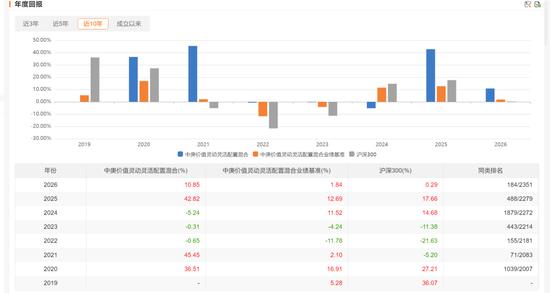
Group 1 - Wu Chenggen from Zhonggeng Fund has moved to GF Fund, previously co-managing the Zhonggeng Value Flexible Allocation Fund, which achieved a 5-year return of 166% with good drawdown control [2][26][28] - Wu's investment strategy focuses on low valuation value investing, aiming for absolute returns while strictly controlling drawdowns, and emphasizes fundamental and comprehensive factor analysis [7][30][31] - GF Fund has been lacking in absolute return fund managers, making Wu's addition a strategic complement to their offerings [10][34] Group 2 - Liu Xiaoming from Xin'ao Fund is also planning to leave, having managed the Xin'ao Performance-Driven Mixed Fund since 2022, achieving a return of 78.77% with an annualized rate of 18.3% [12][36] - Liu's management style has shown high turnover and flexible adjustments, with significant shifts in portfolio focus from liquor to technology stocks [39][41] - The fund's scale increased dramatically from 200 million to nearly 4.6 billion due to strong performance [40] Group 3 - He Jiaqi, a key member of Huaxia Fund for 14 years, has left, managing over 15 billion in assets, with notable performance in the Huaxia Dingli fund, which achieved a return of 103% since 2016 [20][45][47] - The Huaxia Dingli fund's scale grew from just over 10 million to over 9.6 billion under He’s management, indicating strong investor confidence [22][47] - The new management team for Huaxia Dingli includes Sun Meng and Liu Mingyu, who are known for their quantitative investment strategies [49]

晨会纪要-20251204
Guoxin Securities· 2025-12-04 02:27
Macro and Strategy - The report discusses the ongoing expansion and diversification of public REITs in China, highlighting the inclusion of various asset types and industries, with a projected market size increase of 2.3 to 3.8 trillion yuan, indicating a potential 10-16 times expansion compared to the current scale [7][8][10] - The average dividend yield of public REITs from 2022 to 2025 is 5.73%, which is higher than the average yield of the CSI Dividend Index at 5.52%, showcasing their attractiveness as a stable income asset [8][9] - Public REITs are characterized by a dual return structure comprising dividend income and asset appreciation, with a significant portion of returns coming from dividends over longer investment horizons [9][10] Industry and Company - The Chinese duty-free industry is entering a new cycle, with Hainan's duty-free sales experiencing a compound annual growth rate (CAGR) of 39% from 2011 to 2019, but facing a decline of 37% from peak sales due to various market pressures [17][18] - Recent data indicates a recovery in Hainan's duty-free sales, with year-on-year growth of 3%, 13%, and 27% from September to November 2025, suggesting a positive trend in high-end consumption [18][19] - The report emphasizes the importance of policy support and market dynamics in shaping the future of the duty-free sector, with expectations for continued growth driven by improved consumer confidence and strategic policy enhancements [19][20][21] Automotive Industry - The report highlights the rapid advancements in smart driving technology, with companies like Tesla and Huawei leading the way in achieving Level 4 automation through innovative algorithms and architectures [24][25] - The penetration rate of smart driving technologies is expected to see significant growth, with projections indicating an increase from 11.3% to 26.3% for highway navigation assistance (NOA) by 2025 [25] - The global market for robotaxi services is projected to reach nearly 10 trillion yuan, with companies like Waymo and Apollo at the forefront of commercialization efforts [25][26] Non-Banking Sector - The report outlines the importance of the second pillar of the pension system in China, focusing on the development of enterprise and occupational pensions to address the challenges of an aging population [26][27] - The occupational pension system has achieved full coverage, while enterprise pensions are expanding from state-owned to private enterprises, indicating a shift towards a more diversified pension landscape [27][28] - The investment strategy for pension funds is evolving towards a "barbell" approach, balancing stable income-generating assets with growth-oriented investments in technology and manufacturing sectors [28]
国信证券晨会纪要-20251204
Guoxin Securities· 2025-12-04 01:18
Macro and Strategy - The report discusses the ongoing expansion and diversification of public REITs in China, highlighting the inclusion of various asset types and industries, with a projected market size of 2.3 to 3.8 trillion yuan, indicating a potential 10-16 times expansion from current levels [7][8][10] - The average dividend yield of public REITs from 2022 to 2025 is 5.73%, surpassing the average yield of the CSI Dividend Index at 5.52%, showcasing their attractiveness as a stable income asset [8][9] - Public REITs are characterized by a dual return structure comprising dividend income and asset appreciation, with a notable annualized return of 23.66% over the past year [9][10] Industry and Company - The Chinese duty-free industry is entering a new cycle, with Hainan's duty-free sales showing signs of recovery, driven by policy support and improving consumer confidence, with sales growth of 3%, 13%, and 27% from September to November 2025 [17][18] - The report emphasizes the importance of policy optimization in the duty-free sector, with recent expansions in both offshore and onshore duty-free policies, enhancing consumer access and convenience [18][19] - The report identifies key players in the duty-free market, such as China Duty Free Group, which holds a 78% market share, and highlights the strategic importance of airport channels for future growth [20][21] Automotive Industry - The report outlines the advancements in smart driving technology, with companies like Tesla and Huawei leading the way in achieving Level 4 automation through end-to-end algorithms [24][25] - The penetration rate of smart driving is expected to see significant growth, with projections indicating an increase from 11.3% to 26.3% for highway NOA and from 6.1% to 10.9% for urban NOA by 2025 [25] - The global market for Robotaxi is projected to reach nearly 10 trillion yuan, with companies like Waymo and Apollo at the forefront of commercialization efforts [25][26] Non-Banking Industry - The report highlights the importance of the second pillar of the pension system in China, focusing on enterprise and occupational pensions, which are expected to grow at an annualized rate of 8%, outpacing nominal GDP growth [26][27] - The investment behavior of pension funds is shifting towards a "barbell" strategy, balancing stable cash flow assets with high-growth sectors, indicating a significant increase in equity allocations [27][28]
固收+系列报告之五:量化固收+的收益风险平衡之道
Guoxin Securities· 2025-12-03 03:30
Group 1 - The report defines "Quantitative Fixed Income+" as a type of fund that focuses on fixed income assets as the core, using quantitative models to enhance asset allocation in equities and convertible bonds while controlling volatility and maximum drawdown to pursue "fixed income + excess returns" [7][8] - Key features of Quantitative Fixed Income+ include a stable core of pure bond assets, quantitative-driven strategies for stock selection, and various operational methods such as collaboration between fixed income and quantitative fund managers [8][10] Group 2 - Common strategies in Quantitative Fixed Income+ include focusing on single clear return-driving factors, using broad-based indices as benchmarks, and diversifying across multiple independent risk factors to achieve more stable excess returns [10][12] - The report highlights the performance of the "Dividend Low Volatility" strategy, which aims to invest in companies with stable cash flows and low stock price volatility to achieve favorable risk-adjusted returns over the long term [13][22] Group 3 - The report provides a comparative analysis of the performance of various indices, showing that the "Dividend Low Volatility Index" outperformed both the "CSI 300" and "CSI Dividend" indices over the past 20 years [15][22] - The report details the characteristics of representative funds employing the Dividend Low Volatility strategy, including their investment types, benchmarks, and total assets under management [25][26] Group 4 - The report discusses the asset allocation strategies of the funds, emphasizing the importance of adjusting positions based on market trends and maintaining a balance between equities and bonds to achieve stable long-term growth [27][49] - It also highlights the management of duration in bond investments, indicating that the funds adjust duration based on market conditions to optimize returns [49][104] Group 5 - The report outlines the performance of funds using the Index Enhancement strategy, which aims to increase equity returns through quantitative models that optimize asset allocation based on various factors [73][85] - It emphasizes the importance of flexible asset allocation and proactive position adjustments in response to market conditions to enhance overall fund performance [86][127] Group 6 - The report describes the Multi-Factor strategy as a core approach for equity asset selection, utilizing a multi-dimensional factor model to identify high-quality stocks and optimize overall portfolio performance [129][183] - It highlights the importance of dynamic adjustment of industry weightings based on factor performance, allowing for a diversified approach to asset allocation [167][182]

量化赋能,招商基金的“固收+”新解
Huan Qiu Lao Hu Cai Jing· 2025-11-25 12:18
Core Viewpoint - The increasing volatility in the A-share market and the breaking of "rigid redemption" in bank wealth management products have led to a decline in the attractiveness of traditional low-risk investment tools, prompting investors to seek alternatives like "fixed income +" funds, which have seen significant growth in assets and product numbers [1][2][3]. Group 1: Market Trends - As of the end of Q3 2025, the total net asset value of "fixed income +" funds reached approximately 2.75 trillion yuan, a significant increase of 0.5 trillion yuan from the previous quarter, marking a growth rate of over 20% [1][3]. - The demand for stable yet higher-yielding alternative investment tools has intensified due to the weakening ability of cash and deposits to preserve and increase value [2]. Group 2: Product Development - "Fixed income +" products typically use fixed-income assets like bonds as a base to provide fundamental returns while controlling volatility, supplemented by equity investments to enhance returns within manageable risk levels [1][2]. - The "fixed income +" product category has expanded significantly, with the secondary bond fund becoming the largest type within this category, surpassing primary bond funds in scale [3]. Group 3: Differentiation Strategies - To address the issue of product homogeneity, companies like招商基金 have focused on developing differentiated products that cater to diverse investor needs, establishing a three-dimensional product layout system [4]. -招商基金 has innovatively integrated quantitative technology into the "fixed income +" sector, creating a unique quantitative "fixed income +" product line [4][5]. Group 4: Performance and Strategy - The招商安盈 bond fund, a key product in招商基金's quantitative "fixed income +" matrix, has achieved positive returns every year since its inception, with a cumulative return exceeding 50% since its transformation in September 2018 [2][5]. - The fund employs a dual-manager system, combining expertise in bond construction and quantitative enhancement strategies to achieve steady growth while controlling risks [5][6]. Group 5: Quantitative Approach - The quantitative strategy utilized by招商安盈 includes dynamic optimization of equity positions based on multi-factor models, allowing for adjustments in response to market conditions to manage risk effectively [6][7]. - The fund's equity allocation strategies focus on "dividend selection" and "quality selection," targeting stocks with strong defensive characteristics and high dividend yields [6][7]. Group 6: Risk Management - In the fixed income segment, the fund manager emphasizes a framework that prioritizes stability and risk control while actively managing bond structures to align with market conditions [7]. - The quantitative investment team at招商基金 collaborates closely across various functions, ensuring a robust risk control system is in place to manage deviations and maintain performance [9][10].
公募量化业务2026年展望及产品布局展望:在重视基准的时代大显身手
Shenwan Hongyuan Securities· 2025-11-19 14:13
1. Report Industry Investment Rating No information provided in the content. 2. Core Viewpoints of the Report - The upcoming implementation of the "Action Plan for Promoting the High - quality Development of Public Funds" will bring opportunities for quantitative public funds. Active quantitative index - like enhanced products are expected to have better growth space, and attention should also be paid to the layout of quantitative fixed - income + products [44]. - In the public quantitative industry, the scale of index - enhanced products has increased, and there are differences in the scale and performance of different types of funds and products [6][14][19]. - For the layout of active quantitative index - like enhanced products, it can be considered in traditional broad - based and mainstream active equity benchmark tracks, and attention should also be paid to challenges and opportunities in different directions such as value style, industry quantification, and unique strategies [47][68][77]. - In the field of quantitative fixed - income +, there is still much market space to expand. Different management teams have different strategies, and various strategies such as low - wave strategies, position strategies, and multi - strategy combinations can be used to create products [28][93][98]. 3. Summary According to Relevant Catalogs 3.1 Public Quantitative Industry Status - **Top Fund Companies in Equity Quantitative Management Scale**: The top three fund companies in equity quantitative management scale are Bodao Fund, Huaxia Fund, and Fuguo Fund, and the scale of the top five fund companies exceeds 20 billion yuan [6]. - **Top 10 Quantitative Products with the Largest Scale Growth in 2025**: As of Q3, all the top 10 quantitative products with the largest scale growth in 2025 are active quantitative funds. The index - enhanced products with the largest scale growth are Harvest Semiconductor Enhancement Fund and Penghua CSI 1000 Index Enhancement [11][14]. - **Index - Enhanced Scale Changes**: From 2022 to Q3 2025, the scale of index - enhanced products increased from less than 150 billion yuan to nearly 200 billion yuan, a growth of 33%. The proportion of the three major broad - based indexes has decreased, and the proportion of other index - enhanced products has slowly increased [19]. - **Quantitative Fixed - Income + Market Share**: The market share of quantitative fixed - income + is about 6.0572 billion yuan, and there is still much market space to expand. Successful operation teams include Fuguo and China Merchants [28]. 3.2 Focus on Active Quantitative Index - like Enhanced Product Layout - **Advantages of Active Quantitative Index - like Enhanced Products**: After the implementation of the "Action Plan", the cost of investor education for index - like enhanced products will decrease. Compared with strict index - enhanced products, active quantitative index - like enhanced products have looser constraints and can achieve better excess returns in the long run [44]. - **Layout in Mainstream Benchmark Tracks**: In addition to traditional broad - based tracks, attention should also be paid to the layout of index - like enhanced products in mainstream active equity benchmark tracks, which may establish a unique market reputation in terms of information ratio and excess return stability [47]. - **Transition to Floating Management Fee Products**: Quantitative models are ideal for managing floating management fee products because they can ensure relatively stable excess returns and help fund companies collect management fees [50]. - **Challenges of Partial - Stock Fund Index - Enhanced Products**: After the implementation of the "Action Plan", products benchmarked against 885001 will face challenges, but products that can continuously outperform the entire market of active equity still have unique value [53]. - **Growth Style Strategy**: The growth style strategy based on analyst expectations can stably outperform 885001, which provides an alternative idea [58]. - **Factor Resonance Strategy**: The 885001 enhancement strategy can be upgraded to identify over - heated styles, which provides feasibility for the development of multi - strategy or factor - rotation products [63]. - **Value Style Direction**: The value - style index - like enhanced products are suitable for layout because the competition in the value style of active equity funds is less intense, and quantitative methods have advantages in value style [68]. - **Industry Quantification**: Industry quantification has not been very successful in the past, but in policy - encouraged technology directions, quantitative methods may gain long - term performance recognition [69]. - **Unique Strategies**: Unique strategies such as industry rotation, factor rotation, multi - strategy combinations, and volatility - control strategies have unique configuration values and can be considered for productization [77][82][86]. 3.3 Focus on Quantitative Fixed - Income + Layout - **Quantitative Advantages in Low - Wave Strategies**: Quantitative methods can play advantages in volatility control and portfolio exposure control in fixed - income + products. Different low - wave stock combinations can be tried, such as dividend combinations [93]. - **High - Wave Fixed - Income + Products**: In 2025, high - wave fixed - income + products emerged. Quantitative methods can provide different high - wave index - based index - enhanced fixed - income + products, but investor adaptation work is important [96]. - **Position and Asset Allocation Strategies**: Quantitative strategies such as low - wave strategies and risk - budget strategies can be used for position management in fixed - income + products, and asset allocation strategies such as risk parity and all - weather strategies can also be practiced [98]. - **Multi - Strategy Fixed - Income + Products**: Using quantitative means to create different style stock combinations and then rotating them in the fixed - income + base can provide multi - strategy fixed - income + products, and different combination methods can further enrich the risk characteristics of products [102].