金融平权

Search documents
敢信?25美元,就能投一家千亿独角兽
投中网· 2026-03-07 07:07
Core Viewpoint - Robinhood is launching the Robinhood Ventures Fund I (RVI Fund), allowing retail investors to indirectly invest in unicorn companies with a minimum investment of $25, aiming to democratize access to private market investments [4][11][17]. Fund Overview - The RVI Fund plans to issue 40 million shares at $25 each, with 35 million shares issued by RVI and 5 million by Robinhood itself, pending SEC approval for listing on the NYSE under the ticker RVI [5][10]. - The fund's underlying assets include unicorn companies like Databricks and plans to acquire shares in Stripe post-IPO [6][12]. - Unlike traditional private market tools, the RVI Fund has no qualification or minimum investment requirements, making it accessible to all investors [11]. Investment Strategy - The fund aims to invest in private companies, focusing on sectors like AI, robotics, and fintech, with a portfolio typically containing at least ten private companies and no single investment exceeding 20% of the fund's size [12]. - As of now, the fund has invested approximately $275 million in various companies, including Databricks, Mercor, Oura, Boom Supersonic, Revolut, Airwallex, and Ramp [12]. Market Context - Robinhood's initiative addresses perceived inequities in the private market, which has been dominated by wealthy individuals and institutions, thus limiting retail investor participation in high-growth opportunities [15]. - The surge in AI startups has led to significant capital inflows, with estimates suggesting that Silicon Valley startups could raise $150 billion by 2025, driving valuations into the hundreds of billions [15]. Performance and Controversies - The RVI Fund's investment in Databricks has already shown substantial returns, with the fair value of its investment increasing significantly within a few months [16]. - Despite the potential for high returns, the fund's launch has sparked debate regarding the risks for inexperienced retail investors and concerns about the sustainability of the AI bubble [17][19]. Company Background - Founded in 2013, Robinhood has disrupted traditional finance by introducing commission-free trading and expanding its services to include cryptocurrency trading and fractional shares [19][21]. - The company has faced criticism for its business model and practices, yet it has amassed a user base exceeding 27 million, positioning itself as a significant player in the financial services industry [20][21].



干掉K线?这家初创公司想让股市“说人话”
虎嗅APP· 2025-12-07 23:55
Core Viewpoint - The article discusses the vision and development of RockFlow, an AI-native trading platform aimed at democratizing investment for younger generations, particularly Gen Z, who are increasingly participating in the investment landscape [5][10]. Group 1: Company Vision and Development - RockFlow was launched in 2022 with a five-year plan to create an all-in-one AI-native trading platform that resonates with younger investors [4][5]. - The platform aims to lower the barriers for ordinary people to participate in trading by utilizing AI to generate personalized investment strategies [7][19]. - The ultimate goal is to create a "strategy marketplace" where users can express their investment philosophies in simple terms, and the AI agent, Bobby, can generate matching strategies [7][19]. Group 2: AI Integration and User Experience - Bobby, the AI investment assistant, is designed to provide personalized trading strategies based on user behavior and preferences, making investment decisions more accessible [14][29]. - The platform emphasizes a user-friendly experience, allowing users to interact with Bobby in plain language, thus reducing the complexity often associated with financial terminology [35][29]. - RockFlow's approach includes a focus on community engagement, where users can share their investment processes and strategies, enhancing user retention and interaction [15][19]. Group 3: Market Position and Competitive Landscape - RockFlow aims to position itself similarly to Robinhood, a successful trading platform known for its low barriers to entry and gamified interface, with a market valuation that has exceeded $88 billion [13]. - The company has recently secured a multi-million dollar funding round led by Ant Group, indicating strong investor confidence in its business model and growth potential [15]. - The competitive landscape is evolving, with RockFlow focusing on creating a unique AI-native financial operating system that differentiates it from traditional financial institutions and other fintech companies [16][28]. Group 4: Future Outlook and Challenges - The future vision for Bobby includes a seamless integration into users' daily lives, providing proactive investment suggestions based on behavioral patterns [17][34]. - Compliance remains a significant challenge for the company, as navigating global financial regulations is complex and critical for long-term success [51]. - The company is committed to becoming a comprehensive financial services provider, potentially evolving into a full-fledged financial institution rather than merely a fintech service provider [44].

中信建投张昕帆:财富管理应具备的“三重使命”
券商中国· 2025-10-16 06:29
Core Viewpoint - The primary mission of wealth management institutions is to prevent risks, followed by seeking wealth preservation, appreciation, and inheritance [2][4]. Group 1: Risk Prevention - Zhang Xinfan emphasizes that the key to wealth management is not seizing opportunities but preventing risks, as highlighted by Warren Buffett's principle of avoiding losses [4][5]. - The real risk in wealth management arises from purchasing incorrect or fraudulent assets, rather than market fluctuations [4]. Group 2: Investment Advisory Role - Investment advisors should help clients filter out noise, avoid risks, and skillfully abandon unfamiliar or complex financial products to find stable growth channels [5][6]. Group 3: Financial Product Accessibility - The complexity of investment and financial management is increasing, making the value of professional institutions and advisors more prominent [6]. - Future directions for brokerage wealth management include developing a fully entrusted advisory model and focusing on ETFs as a simple investment method [6]. Group 4: Financial Equity - The concept of "financial equity" is emphasized, suggesting that individuals in remote areas can access investment opportunities through financial products, promoting wealth balance in society [7].

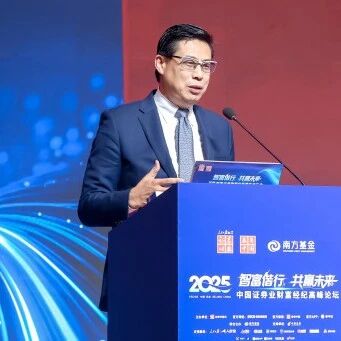
财富管理机构应具备“三重使命”
Zheng Quan Shi Bao· 2025-10-15 22:05
Core Insights - The primary mission of wealth management institutions is to prevent risks, followed by seeking wealth preservation, appreciation, and inheritance [2] - Wealth management should transcend economic cycles rather than merely predicting or speculating on them [2] - Investment advisors should help clients filter noise, avoid risks, and focus on stable growth channels [2] Group 1: Wealth Management Philosophy - Wealth management institutions must accompany and guide clients to achieve self-awareness and navigate economic cycles [3] - Investment advisors need a deep understanding of wealth management's mission, vision, values, and the development of the Chinese economy [3] Group 2: Investment Strategies - Future directions for brokerage wealth management include the development of fully entrusted investment advisory models and the promotion of ETFs as simple investment methods [2] - Financial products are essential for stable and long-term wealth management development, enabling ordinary investors to access investment opportunities in emerging sectors like renewable energy and AI [3]
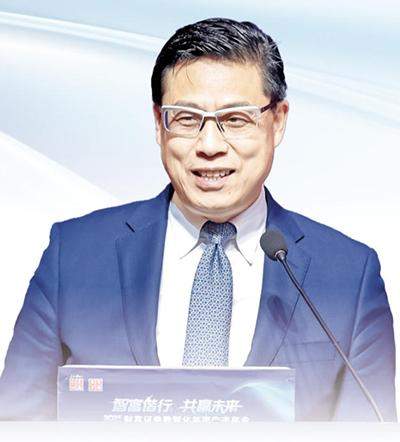
中信建投证券执委会委员张昕帆: 财富管理机构应具备“三重使命”
Zheng Quan Shi Bao· 2025-10-15 18:04
Core Insights - The primary mission of wealth management institutions is to prevent risks, followed by seeking wealth preservation, appreciation, and inheritance [1] - Wealth management should transcend economic cycles rather than merely predicting or speculating on them [1] - Investment advisors should help clients filter noise, avoid risks, and focus on stable growth channels [1] Group 1 - Zhang Xin Fan emphasized the importance of risk prevention in wealth management, stating that protecting asset safety is the top priority [1] - The future of brokerage wealth management will focus on two main directions: developing a fully entrusted investment advisory model and promoting ETFs as a simple investment method [1] - Investment advisors must possess a deep understanding of wealth management's mission, vision, and the development of the Chinese economy [2] Group 2 - Financial products are crucial for the sustainable development of wealth management, enabling ordinary people to access investment opportunities in emerging sectors like renewable energy and AI [2] - The concept of financial equality is highlighted, as individuals in remote areas can access the same investment opportunities through financial products, despite lacking access to top-tier resources [2]

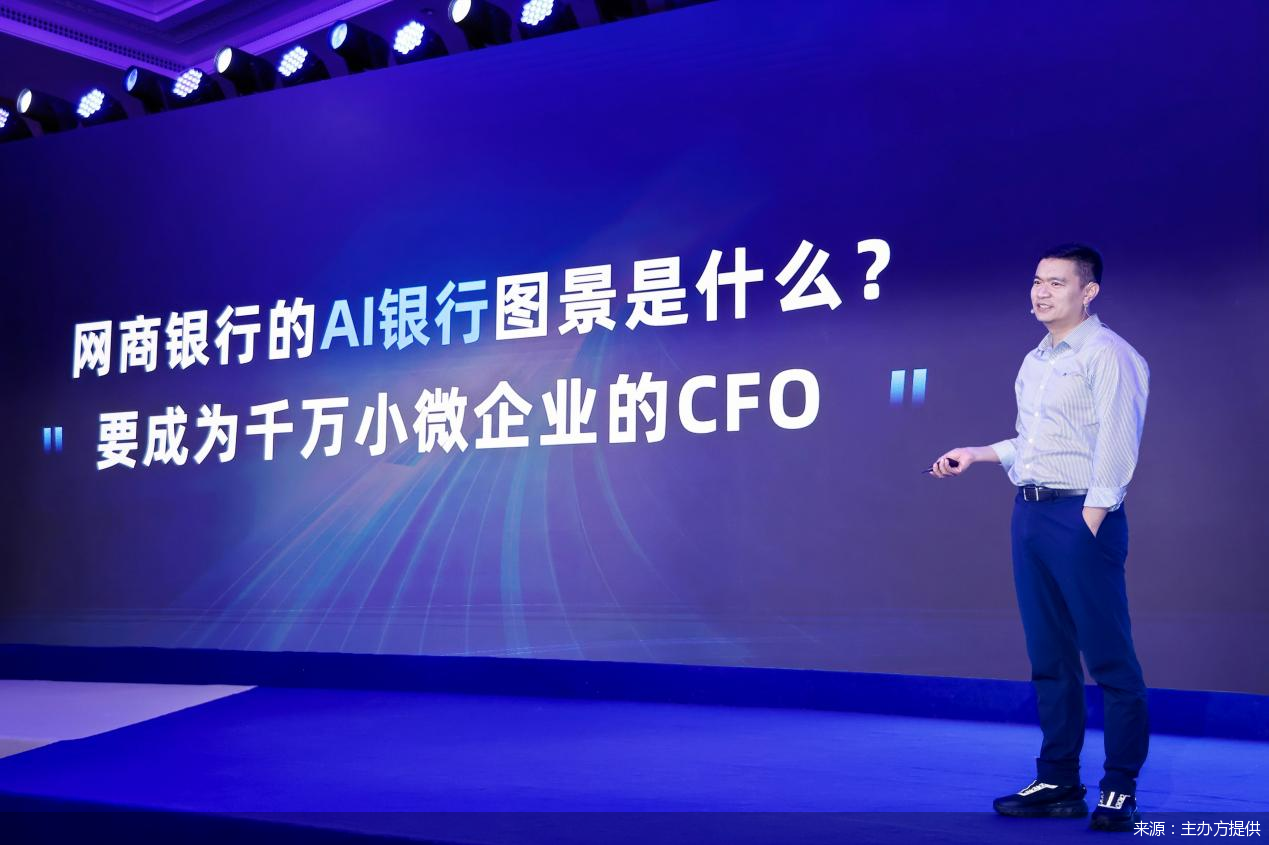
网商银行行长冯亮:未来十年,AI银行的进化方向
Bei Jing Shang Bao· 2025-06-26 03:40
Core Viewpoint - The article discusses the launch of the AI banking strategy by Wangshang Bank, aiming to serve small and micro enterprises as their CFOs, leveraging AI technology to enhance financial management and decision-making capabilities [1][3]. Group 1: AI Banking Strategy - Wangshang Bank has served over 68 million small and micro business owners in the past decade and is now positioning itself as a CFO for these enterprises [1]. - The bank's president, Feng Liang, emphasizes that traditional CFO skills, which are often inaccessible to small businesses, can now be provided through AI technology [3]. Group 2: AI Capabilities and Applications - AI banking will utilize advanced recognition capabilities to analyze a company's operations, industry trends, and financial needs, exemplified by a case study of a small high-temperature nylon manufacturer [4]. - The AI system can identify industry connections, assess production capabilities, and analyze financial patterns, providing insights that were previously unattainable for small enterprises [4][5]. Group 3: Financial Tools and Services - The bank aims to analyze and match over 40,000 financial products to the specific needs of small businesses, enhancing their financial decision-making [5]. - As small businesses shift from expansion to survival modes, the bank is adapting its services to focus on refined management and efficiency [5]. Group 4: Future of Banking Services - The transformation of banking services will shift from merely providing financial products to offering comprehensive operational support, akin to having a personal CFO [6]. - Future applications like "AI Invoice Manager" and "AI Tender Assistant" are in development, indicating a trend towards AI-driven banking solutions [7]. - Over 33 banks have already announced their integration with AI technologies, marking a significant trend in the banking industry for the next decade [7].