
银行净息差收窄

Search documents
多地农商行开年“逆势加息”,业内:实为短期营销,具有高门槛、限时性特征
Mei Ri Jing Ji Xin Wen· 2026-02-12 00:34
Core Viewpoint - The recent "reverse interest rate hike" initiated by rural commercial banks is a marketing strategy rather than a signal of a trend reversal in interest rates, characterized by high thresholds and limited time offers [1][4][14] Group 1: Market Dynamics - In early 2026, large banks are reducing long-term, high-cost deposits, with 1-year fixed deposit rates generally below 1%, while local rural banks are introducing higher interest rate products, creating localized "interest rate peaks" [2][10] - Some rural banks have raised the annual interest rate for 3-year deposits to 1.75%, with strict conditions such as minimum deposits of 20,000 yuan and limited availability [3][11] Group 2: Strategic Analysis - The combination of "high interest rates + high thresholds + short duration" is a calculated marketing strategy by small banks facing significant liability pressures, aiming to attract large, short-term deposits during a critical assessment period [4][12] - The banking sector is experiencing systemic pressure on net interest margins, which have narrowed to a historical low of 1.42%, influenced by declining loan rates and rigid deposit costs [5][13] Group 3: Future Outlook - The overall direction for deposit rates is expected to be "stable with a downward trend" throughout 2026, supported by a moderately loose monetary policy and internal pressures to reduce liability costs [7][15] - The reliance on high-interest deposits is unsustainable, and future competition will focus on enhancing financial service capabilities and customer experience rather than solely on interest rates [8][16]
多家银行上调存款利率
21世纪经济报道· 2026-02-05 14:17
Core Viewpoint - The article highlights the differentiation in the deposit market as state-owned banks reduce high-interest long-term deposits while smaller banks, primarily rural commercial banks, actively adjust strategies to attract market share through new large-denomination certificates of deposit (CDs) and increased interest rates on fixed deposits [1][3]. Group 1: Large-Denomination Certificates of Deposit - Rural commercial banks have become the main force in issuing large-denomination CDs, with total issuance exceeding 30 billion yuan, and a clear trend towards shorter product durations [3][6]. - On February 5, 2026, multiple rural commercial banks released 45 announcements for large-denomination CDs, with Zhuhai Rural Commercial Bank alone issuing 10.5 billion yuan across seven products [6][7]. - The average interest rates for one-year and three-year large-denomination CDs are around 1.5% and 1.8%, respectively, which are higher than those offered by major state-owned banks [7]. Group 2: Interest Rate Adjustments - From January to February 2026, many rural commercial banks raised interest rates on fixed deposits by 10 to 20 basis points to meet the "opening red" deposit demand [9][12]. - For instance, Zhejiang Jiashan Rural Commercial Bank increased its one-year and two-year fixed deposit rates to 1.50% and 1.75%, respectively, while also implementing tiered rates based on deposit amounts [9][12]. - Some banks have set high minimum deposit thresholds and limited promotional periods, indicating a marketing strategy focused on short-term gains [12][13]. Group 3: Market Dynamics and Strategies - The banking sector is facing a narrowing net interest margin, prompting rural commercial banks to seek a balance between controlling liability costs and capturing market share through differentiated deposit products [1][13]. - The strong demand for deposits is driven by the need for banks to support asset expansion amid competitive pressures, particularly for smaller banks lacking brand dominance [13]. - Some banks are employing a strategy of offering competitive rates selectively to attract high-net-worth clients while managing overall liability costs [13].


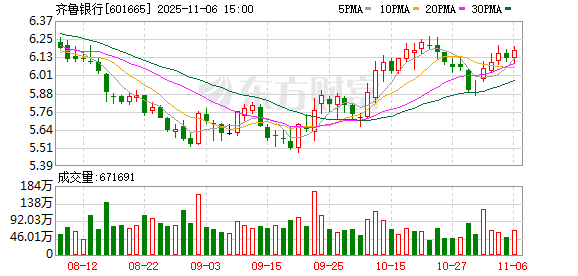
三季报观察|上市银行哪家强?齐鲁银行净利增16.14% ,常熟银行净息差2.57%保持领先
Mei Ri Jing Ji Xin Wen· 2025-11-06 10:26
Core Insights - The overall performance of A-share listed banks in the first three quarters of 2025 reflects a stable total, improved structure, and significant differentiation amid a gradually recovering macroeconomic environment [2] - Revenue growth remains robust, with over 60% of listed banks achieving year-on-year revenue increases, driven by optimized asset structures and a focus on non-interest income [3] - The net interest margin (NIM), a key driver of profitability, is under pressure, posing challenges to the banking industry's profit model [2][9] Revenue Growth Resilience - More than 60% of A-share listed banks reported positive year-on-year revenue growth in the first three quarters of 2025, indicating effective support for the real economy [3] - The growth dynamics vary significantly among banks of different sizes, highlighting structural differentiation in revenue generation [3] Financial Performance of Major Banks - Major state-owned banks maintain a leading position in revenue, with Industrial and Commercial Bank of China (ICBC) reporting revenue of 640 billion yuan, a 2.17% increase, and net profit of 271.88 billion yuan, a 0.52% increase [5] - Agricultural Bank of China and China Bank also showed revenue growth above 1.5%, contributing to the stability of industry income [7] - Some joint-stock banks and regional banks, such as Minsheng Bank and Jiangsu Bank, demonstrated stronger growth, with revenue increases of 6.74% and 7.83%, respectively, indicating successful differentiation strategies [7] Profitability and Net Interest Margin - Despite revenue growth, some banks experienced lower net profit growth compared to revenue, indicating challenges in converting revenue growth into profit due to narrowing net interest margins [8] - State-owned banks showed stable net profit growth, reflecting strong risk resilience, with net profit growth rates remaining relatively close to revenue growth [8] - Smaller banks like Hangzhou Bank and Jiangsu Bank exhibited significant net profit growth, attributed to effective management and targeted customer strategies [8] Challenges in Net Interest Margin - The net interest margin for listed banks has generally declined, primarily due to factors such as lower loan market quotation rates and adjustments in existing mortgage rates [9] - State-owned banks experienced a decline of approximately 15 basis points in net interest margins, while Postal Savings Bank faced a larger drop of 21 basis points [12] - Some banks, like Minsheng Bank, managed to slightly increase their net interest margin, showcasing resilience in their business structure [12] Industry Outlook - The financial reports of listed banks in the first three quarters of 2025 depict an industry navigating pressures while growing through differentiation [13] - The stable revenue growth validates the banking sector's resilience in supporting the real economy, while the overall narrowing of net interest margins is a challenge that banks must address [13] - The ongoing macroeconomic policy effects are expected to gradually improve the banking environment, but differentiation among institutions is likely to persist [13]
一批中小银行密集降息,释放了什么信号?
Sou Hu Cai Jing· 2025-10-24 03:52
Core Viewpoint - A number of small and medium-sized banks in China have announced reductions in RMB deposit rates, with some cuts reaching up to 80 basis points, reflecting a combination of macroeconomic factors and banking operations [1][2][4]. Group 1: Deposit Rate Adjustments - Since October, several small and medium-sized banks, including Zhejiang Pingyang Pudong Development Bank and Shanghai Huari Bank, have lowered their deposit rates significantly, with some products seeing reductions of up to 80 basis points [2][3]. - For instance, Dalian Lushunkou Mengyin Village Bank has adjusted its current deposit rate to 0.15%, while the one-year fixed deposit rate is now 1.15% [2]. - Shanghai Huari Bank reduced its three-year fixed deposit rate from 2.3% to 2.15%, indicating a trend of continuous rate cuts [3]. Group 2: Economic and Operational Drivers - The adjustments in deposit rates are driven by the current macroeconomic environment, where banks aim to lower social financing costs and facilitate smoother capital flow to the real economy [4]. - The narrowing net interest margin (NIM) is a core reason for the rate cuts, as banks face pressure from lower loan market rates (LPR) while deposit rates have been slower to adjust [5][7]. - The trend of high-interest deposits maturing from 2022 to 2024 is expected to lead to significant downward adjustments in deposit rates, alleviating NIM pressures for banks [7]. Group 3: Implications for Depositors - The reduction in deposit rates may negatively impact certain groups, such as elderly depositors who rely on interest income, but could encourage a shift towards more efficient asset allocation [5][7]. - Lower deposit rates may also lead to a decrease in loan rates, benefiting borrowers by reducing interest expenses and financing costs [5][7].
中小银行密集调降存款利率
Zheng Quan Ri Bao· 2025-10-22 16:44
Core Viewpoint - Recent adjustments in deposit rates by several small and medium-sized banks indicate a proactive response to the pressure on the liability side, reflecting a consensus expectation of declining interest rates [1][3]. Group 1: Deposit Rate Adjustments - Many banks have lowered deposit rates across various terms, with specific rates such as 0.15% for demand deposits and 1.15% to 1.9% for fixed deposits of different maturities [2]. - The trend of lowering deposit rates is observed among multiple banks, including Fujian Huatuo Bank and Shanghai Huarui Bank, with the latter having made several adjustments within the year [2]. - The adjustments are primarily driven by the need to manage funding costs and maintain net interest margins amid a narrowing interest spread [3]. Group 2: Interest Rate Inversion - Some banks are experiencing an inversion in deposit rates, where longer-term rates are lower than shorter-term rates, indicating a cautious approach to long-term liabilities [4]. - For instance, Dalian Lushunkou Mengyin Village Bank has a five-year deposit rate of 1.85%, which is lower than the three-year rate of 1.9% [4]. - This inversion reflects banks' expectations of further declines in interest rates, prompting them to avoid locking in high-cost long-term liabilities [4]. Group 3: Strategic Responses - Banks are advised to enhance their strategic management and innovate by integrating local advantages and focusing on regional market research [5]. - Recommendations include refining asset-liability management, expanding low-cost demand deposits, and increasing non-interest income through wealth management services [5][6]. - The current interest rate adjustments are seen as a necessary adaptation for banks to balance cost control and strategic transformation for sustainable development [6].
银行净息差降幅究竟如何收窄?
证券时报· 2025-09-20 15:17
Core Viewpoint - The article discusses the trends and challenges in the net interest margin (NIM) of listed banks in China, highlighting the structural decline in NIM due to various factors, while also pointing out some banks' strategies to mitigate this decline and maintain profitability [1][2][5]. Group 1: Net Interest Margin Trends - As of mid-2025, the average NIM for listed banks is approximately 1.33%, a year-on-year decrease of 13 basis points, although the decline is less severe than the previous year's 19 basis points [1]. - The narrowing of NIM is attributed to policy-driven measures to support the real economy, economic growth rates, multiple reductions in the Loan Prime Rate (LPR), and the repricing of existing mortgage rates [1]. Group 2: Individual Bank Performance - China Merchants Bank reported a NIM of 1.88%, outperforming the industry average by over 40 basis points, with an optimistic outlook for the second half of the year due to its asset and liability structure [1]. - Ping An Bank's NIM stood at 1.8%, also leading the industry by nearly 40 basis points, with effective cost control measures and a focus on optimizing asset structure contributing to its performance [2]. - Industrial Bank's NIM was 1.75%, with plans to reduce liability costs significantly in the second half of the year, indicating a potential easing of NIM pressure [3]. - Minsheng Bank achieved a NIM of 1.39%, showing a year-on-year increase of 1 basis point, with strategies focused on asset quality and liability management [3][4]. Group 3: Future Outlook - The article suggests that while NIM faces downward pressure due to factors like LPR adjustments and deposit rate cuts, the impact is expected to lessen over time as monetary policy improves and banks adapt their strategies [5]. - Analysts predict that 2025 may mark the end of the current performance downturn cycle for banks, with expectations of a narrowing decline in NIM and a potential turning point for retail loan non-performing assets in 2026 [5].

13家银行个人存款同比仍增11.9万亿,定期化趋势未显著缓解
Di Yi Cai Jing· 2025-08-31 12:40
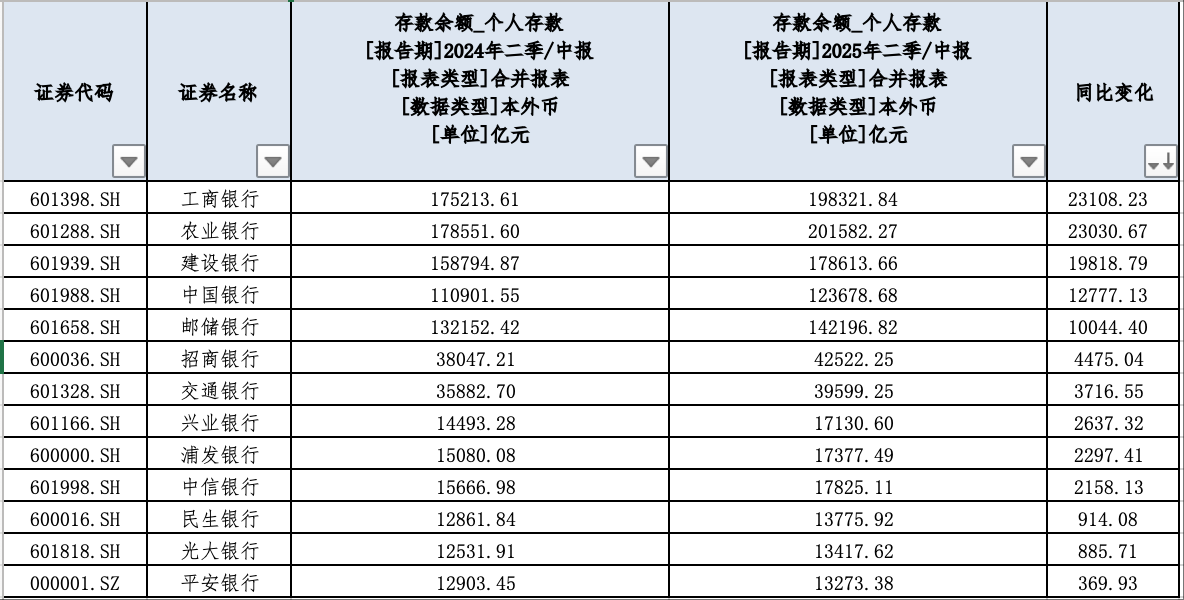
Core Viewpoint - The continuous decline in deposit rates, coupled with the concentration of fixed deposits maturing, is expected to significantly improve the cost of liabilities for banks [1][8]. Group 1: Deposit Trends - Recent reports indicate a trend of residents moving deposits from banks to other financial products such as funds and wealth management products [2][3]. - As of mid-2025, the total personal deposit balance of 13 major commercial banks reached 112.07 trillion yuan, an increase of 11.9 trillion yuan year-on-year [4][5]. - The average cost of deposits for these banks in the first half of 2025 was 1.61%, a decrease of 34 basis points compared to the same period in 2024 [12]. Group 2: Wealth Management Business Growth - The shift of deposits to wealth management products has led to significant growth in banks' wealth management income, with Agricultural Bank's wealth management income increasing by 62.3% [6]. - The total scale of bank wealth management products reached 30.67 trillion yuan by the end of June, with an estimated increase of about 2 trillion yuan by the end of July [6]. Group 3: Interest Margin and Cost of Liabilities - Despite the reduction in deposit costs, banks are still facing pressure on net interest margins, which have decreased to 1.42% as of the second quarter of 2025 [15][16]. - The average net interest margin for the 13 banks was 1.5%, down from 1.62% year-on-year [15]. - The decline in net interest margins is attributed to factors such as the reduction in the Loan Prime Rate (LPR) and adjustments in existing mortgage rates [17][18]. Group 4: Future Outlook - Analysts predict that the concentration of maturing fixed deposits will lead to a significant reduction in the cost of liabilities for banks in the coming years, with expected decreases of 17 to 24 basis points across different types of banks [11]. - The trend of increasing fixed deposits is expected to continue, with the proportion of fixed deposits among total deposits rising to approximately 59.7% in the first half of 2025 [9][10].






多只大型银行股8月29日公布中期业绩
Xin Lang Cai Jing· 2025-08-24 03:48
Group 1 - Major banks including the four state-owned banks and China Merchants Bank are set to announce their interim results on August 29 [1] - Brokerages are primarily focused on the impact of the expected continued narrowing of net interest margins in Q2 on net interest income [1] - The injection of capital into banks by the "national team" in the first half of the year is anticipated to influence the profitability and dividend outlook for banks in the second half of the year [1]
低息差时代中小银行如何破局
Zheng Quan Ri Bao· 2025-07-06 15:46
Core Viewpoint - The continuous narrowing of net interest margins (NIM) in China's commercial banks is significantly impacting their profitability, driven by factors such as declining market interest rates, intensified competition, and insufficient credit demand [1][2]. Summary by Sections Net Interest Margin Trends - China's commercial banks' NIM has decreased to 1.43% in Q1 2025, down 9 basis points from 1.52% at the end of Q4 2024. Different types of banks show varying NIM performance, with private banks and rural commercial banks facing the most pressure [2][3]. - The overall NIM for listed banks fell by 13 basis points year-on-year to 1.43%, with a quarter-on-quarter decline of 6 basis points [2]. Causes of NIM Decline - The decline in NIM is attributed to lower yields on loans and bond investments on the asset side, and a trend towards longer-term deposits on the liability side, which increases costs [3][4]. - Forecasts suggest that NIM will continue to face downward pressure in 2025, but the negative impact on income and net profit growth is expected to gradually diminish [3]. Challenges for Small and Medium Banks - Small and medium banks are facing the greatest challenges in the current low NIM and low-interest-rate environment, with issues related to profitability and competition from larger banks [4][5]. - Strategies for these banks include focusing on localized and differentiated development, digital transformation, and optimizing asset-liability management [4][5]. Strategies for Improvement - Small banks are advised to enhance their asset-liability management, increase the proportion of medium- to long-term assets, and implement differentiated pricing models for loans [4][5]. - Initiatives such as dynamic monitoring of deposit interest rates and targeted marketing strategies are being employed to improve customer acquisition and retention [5][6]. - The shift towards digitalization and innovative product offerings is seen as a crucial step for banks to find new growth opportunities amidst the challenges posed by low NIM [5][6].
四大行史上最差一季报?
表舅是养基大户· 2025-04-29 13:33
今天傍晚,四大行和招行,都陆续公布了一季报,从各个维度看,坦率来说,这应该都是四大行史上最差的一季报了:工行和建行一季度净利润 增速都是-3.99%,历史最低;中行是-2.9%,和去年一季度并列史低;农行一季度净利润倒是增长了2.2%,但后面会讲到,其实都是非常规业务 导致的。 今天港股的四大行,早上冲高后,纷纷跳水,工行和建行日内跌幅都在2个点附近。 下图 ,我自己做了一个表,把五家银行的一季报,喂给了Deepseek,让它整理了一下,部分数据如果有误,都是deepseek的锅。 | 银行名称 | 营收同比 | 李度净利 | 净利润同 | 净利息收入 | 非利息收入 | 非利息收入中: | 非利息收入中:公分 价值变动绝对值(债 | | --- | --- | --- | --- | --- | --- | --- | --- | | | | 润(亿) | 比 | 同比 | 合计同比 | 净手续费及佣金 收入同比 | 券和基金投资收益 | | | | | | | | | 等) | | 工商银行 | -3.22% | 847.09 | -3.99% | -2.86% | -4.20% | -1.18% | - ...