
非银机构流动性支持机制

Search documents
央行部署2026年重点工作 非银机构流动性机制性安排有望破题
2 1 Shi Ji Jing Ji Bao Dao· 2026-01-06 14:44
Core Viewpoint - The People's Bank of China (PBOC) is establishing a mechanism to provide liquidity to non-bank financial institutions (NBFIs) under specific scenarios, aiming to support capital market stability and prevent systemic risks [1][2]. Group 1: Mechanism for Liquidity Support - The PBOC's recent announcements indicate a shift towards regularized liquidity support for NBFIs, moving from temporary measures to a more structured approach [2]. - The traditional liquidity provision tools primarily target commercial banks, leaving NBFIs reliant on indirect channels for liquidity, which may fail under market stress [1][2]. - The term "specific scenarios" refers to situations of systemic pressure, where normal liquidity channels are obstructed, or when individual institutions face liquidity crises that could lead to systemic risks [1]. Group 2: Legal and Operational Framework - A legal foundation is necessary for the liquidity support mechanism, including clear responsibilities and conditions for the PBOC's involvement with NBFIs [2][3]. - An operational framework must be established, detailing criteria for eligible counterparties, collateral valuation methods, interest rate pricing, and control measures for the scale of support [3]. - Coordination with existing regulatory frameworks and investor protection systems is essential to ensure the effectiveness and fairness of the liquidity support mechanism [3]. Group 3: Continuous Evaluation and Adaptation - The liquidity support mechanism should not remain static; it requires ongoing assessment and optimization to adapt to evolving financial markets and business models of NBFIs [3]. - A regular evaluation mechanism is recommended to analyze implementation experiences and adjust parameters based on market changes and policy objectives [3].
降准降息可期!央行2026年政策定调
第一财经· 2026-01-06 13:25
Core Viewpoint - The People's Bank of China (PBOC) has outlined seven key priorities for 2026, focusing on monetary policy implementation, financial services for the real economy, risk prevention, and financial reform and opening-up [3]. Group 1: Monetary Policy - The PBOC will continue to implement a moderately accommodative monetary policy in 2026, emphasizing the promotion of high-quality economic development and reasonable price recovery as core considerations [5]. - The monetary policy will utilize various tools such as reserve requirement ratio (RRR) cuts and interest rate reductions to maintain ample liquidity and ensure that social financing conditions remain relatively loose [5]. - Structural policies will be refined to provide targeted support to key areas, including expanding domestic demand, technological innovation, and small and micro enterprises [6]. Group 2: Exchange Rate Management - The RMB has shown a strong recovery, with the offshore RMB/USD exchange rate breaking 6.97 for the first time in two and a half years, indicating a potential for moderate appreciation in 2026 [8]. - The PBOC aims to maintain the RMB exchange rate at a reasonable and balanced level while preventing excessive fluctuations, with a focus on managing market expectations [9]. Group 3: Financial Risk Prevention - The PBOC has prioritized the prudent resolution of financial risks in key areas, including financing platform debts and small financial institutions, and has proposed mechanisms for providing liquidity support to non-bank financial institutions under specific scenarios [11]. - The exploration of liquidity support mechanisms for non-bank institutions is seen as a proactive response to potential systemic risks, given the growing scale of these institutions in the financial market [12].

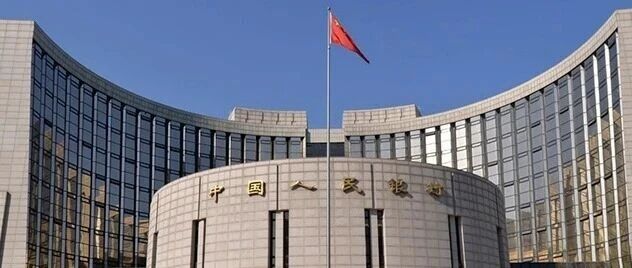
降准降息可期!央行2026年政策定调 非银流动性机制有望破题
Di Yi Cai Jing· 2026-01-06 13:04
Monetary Policy - The People's Bank of China (PBOC) has set a focus on promoting high-quality economic development and reasonable price recovery as key considerations for monetary policy in 2026, utilizing various tools such as reserve requirement ratio (RRR) cuts and interest rate reductions flexibly and efficiently [1][2] - The 2026 monetary policy will have two main directions: aggregate policy and structural policy, aiming to maintain ample liquidity and relatively loose social financing conditions to align the growth of social financing and money supply with economic growth and price level expectations [2][3] Exchange Rate Management - The PBOC aims to maintain the stability of the RMB exchange rate at a reasonable and balanced level while preventing excessive fluctuations, with the RMB showing a strong recovery at the beginning of 2026 [4][5] - Analysts expect a moderate appreciation of the RMB in 2026, supported by a weak US dollar trend and external conditions being relatively favorable [4][6] Financial Risk Prevention - The PBOC has prioritized the resolution of financial risks in key areas, including financing platform debts and small financial institutions, and proposed mechanisms to provide liquidity support to non-bank financial institutions under specific scenarios [7][8] - The exploration of liquidity support mechanisms for non-bank institutions is seen as a proactive response to potential systemic risks, given the increasing scale and importance of these institutions in the financial system [7][8]

降准降息可期!央行2026年政策定调,非银流动性机制有望破题
Di Yi Cai Jing Zi Xun· 2026-01-06 12:15
Group 1: Monetary Policy Direction - The People's Bank of China (PBOC) emphasizes promoting high-quality economic development and reasonable price recovery as key considerations for monetary policy in 2026, utilizing various tools such as reserve requirement ratio (RRR) cuts and interest rate reductions flexibly and efficiently [1][2] - The 2026 monetary policy will focus on both total and structural policies, maintaining ample liquidity and relatively loose social financing conditions to align the growth of social financing and money supply with economic growth and price level expectations [2][3] Group 2: Exchange Rate Management - The PBOC aims to maintain the stability of the RMB exchange rate at a reasonable and balanced level while preventing excessive fluctuations, with recent trends showing a strong recovery of the RMB against the USD [4][5] - Analysts predict that the RMB may experience moderate appreciation in 2026, supported by a favorable external environment, including the ongoing easing cycle of the Federal Reserve [4][6] Group 3: Financial Risk Prevention - The PBOC identifies the resolution of financial risks in key areas as a top priority for 2026, with measures to address risks related to financing platforms, small financial institutions, and financial markets [7] - A proposed mechanism for providing liquidity support to non-bank financial institutions in specific scenarios aims to enhance the financial stability framework, responding to potential systemic pressures [7][8]