高效能运算(HPC)

Search documents
日本要建1nm工厂
半导体行业观察· 2026-03-02 01:41
Core Viewpoint - Rapidus aims to start mass production of 2nm chips in the second half of 2027, with significant backing from the Japanese government and private sector, indicating a strong commitment to advancing Japan's semiconductor industry [2][3][4]. Group 1: Company Overview - Rapidus is collaborating with over 60 companies, primarily focusing on high-performance computing (HPC), AI semiconductors, and robotics, with around 10 companies already receiving quotes [2]. - The company has secured approximately 267.6 billion yen in funding, with the Japanese government contributing 100 billion yen, making it the largest shareholder [2][3]. Group 2: Future Plans - Rapidus plans to expand its investment to over 7 trillion yen, targeting profitability by 2030 and an IPO around 2031 [4]. - The company intends to construct a second factory in Chitose, Hokkaido, starting in 2027, which will produce 1.4nm chips by 2029, aiming to compete with TSMC [4]. Group 3: Government Involvement - The Japanese government will hold approximately 40% of shares through its investment, with provisions to convert non-voting shares into voting shares under certain conditions [3]. - The government plans to invest an additional 150 billion yen by 2026, potentially increasing its voting power to 60% [3].

每周观察| 预计1Q26智能手机、笔电品牌将上调产品价格;3Q25全球前十大晶圆代工产值;中国CSP、OEM或将积极采购H200
TrendForce集邦· 2025-12-13 02:03
Group 1 - The article highlights the significant growth in the demand for optical transceiver modules, predicting that the global market for modules above 800G will reach 24 million units by 2025 and nearly 63 million units by 2026, representing a growth rate of 2.6 times [2] - The semiconductor industry is expected to see a strong performance in Q3 2025, driven by high-performance computing (HPC) and demand for new consumer electronics, with the top ten foundries collectively generating revenue of approximately $45.1 billion, a quarter-over-quarter increase of 8.1% [5][6] - The introduction of NVIDIA's H200 chip is anticipated to attract significant procurement from Chinese cloud service providers (CSPs) and OEMs, as it offers substantial performance improvements over the previous H20 model [7] Group 2 - The article discusses the ongoing price increases in memory products, with expectations that smartphone and laptop brands will raise prices and downgrade specifications due to rising costs, leading to a concentration of resource advantages among a few leading brands [3] - The article provides a detailed breakdown of memory configurations for smartphones and laptops, indicating a trend towards lower specifications in mid-range and entry-level devices, with high-end smartphones maintaining configurations of 12-16GB and laptops focusing on 16GB as the mainstream option [4] - The global humanoid robot market is projected to reach over 50,000 units by 2026, driven by advancements in key components and differing application scenarios across major economies, particularly Japan, the US, and China [10]

存储器涨价等因素扰动供应链转趋保守 机构预计第四季晶圆代工产值季增幅收窄
Zheng Quan Shi Bao Wang· 2025-12-12 12:52
Core Insights - The global wafer foundry industry is experiencing growth driven by the AI boom, with the top ten foundries' revenue increasing by 8.1% to nearly $45.1 billion in Q3 2025 [1][2] - However, due to international conditions and rising memory prices, the supply chain is becoming conservative regarding demand for mainstream terminal applications in 2026, leading to a forecasted slowdown in capacity utilization growth in Q4 [1][7] Group 1: Industry Performance - The top ten foundries' revenue growth in Q3 2025 was significantly supported by high-performance computing (HPC) and consumer electronics, particularly from advanced processes of 7nm and below [2] - TSMC's revenue reached approximately $33.1 billion, a 9.3% increase, with a market share rise to 71%, driven by smartphone and HPC demand [2] - Samsung's revenue remained stable at about $3.18 billion, with a market share of 6.8%, while SMIC's revenue grew by 7.8% to $2.38 billion, ranking third [2] Group 2: Future Outlook - The wafer foundry industry is projected to grow by 19% in 2026, with AI-related demand driving advanced process markets to a 28% annual increase [2] - TSMC is advancing to 2nm production and plans to move towards 1nm technology, with advanced packaging capacity expected to grow by 27% next year [3] - The semiconductor industry is focusing on increasing capacity and technological trends, especially with the rise of ASIC chips and domestic chip innovations from companies like Huawei and Cambrian [3] Group 3: Consumer Electronics Impact - Consumer electronics are a significant driver for wafer foundry performance, affecting the rankings of the top ten foundries [4] - Nexchip's revenue increased by 12.7% to $409 million, allowing it to surpass Tower Semiconductor to rank eighth [4] - UMC's revenue grew by 3.8% to nearly $1.98 billion, benefiting from demand for smartphones and PCs, while GlobalFoundries' revenue remained stable at about $1.69 billion [5] Group 4: Q4 Expectations - The growth rate for Q4 is expected to slow due to conservative demand forecasts influenced by international conditions and rising memory prices [7] - SMIC's Q4 revenue guidance indicates a modest growth of 2%, reflecting cautious customer production planning amid price pressures [7] - Hua Hong Group anticipates Q4 sales revenue between $650 million and $660 million, with limited growth expected [8]


【IPO】PCB行业一设备商成功上市
Sou Hu Cai Jing· 2025-11-05 15:19
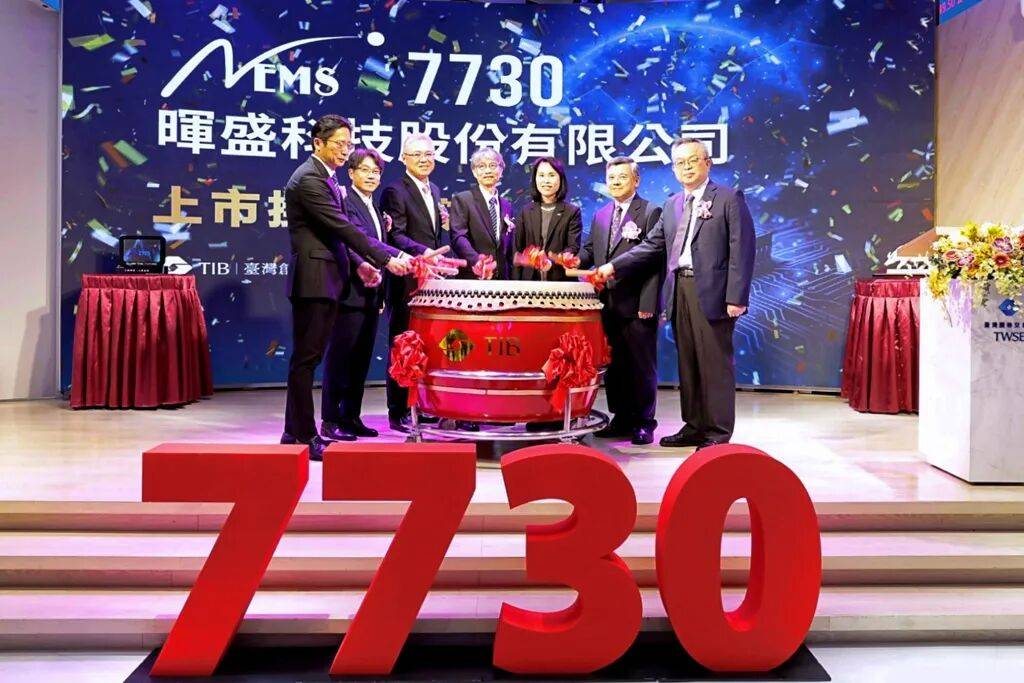
Core Viewpoint - HUISEN Technology (7730.TW), a Taiwanese advanced plasma equipment manufacturer, was listed on the Taiwan Stock Exchange's Innovation Board on November 4, with an initial offering price of NT$72 per share, which surged by 34.03% to NT$96.5 at opening [1] Company Overview - Founded in 2002, HUISEN specializes in advanced plasma technology, offering products for plasma cleaning, etching, and surface modification, applicable in semiconductor, ABF substrates, PCB, and new energy environmental sectors [2] - The company has a comprehensive technology platform including vacuum plasma, atmospheric plasma, and plasma flame, used for cleaning, etching, adhesive removal, coating pre-treatment, and high-temperature cracking processes [2] - HUISEN is expanding its market presence beyond Taiwan and mainland China to Japan, the United States, Europe, and Southeast Asia [2] Technological Advancements - HUISEN is actively positioning itself in the advanced packaging market, investing in heterogeneous material etching and surface activation technologies, providing integrated solutions for Epoxy+SiO₂ and Glass+Cu packaging processes [2] - The company has achieved technical leadership in advanced packaging and heterogeneous integration processes, having passed wafer regeneration validation from leading manufacturers [2][3] Financial Performance - For 2024, HUISEN's consolidated revenue is projected to be NT$547 million (approximately RMB 126 million), a year-on-year decrease of 28.14%, with a net profit after tax of NT$86 million, down 34.75%, marking the lowest figures in three years [7] - In the first three quarters of 2025, the cumulative consolidated revenue was NT$356 million (approximately RMB 82.02 million), reflecting a year-on-year decline of 5.6% [7] - The sales manager expressed optimism for the upcoming year, anticipating that semiconductor performance will account for 30-40% of revenue, doubling from the current year, with expected growth in applications including glass substrates and wafer manufacturing [7]