
高速运算

Search documents
20年来最缺,有钱也买不到存储芯片了
半导体行业观察· 2025-11-25 01:20
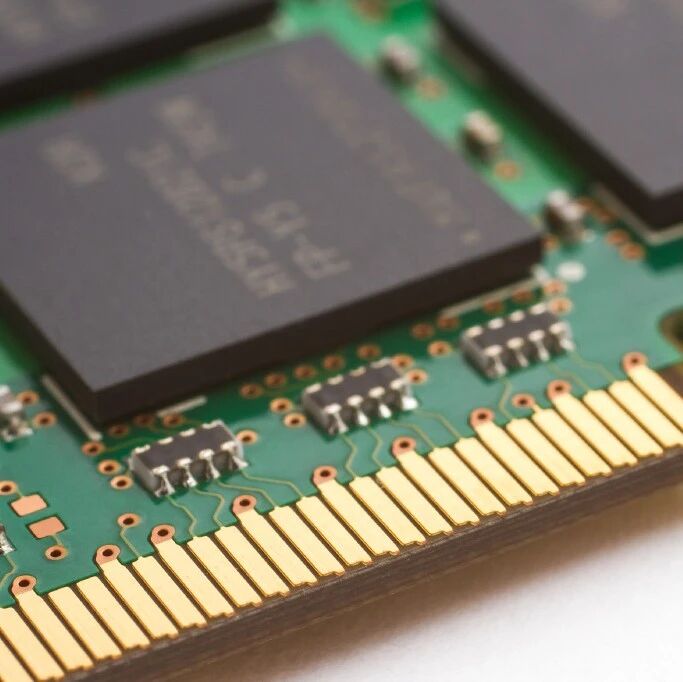
Core Viewpoint - The memory module industry is experiencing the most severe shortage in 20 years due to surging AI demand, with customers receiving only 30% of their orders, leading to significant price increases expected to last for at least two to three quarters [1][2]. Group 1: Memory Shortage Insights - The current memory shortage is not driven by economic cycles but by strong demand from AI, cloud data centers, and high-performance computing, compounded by production adjustments favoring DRAM over NAND Flash [1][2]. - Major electronic brands are elevating procurement discussions to the highest levels, with company leaders personally negotiating for memory supplies, yet availability remains extremely limited [1][2]. - DDR4 and DDR5 memory supplies are tight, with DDR3 prices having doubled from their lows, and DDR5 prices expected to rise more than DDR4 starting this quarter [2]. Group 2: Lenovo's Strategy - Lenovo is stockpiling memory components, increasing its inventory by approximately 50% compared to normal levels, to mitigate the impact of rising memory prices [3][4]. - This strategy positions Lenovo to maintain competitive pricing for its OEM PC and laptop products through 2026, potentially giving it an advantage over competitors who have not stockpiled [3][4]. - The surge in demand for DRAM chips, particularly from AI companies, has led to skyrocketing prices, with some memory kits exceeding the cost of a PS5 console [4]. Group 3: Market Dynamics - Memory manufacturers are prioritizing supply to AI firms like NVIDIA, resulting in limited availability for other markets, and production increases are not anticipated to address the current shortages [4]. - Analysts suggest that the current price surge in memory could persist for up to ten years, with the market expected to remain volatile until at least the end of 2026 [4].


台积电,又一座1.4nm厂
半导体行业观察· 2025-10-07 02:21
Core Insights - TSMC is rapidly advancing its 2nm production capabilities, with Kaohsiung set to become a key production hub for the 2nm family, including the introduction of the A16 process in 2024 [3][4][5] - The total investment in the Kaohsiung facility is expected to exceed $50 billion, marking a significant milestone in semiconductor manufacturing [3][4] - The establishment of five fabs (P1 to P5) is projected to create approximately 7,000 high-tech jobs and 20,000 construction jobs, significantly boosting the local economy [3][4][5] Investment and Production Plans - The P1 fab is set to begin mass production of 2nm wafers by the end of this year, while the P2 fab is currently in the equipment installation phase, aiming for mass production in Q2 2024 [3][5] - The P3 fab is expected to start construction in October 2024, with all five fabs projected to be operational by Q4 2027, establishing a leading global 2nm cluster [5] - TSMC's investment in Kaohsiung is anticipated to surpass NT$1.5 trillion, setting a new record for corporate investment in the region [3][4] Technological Advancements - The A16 process will enhance performance and power efficiency, incorporating a new chip architecture that is crucial for AI and high-performance computing [4][5] - The A14 process is scheduled for mass production in 2028, with the main production base located in Taichung, indicating a strong market demand for AI and high-efficiency computing [4][5] Economic Impact - The development of the Nanzih Science Park, which includes the P1 and P2 fabs, is expected to create over 10,000 jobs when considering construction workers and downstream contractors [4] - The local government is committed to optimizing the investment environment to support TSMC's operations and enhance the semiconductor ecosystem in southern Taiwan [5]

台积电美国投资扩厂 加速度
Jing Ji Ri Bao· 2025-08-03 23:20
Core Viewpoint - TSMC (2330) is expected to face a decline in revenue in Q4 compared to Q3 for the first time in nearly a decade, despite actively pursuing growth opportunities in the U.S. semiconductor market [1][2] Group 1: Revenue and Production Outlook - TSMC anticipates that Q4 revenue in New Taiwan Dollars and U.S. Dollars may not surpass Q3 levels, marking a significant seasonal decline [1] - The first wafer fab in Arizona is set to begin mass production using 4nm technology in Q4 2024, achieving yield rates comparable to those in Taiwan [1] - The second wafer fab, utilizing 3nm technology, has been completed, with strong interest from advanced process customers, prompting TSMC to accelerate production timelines [1] Group 2: Investment and Expansion Plans - TSMC has committed to investing a total of $165 billion in advanced semiconductor manufacturing in the U.S., including six wafer fabs, two advanced packaging facilities, and a major R&D center [1][2] - Approximately 30% of the advanced process capacity below 2nm is expected to be produced in Arizona, supporting major U.S. clients such as Apple, NVIDIA, AMD, Qualcomm, and Broadcom [1] - The fourth wafer fab in Arizona will utilize N2 and A16 process technologies, with the fifth and sixth fabs planned to adopt even more advanced technologies, contingent on customer demand [2]
骏亚科技股价震荡下行 上半年业绩扭亏为盈
Jin Rong Jie· 2025-07-29 18:51
Company Overview - Junya Technology's main business involves the research, production, and sales of printed circuit boards (PCBs), which are widely used in consumer electronics, communication devices, and automotive electronics [1] - The company operates within the electronic components sector [1] Financial Performance - As of July 29, Junya Technology's stock price was 14.56 yuan, reflecting a decline of 1.89% from the previous trading day, with an intraday fluctuation of 12.26% and a trading volume of 980 million yuan [1] - The company is expected to turn a profit in the first half of 2025, primarily driven by increased demand for high-end PCBs in AI servers and high-speed computing, leading to a higher proportion of high-value-added products [1] Market Activity - On July 29, there was a net outflow of 56.02 million yuan in the main funds for Junya Technology [2]
