黄金定价机制

Search documents
黄金价格波动,有何深意?
新华网财经· 2026-02-11 02:06
Core Viewpoint - The fluctuations in international gold prices in early 2026 reflect a reassessment of the global monetary system and geopolitical situation, indicating that gold is evolving from a mere investment asset and temporary safe haven to a strategic reserve against long-term uncertainties [1]. Group 1: Factors Influencing Gold Prices - Historical data shows that international gold price fluctuations have long been influenced by factors such as safe-haven demand, dollar credit, and real interest rates, with significant variations in the weight of these factors over different historical periods [2]. - In the 1970s, inflation and oil crises drove gold prices, while from the 1980s to the early 2000s, economic growth and a strong dollar led to a prolonged period of low gold prices [2]. - The current gold price uptrend is characterized by a structural shift, where the influence of real interest rates is diminishing, and the dual drivers of safe-haven attributes and credit reassessment are emerging [2]. Group 2: New Dynamics in Gold Pricing - As of 2026, a phenomenon of "strong dollar" and "strong gold" coexists, indicating a reduced correlation between the two, suggesting that gold is seeking a new dynamic balance under multiple influencing factors [5]. - Analysts believe that the market pricing mechanism is adapting to new realities, with gold exhibiting stronger independent asset characteristics [5]. - Goldman Sachs has raised its gold price forecast for the end of 2026, citing that as long as global policy risks remain, the dynamic balance formed by various forces will continue to push prices upward [5]. Group 3: Central Banks' Role in Gold Market - A significant factor supporting the current gold price is the shift in the role of global central banks, which have transitioned from net sellers to net buyers of gold, with purchases expected to remain high at around 755 tons in 2026 [9]. - This shift reflects a reassessment of the safety of reserve assets in the current geopolitical context, with increasing gold reserves becoming a strategic defensive measure [9]. - A survey by the World Gold Council indicates that most central banks plan to increase or maintain their gold reserves in the coming year, reaffirming gold's strategic value in an uncertain multilateral trade environment [9]. Group 4: Overall Market Implications - The high international gold prices in 2026 are seen as a reflection of the transformation in the global economic governance system [10]. - Predictions suggest that the premium effect of gold will not quickly dissipate until a new stable period in global geopolitical dynamics and sovereign credit systems is established [10]. - Gold is returning to its role as a strategic cornerstone for national economic security, serving as an important tool for hedging against uncertainties until new global growth engines or international cooperation agreements are reached [10].

黄金价格波动,有何深意?
Xin Hua She· 2026-02-10 12:28
Core Viewpoint - The fluctuations in international gold prices in early 2026 reflect a reassessment of the global monetary system and geopolitical situation, indicating that gold is evolving from a mere investment asset to a strategic reserve against long-term uncertainties [2][10]. Group 1: Factors Influencing Gold Prices - Historical data shows that gold price fluctuations have long been influenced by factors such as safe-haven demand, U.S. dollar credit, and real interest rates, with the weight of these factors changing significantly over different historical periods [4]. - The current gold price increase cycle is characterized by a structural shift, where the traditional logic of real interest rates is weakening, and the dual drivers of safe-haven attributes and credit reassessment are becoming more prominent [4][5]. - The correlation between a strong U.S. dollar and gold prices has diminished in 2026, suggesting that gold is finding a new dynamic balance under multiple influencing factors [7]. Group 2: Central Bank Influence - Global central banks have shifted from being net sellers to net buyers of gold, with purchases expected to remain high at around 755 tons in 2026, significantly above historical averages prior to 2022 [9]. - This transition reflects a strategic reassessment of reserve asset security amid current geopolitical contexts, with increased gold reserves seen as a defensive measure [9]. - A majority of surveyed central banks plan to increase or maintain their gold reserves in the coming year, highlighting gold's strategic value in an uncertain multilateral trade environment [9]. Group 3: Market Dynamics and Future Outlook - The current high gold prices are a market reflection of the transformation in the global economic governance system, with predictions indicating that gold's premium effect will not quickly dissipate until a new stable geopolitical landscape is established [10]. - Gold is transitioning back to being a strategic cornerstone for national economic security, serving as an important tool for hedging against uncertainties in the global political and economic landscape [10].

国际黄金价格波动背后有何深意
Xin Hua Wang· 2026-02-10 03:17
Core Viewpoint - The international gold market has experienced significant volatility in early 2026, with prices reaching a historical peak of over $5,600 per ounce before dropping more than 20% in a short period, currently stabilizing above $5,000 per ounce. This reflects a reassessment of the global monetary system and geopolitical situation, positioning gold as a strategic reserve against long-term uncertainties rather than merely an investment asset or temporary safe haven [1]. Group 1: Factors Influencing Gold Prices - Historical data indicates that gold price fluctuations have long been influenced by factors such as safe-haven demand, U.S. dollar credit, and real interest rates, with the weight of these factors varying significantly across different historical periods [2]. - In the 1970s, inflation and oil crises drove gold prices, while from the 1980s to the early 2000s, economic growth and a strong dollar led to a prolonged period of low gold prices due to increased opportunity costs of holding gold [2]. - The current gold price uptrend is characterized by a structural shift, where the influence of real interest rates is diminishing, and the dual drivers of safe-haven attributes and credit reassessment are emerging [2]. Group 2: New Dynamics in Gold Pricing - In 2026, a phenomenon of "strong dollar" and "strong gold" coexists, indicating a reduced correlation between the two, suggesting that gold is seeking a new dynamic equilibrium under multiple influencing factors [3]. - Analysts believe that as long as global macroeconomic uncertainties persist, gold prices will maintain solid support, leading to a "defensive growth" investment strategy [3]. - Goldman Sachs has raised its gold price forecast for the end of 2026, attributing this to diversified demand from the private sector and emerging markets, which is hedging against policy risks [3]. Group 3: Central Bank Influence on Gold Prices - A significant factor supporting the current gold price is the shift in the role of global central banks, which have transitioned from net sellers to net buyers of gold, with purchases expected to remain high at around 755 tons in 2026 [4]. - This trend reflects a strategic reassessment of reserve asset security amid current geopolitical contexts, with increased gold reserves becoming a defensive measure [4]. - A survey by the World Gold Council indicates that most central banks plan to increase or maintain their gold reserves in the coming year, reaffirming gold's strategic value as a physical asset with no counterparty risk [5]. Group 4: Broader Economic Implications - The high international gold prices in 2026 are seen as a reflection of the transformation in the global economic governance system, with predictions that gold's premium effect will not quickly dissipate until a new stable geopolitical landscape is established [5]. - The current trends indicate a shift in gold's role from a mere financial investment tool to a strategic cornerstone for national economic security, continuing to serve as a hedge against uncertainties [5].
国际观察丨国际黄金价格波动背后有何深意
Xin Hua Wang· 2026-02-10 03:00
Core Insights - The international gold market has experienced significant volatility, with prices reaching a peak of over $5,600 per ounce before dropping more than 20% and stabilizing above $5,000 [1] Group 1: Factors Influencing Gold Prices - Historical data indicates that gold prices have long been influenced by factors such as safe-haven demand, U.S. dollar credit, and real interest rates, with the weight of these factors changing over different historical periods [2] - In the 1970s, inflation and oil crises drove gold prices, while from the 1980s to the early 2000s, economic growth and a strong dollar led to a prolonged period of low gold prices [2] - The current gold price increase is characterized by a structural shift, where the influence of real interest rates is diminishing, and safe-haven attributes combined with credit reassessment are becoming dual driving forces [2] Group 2: New Dynamics in Gold Pricing - In 2026, a coexistence of a strong dollar and strong gold has emerged, indicating a reduced correlation between the two, suggesting that gold is seeking a new dynamic balance under multiple influencing factors [3] - Analysts believe that as long as global macroeconomic uncertainties persist, gold prices will maintain solid support, leading to a "defensive growth" investment strategy [3] - Goldman Sachs has raised its gold price forecast for the end of 2026, citing that diverse demand from the private sector and emerging markets is hedging against policy risks [3] Group 3: Central Bank Influence on Gold Prices - Global central banks have shifted from being net sellers to net buyers of gold, with purchases expected to remain high at around 755 tons in 2026, significantly above historical averages prior to 2022 [4][5] - This shift reflects a reassessment of the security of reserve assets in the current geopolitical context, with increased gold reserves becoming a strategic defensive measure [5] - A survey by the World Gold Council indicates that most central banks plan to increase or maintain their gold reserves in the coming year, reinforcing gold's strategic value as a risk-free physical asset [5]
新世纪期货交易提示(2025-12-25)-20251225
Xin Shi Ji Qi Huo· 2025-12-25 02:58
Report Industry Investment Ratings - Iron ore: Oscillating [2] - Coking coal and coke: Oscillating [2] - Rebar and hot-rolled coils: Oscillating [2] - Glass: Oscillating [2] - Soda ash: Oscillating [2] - CSI 50 Index Futures/Options: Oscillating [4] - SSE 50 Index Futures/Options: Oscillating [4] - CSI 300 Index Futures/Options: Oscillating [4] - CSI 500 Index Futures/Options: Rebounding [4] - CSI 1000 Index Futures/Options: Rebounding [4] - 2-year Treasury bonds: Oscillating [4] - 5-year Treasury bonds: Oscillating [4] - 10-year Treasury bonds: Consolidating [4] - Gold: Oscillating with an upward bias [6] - Silver: Oscillating with an upward bias [6] - Logs: Oscillating [6] - Pulp: Oscillating [8] - Offset paper: Weakly oscillating [8] - Soybean oil: Rebounding [8] - Palm oil: Rebounding [8] - Rapeseed oil: Rebounding [8] - Soybean meal: Weakly oscillating [8] - Rapeseed meal: Weakly oscillating [8] - Soybean No. 2: Weakly oscillating [8] - Soybean No. 1: Weakly oscillating [8] - Live pigs: Oscillating [10] - Rubber: Oscillating [12] - PX: Widely oscillating [12] - PTA: Widely oscillating [12] - MEG: Oscillating at a low level [12] - PR: On the sidelines [12] - PF: On the sidelines [12] Core Views - The iron ore market features a loose supply, low demand, and rising port inventories in 2026, with new global mine production increasing by 64 - 65 million tons, outpacing the growth of crude steel production. Real - demand is weak, and the steel export license system is a definite negative for raw materials. Short - term rebounds offer opportunities to enter short positions [2]. - Coking coal and coke are supported by capacity inspections, safety inspections, and anti - involution policies. However, the steel export license system shifts market expectations from supply - side policy benefits to demand - side negatives, impacting raw material demand and prices [2]. - The sentiment in the rebar market is boosted by policies emphasizing domestic demand, and the black sector has rebounded. The steel export license system requires a downward adjustment of steel export expectations for next year, and the impact of potential crude steel production control policies should be noted [2]. - The glass market has a supply - demand imbalance. Although there is a cold - repair expectation for some production lines before the Spring Festival, supply contraction is less than expected, and demand is weak due to the decline in real - estate completion [2]. - In the financial market, the central bank's monetary policy meeting emphasizes the integrated effect of incremental and existing policies. The new version of the "Catalogue of Industries Encouraged for Foreign Investment" guides more foreign investment. The power consumption data shows growth, and the market is in short - term consolidation with a continued medium - term trend [4]. - Gold's pricing mechanism is shifting from being centered on real interest rates to central bank gold purchases. Multiple factors such as the US debt issue, geopolitical risks, and increased Chinese physical gold demand support the upward trend of gold prices, despite short - term fluctuations [6]. - Logs have a supply - demand pattern of weakening supply pressure and relatively weak demand, with prices expected to oscillate. Pulp has a loose supply - demand situation, and prices may remain oscillating. Offset paper prices are expected to weakly oscillate in the short term [6][8]. - In the oil and oilseed market, the demand for oils is uncertain, but they are rebounding in the short term driven by the strengthening of crude oil. The soybean market has a relatively loose supply, and prices of soybean meal and soybeans are expected to oscillate weakly [8]. - The live - pig market has a complex relationship between supply and demand. The average trading weight may decline, and the average price is expected to oscillate in the coming week [10]. - The rubber market has supply disruptions in major producing areas and a demand - side support that is insufficient. With inventory accumulation, prices are expected to oscillate. The polyester market has different trends for each product, with PX and PTA having wide - range oscillations, MEG having low - level oscillations, and PR and PF being on the sidelines [12]. Summaries by Related Catalogs Black Industry - Iron ore: In 2026, global mine production will increase significantly, with real demand weakening due to factors like falling hot - metal production and high plate inventories. The steel export license system is a negative for raw materials, and short - term rebounds can be used to enter short positions [2]. - Coking coal and coke: Supported by capacity inspections and anti - involution policies, but the steel export license system changes market expectations, affecting raw material demand and prices [2]. - Rebar: Policy boosts market sentiment, and the black sector rebounds. The steel export license system requires adjusting export expectations, and the impact of crude steel production control policies should be watched [2]. - Glass: Supply - demand imbalance persists, with cold - repair expectations not fully met, and demand weakening due to the real - estate situation [2]. Financial - Stock index futures/options: Different stock indices show different trends, and the market is affected by central bank policies and industry - specific capital flows [4]. - Treasury bonds: The yield of 10 - year Treasury bonds is flat, and the market is in a small - scale rebound after a short - term net cash withdrawal by the central bank [4]. Precious Metals - Gold: The pricing mechanism is changing, and multiple factors support the upward trend, with short - term fluctuations affected by interest - rate policies and geopolitical risks [6]. - Silver: Similar to gold, it oscillates with an upward bias, affected by macro - economic data and geopolitical factors [6]. Light Industry - Logs: Supply pressure is weakening, demand is relatively weak, and prices are expected to oscillate [6][8]. - Pulp: Supply - demand is loose, and prices may remain oscillating [8]. - Offset paper: Prices are expected to weakly oscillate in the short term, with potential large - scale price fluctuations [8]. Oil and Oilseeds - Oils: Demand is uncertain, but they are rebounding in the short term driven by crude oil. Attention should be paid to the weather in South American soybean - producing areas and the production and sales of Malaysian palm oil [8]. - Meal and soybeans: Supply is relatively loose, and prices are expected to oscillate weakly, with short - term rebounds possible, and attention should be paid to multiple uncertainties [8]. Agricultural Products - Live pigs: The average trading weight may change, and demand is affected by festivals. The average price is expected to oscillate in the coming week [10]. Soft Commodities - Rubber: Supply is affected by weather in major producing areas, demand support is insufficient, inventory is accumulating, and prices are expected to oscillate [12]. Polyester - PX and PTA: Prices have wide - range oscillations, affected by oil prices and supply - demand relationships in the polyester industry [12]. - MEG: Prices oscillate at a low level, with long - term inventory pressure and short - term supply - side changes to be watched [12]. - PR and PF: The market is on the sidelines, with different trends based on their own supply - demand and cost situations [12]
黄金再度站上新高之际,聊点不一样的!
Sou Hu Cai Jing· 2025-12-24 01:43
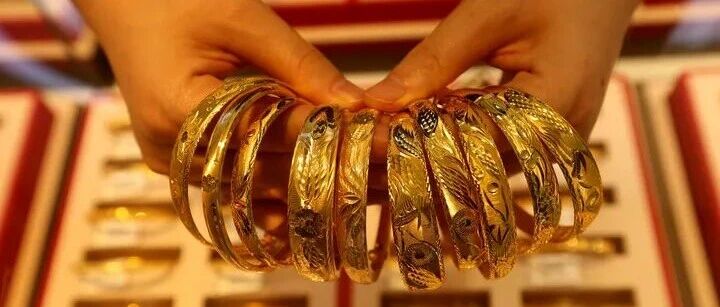
Core Viewpoint - The recent surge in gold prices, reaching a historical high of $4,400, has exceeded the expectations of major financial institutions, indicating an unprecedented market behavior for gold [1][2]. Group 1: Price Predictions and Market Reactions - Major institutions had predicted lower gold prices for the end of 2023, with Goldman Sachs forecasting $3,700, UBS at $3,500, and Morgan Stanley at $3,800, while Citigroup even anticipated a drop below $3,000 [1]. - The current price of $4,400 has surpassed these predictions, highlighting a significant deviation from expected market trends [1]. Group 2: Changes in Pricing Mechanism - Historically, gold prices have shown a strong negative correlation with real interest rates on U.S. Treasury bonds since 2000. However, this relationship has changed since 2022, as gold prices have risen despite increasing real interest rates [2]. Group 3: Underlying Market Dynamics - The decline in confidence towards the U.S. dollar and the rise of "de-dollarization" have made gold a more attractive asset, serving as a stable value anchor amid changing market conditions [4]. - The simultaneous rise of gold and U.S. equities marks a historic shift, driven by a weaker dollar and the Federal Reserve's liquidity measures, which have benefitted both risk and safe-haven assets [4]. Group 4: Future Outlook for Gold Prices - Institutions generally maintain a bullish outlook for gold prices in 2026, with predictions ranging from $4,400 to $5,000, driven by structural demand from central banks, expectations of continued interest rate cuts, and geopolitical uncertainties [6][7]. - Goldman Sachs predicts a price of $4,900, while Morgan Stanley estimates $4,800, indicating a consensus on the potential for further price increases [7]. Group 5: Investment Trends in Gold ETFs - Despite the bullish sentiment, actual investment in gold ETFs remains relatively low compared to the overall market, with gold ETFs in the U.S. accounting for only 0.17% of private financial portfolios [8]. - The scale of gold ETFs in China has increased significantly, surpassing 210 billion yuan, but still appears small compared to the broader A-share ETF market [8].
程强:黄金追平内在价值,货币属性凸显,降息周期下金价或持续走强
Sou Hu Cai Jing· 2025-09-11 15:43
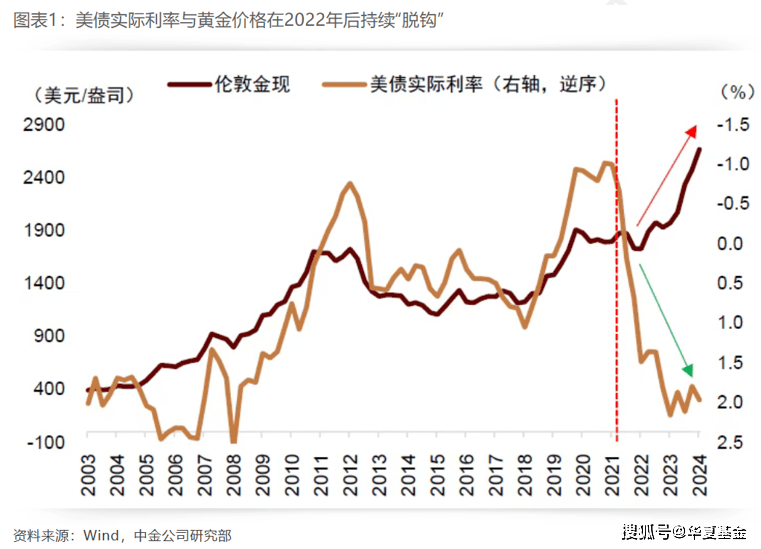
Core Insights - The relationship between gold prices and the real dollar interest rate has shown dynamic changes over the past two decades, reflecting the deep impact of the stability of the dollar's value [1] - Recent analysis indicates that the pricing logic of gold is undergoing a critical shift, where the influence of interest rates on gold prices may significantly change as gold prices approach their intrinsic value [4] Group 1: Historical Sensitivity Analysis - From 2003 to 2015, the sensitivity of gold prices to the real dollar interest rate was -404.8, with an explanatory power of 0.75, indicating a strong negative correlation [4] - This relationship weakened from 2016 to 2019, with sensitivity dropping to -151.3 and explanatory power falling to 0.24 [4] - Since 2020, a counterintuitive positive correlation has emerged, with sensitivity at 224.1, suggesting that the stability of the dollar's value plays a dominant role in gold pricing [4] Group 2: Current Market Dynamics - The tightening of the Federal Reserve's monetary policy since 2020 has led to a gradual recovery of gold's intrinsic value, with gold prices continuing to rise during the rate hike cycle [4] - As of September 8, the futures market indicates a 90.1% probability of a rate cut by the Federal Reserve in September, with a 68.6% chance of three rate cuts by the end of the year [5] - Historical data shows that gold prices tend to perform well during rate cut periods, providing dual support for gold prices in the current environment [5] Group 3: Potential Risks - The market should remain cautious of potential risks, including unexpected increases in global gold production and significant shifts in U.S. monetary policy, which could disrupt the fragile balance of current gold pricing [8] - Understanding the dynamic evolution of gold pricing mechanisms is strategically more valuable for investors than merely focusing on short-term price fluctuations [8]