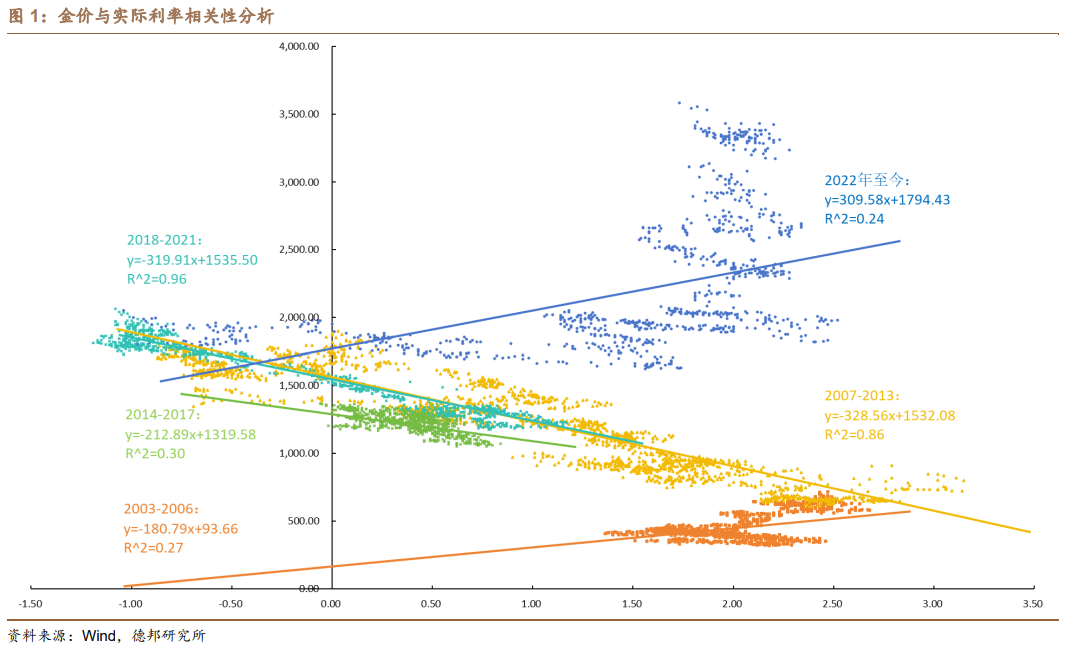
美元实际利率

Search documents
螺丝钉黄金星级和牛熊信号板来啦:黄金估值如何?|2026年3月
银行螺丝钉· 2026-03-02 14:04
Core Viewpoint - The article discusses the design of a "Golden Star Rating" and a "Golden Bull-Bear Signal Board" by the company, aimed at helping investors assess the valuation of gold, similar to stock market indicators [1]. Group 1: Gold Price and Valuation - The price of gold is typically referred to in terms of Shanghai gold prices, which closely follow London gold prices, with differences mainly due to exchange rate fluctuations [12][13]. - Historical star ratings for gold indicate that in early March 2026, gold was rated at 1.0 stars, while it reached over 4 stars during its lowest valuation in 2022. The period from 2011 to 2016 saw a prolonged bear market for gold, with significant undervaluation opportunities [15]. Group 2: Factors Influencing Gold Prices - The primary factors affecting gold prices include: 1. **US Dollar**: The actual interest rate of the dollar, calculated as nominal interest rate minus inflation rate, significantly influences gold prices. A decrease in the actual interest rate typically leads to an increase in gold prices, while an increase results in a decline [18]. 2. **Mining Costs**: As of this year, the cost of gold mining is around $1600 per ounce, which is higher than in previous years. If gold prices fall below mining costs, it presents a significant buying opportunity [23][24]. 3. **Geopolitical Risks**: Events such as regional conflicts and financial crises can drive investors towards gold as a safe-haven asset, leading to price increases [25][26]. Group 3: Gold Volatility and Risk - Gold typically exhibits a volatility rate of around 42% and a maximum drawdown of approximately 44%, comparable to a mixed fund with a 60-70% stock position. The risk level of gold is generally lower than that of average stock assets but higher than bond assets [29][31]. Group 4: Investment Options in Gold - Investors can choose between gold funds and physical gold for investment: 1. **Gold Funds**: These funds usually yield slightly lower returns than the actual gold price due to management fees and cash reserves for redemptions. They offer convenience and reduce the risk of purchasing counterfeit gold [33][34]. 2. **Physical Gold**: This includes investment bars, panda coins, and jewelry. While investment bars track gold prices closely, they require careful selection to avoid counterfeits. Panda coins, issued by the People's Bank of China, are also a popular choice, though they may carry a premium [37][39][41].


螺丝钉黄金星级和牛熊信号板来啦:黄金估值如何?|2026年2月
银行螺丝钉· 2026-02-02 12:45
Core Viewpoint - The article discusses the design of a "Golden Bull and Bear Signal Board" by the company, which helps assess the valuation of gold, similar to stock market indicators. The board is updated regularly to provide insights into gold price trends [1][2]. Group 1: Gold Price Dynamics - The price of gold is primarily referenced through Shanghai Gold in mainland China and London Gold internationally, with their movements closely related but affected by exchange rate fluctuations [12][13]. - Historical data shows that in February 2026, gold prices significantly dropped to a 1.2-star rating, while in 2022, gold was undervalued at over 4 stars. The period from 2011 to 2016 marked a prolonged bear market for gold, with a recovery starting in 2017 [15]. Group 2: Factors Influencing Gold Prices - The main factors affecting gold prices include: 1. **US Dollar**: The actual interest rate of the dollar, calculated as nominal interest rate minus inflation rate, significantly influences gold prices. A decrease in the actual interest rate typically leads to higher gold prices, while an increase results in lower prices [18]. 2. **Mining Costs**: As of this year, the cost of gold mining is around $1600 per ounce, which has risen due to inflation and labor costs. If gold prices fall below mining costs, it presents a buying opportunity [23][24]. 3. **Geopolitical Risks**: Events such as regional conflicts and financial crises can drive investors towards gold as a safe-haven asset, leading to price increases [25][26]. Group 3: Gold Volatility and Returns - Gold exhibits a volatility rate of approximately 40% and a maximum drawdown of around 44%, comparable to a mixed fund with a 60-70% stock allocation [29]. - Since 2012, the annualized return for Shanghai Gold is about 8.18%, while the annualized return for the pure bond index is approximately 4.31%, and the total return index for the CSI All Share is around 8.39% [33]. Group 4: Investment Options in Gold - Investors can choose between gold funds and physical gold. Gold funds typically yield slightly lower returns than physical gold due to management fees and cash reserves [38][39]. - Physical gold can be purchased in various forms, including investment bars, panda coins, and jewelry, each with different pricing structures and potential for counterfeit risks [42][44][47].

螺丝钉黄金星级和牛熊信号板来啦:黄金估值如何?|2026年1月
银行螺丝钉· 2026-01-05 14:15
Core Viewpoint - The article discusses the design of a gold bull-bear signal board by the company, which helps in assessing the valuation of gold, similar to stock market indicators. The signal board is updated regularly for user convenience [1][2]. Group 1: Gold Price and Historical Context - Gold prices are primarily referenced from London Gold for overseas markets and Shanghai Gold for domestic markets, with the latter being the standard for local pricing [6]. - Historical data shows that in January 2026, gold was rated at 1.0 star, while it reached over 4 stars during its lowest valuation in 2022. The period from 2011 to 2016 was marked by a prolonged bear market for gold, which lasted longer than the longest bear market in A-shares history [8]. Group 2: Factors Influencing Gold Prices - The main factors affecting gold prices include the actual interest rates of the US dollar, which are calculated as nominal interest rates minus inflation rates. A significant decrease in actual interest rates typically leads to an increase in gold prices [12][13]. - Fluctuations in the US dollar's exchange rate also impact gold prices, as a depreciating dollar may drive more investments into gold as a safe haven [15]. - Other influencing factors include regional conflicts and financial crises, which often lead to increased demand for gold as a safe asset during times of uncertainty [18][19]. Group 3: Gold Volatility and Returns - Gold exhibits a volatility rate of approximately 38% and a maximum drawdown of around 44%, comparable to a mixed fund with a 60-70% stock position [22]. - Since 2012, the annualized return for Shanghai Gold has been about 8.12%, outperforming the annualized returns of pure bond indices and the CSI All Share Index [23]. Group 4: Investment Options in Gold - Investors can choose between gold funds and physical gold. Gold funds typically yield slightly lower returns than the actual gold price due to management fees and cash reserves [28][29]. - Physical gold can closely track gold price movements, but there is a risk of counterfeit products, necessitating reliable dealers for purchases [32][33]. - Common forms of physical gold include investment bars, panda gold coins, and gold jewelry, with varying levels of premium and investment value [35][36][39].

黄金时代-金工:金价是否还在利率框架内?
2025-12-15 01:55
Summary of Key Points from the Conference Call Industry Overview - The discussion revolves around the gold market and its pricing dynamics in relation to real interest rates, central bank gold purchases, and ETF developments [1][2][3]. Core Insights and Arguments - **Interest Rate Impact on Gold Prices**: The end of the interest rate hike cycle has led to a high-level oscillation with a downward bias, with expectations of entering a rate-cutting phase in the future. Historical data indicates a strong correlation between gold prices and real interest rates, which remain a crucial reference for gold pricing [1][2]. - **Asymmetric Relationship**: Quantitative research shows a non-linear relationship between gold prices and real interest rates. During periods of declining real interest rates, gold prices tend to rise by an average of 28%, while during periods of rising rates, gold prices experience minimal declines [2][3]. - **Economic Conditions and Gold Demand**: High inflation supports gold prices, limiting their decline, while economic slowdowns or crises increase safe-haven demand, further driving prices up. Rapid interest rate hikes raise concerns about financial stability, diminishing the suppressive effect of rate increases on gold prices [3][4]. - **Central Bank Gold Purchases**: Central bank demand for gold is influenced more by international risk events and changes in the dollar's credit system than by the annual fluctuations in gold prices. Following the Russia-Ukraine conflict in 2022, global central bank net gold purchases doubled to around 1,000 tons [5]. - **ETF Fund Flows**: Gold ETF fund flows are highly correlated with gold prices, particularly post-2024. However, during the divergence period from 2022 to 2024, some institutions shifted from paper ETFs to physical gold due to the Russia-Ukraine conflict, and some ETF funds were redeemed during the rate hike cycle. This indicates that ETF funds have speculative and trend-following characteristics, significantly impacting short-term gold price fluctuations [6]. Future Predictions - If real interest rates decline by 100 basis points and global central banks continue to purchase approximately 1,000 tons of gold annually, the expected gold price center in 2026 could rise to around $5,000, with optimistic estimates reaching $5,400 to $5,600 [2][7]. Additional Important Points - The relationship between interest rate changes and gold prices has shown different responses during small versus large rate hikes, with gold prices generally remaining stable during significant rate increases due to its safe-haven attributes [4]. - The current high-level oscillation in gold prices is influenced by various factors, including international events and risk occurrences, which complicate the historical patterns observed [3].
白银一夜狂飙破58美元,涨幅碾压黄金!贵金属牛市逻辑已经变了?
Sou Hu Cai Jing· 2025-12-03 04:26
Price Surge - The spot silver price reached a historic high of $58.8 per ounce, marking a year-to-date increase of over 100%, significantly outpacing gold's approximately 60% rise [1][3] - Gold also saw a notable increase, reaching $4264 per ounce, the highest in six weeks [1][3] - The gold-silver ratio has approached 70, the lowest since August 2021, indicating a strong performance of silver relative to gold [3] Supply Constraints - The primary factor supporting the surge in silver prices is a persistent supply shortage, with global silver inventories at a near 10-year low and experiencing a supply deficit for five consecutive years [5] - Silver stocks in London have decreased from 31,023 tons in June 2022 to 22,126 tons in March 2025, a decline of approximately one-third [5] - The Shanghai Futures Exchange's silver inventory has also reached its lowest level in nearly a decade, exacerbating supply tightness [5] Demand Explosion - In contrast to the supply side, silver demand is experiencing a multifaceted surge, particularly in India, the largest consumer of silver, with an annual consumption of about 4000 tons [7] - Indian silver prices have soared to a historical high of 170,415 rupees per kilogram, reflecting an 85% increase since the beginning of the year [7] - Industrial demand for silver is growing significantly due to factors such as the electrification of vehicles, expansion of the AI industry, and increased demand for photovoltaics [7] Financial Attributes - Silver's financial characteristics are also playing a crucial role in its price surge, influenced by the Federal Reserve's policies [9] - Market expectations for a potential interest rate cut by the Federal Reserve have risen to 85% due to soft U.S. economic data and dovish comments from officials [9] - Concerns over macroeconomic risks from Japan, including potential interest rate hikes, have led to fears of forced unwinding of carry trades, further impacting silver prices [9] Gold Linkage - The strong performance of silver is closely tied to the gold market, with global gold demand reaching 1206 tons in Q1 2025, a 1% year-on-year increase, marking the highest trading volume for Q1 since 2016 [11] - China's gold investment demand surged, with gold bar and coin investments rising to 124 tons, a 48% quarter-on-quarter increase and a 12% year-on-year increase [11] - Central banks continue to purchase gold, with a net increase of 244 tons in official gold reserves in Q1 2025, marking the 16th consecutive year of net gold purchases [11] Logical Transformation - The traditional pricing logic of gold is undergoing a fundamental change, with the correlation between gold prices and real U.S. interest rates weakening since 2022 [13] - The driving force behind rising gold prices is now the unprecedented scale of central bank gold purchases, averaging 1073 tons annually from 2022 to 2024, accounting for 23% of global gold demand [13] - This shift is influenced by geopolitical tensions and concerns over the credibility of the U.S. dollar, repositioning gold as a strategic monetary anchor and a hedge against geopolitical risks [13] Institutional Forecasts - In response to the strong surge in silver prices, several institutions have raised their price forecasts, with UBS predicting silver prices could reach $60 per ounce by 2026, and Solomon Global suggesting it may exceed $100 per ounce [15] - Market participants are showing optimism, as the cost differential between bullish and bearish silver options has surged to the highest level since 2022, indicating strong expectations for price increases [15] - The recent price movements are driven by speculation, attracting more capital into the silver market [15]
螺丝钉黄金星级和牛熊信号板来啦:黄金估值如何?|2025年12月
银行螺丝钉· 2025-12-01 13:59
Core Viewpoint - The article discusses the design of a "Golden Star Rating" and a "Golden Bull-Bear Signal Board" by the company, aimed at helping investors assess the valuation of gold, similar to stock market indicators [1][2]. Gold Price - Gold prices are primarily referenced through London Gold internationally and Shanghai Gold domestically, with the latter being the standard for local pricing [4]. - Historical data shows that in December 2025, gold was rated at 1.0 stars, with a low valuation of over 4 stars in 2022. The period from 2011 to 2016 experienced a prolonged bear market for gold, which was longer than the historical bear market in A-shares [6]. Factors Influencing Gold Prices - The main factors affecting gold prices include: 1. **US Dollar**: The actual interest rate of the dollar, calculated as nominal interest rate minus inflation rate, significantly impacts gold prices. A decrease in actual interest rates typically leads to an increase in gold prices, while an increase results in a decline [9][12]. 2. **Mining Costs**: As of this year, the cost of gold mining is around $1,600 per ounce, which is significantly higher than in previous years. If gold prices fall below mining costs, it presents a buying opportunity [14]. 3. **Geopolitical Risks**: Events such as regional conflicts and financial crises can drive investors towards gold as a safe-haven asset, leading to price increases [15][16]. Gold Volatility and Risk - Gold typically exhibits a volatility rate of around 36% and a maximum drawdown of approximately 44%, comparable to a mixed fund with a 60-70% stock position [19]. - The risk level of gold is generally lower than that of average stock assets but higher than that of bond assets [21]. Gold Returns - Since 2012, the annualized return for Shanghai Gold has been approximately 7.92%, compared to 4.34% for pure bond indices and 7.80% for the CSI All Share Total Return Index [24]. - A balanced investment in gold, ideally maintained at a star rating of 4-5, could yield better returns, with a recommended allocation of 5-10% of household assets in gold [25]. Gold Investment Options - Investors can choose between gold funds and physical gold. Gold funds typically yield slightly lower returns than physical gold due to management fees and cash reserves [28]. - Physical gold can follow market prices closely but carries the risk of counterfeit products, necessitating reliable dealers [35]. Types of Physical Gold - Common forms of physical gold include: 1. **Gold Bars**: Available at banks and jewelry stores, often with minimal fabrication fees [36]. 2. **Panda Gold Coins**: Issued by the People's Bank of China, these coins have a slight premium over gold prices but are considered a reliable investment [37]. 3. **Gold Jewelry**: Typically has high fabrication costs and may carry significant premiums, making it less ideal for investment purposes [39].

黄金近期波动较大,还能上涨吗,当前估值如何?|第415期直播回放
银行螺丝钉· 2025-11-04 14:03
Core Viewpoint - The article discusses the historical performance of gold, its current valuation, and investment considerations in light of recent market fluctuations. Group 1: Historical Performance of Gold - Over the past 200 years, gold has slightly outperformed inflation, with a long-term annualized return of around 0.6% after adjusting for inflation [3][4] - Since 1971, the annualized return of gold has significantly increased to 8.89% [7][11] - The transition from the gold standard to fiat currency has led to higher inflation rates, which in turn has driven up gold prices [9][10][11] Group 2: Bull and Bear Markets - Gold has experienced three major bull and bear market cycles since the U.S. abandoned the gold standard in 1971 [12] - The first cycle (1971-2000) saw gold prices rise from $37 to $850 per ounce, followed by a 20-year bear market where prices fell nearly 70% [14][16] - The second cycle (2001-2016) included a rise to $1921 per ounce during the financial crises, followed by a bear market with a maximum drawdown of about 44% [16][17] - The third cycle (2017-present) has seen gold prices rise significantly, reaching a peak of $4251.448 per ounce, with a maximum increase of 262.73% [19][20] Group 3: Volatility and Risk - Gold's volatility can be measured by its volatility rate of around 35% and a maximum drawdown of 44% since 2008, which is lower than the average risk of stock assets [22] - Historical maximum declines in A-shares were approximately 71% in 2008 and nearly 50% in 2015, indicating that gold's risk level is slightly lower than that of stocks but higher than bonds [22] Group 4: Factors Influencing Gold Prices - The primary factor affecting gold prices is the real interest rate of the U.S. dollar, which is calculated as nominal interest rate minus inflation rate [24][25] - A significant decrease in the real interest rate typically leads to an increase in gold prices, while an increase in the real interest rate tends to decrease gold prices [25] - Other influencing factors include the cost of gold mining, which is currently around $1624 per ounce, and geopolitical risks such as regional conflicts and financial crises [29][31] Group 5: Valuation of Gold - Gold valuation can be assessed using the ratio of gold price to average mining cost; prices below mining costs indicate a buying opportunity [35] - As of November 3, 2025, gold is rated at approximately 1.1 stars, suggesting it is not currently undervalued [39][40] Group 6: Investment Purposes - There are three main purposes for investing in gold: decorative (jewelry), short-term investment (gold funds), and long-term hedging (physical gold) [44] - The decision to take profits from gold investments should depend on the initial investment purpose, with long-term holders typically not selling during short-term price increases [49][50]

螺丝钉黄金星级和牛熊信号板来啦:黄金估值如何?|2025年11月
银行螺丝钉· 2025-11-03 14:04
Core Viewpoint - The article discusses the design of a gold bull-bear signal board by the company, which helps assess the valuation of gold, similar to stock market indicators. The signal board is updated regularly to provide timely insights into gold pricing trends [1][2]. Gold Price Overview - Gold prices are primarily referenced from London gold for overseas markets and Shanghai gold for domestic markets. The common reference for gold price in China is the price per gram of Shanghai gold [5]. - Historical data shows that in November 2025, gold was rated at 1.1 stars, with the lowest valuation reaching over 4 stars in 2022. The period from 2011 to 2016 experienced a prolonged bear market for gold, which was longer than the historical bear market in A-shares. Since 2017, gold has gradually recovered from undervaluation, with significant price increases noted in 2019-2020 and from 2023 to the present [7]. Factors Influencing Gold Prices - The main factors affecting gold prices include: 1. **US Dollar**: The actual interest rate of the dollar, calculated as nominal interest rate minus inflation rate, significantly impacts gold prices. A substantial decrease in the actual interest rate typically leads to an increase in gold prices, while a rise results in a decrease [11]. 2. **Mining Costs**: As of this year, the cost of gold mining has reached approximately $1600 per ounce, which is significantly higher than in previous years. If gold prices fall below mining costs, it presents a buying opportunity, classified as a 5-star opportunity [15]. 3. **Geopolitical Risks**: Events such as regional conflicts and financial crises can drive up gold prices as it is viewed as a safe-haven asset during times of uncertainty [17]. Gold Volatility and Risk - Gold typically exhibits a volatility rate around 35% and a maximum drawdown of approximately 44%, which is comparable to a mixed fund with a 60-70% stock position. Generally, gold's risk level is slightly lower than that of average stock assets but higher than bond assets [19][21]. Investment Options in Gold - Investors can choose between gold funds and physical gold. Gold funds generally yield slightly lower returns than the actual gold price due to management fees and cash reserves held for redemptions [27][30]. - **Physical Gold**: This includes gold bars, panda coins, and gold jewelry. Gold bars are often available at minimal premiums, while panda coins, issued by the People's Bank of China, are popular for their craftsmanship. Gold jewelry typically carries higher premiums due to manufacturing costs [32][36].

疯了!金价暴跌6%创纪录?有人喊跑有人加仓,到底该听谁的?
Sou Hu Cai Jing· 2025-10-27 06:47
Core Viewpoint - The recent significant drop in gold prices is attributed to a rapid shift in market sentiment, influenced by geopolitical developments and U.S. economic signals, leading to a reassessment of gold's role as a safe-haven asset [1][5][11]. Short-term Fluctuations - The recent decline in gold prices is linked to a decrease in risk aversion among investors, driven by news of potential ceasefires in Ukraine and trade discussions in the U.S. [5][7]. - As a result, funds have shifted from gold to equities and commodities, reflecting a broader market optimism [5][7]. Mid-term Trends - U.S. interest rates play a crucial role in determining gold's attractiveness as an investment. When real interest rates are positive, gold becomes less appealing compared to interest-bearing assets [9][11]. - Current U.S. inflation is around 3%, with real interest rates approximately 4%, suggesting a challenging environment for gold unless interest rates are lowered [9][11]. Long-term Logic - The credibility of the U.S. dollar is fundamental to gold's long-term value. As concerns grow over U.S. debt and the weaponization of the dollar, many countries are diversifying their reserves into gold [11][13]. - Central banks have shown a consistent demand for gold, with net purchases exceeding 1,000 tons for two consecutive years, indicating a shift towards gold as a reliable asset [11][13]. Conclusion - The dynamics of gold prices are influenced by short-term geopolitical events, mid-term monetary policy, and long-term perceptions of the U.S. dollar's reliability. Investors should consider these factors before making decisions regarding gold investments [13].
程强:黄金追平内在价值,货币属性凸显,降息周期下金价或持续走强
Sou Hu Cai Jing· 2025-09-11 15:43
Core Insights - The relationship between gold prices and the real dollar interest rate has shown dynamic changes over the past two decades, reflecting the deep impact of the stability of the dollar's value [1] - Recent analysis indicates that the pricing logic of gold is undergoing a critical shift, where the influence of interest rates on gold prices may significantly change as gold prices approach their intrinsic value [4] Group 1: Historical Sensitivity Analysis - From 2003 to 2015, the sensitivity of gold prices to the real dollar interest rate was -404.8, with an explanatory power of 0.75, indicating a strong negative correlation [4] - This relationship weakened from 2016 to 2019, with sensitivity dropping to -151.3 and explanatory power falling to 0.24 [4] - Since 2020, a counterintuitive positive correlation has emerged, with sensitivity at 224.1, suggesting that the stability of the dollar's value plays a dominant role in gold pricing [4] Group 2: Current Market Dynamics - The tightening of the Federal Reserve's monetary policy since 2020 has led to a gradual recovery of gold's intrinsic value, with gold prices continuing to rise during the rate hike cycle [4] - As of September 8, the futures market indicates a 90.1% probability of a rate cut by the Federal Reserve in September, with a 68.6% chance of three rate cuts by the end of the year [5] - Historical data shows that gold prices tend to perform well during rate cut periods, providing dual support for gold prices in the current environment [5] Group 3: Potential Risks - The market should remain cautious of potential risks, including unexpected increases in global gold production and significant shifts in U.S. monetary policy, which could disrupt the fragile balance of current gold pricing [8] - Understanding the dynamic evolution of gold pricing mechanisms is strategically more valuable for investors than merely focusing on short-term price fluctuations [8]