
1小时经济圈

Search documents
宜攀高速多个路段通车,从攀枝花2小时到宁南
Xin Lang Cai Jing· 2025-12-31 14:51
Group 1 - The G4216 Yibin to Panzhihua Expressway (referred to as "Yipan Expressway") has completed the construction of several key sections, significantly reducing travel time from 5 hours to 2 hours for the Ningnan to Panzhihua segment [1][3] - The expressway features a dual four-lane design with a speed limit of 80 km/h, connecting various regions seamlessly and enhancing the local transportation network [3][6] - The total length of the Ningnan to Panzhihua segment is 166.167 kilometers, while the Jinyang to Ningnan segment measures 105 kilometers, facilitating better access to the surrounding counties and cities [3][10] Group 2 - The Yipan Expressway is a crucial part of the national expressway network, with a total investment of 934.3 billion yuan, making it the largest single investment highway project in China [10] - The project faces significant construction challenges due to complex terrain and geological conditions, including crossing four world-class hydropower reservoir areas and multiple seismic fault zones [10] - The expressway aims to create a "1-hour economic circle" between Panzhihua and southern Liangshan counties, promoting economic integration and enhancing logistics for local industries [6][8]

延安迈入“高铁时代”
Xin Lang Cai Jing· 2025-12-26 23:07
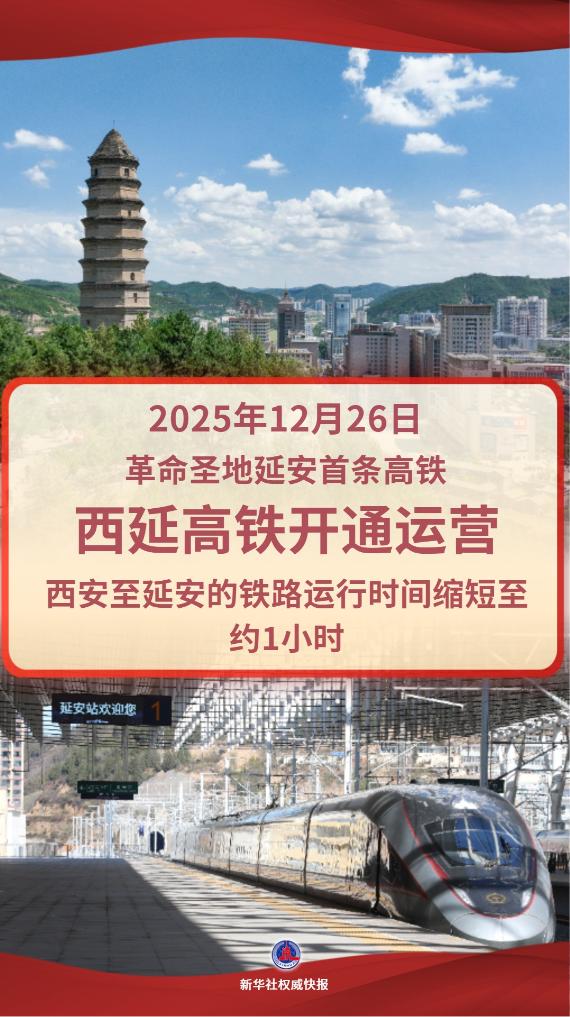
Core Points - The opening of the Xi'an to Yan'an high-speed railway (Xiyan High-speed Railway) marks a significant development in China's high-speed rail network, connecting key cities and reducing travel time from 2.5 hours to approximately 1 hour [2][4] - The railway spans 299 kilometers with a design speed of 350 kilometers per hour, enhancing economic connectivity between the Shaanxi province and major regions like Beijing-Tianjin-Hebei and the Yangtze River Delta [3][4] Infrastructure Development - The Xiyan High-speed Railway includes 10 stations, with some being newly constructed and others expanded, facilitating better access to the region [3][4] - The railway's construction faced various geological challenges, including complex terrain and environmental sensitivities, which were addressed through innovative engineering techniques [5] Economic Impact - The high-speed railway is expected to integrate Yan'an into the "one-hour economic circle" of Xi'an, significantly boosting local economies and industries, particularly agriculture [4][6] - The improved transportation infrastructure will enhance the logistics of local agricultural products, such as apples from Luochuan, allowing for faster and more efficient distribution to national markets [6][7] - The railway's opening is anticipated to transform business models for local farmers and businesses, facilitating smoother operations and collaborations with clients in nearby cities [7]

西安至延安高铁正式开通—— 陕北革命老区迈入“高铁时代”
Ren Min Ri Bao· 2025-12-26 22:24
Core Viewpoint - The opening of the Xi'an to Yan'an high-speed railway marks a significant milestone for the region, integrating Yan'an into the high-speed rail network and enhancing connectivity, with the total high-speed rail mileage in China exceeding 50,000 kilometers, maintaining its position as the world's leader in high-speed rail infrastructure [1][4]. Group 1: High-Speed Rail Opening - The Xi'an to Yan'an high-speed railway officially opened on December 26, 2023, with the first train departing from Yan'an Station [1]. - The train covers a distance of 299 kilometers in just 68 minutes, significantly reducing travel time compared to previous rail options [2]. Group 2: Historical Context and Development - The new high-speed rail line represents a culmination of decades of railway development in the region, with previous travel times from Yan'an to Xi'an taking as long as 14 hours in the past [3]. - The construction of the railway involved overcoming complex geological challenges, featuring 47 tunnels and 67 bridges, with a bridge-tunnel ratio of 91% [3]. Group 3: Economic and Social Impact - The high-speed railway is expected to activate economic development in the Shaanxi region, allowing for faster and more efficient transportation of goods and services, thus reducing costs for local businesses [4]. - The railway connects significant historical sites, enhancing tourism and educational opportunities related to the revolutionary history of Yan'an [4].
新华社权威快报丨高铁开进延安!西延高铁开通运营
Xin Hua She· 2025-12-26 02:31
Core Viewpoint - The opening of the Xi'an to Yan'an high-speed railway marks a significant development for Yan'an, integrating it into the high-speed rail network and reducing travel time to approximately 1 hour from over 2 hours [2]. Group 1: Project Overview - The Xi'an to Yan'an high-speed railway officially commenced operations on December 26, 2025, with the first "Fuxing" intelligent train departing from Yan'an Station [2]. - The railway, which began construction in May 2021, is a crucial part of China's "eight vertical and eight horizontal" high-speed rail network, specifically the Baotou, Yinchuan to Haikou corridor [2]. - The total length of the railway is 299 kilometers, designed for a maximum speed of 350 kilometers per hour, and it includes 10 stations along the route [2]. Group 2: Geographic and Economic Impact - The railway traverses four distinct geographical units: the Weihe alluvial plain, the Loess plateau, the Mid-Low Mountain area of the Ziwuling, and the Loess gully and ridge area, with a bridge-tunnel ratio of 91% [2]. - The opening of the high-speed railway integrates Yan'an into the "one-hour economic circle" of Xi'an, enhancing connectivity with regions such as Beijing-Tianjin-Hebei, the Yangtze River Delta, and the Guangdong-Hong Kong-Macau Greater Bay Area [2]. - This development is expected to facilitate logistics, reduce costs, promote the integration of agriculture, culture, and tourism, and attract high-end talent to the region [2].
大湾区又一“超级通道”,要来了?
3 6 Ke· 2025-09-25 02:10
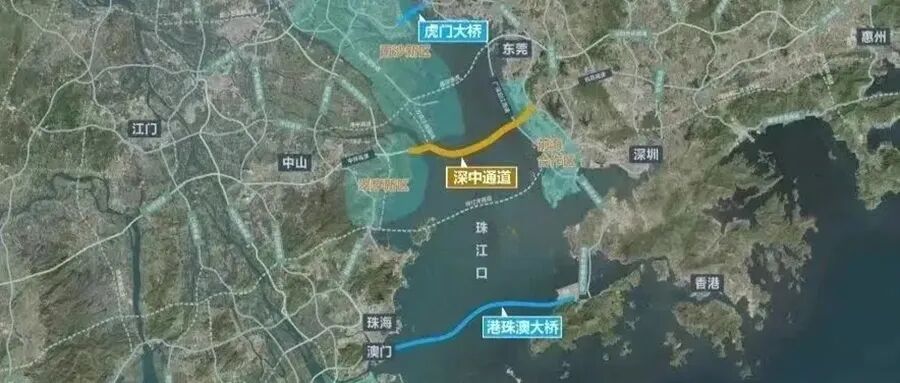
Core Insights - The Shenzhen-Zhuhai Channel project has made significant progress with the recent public solicitation for opinions on the preliminary research project, indicating a step forward in this major transportation infrastructure initiative [2][3]. Group 1: Project Overview - The Shenzhen-Zhuhai Channel is a composite transportation corridor that will include a highway, high-speed rail, and intercity rail, designed to enhance connectivity between Shenzhen and Zhuhai [2]. - The project has a budget of 20.8 million yuan and aims to provide critical technical support for the channel's inclusion in national planning [2]. - The channel will reduce travel time between Shenzhen and Zhuhai to approximately 30 minutes upon completion [2]. Group 2: Strategic Importance - The channel is positioned as a "middle ring" corridor in the context of existing transportation links, addressing the high demand for traffic between the east and west banks of the Pearl River Estuary [3]. - The rapid saturation of the Shenzhen-Zhongshan Channel highlights the urgent need for additional infrastructure to support the growing transportation demands in the region [3]. Group 3: Government Support and Future Prospects - The Guangdong Provincial Development and Reform Commission has included the preliminary research for the Shenzhen-Zhuhai Channel in its budget for 2025, reflecting governmental commitment to the project [4]. - Local governments are actively promoting the integration of the Shenzhen-Zhuhai high-speed rail into the 14th Five-Year Plan, indicating a strategic push for the project's advancement [4]. Group 4: Economic Impact - The Shenzhen-Zhuhai Channel is expected to significantly boost the transfer of industries from Shenzhen to the western bank of the Pearl River, particularly benefiting Zhuhai [5]. - The anticipated collaboration between Shenzhen's technological innovation and Zhuhai's manufacturing base is expected to accelerate the transformation of technological achievements and the integration of industrial chains within the Greater Bay Area [5].
机场城市群崛起!“中国或成全球航空运输规则的重要制定者”
Guan Cha Zhe Wang· 2025-08-08 08:01
Core Viewpoint - The development of airport city clusters in China is reshaping global connectivity and creating unparalleled competitive advantages in the international aviation sector [1][3]. Summary by Sections Airport City Clusters Performance - The rise of China's airport city clusters has significantly improved global city connectivity, offering higher flight frequencies, diverse route options, and broader international destination networks [1][3]. - In the first half of 2025, the Greater Bay Area airport city cluster showed outstanding performance, with Guangzhou Baiyun International Airport handling 400.36 million passengers, a year-on-year increase of 9.2% [3][4]. - Shenzhen Bao'an International Airport achieved a passenger throughput of 32.57 million, up 10.9% year-on-year, marking a record high for the airport [4][5]. International and Regional Connectivity - Guangzhou Baiyun International Airport has successfully opened or increased multiple international and regional routes, surpassing 1,600 weekly flights to 93 international and regional destinations [4]. - Shenzhen Airport's international passenger volume reached 3.054 million, a 30.7% increase, with over 20,000 international flights, reflecting a 26.1% growth [4][5]. Economic Integration and Development - The development of airport city clusters is accelerating regional economic integration, promoting the formation of "one-hour economic circles" in cities like Beijing, Tianjin, Hebei, and the Greater Bay Area [6][9]. - The four major world-class airport clusters in China accounted for 50.7% of the national passenger throughput in 2024, with significant growth rates observed in the Chengdu-Chongqing cluster [9][10]. Global Aviation Network - China's airport city clusters are breaking the traditional aviation hub distribution dominated by Europe and North America, with major airports like Shanghai Pudong and Beijing Capital leading in passenger throughput [9][14]. - The establishment of a multi-centered network layout is expected to promote a more balanced allocation of global aviation resources, providing new opportunities for developing countries in the international aviation market [14][15].


深中通道一周年,交通一体化显效,跨市公交客流破300万
Nan Fang Du Shi Bao· 2025-06-30 14:18
Core Insights - The opening of the Shenzhen-Zhongshan Channel has significantly transformed the transportation landscape in the Pearl River Delta, creating a one-hour living circle among Shenzhen, Zhongshan, and Guangzhou [1][2][4] - The channel has led to a substantial increase in cross-city public transport usage, with over 300 million passenger trips recorded within a year, indicating a strong demand for integrated regional transport [3][4][8] Group 1: Transportation Impact - The Shenzhen-Zhongshan Channel, spanning approximately 24 kilometers, has reduced travel times between key cities, with journeys from Shenzhen to Zhongshan now taking under 30 minutes [1][2] - The channel has recorded a cumulative traffic volume exceeding 29 million vehicle trips by May, with daily averages around 86,000 trips [2][4] - The peak traffic day during the recent holiday saw a record of 181,600 vehicle trips, showcasing the channel's capacity and popularity [2] Group 2: Public Transport Development - The introduction of cross-city bus services has enhanced connectivity between Shenzhen and Guangzhou, with new routes launched to meet commuter needs [5][6] - The cross-city bus services have completed over 112,000 trips and covered more than 7 million kilometers since the channel's opening [4][5] - Five cross-city bus routes are currently operational, facilitating daily commutes and leisure travel for residents [6][7] Group 3: Aviation Connectivity - The channel has doubled the number of travelers from Zhongshan using Shenzhen Airport, reflecting a shift in travel patterns due to improved access [8][9] - Airlines are responding to increased demand by launching new routes and offering promotional travel packages, enhancing the overall travel experience [8][9] - The integration of air and ground transport services is expected to further facilitate the movement of people and goods across the region [9]