AI时代投资

Search documents
付鹏:新时代的框架已经开启,年轻人的机会真正来了
对冲研投· 2026-03-13 03:33
Core Viewpoint - A significant transformation driven by productivity and production relationships is expected within the next 5 to 10 years, potentially occurring in as little as 12 to 18 months [2][12]. Group 1: Investment Landscape - This year is anticipated to experience a small cycle of pain as new production relationships emerge, leading to market volatility [3][17]. - Investment this year is less influenced by macroeconomic variables and more by the destruction and reconstruction of production relationships across various industries [4][20]. - The focus has shifted from productivity, which dominated the past few years, to production relationships, which are now critical [22][27]. Group 2: Industry Dynamics - The stock price movements of major companies like Samsung and SK Hynix reflect the end of a cycle in upstream construction materials, indicating a broader industry restructuring [5][26]. - The emergence of AI is expected to disrupt traditional business models across various sectors, necessitating a reevaluation of commercial strategies [12][51]. - The current phase is characterized by a need for industries to adapt to new production relationships, with significant implications for sectors like transportation and media [14][21]. Group 3: Geopolitical and Systemic Changes - The geopolitical landscape is undergoing a transformation, with conflicts such as those in Iran and Ukraine signaling a shift towards the end of existing paradigms rather than the beginning of new ones [36][38]. - The historical context suggests that the current period resembles the transition from industrial to information technology, marked by significant upheaval [33][34]. - The global order and distribution of resources are expected to change, reflecting a reconfiguration of production relationships and technological advancements [32][39]. Group 4: Future Opportunities - The upcoming years present unique opportunities for younger generations to leverage new production relationships and technologies to disrupt traditional practices [11][54]. - The investment logic is anticipated to differ significantly in the future, with a focus on embracing AI and technological advancements rather than resisting them [10][52]. - The historical trend indicates that only a small percentage of individuals will be at the forefront of these changes, emphasizing the importance of proactive engagement with emerging technologies [56][57].


吴晓求:当前最重要的任务是用法律约束“埋雷”现象
Xin Lang Cai Jing· 2026-01-15 04:18
Core Viewpoint - The forum emphasizes the need for reform and development in China's capital market, particularly addressing issues like major shareholder reductions and the importance of legal frameworks to prevent market risks [1][5]. Group 1: Major Shareholder Reduction - The discussion highlights the need to critically assess whether major shareholder reductions are a problem, suggesting that market stagnation cannot be solely attributed to this issue [3][7]. - Reforms initiated during the split share structure reform and further regulations in 2024 have clarified the conditions under which major shareholders can reduce their holdings, transitioning from "necessary conditions" to "sufficient conditions" [3][7]. - Despite significant reductions by major shareholders, the market continues to grow, indicating that other factors are at play [3][7]. Group 2: Market Reform and Growth - The speaker stresses that the most critical aspect of the Chinese market is reform, particularly enhancing the asset side to boost growth and attract continuous capital inflow [3][7]. - There are many misconceptions in the market, and addressing these through reform is essential for sustainable growth [3][7]. Group 3: Challenges for Small Investors - In the AI era, small investors in China face structural challenges, with some reports indicating that investors have not made profits even at market levels around 4100 points, suggesting a lack of independent investment capability [3][7]. - The availability of diverse investment tools, such as ETFs, is highlighted as a beneficial option for investors, often outperforming individual investors [3][7]. Group 4: Market Safety and Legal Framework - The phenomenon of "hidden risks" in the capital market is noted, where many listed companies may have motives to conceal risks, and intermediaries may assist in this behavior [4][8]. - The current priority is to implement legal measures to deter the motives and actions that lead to these hidden risks, marking a significant area for institutional reform [4][8].
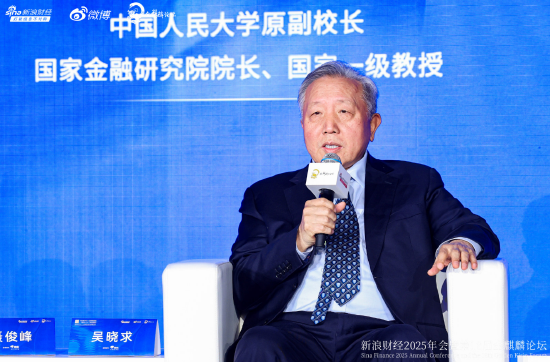
吴晓求:不能简单认为市场停滞与大股东减持有关
Xin Lang Cai Jing· 2026-01-15 04:12
Core Viewpoint - The forum emphasizes the need for reform and development in China's economy, particularly in the context of the upcoming 2026 challenges and opportunities [1][5]. Group 1: Reform and Development - Wu Xiaoqiu highlights the importance of addressing the issue of major shareholder reductions, suggesting that it should not be simplistically linked to market stagnation [3][7]. - The reforms initiated during the split share structure reform and the specific regulations established in 2024 regarding major shareholder reductions are aimed at enhancing market growth [3][7]. - The focus should be on reforming the asset side to boost growth potential and attract continuous capital inflow [3][7]. Group 2: Investment Strategies - In the AI era, structural challenges are faced by small investors in China, with some still not making profits at the 4100-point mark, indicating a lack of independent investment capability [3][7]. - The creation of diverse assets and tools, particularly ETFs, is presented as a favorable option for investors, often outperforming individual investors [3][7]. - The notion of "making everyone profitable" is viewed as a slogan rather than a practical reality, with a more realistic approach being the investment in ETFs to increase the number of profitable investors [3][7]. Group 3: Market Safety and Regulation - The phenomenon of "hidden risks" in China's capital market is serious, with many listed companies having motives and behaviors that contribute to this issue, often aided by intermediary institutions [4][8]. - Ensuring market safety requires legal measures to deter the motives and actions that lead to "hidden risks," marking a critical area for institutional reform [4][8].
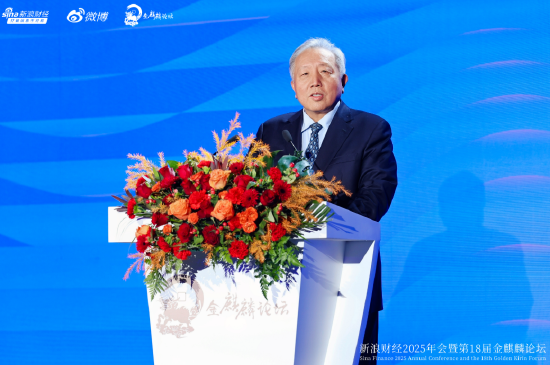
xvc基金合伙人陆宜25年终思考:归纳,演绎,和理性边界
Sou Hu Wang· 2025-11-24 12:03
Core Insights - The essence of investment is a research and judgment process about the future, supported by two fundamental methods: induction and deduction, with a third dimension of rational boundaries to combat cognitive ambiguity [1][2]. Group 1: Investment Decision Cases - Case 1 discusses a cross-border e-commerce company that experienced over 100% year-on-year growth from 2016 to 2017 but saw a significant slowdown in Q1 2018. The company had a low average order value of approximately $10 and faced quality concerns, with retention rates dropping significantly over time [4][12]. - Case 2 compares four short video apps, highlighting their daily active user (DAU) differences, with Product A leading at approximately 60 million DAU, while Product D had only about 5 million. The analysis emphasizes the importance of user engagement and retention metrics in investment decisions [6][8]. Group 2: Induction Method - Induction is defined as deriving general principles from specific facts and historical samples, which can be used to judge new cases. This method is crucial in understanding industry changes, company growth, and team capabilities [10]. - Three types of induction are identified: analogical induction, enumerative induction focusing on key performance indicators, and statistical induction that abstracts winning patterns from successful companies [11][12]. Group 3: Deduction Method - Deduction involves reasoning from general principles to predict future trends, focusing on macro environments, industry evolution, and technological advancements. It is essential when historical samples are no longer reliable [18][19]. - Three paths of deduction are outlined: behavioral changes leading to new business models, structural changes in macro environments, and breakthroughs in technology that create new opportunities [19]. Group 4: Weee! Case Study - Weee!, a leading ethnic grocery e-commerce platform in North America, showcases a successful combination of induction and deduction in investment analysis. The company has a high and stable quarterly repurchase rate, indicating strong business quality [25][26]. - Key deductions about Weee! include its competitive advantages over traditional supermarkets, cost efficiencies in delivery, and the potential for market expansion among diverse ethnic groups in the U.S. [27][28]. Group 5: Challenges of Induction and Deduction - Induction may lead to missed opportunities if historical patterns are rigidly applied, as seen in the case of SHEIN, which defied initial negative predictions and achieved significant revenue growth [14]. - Deduction can lead to illusions if the foundational logic is flawed or if the assumptions do not hold true in changing environments. It is crucial to ensure that the reasoning is based on stable, verifiable principles [30][31]. Group 6: AI Era Considerations - In the AI era, traditional research methods face challenges as historical samples become less relevant. Investors must return to first principles to identify what is certain and deduce potential future paths [32][34]. - Four constraints impacting AI development are identified: computational power, energy sustainability, data quality, and talent availability, which are critical for identifying investment opportunities [35]. Group 7: Rational Boundaries - To navigate the uncertainties of the AI era, establishing rational boundaries is essential. This involves focusing on irreversible variables, using constraints for reasoning, and understanding that AI evolution is a series of incremental changes rather than sudden shifts [36][37]. Group 8: Summary - The importance of using induction to understand the past and deduction to envision the future is emphasized, along with the need to avoid falling into single-minded thinking traps in a rapidly changing environment [39].

巴菲特:做投资的关键不是聪明,而是敢出手
聪明投资者· 2025-11-09 02:07
Group 1 - The article emphasizes the importance of stable investment products, particularly in the current market environment where investors are more sensitive to drawdowns and risk management [2][3] - It highlights the collaboration between Smart Investors and Guotai Fund in the "Midnight Diner" series, which has been ongoing for four years, reflecting a commitment to providing reliable investment insights [2] - The article suggests that despite the volatility in technology and energy sectors, a stable investment remains a crucial anchor for investors, often underestimated in its strength [3] Group 2 - The article mentions key insights from the APS 30th anniversary forum, including discussions on the rare earth market, institutional resilience, and the reassessment of the China-US landscape [4] - It features an exclusive interview with Zhang Yidong, who advocates for a patient long-term investment strategy, suggesting that the upcoming AI market will likely lead growth in large-cap stocks, with both emerging and traditional sectors expected to perform well next year [4] - Liu Yuhui's recent commentary indicates that the sentiment in the A-share market is unlikely to be aggressive as it approaches the year-end, with a focus on four key sectors and gold as a preferred stable investment asset [4]

英华周播报|4000点得而复失,后市怎么看?创新药近期为何回调?
中国基金报· 2025-10-29 09:38
Group 1 - The article discusses the volatility in the gold market, highlighting the recent dramatic price fluctuations and their implications for investors [2] - It emphasizes the importance of having a long-term investment strategy, particularly in the context of technological advancements and market uncertainties [3] - The piece suggests that investors should focus on fundamental analysis and avoid excessive leverage in their investment decisions [5] Group 2 - The article mentions that certain segments of the non-ferrous metals market still show strong support despite recent market corrections [5] - It highlights the significance of education in personal finance, particularly regarding retirement planning, indicating that it is essential for all age groups [7] - The content also includes insights from fund managers on the high volatility of innovative pharmaceuticals and the potential for gold prices to continue rising [9][11]