AI诊断

Search documents
首个可溯源罕见病AI诊断系统启动万例临床试验
Di Yi Cai Jing· 2026-02-28 02:26
Core Insights - Shanghai Jiao Tong University School of Medicine's Xinhua Hospital has launched the world's first traceable AI diagnostic system for rare diseases, named DeepRare, which is undergoing real-world clinical validation [1] Group 1 - The validation process involves over 18,000 retrospective cases and more than 2,000 prospective, multi-level case studies to assess the actual value of AI in the clinical diagnosis of rare diseases [1]
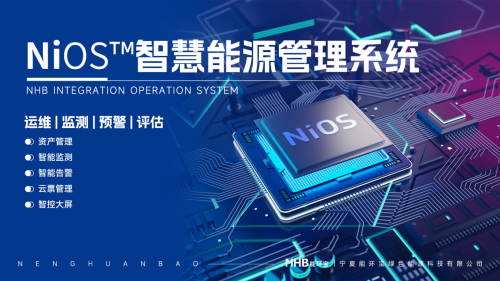
从IoT监测到AI诊断:解析NiOS 智慧能源管理系统运行流程
Jin Tou Wang· 2026-01-28 09:46
Core Insights - The NiOS Smart Energy Management System has been developed to enhance operational efficiency in the commercial distributed photovoltaic (PV) maintenance sector, focusing on data accuracy and feedback speed as key competitive factors [1][3] Group 1: System Architecture - The NiOS system is structured into three layers: the perception layer (IoT sensors), the analysis layer (AI algorithms), and the execution layer (automated operations), creating a closed-loop management logic [1] - The perception layer utilizes high-precision sensor clusters and drone inspections with high-definition cameras and infrared thermal imaging to capture data across critical nodes [1] - The analysis layer processes vast amounts of physical signals using AI, enabling health diagnostics and anomaly detection at the string level, with data updates occurring every minute [1][3] Group 2: Features and Capabilities - Core modules of the NiOS system include asset management, intelligent monitoring, smart alerts, cloud ticket management, and a smart control dashboard [3] - The system employs LBS (Location-Based Services) for dispatch management, allowing for proximity-based task assignments to maintenance personnel [3] - Digital twin modeling technology replicates the physical state of power plants in a virtual space, providing quantitative data support for management decisions [3] Group 3: Industry Trends - As the installed capacity of commercial PV plants increases, the focus of maintenance work is shifting from manual inspections to algorithm-based monitoring [3] - The NiOS system reduces information lag in management processes by connecting the perception, analysis, and execution phases in a closed loop, representing a typical application of digital-driven management in clean energy solutions [3]

国际医学(000516.SZ):目前与阿里巴巴暂不涉及AI诊断方面的合作
Ge Long Hui· 2026-01-26 14:48
Group 1 - The core point of the article is that International Medical (000516.SZ) is currently not involved in any AI diagnostic collaboration with Alibaba [1]


体外诊断行业周报 2026.1.19-2026.1.23:政策与技术推动体外诊断行业渐企稳-20260125
Xiangcai Securities· 2026-01-25 13:18
Investment Rating - The report maintains an "Overweight" rating for the in vitro diagnostics industry [4][54]. Core Views - The in vitro diagnostics industry is stabilizing due to policy and technological advancements, including the accelerated integration of AI in diagnostics, the implementation of price reforms, and the stabilization of centralized procurement impacts [4][54]. - The report highlights the importance of focusing on specific growth areas within the industry, such as chemiluminescence in immunodiagnostics and PCR in molecular diagnostics, with companies like YHLO and Shengxiang Bio being recommended for attention [4][54]. Summary by Sections Industry Performance - The pharmaceutical and biological sector decreased by 0.39%, while the in vitro diagnostics sector increased by 0.42% during the week [1][20]. - The in vitro diagnostics sector's PE ratio is currently at 40.90X, with a recent increase of 0.17X, and the PB ratio is at 1.87X, up by 0.01X from the previous week [3][30]. Key Developments - AI diagnostics are evolving from auxiliary tools to core components of clinical processes, enhancing diagnostic efficiency and driving industry modernization [4][54]. - The Chongqing Medical Insurance Bureau has introduced a price reform draft for pathological services, which is expected to enhance the value recognition of diagnostic services [4][54]. - The impact of centralized procurement is stabilizing, with price pressures gradually easing and testing volumes expected to stabilize following the unbundling of service packages [4][54]. Company Performance - Notable companies in the medical services sector include Aotai Bio (+7.9%), Saikexide (+4.5%), and Mingde Bio (+4.0%), while underperformers include Rejing Bio (-8.7%) and Botuo Bio (-3.3%) [2][25]. - The report suggests that the domestic biochemical diagnostics sector has largely overcome foreign constraints, indicating a completed localization process [4][54].
健之佳:公司依托药学专业服务为基础开展药品及非药零售主营业务
Zheng Quan Ri Bao Zhi Sheng· 2026-01-15 12:13
Group 1 - The core viewpoint of the article is that the company, Jianzhijia, is leveraging pharmaceutical professional services to enhance its retail business in both pharmaceuticals and non-pharmaceuticals, while also exploring the application of AI technologies in its operations [1] - The company is actively learning and improving its operations in response to the significant indirect impact of AI diagnostics and new medical technologies on the industry [1] - Jianzhijia is introducing and exploring the industrial application of the DeepSeek large model to enhance various operational aspects, including store operation diagnostics, inventory replenishment efficiency, sales forecasting, and improving employee service quality and professionalism [1]

多位三甲医院主任谈AI诊断:缺乏判断的人类拖了后腿?
Zhong Guo Jing Ying Bao· 2026-01-06 17:13
Core Insights - The reliability of AI in medical diagnosis is more dependent on the quality of questions asked rather than the type of model used [1][2][3] - AI lacks deep understanding of symptoms, which is crucial for accurate diagnosis, especially in complex fields like neurology [2][3] Group 1: AI in Medical Diagnosis - Multiple specialists agree that the effectiveness of AI models in medical diagnosis hinges on the ability to ask the right questions rather than the model's ranking [1][2] - AI's conclusions can vary significantly based on the input information provided, indicating that context is critical for accurate outputs [3] Group 2: Limitations of AI - AI currently struggles with deep interpretation of symptoms, making it difficult to replace human doctors, particularly in fields that rely heavily on clinical experience [2][3] - In traditional Chinese medicine, the limitations of AI are even more pronounced due to the complexity of symptom descriptions that patients may struggle to articulate [3]
微创医疗(00853):预期合并将于12月19日或前后完成
智通财经网· 2025-12-15 14:59
Core Viewpoint - The strategic merger between MicroPort Medical (00853) and CRM Cayman aims to optimize resource allocation and enhance overall competitiveness in the structural heart disease and arrhythmia management sectors, with completion expected around December 19, 2025 [1][2]. Group 1: Merger Details - The independent shareholders of MicroPort Heart have approved the merger agreement during a special meeting held on December 15, 2025, leading to the cancellation of all existing shares of CRM Cayman in exchange for ordinary shares of MicroPort Heart [1]. - Following the merger, CRM Cayman will become a wholly-owned subsidiary of MicroPort Heart, facilitating the integration of complementary product lines and global channel resources [1]. Group 2: Strategic Focus - The company plans to leverage its accumulated expertise in interventional treatment and precision delivery within the structural heart disease business, alongside its technological advantages in AI diagnostics and algorithms in arrhythmia management, to penetrate the heart failure market [2]. - The goal is to create a comprehensive management solution covering all causes, stages, and processes of heart failure, providing complete management services from monitoring to diagnosis, treatment, and management [2]. Group 3: Financial Implications - The merger is expected to significantly optimize the consolidated financial structure of the group, as approximately $260 million in preferred stock buyback obligations will be converted into ordinary shares, effectively reducing overall debt and financial costs [2]. - Prior to the merger, CRM Cayman refinanced a convertible bond with an original principal of approximately $128 million, replacing it with a long-term bank loan at an interest rate of 2.8%, further enhancing the financial structure [3].
Optain Health 融资 2600 万美元,眼底图能成为全科 AI 诊断的入口吗?
Sou Hu Cai Jing· 2025-09-30 04:12
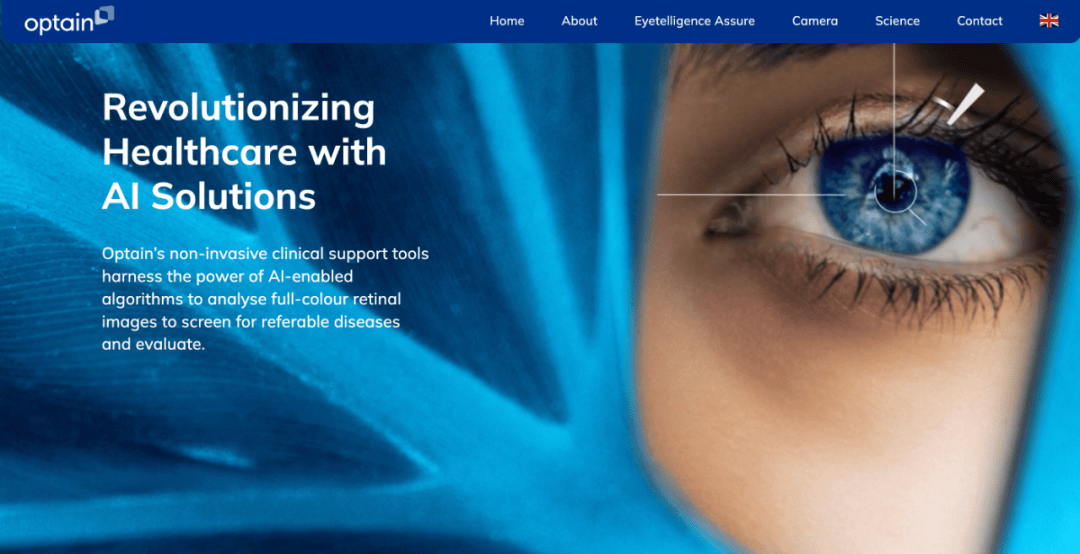
Core Insights - Optain Health has completed a $26 million Series A funding round led by Insight Partners, aimed at expanding its deployment capabilities in primary care and accelerating product registration and clinical collaboration [1][4]. Company Overview - Optain Health focuses on AI retinal imaging diagnostics, developing a platform that assists in identifying not only eye diseases like diabetic retinopathy and glaucoma but also has the potential to analyze cardiovascular and neurodegenerative diseases [1][3]. - The company aims to transform retinal imaging from a specialized service to a basic diagnostic tool accessible to everyone, similar to blood pressure monitoring [4][5]. Technology and Product Development - The platform combines AI models with automated imaging hardware, allowing for quick collection and preliminary analysis of high-definition retinal images without the need for pupil dilation or expert operation [3][9]. - Optain's system has already been integrated into several large hospital systems, including UPMC and Northwell Health, and is undergoing real-world testing [4][6]. Market Potential - The global retinal imaging device market is valued at $3.74 billion in 2023 and is projected to grow to $6.35 billion by 2030, with a compound annual growth rate (CAGR) of 7.9% [7]. - The AI medical imaging market is expected to reach approximately $1.28 billion in 2024 and grow to $14.46 billion by 2034, with a CAGR exceeding 25% [7]. - The AI retinal image analysis segment is projected to grow from $2.65 billion in 2023 to $9.41 billion by 2033, with a CAGR of 13.5% [7]. Strategic Positioning - Optain's strategy emphasizes "downstream" deployment through portable devices and cloud-based AI platforms, targeting family doctors and primary care clinics, which differentiates it from traditional ophthalmic device manufacturers [5][6]. - The company is positioned at a significant intersection of technological advancements in medical AI and the evolving recognition of the value of retinal imaging for overall health assessment [7][8].
扫片机:60秒看清坏细胞
Chang Jiang Ri Bao· 2025-07-06 00:35
Core Insights - The "Digital Slide Scanner" developed by Dr. Zheng Ting's team is a significant advancement in pathology diagnostics, enhancing efficiency and accuracy in disease diagnosis [1][2] - The scanner can produce a 3GB high-definition image of a 1 cm tissue slice in just 60 seconds, allowing for detailed observation of cellular structures without manual searching [2][3] - The device integrates various technologies, including microscopy, multi-axis robotic arms, and machine vision, with a focus on domestic production and self-research [1][2] Group 1 - The scanner addresses the inefficiencies of traditional microscopy, which relies on manual observation and is prone to missed diagnoses [1] - It creates a digital virtual slide that can be easily stored, shared, and analyzed, facilitating remote diagnostics and addressing uneven distribution of medical resources [2] - The integration of AI image analysis is expected to further enhance diagnostic efficiency by automatically identifying pathological cells [2] Group 2 - The scanner has been adopted by 150 research institutions in China and is expected to receive medical device certification within the year, paving the way for clinical applications [2] - The compact design and automation of the scanner significantly reduce the time required for analysis, completing in half an hour what previously took a month [4] - The development of a brain slice analyzer based on the scanner demonstrates its versatility and potential for specialized applications in neuroscience [2]
直击一脉阳光投资者开放日 看医学影像龙头如何拆解行业未来发展
Cai Jing Wang· 2025-05-27 07:08
Core Viewpoint - The company, Yipai Yangguang, is redefining the third-party medical imaging industry in China through an innovative "shared model," establishing a strong competitive moat and entering a high-growth phase with synchronized revenue and profit increases [3][11]. Group 1: Company Strategy and Operations - Yipai Yangguang has built a comprehensive service system centered on medical imaging, with over 100 imaging centers across the country, serving more than 500 institutions and achieving an annual scanning volume of tens of millions [4][5]. - The company is focusing on a "CDH model" that integrates consumer (C), doctor (D), and healthcare institution (H) services, enhancing operational efficiency and creating a health community ecosystem [6][7]. - The company is exploring new operational models for flagship imaging centers to transform perceived "loss-making strategic resources" into operational advantages [5][7]. Group 2: Market Expansion and Internationalization - Yipai Yangguang is expanding internationally, leveraging its cost-effective hardware and advanced data services to penetrate markets in Hong Kong, Macau, Southeast Asia, the Middle East, and Africa [8][10]. - The establishment of the "Yipai Medical Health Technology Alliance" with Hong Kong Medical Health aims to create a dual-engine supply chain platform for global distribution [9]. - The company is utilizing its mature data services to replace local systems in overseas markets, enhancing efficiency and reducing costs significantly [10][11]. Group 3: Future Growth and Industry Positioning - The company emphasizes the importance of data in enhancing traditional medical services, positioning itself as a leader in the evolving medical imaging landscape [11][12]. - Yipai Yangguang's strategic focus on maintaining value with existing hospital partners and leveraging standardized professional modules is expected to sustain its competitive edge [7][11]. - The company’s ability to convert strategic insights into financial performance is a key factor attracting continued investment [4][11].