
AI 3D大模型

Search documents
阿里刚投的AI明星,3D大模型那种
量子位· 2026-03-05 08:32
Core Viewpoint - VAST has completed a $50 million Series A financing round, led by Alibaba and Hengxu Capital, with participation from other notable investors, indicating strong confidence in the company's strategic direction and growth prospects [1][2]. Group 1: Company Overview and Achievements - Founded in 2023, VAST has emerged as a leader in the multimodal AI field, focusing on the development of foundational models and application ecosystems [4]. - The company has developed a proprietary 3D foundational model that maintains industry leadership, collaborating with major enterprises like Alibaba, Tencent, and ByteDance, and has attracted over 650 million creators who have generated nearly 100 million 3D models [4][27]. - VAST has launched a new AI 3D model family, with the Tripo H3.1 model achieving industry-leading performance in key metrics such as input alignment, structural accuracy, texture quality, and generation speed [5][10]. Group 2: Technological Innovations - The Tripo P1.0 model redefines the algorithmic paradigm for AI 3D, capable of generating professional-grade 3D assets in just 2 seconds, significantly improving speed compared to existing solutions [5][20]. - VAST's algorithm team has made substantial advancements in AI 3D modeling, addressing long-standing challenges in precision and speed, thus enabling scalable user-generated content (UGC) [9][16]. Group 3: UGC Platform Development - VAST believes that lowering the creation threshold for interactive content will lead to a new phase of UGC, which is being validated by increasing user engagement with 3D generation tools [21][24]. - The company has built a robust creator ecosystem, engaging with developers and creators globally to explore the evolution of interactive content as production efficiency improves [25][27]. - VAST plans to accelerate the development of a UGC interactive content platform by 2026, integrating generation capabilities, distribution mechanisms, and interactive systems into a complete loop [31]. Group 4: Future Vision and World Model - VAST aims to transition from creating individual objects to generating entire worlds, positioning the world model as the ultimate form of a universal model, grounded in a native understanding of three-dimensional space [32][33]. - The company is focusing its core R&D resources on world models, leveraging a high-quality 3D and world model database and a talented AI and graphics team to establish a unique advantage in this field [32][41]. Group 5: Investor Perspectives - Investors express strong confidence in VAST's technology maturity and product readiness, highlighting its potential to drive efficiency in various industries, including automotive design and smart manufacturing [35][39]. - The consensus among investors is that VAST is well-positioned to lead the next generation of interactive content platforms, with a focus on democratizing 3D creation [37][38].


400亿3D打印巨头,「惹怒」泡泡玛特
36氪· 2026-03-04 14:40
Core Viewpoint - The legal dispute between Pop Mart and Tuo Zhu Technology highlights significant challenges in copyright compliance and competition within the 3D printing industry, particularly concerning the MakerWorld platform's content ecosystem [4][8][35]. Group 1: Legal Disputes and Copyright Issues - Pop Mart has filed a lawsuit against Tuo Zhu Technology, focusing on copyright ownership and infringement related to the MakerWorld platform, which boasts nearly 10 million monthly active users and over 1 million 3D models [5][11][13]. - This is not the first time Tuo Zhu Technology has faced legal challenges; it was previously sued by the copyright holder of "The King's Avatar" for copyright infringement [6][10]. - The core issue in the current lawsuit revolves around whether Tuo Zhu Technology's platform constitutes "aiding infringement" by allowing users to download and share copyrighted models [17]. Group 2: Company Background and Growth - Tuo Zhu Technology, founded in 2020 by former DJI executives, has rapidly grown to become a leading player in the global consumer 3D printing market, achieving a valuation of 40 billion yuan [20][23]. - The company reported revenues of approximately 27 billion yuan in 2023, with projections to exceed 100 billion yuan by 2025, capturing about 29% of the global market share [24][25]. - The management team, primarily composed of former DJI engineers, has successfully implemented a "hardware + content ecosystem" strategy, which has been crucial for its rapid growth [21][22]. Group 3: Industry Competition and Challenges - The 3D printing industry is experiencing intensified competition, with significant investments pouring into the sector; 72 financing events occurred in 2025 alone [30]. - DJI's investment in a competing 3D printing company has raised concerns within Tuo Zhu Technology, as it indicates a strategic move to counteract Tuo Zhu's market position [31]. - The rise of competitors like Chuangxiang Sanwei and Snapmaker, along with the potential for price wars, poses a threat to Tuo Zhu Technology's sustained growth [32][34]. Group 4: Future Risks and Considerations - The ongoing copyright disputes and the potential for increased legal scrutiny could undermine Tuo Zhu Technology's business model, particularly as user-generated content becomes more prevalent [36]. - The integration of AI tools for 3D modeling may complicate copyright issues further, as the ease of content creation increases the risk of infringement [37].

3D打印iPhone时刻 拓竹的真问题
2 1 Shi Ji Jing Ji Bao Dao· 2026-01-23 08:48
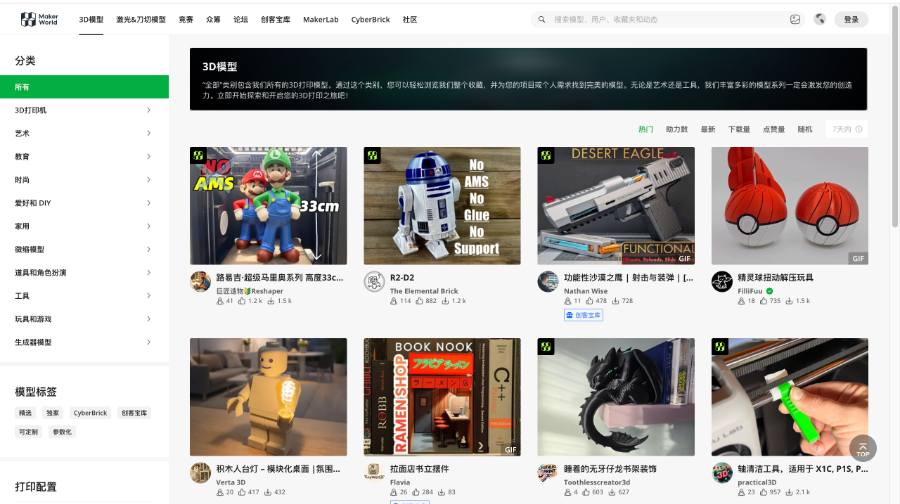
Core Insights - The consumer-grade 3D printing industry is approaching a pivotal moment, likened to an "iPhone moment," with significant growth and interest from consumers and investors alike [2][10] - The A-share 3D printing index has seen an impressive year-to-date increase of 82.11%, with nearly 70% of companies reporting profit growth in the first three quarters [2] - Competition is intensifying, with established players like Bambu Lab facing challenges from new entrants and capital influx, indicating a shift from a single-player dominance to a more competitive landscape [3][4] Market Dynamics - Major capital players such as DJI, Meituan, and Hillhouse Capital are entering the 3D printing space, while established companies like Creality are pursuing IPOs to capitalize on market opportunities [3][5] - Since 2025, there have been 72 investment events in the 3D printing sector, with 52 companies receiving funding, primarily in the domestic market [5] - The competition is not just about hardware specifications but also involves capital battles and ecosystem strategies [3][4] Company Performance - Creality's revenue grew from 1.346 billion to 2.288 billion yuan from 2022 to 2024, but net profit growth has slowed, with a projected decline of 31% in 2024 [7][8] - Bambu Lab is projected to achieve revenues between 5.5 billion and 6 billion yuan in 2024, maintaining its position as an industry leader [11] - Snapmaker's recent crowdfunding success, raising over $20 million for its Snapmaker U1 printer, highlights the potential for disruptive products in the market [6] Ecosystem Development - Bambu Lab's Maker World community is a key component of its competitive advantage, boasting nearly 10 million active users and over a million 3D models [11][13] - Competitors are also focusing on ecosystem development, with companies like Elegoo and Creality investing in community platforms to enhance user engagement and content creation [14] - The rise of AI technologies is expected to lower barriers to entry in 3D modeling, facilitating a shift towards a more democratized creation process [14] Competitive Landscape - The competition is evolving into a battle for ecosystem dominance, with companies needing to build robust communities to retain user loyalty [13][14] - The entry of large players like DJI is accelerating industry consolidation and intensifying competition, making the market landscape more complex [15]
消费级3D打印的iPhone时刻来了,A股概念股大涨,52家企业新获投资
2 1 Shi Ji Jing Ji Bao Dao· 2026-01-23 08:19
Core Insights - The consumer-grade 3D printing industry is approaching a pivotal moment, often referred to as the "iPhone moment" [1] - The market is experiencing significant growth, with the A-share 3D printing index rising nearly 90% year-to-date as of January 23, 2025, and almost 70% of companies in the sector reporting profit growth [2] - Intense competition is emerging, with major players like DJI, Meituan, and Hillhouse Capital entering the market, while established companies like Creality pursue IPOs [3][11] Market Dynamics - The 3D printing sector has seen 72 financing events since 2025, with 52 companies receiving investments, primarily in the domestic market [7] - DJI's investment in Elegoo, a significant player in the consumer-grade 3D printing market, highlights the potential for growth in this sector [7] - Snapmaker's recent funding round, led by Hillhouse Capital and Meituan, underscores the interest in innovative products that promise substantial growth potential [8] Competitive Landscape - Creality, once a dominant player, is facing challenges as it attempts to go public while experiencing a decline in net profit despite revenue growth [11][13] - The competition is not limited to hardware specifications but involves capital battles and ecosystem strategies [4] - The emergence of new players and the aggressive strategies of existing companies indicate a shift towards a more competitive environment [6][12] Ecosystem Development - The success of 3D printing companies increasingly relies on building robust ecosystems, as seen with Bambu Lab's Maker World community, which has nearly 10 million active users [16] - The debate between open-source and closed ecosystems is intensifying, with companies like Bambu Lab adopting a closed strategy to enhance user experience and protect content [18] - Competitors are investing heavily in ecosystem development, with Elegoo and Creality focusing on community engagement and content creation [19] Future Outlook - The global consumer-grade 3D printing market is projected to grow from $1.5 billion in 2020 to $4.1 billion by 2024, with a compound annual growth rate of approximately 28% [14] - The entry of AI technologies is expected to lower barriers to entry and accelerate the development of high-quality content in the 3D printing space [19] - As the industry matures, the competition will increasingly hinge on the quality of models and user experience, making the ecosystem a critical factor for long-term success [20]
消费级3D打印的iPhone时刻来了,A股概念股大涨,52家企业新获投资
21世纪经济报道· 2026-01-23 08:10
Core Viewpoint - The consumer-grade 3D printing industry is approaching a pivotal moment, often referred to as the "iPhone moment," characterized by rapid growth and increased consumer engagement [1][11]. Market Performance - The A-share 3D printing index has seen a nearly 90% increase year-to-date as of January 23, 2025, with almost all stocks in the sector rising and about 70% of companies reporting positive net profit growth [3][4]. Competitive Landscape - The market is witnessing intense competition, with major players like DJI, Meituan, and Hillhouse Capital entering the space, while established companies like Creality are pursuing IPOs [5][10]. - Bambu Lab, a pioneer in consumer-grade printers, faces significant competition from both established and new entrants, indicating a shift from a single-player dominance to a multi-competitor environment [5][11]. Investment Trends - Since 2025, there have been 72 investment events in the 3D printing sector, with 52 companies receiving funding, primarily concentrated in the domestic market [7][8]. - Notable investments include DJI's multi-million dollar investment in Elegoo, highlighting the potential for growth in consumer-grade 3D printing technology [7][8]. Financial Performance of Key Players - Creality's revenue is projected to grow from 13.46 billion to 22.88 billion from 2022 to 2024, but its net profit is expected to decline by 31% in 2024, indicating a challenging competitive environment [10]. - Bambu Lab's revenue is estimated to be between 55 billion and 60 billion in 2024, with a net profit close to 20 billion, maintaining a leading market share [13]. Ecosystem Development - Bambu Lab's Maker World community has become a central part of its ecosystem strategy, boasting nearly 10 million active users and over one million 3D models, which enhances user engagement and lowers operational barriers [14][16]. - The industry is experiencing a shift towards ecosystem competition, with companies like Elegoo and Snapmaker also focusing on building robust content ecosystems to attract users [16][18]. Future Outlook - The global consumer-grade 3D printing market is expected to grow from $1.5 billion in 2020 to $4.1 billion in 2024, with a compound annual growth rate of approximately 28% [13]. - The entry of AI technologies is anticipated to lower barriers for content creation, facilitating a transition to a "everyone can create" era in 3D printing [18].

拓竹“战群狼” 百亿3D打印赛道大战
2 1 Shi Ji Jing Ji Bao Dao· 2026-01-23 08:07
Core Viewpoint - The consumer-grade 3D printing industry is approaching a pivotal moment, often referred to as the "iPhone moment," indicating significant growth and transformation in the market [1]. Market Performance - The A-share 3D printing index has seen an impressive year-to-date increase of 82.11%, with nearly 70% of companies reporting positive net profit growth in the first three quarters [2]. - The global consumer-grade 3D printing market is projected to grow from $1.5 billion in 2020 to $4.1 billion by 2024, with an annual compound growth rate of approximately 28% [11]. Competitive Landscape - The competitive environment is intensifying, with major players like DJI, Meituan, and Hillhouse Capital entering the market, while established companies like Creality are pursuing IPOs [3][6]. - Bambu Lab, once a dominant player, is now facing significant competition, with multiple companies vying for market share and investment [3][4]. Investment Trends - Since 2025, there have been 72 investment events in the 3D printing sector, with 52 companies receiving funding, primarily concentrated in the domestic market [6]. - Notable investments include DJI's multi-million dollar investment in Elegoo, highlighting the potential for growth in consumer-grade 3D printing technology [6]. Company Developments - Elegoo, a key player in the market, has achieved a compound annual growth rate of over 40% in the past three years, with projected revenues of 1.6 billion yuan in 2024 and 2.5 billion yuan in 2025 [7]. - Snapmaker has also gained attention, raising over $20 million on Kickstarter for its innovative 3D printer, which boasts significant efficiency improvements [7][8]. Ecosystem and Community - Bambu Lab's success is attributed not only to hardware performance but also to its robust community and content ecosystem, exemplified by its Maker World platform, which has nearly 10 million active users [12][13]. - The shift towards a closed ecosystem has sparked debates within the industry regarding the balance between open-source and proprietary models [15]. Future Outlook - The entry of large players like DJI is expected to accelerate industry consolidation and competition, making the landscape more complex and dynamic [17]. - The ongoing development of AI technologies is anticipated to lower barriers to entry in 3D modeling, facilitating a broader participation in the 3D printing ecosystem [16].
「AI新世代」巨头入场赛道升温,VAST打响3D大模型破圈之战
Hua Xia Shi Bao· 2025-11-04 12:56
Core Insights - VAST is a key player in the AI 3D model sector, which is gaining traction as a new competitive arena in the AI landscape, particularly as traditional modeling transitions to AI-driven 3D models [2][3] - The AI 3D model technology has vast application potential across various industries, including gaming and industrial sectors, but it faces challenges in reaching mainstream consumers [2][4] - VAST's annual recurring revenue (ARR) has surpassed $12 million, indicating strong commercial potential despite being a relatively new company [5][6] Company Overview - VAST was established in March 2023 and has rapidly developed its Tripo AI 3D model series, which includes over 200 billion parameters [6] - The company has served over 5 million professional users and 40,000 enterprise clients, generating more than 50 million 3D models [3][5] - VAST completed a multi-million dollar Pre-A+ funding round in June 2023, indicating investor confidence in its growth potential [6] Market Dynamics - The 3D vision market in China is projected to grow significantly, with a compound annual growth rate (CAGR) of approximately 25.73% from 2024 to 2028, reaching around 7 billion yuan [3] - Major competitors like Tencent and ByteDance are entering the AI 3D model space, posing challenges for VAST as it seeks to establish itself [8] - The industry is still in its early stages, with a lack of benchmark applications, which may hinder broader adoption of AI 3D models [7] Technological Challenges - Developing AI 3D models is more complex and resource-intensive than 2D models, requiring significant computational power and specialized talent [6][7] - The transition from traditional modeling to AI-driven solutions necessitates overcoming technical barriers and educating potential users about the benefits of AI 3D technology [7][8] Future Outlook - VAST aims to expand its user base by targeting professional modelers, amateur creators, and eventually casual consumers, with market potential scaling from millions to billions [7] - The company is focused on democratizing 3D content creation, allowing more individuals to participate in the 3D ecosystem [4][7]

700万美金ARR背后:95后如何管理天才员工
虎嗅APP· 2025-07-12 03:15
Core Viewpoint - The article discusses the rapid growth and unique management style of VAST, an AI 3D model company led by its young CEO, Song Yachen, highlighting its high valuation and innovative approaches in a competitive landscape. Company Overview - VAST recently completed a Pre-A+ round financing of several million dollars, following a previous Pre-A round of several hundred million yuan, making it the highest-valued AI 3D model company [2] - The company's annual ARR has reached $7 million, positioning it as the highest revenue-generating company in the AI 3D model sector [2] Unique Management Style - VAST has a distinct company culture, with a mix of interests from anime to traditional collectibles, reflecting the diverse personalities within the team [3] - The company maintains a high product iteration speed, with significant growth in 3D model generation from 5 million in early 2024 to over 30 million by mid-2025, despite having only around 50 full-time employees [3][5] - VAST does not utilize traditional performance management tools like OKR or KPI, which are common in other AI companies, yet it achieves effective cross-department collaboration through informal communication [5][6] Strategic Shifts - In mid-2024, VAST shifted its focus from targeting C-end users to PGC (Professionally Generated Content) users, leading to the development of Tripo Studio, a one-stop 3D workspace, which has generated $60,000 in monthly revenue [6] Challenges and Competition - VAST faces increasing competition from major internet companies like Douyin, Tencent, and Alibaba, which are also investing in 3D models, while the demand for 3D models in gaming and collectibles is surging [5][6] Innovation and Culture - The company promotes a culture of "deliberate innovation," encouraging employees to explore new methods even in areas that seem to require little change [23][25] - VAST implements a quarterly salary adjustment strategy to enhance team creativity and responsiveness, differing from the typical semi-annual or annual reviews in the industry [5][17] Leadership Insights - CEO Song Yachen emphasizes the importance of rational decision-making over personal relationships in leadership, reflecting a significant personal growth since the company's inception [7][9] - He recognizes the need for a balanced team, valuing consistent and diligent workers over merely "brilliant" individuals, which has influenced the company's hiring strategy [14][15]

VAST创始人宋亚宸:聪明的天才过剩,木讷的天才稀缺
Hu Xiu· 2025-07-11 23:06
Core Insights - VAST has completed multiple rounds of financing, totaling hundreds of millions of dollars, and is currently the highest-valued AI 3D model company [1][2] - The company has an annual ARR of $7 million, making it the highest revenue-generating company in the AI 3D model sector [1] - VAST has achieved rapid product iteration, with its core product "Tripo" generating over 30 million 3D models by June 2025, up from 5 million in early 2024 [2][4] Company Structure and Management - The founder, Song Yachen, does not have a strong technical background and focuses on strategic decisions, hiring, financing, and public relations [2][3] - VAST operates without traditional performance metrics like OKR or KPI, relying instead on natural communication for cross-department collaboration [3][4] - The company has implemented a unique quarterly salary adjustment strategy to enhance team creativity and flexibility [3][4] Market Position and Challenges - VAST faces competition from major players like Douyin, Tencent, and Alibaba, who are also entering the 3D model space [4] - The demand for 3D models is increasing in gaming and trendy products, but the company must navigate the challenges of commercialization [4] Product Development and Strategy - In mid-2024, VAST shifted its strategy to focus on PGC users, launching Tripo Studio, which has generated $600,000 in monthly revenue [4] - The initial approach targeted C-end users but was adjusted based on feedback from core users who are primarily PGC creators [4] Founder Insights and Philosophy - Song Yachen has evolved from a more emotional decision-maker to a rational one, emphasizing the importance of company operations over personal relationships [5][6] - He believes that the company needs more diligent and grounded individuals rather than just "genius" talent, highlighting the scarcity of reliable workers [12][13] - The company culture encourages innovation and creativity, with a focus on maintaining a relaxed atmosphere to foster inspiration [20][21]