AI for Materials

Search documents
中篇・实战篇:十大核心新材料赛道产业化全景拆解
材料汇· 2026-03-23 14:00
Core Insights - The article discusses the development trends and industrialization progress of key new materials in China, focusing on three main categories: fortress materials, sovereign materials, and fusion materials [2][4]. Fortress Materials Track - Fortress materials are essential for national security, supporting major strategic projects and defense applications, with a focus on reliability and performance under extreme conditions [9]. - High-temperature alloys are critical for aerospace engines, with a global market expected to reach $12.44 billion by 2024 and $19.11 billion by 2031, reflecting a CAGR of 6.4%. The Chinese market is projected to grow from 28 billion yuan in 2024 to 54.4 billion yuan by 2031, with a CAGR of around 10% [12]. - The domestic high-temperature alloy market is currently 40% reliant on imports, with a supply gap exceeding 30,000 tons. The aerospace sector accounts for 55% of downstream applications [12][13]. - The global market for ceramic matrix composites (CMC) is expected to exceed $4 billion by 2025 and reach $25 billion by 2031, with a CAGR of 11% from 2021 to 2031 [21]. - The SiC fiber market is projected to grow from $250 million in 2017 to $3.587 billion by 2026, with a CAGR of 34.4% [22]. Sovereign Materials Track - Sovereign materials are crucial for high-end manufacturing and reducing dependency on foreign technology, characterized by high technical barriers and significant potential for domestic substitution [33]. - The global semiconductor photoresist market is expected to grow from $10.8 billion in 2024 to $11.4 billion in 2025, with a semiconductor photoresist market of approximately $2.4 billion [36]. - The domestic market for OLED organic materials is projected to reach approximately 5.7 billion yuan in 2024, with a year-on-year growth of 31% [48]. - The domestic market share of OLED terminal materials has increased from 1% in 2022 to 11% in 2024, indicating strong growth [50]. Fusion Materials Track - Fusion materials represent future industrial high points, with applications in humanoid robots and other advanced technologies [6]. - Diamond-copper composite materials are essential for AI chip cooling, with the global market expected to reach $160 million by 2024 and $350 million by 2031, reflecting a CAGR of 12% [68]. - The domestic market for diamond-copper composites is projected to grow from 1.28 billion yuan in 2024 to 1.41 billion yuan in 2025 [68].

下篇・决策篇:2026中国新材料产业投资逻辑与未来发展展望
材料汇· 2026-03-23 14:00
Core Viewpoint - The investment in the new materials industry is fundamentally about long-term pricing of national security, industrial upgrading, and technological innovation, emphasizing the need to establish an investment evaluation system that aligns with the characteristics of different tracks [5][6]. Investment Logic and Value Assessment System - The first principle of investment in the new materials industry is that material performance determines the upper limit of the industry, self-control determines the survival baseline, and engineering capability determines commercial success [6]. - The four underlying logics for investment include prioritizing strategic security over commercial value, certainty of domestic substitution over growth elasticity, customer certification progress over technological advancement, and full lifecycle green and low-carbon considerations over short-term performance [11][12][13][15]. - A differentiated value assessment system is established based on three major lines: fortress materials, sovereign materials, and fusion materials, with different evaluation dimensions and weights for each track [16]. Product Lifecycle and Investment Rhythm - The product lifecycle of new materials follows a four-stage evolution, with different investment strategies for each stage: introduction, growth, maturity, and decline [22][24]. - The core investment principles are to heavily invest during the growth phase, hold long-term during the maturity phase, cautiously test during the introduction phase, and decisively avoid during the decline phase [24]. Three Core Investment Lines - The three core investment lines are: 1. **Substitution Line**: Focused on domestic substitution for strategic materials, ensuring national security [29]. 2. **Growth Line**: Driven by explosive downstream demand in emerging industries, offering high growth potential [33]. 3. **Frontier Line**: Involves innovative materials that integrate with cutting-edge technologies, representing the highest growth ceiling [35]. Future Development Outlook - In the short term (2026-2028), the focus will be on achieving significant breakthroughs in domestic substitution, with key strategic materials' import dependency reduced to below 40% [45]. - In the medium to long term (2028-2035), the goal is to establish a globally leading new materials industry system, achieving over 80% domestic substitution for core strategic materials and fostering a robust innovation ecosystem [46][47]. - Five irreversible core trends in industry development include the emphasis on self-control, AI integration in material development, green and low-carbon standards, cross-industry integration, and deep collaboration between academia and industry [48].
下篇・决策篇:2026中国新材料产业投资逻辑与未来发展展望
材料汇· 2026-03-20 14:35
Core Viewpoint - The investment logic in the new materials industry is fundamentally about long-term pricing of national security, industrial upgrading, and technological innovation, emphasizing the need to move beyond short-term market fluctuations and establish a suitable investment evaluation system for different tracks [6][12]. Investment Logic and Value Assessment System - The first principle of investment in the new materials industry is that material performance determines the upper limit of the industry, self-control determines the survival bottom line, and engineering capability determines the success of commercialization [7]. - The commercial path follows a unified industry evolution pattern: breakthrough in key core technologies → downstream customer certification testing → small batch stable supply → scale production release → global market replacement [9]. - Four underlying logics are identified: 1. Strategic security takes precedence over commercial value [12]. 2. The certainty of domestic substitution takes precedence over growth elasticity [13]. 3. Customer certification progress takes precedence over technological advancement [15]. 4. Full lifecycle green and low-carbon considerations take precedence over short-term performance [16]. Product Lifecycle and Investment Rhythm - The product lifecycle of new materials is divided into four stages, each requiring different investment strategies: 1. Introduction phase: Focus on technology validation and sample testing, high risk, and uncertainty [24]. 2. Growth phase: Focus on customer certification and beginning of bulk supply, rapid revenue growth [24]. 3. Maturity phase: Focus on stable supply and industry consolidation, suitable for long-term value holding [24]. 4. Decline phase: Focus on technological replacement and cost pressures, requiring continuous iteration [24]. Core Investment Guidelines - The investment strategy should prioritize heavy investment during the growth phase, long-term holding during the maturity phase, cautious exploration during the introduction phase, and complete avoidance during the decline phase [25]. Three Core Investment Lines - The three core investment lines are: 1. Substitution line: Focused on domestic substitution and strategic materials [30]. 2. Growth line: Driven by explosive downstream demand in emerging industries [34]. 3. Frontier line: Focused on innovative materials that lead future industries [36]. Future Development Outlook - The domestic substitution of key strategic materials is expected to double, with the import dependency of 130 key strategic materials reduced to below 40% [45]. - AI technology will accelerate the development of materials, with over 30% of leading material companies implementing AI-assisted research, reducing research and development cycles by over 50% [45]. - The industry is expected to see a concentration of leading companies, with over 50 specialized "little giant" enterprises emerging in the new materials sector [45]. - Emerging industries such as AI, humanoid robots, and commercial aerospace are projected to drive the market growth rate of frontier new materials to exceed 40% annually [45].
中篇・实战篇:十大核心新材料赛道产业化全景拆解
材料汇· 2026-03-19 15:45
Core Insights - The article discusses the development trends and industrialization progress of ten core tracks in the new materials industry, emphasizing the importance of "fortress materials," "sovereign materials," and "fusion materials" as strategic areas for China [2][4]. Fortress Materials Track - Fortress materials are critical for national security, supporting major strategic projects and defense applications, with a focus on reliability and performance under extreme conditions [7]. - High-temperature alloys are essential for aerospace engines, with a global market projected to reach $12.44 billion by 2024 and $19.11 billion by 2031, reflecting a CAGR of 6.4%. The Chinese market is expected to grow from 28 billion yuan in 2024 to 54.4 billion yuan by 2031, with a CAGR of around 10% [10]. - The domestic high-temperature alloy market is currently 40% reliant on imports, with a supply gap exceeding 30,000 tons. The aerospace sector accounts for 55% of downstream applications [11][12]. - The market is dominated by a few key players, with Precision Castparts Corporation holding 32% of the aerospace market share [12]. - Future trends include increased demand driven by domestic military aircraft and advancements in single crystal and powder metallurgy high-temperature alloys, with a goal to reduce import dependency to below 20% in the next five years [14]. Sovereign Materials Track - Sovereign materials are vital for high-end manufacturing, enabling China to achieve self-sufficiency in critical industries and reduce reliance on foreign technology [30]. - The semiconductor photoresist market is projected to grow from $10.8 billion in 2024 to $11.4 billion in 2025, with a CAGR of 4%. The market is dominated by Japanese and American companies, which hold 85% of the global market share [33][40]. - Domestic companies have made progress in photoresist production, with g/i-line photoresists achieving a 10% localization rate, while KrF and ArF photoresists are at 1% [40]. - OLED organic materials are expected to grow from $2 billion in 2024 to over $3 billion in 2025, with a significant increase in domestic market share from 1% in 2022 to 11% in 2024 [45][48]. Fusion Materials Track - Fusion materials represent future industrial high ground, with applications in humanoid robots and AI infrastructure [5]. - The diamond-copper composite material market is projected to reach $160 million in 2024, with a CAGR of 12% expected until 2031. The Chinese market is anticipated to grow from 1.28 billion yuan in 2024 to 1.41 billion yuan in 2025 [65]. - The global market is dominated by Japanese companies, with domestic firms achieving significant technological advancements and cost reductions of 30-40% compared to imports [68].
珠海冠宇拟33亿扩产;宁德时代年报出炉;国轩赣州项目开工;中创新航签10GWh合作;湖南裕能再扩产;创明大圆柱电池开年满产
起点锂电· 2026-03-15 03:22
Group 1 - The second "Starting Point Lithium Battery Cylindrical Battery Technology Forum" will be held on April 10, 2026, in Shenzhen, focusing on the all-tab technology and the leadership of the large cylindrical battery market [2] - Guoxuan High-Tech's Jiangxi Ganzhou industrial park project has officially started construction with a total investment of 3.2 billion yuan, aiming for a total output value of 10 billion yuan during the 14th Five-Year Plan period [2] - CATL reported a net profit of 72.201 billion yuan for 2025, with a revenue of 423.7 billion yuan, marking a 17% year-on-year increase [3] Group 2 - CATL's lithium-ion battery sales reached 661 GWh in 2025, a 39% year-on-year increase, with a market share of 39.2% [4] - CATL signed a memorandum of understanding with Rio Tinto to enhance mining electrification and explore battery material recycling [5] - Chuangming New Energy's large cylindrical battery production is fully operational, supplying the Indian and Southeast Asian markets [6] Group 3 - Zhuhai Guanyu plans to raise no more than 3.3 billion yuan for expanding production capacity in smartphone and wearable device batteries [8][9] - Guokai Energy's 30 GWh battery cell project is progressing steadily, with a total investment of 9 billion yuan [10] - Yujin New Energy plans to invest 260 million yuan to build a 150,000-ton phosphate iron production line [18] Group 4 - Tianqi Materials expects to sell over 720,000 tons of electrolyte in 2025, a 44% year-on-year increase [15] - Huaneng Technology has received a 1 billion yuan order from CATL [24] - Puxin Technology is preparing for an IPO on the Beijing Stock Exchange [25] Group 5 - NIO reported a vehicle delivery of 326,028 units in 2025, a 46.9% year-on-year increase, with a revenue of 87.48 billion yuan [31] - Li Auto's revenue for 2025 was 112.3 billion yuan, a 22% year-on-year decrease [32][33] - China's automotive exports in February increased by 52.4% year-on-year, reaching 672,000 units [35]


上海交大教授创业,用AI研发新材料,交大系基金投资|早起看早期
36氪· 2026-03-14 00:59
Core Viewpoint - The article discusses the recent seed round funding of over 10 million yuan for the startup Sogou Zhichuan, which focuses on using AI to address challenges in new materials research and development, particularly through innovative algorithms and hardware solutions [5][15]. Funding and Company Overview - Sogou Zhichuan was established in September 2025, with a founding team from Shanghai Jiao Tong University, led by Professor Xu Zhenli [5]. - The funding round was led by Qigao Capital, with participation from other investors, aimed at enhancing the development of their AI computing engine and expanding their research team [5][15]. Technological Innovations - The company aims to solve the long development cycles and high costs in new materials research using its core technology, the SOG-Net, which efficiently models long-range interactions in materials [6][10]. - Sogou Zhichuan has developed the RBMD molecular dynamics simulation software and the NanoTitan integrated simulator, which can simulate millions of atoms on a single GPU, significantly speeding up the research process from years to months [8][10]. Business Model and Market Strategy - The company operates a dual business model targeting both consumer (to C) and business (to B) markets, providing solutions to academic institutions and large enterprises [10]. - Sogou Zhichuan has established partnerships in key areas such as rare earth permanent magnets and lithium battery materials, collaborating with companies like Tianhe Magnetic Materials and CATL [11][12]. Future Development Plans - Post-funding, the company plans to expand its core research team and accelerate the application of its algorithms across various scenarios, solidifying its technological advantages in the new materials sector [14]. - The company aims to transition from research-focused efforts to market expansion, laying a foundation for scalable growth [14]. Investor Perspectives - Investors express confidence in the potential of the AI for Materials sector, highlighting Sogou Zhichuan's innovative algorithms and integrated hardware as key competitive advantages [15][17]. - The company is seen as a leader in the AI-enabled new materials research field, with a clear commercial outlook in critical areas such as batteries and semiconductors [15][16].

锦秋基金被投企业深度原理完成A2轮融资,加速AI for Materials范式重构|Jinqiu Spotlight
锦秋集· 2026-03-05 05:57
Core Insights - Deep Principle is a leading global AI for Chemistry/Materials technology innovation company that accelerates chemical materials innovation through generative AI and first-principles calculations [2] - Jinqiu Fund, with a 12-year history as an AI Fund, focuses on long-term investment in groundbreaking technologies and innovative business models within the general artificial intelligence startup sector [4] Funding and Development - In early 2025, Jinqiu Fund participated in a strategic Pre-A round financing of over 100 million yuan for Deep Principle, highlighting its commitment to supporting innovative AI startups [4] - Recently, Deep Principle completed its A2 round of financing, led by Jinma Investment, with continued support from existing shareholders such as Jingtai Technology and Baidu Ventures, indicating strong market confidence in the company's technological capabilities and long-term prospects [6] - The funds from the latest round will be used to upgrade the "LLM + Diffusion" dual-driven algorithm model system, refine the full-stack product matrix including Agent Mira, and advance the strategic implementation of AI Materials Factory and self-developed pipelines [6] Vision and Mission - Deep Principle aims to unlock breakthrough materials with AI, positioning itself as a global technology pioneer in the AI for Materials field [6] - The company's vision is to industrialize materials innovation with AI scientists, fostering deep integration of technological innovation and industry needs, and continuously injecting AI momentum into the development of global materials science [7]
成立仅9个月,这家苏州材料AI研发企业为何能拿下两轮融资
Sou Hu Cai Jing· 2026-01-29 12:39
Core Insights - The company Suzhou Material Source Technology Co., Ltd. (referred to as "Material Source") is revolutionizing new material research and development through AI material modeling technology [1][2] - Material Source has completed its second angel round financing within three months, raising tens of millions of RMB [1][4] - The company focuses on catalytic and energy materials, particularly in high-value industries such as solid-state batteries, photovoltaics, and hydrogen energy [1] Group 1 - The core founding team possesses top global research experience in AI for Materials (AI4M), successful entrepreneurial backgrounds, and industry experience [2] - The first angel round investment was completed on October 29 last year, with investors including Zhongke Chuangxing and Guangzhou Yihe, who recognized the broad market prospects of Material Source's AI material modeling technology [2] - The recent financing round on January 27 was led by Yongxin Ark, with Qinxin Capital participating, focusing on hard technology sectors like integrated circuits, new energy vehicles, and artificial intelligence [4] Group 2 - Despite being in the early stages of development, the industry faces common challenges such as data resource scarcity and insufficient theoretical model interpretability [4] - Material Source aims to use the angel round financing to enhance core technology research, including database expansion, model development, and high-throughput platform construction [4] - The company has quickly gained recognition, winning the 2025 Suzhou Youth Scientist Award and the second prize at the Yangtze River Delta Innovation and Entrepreneurship Competition [5]
再上新台阶:西交利物浦大学材料科学学科跻身ESI全球前1%
Yang Zi Wan Bao Wang· 2026-01-12 11:44
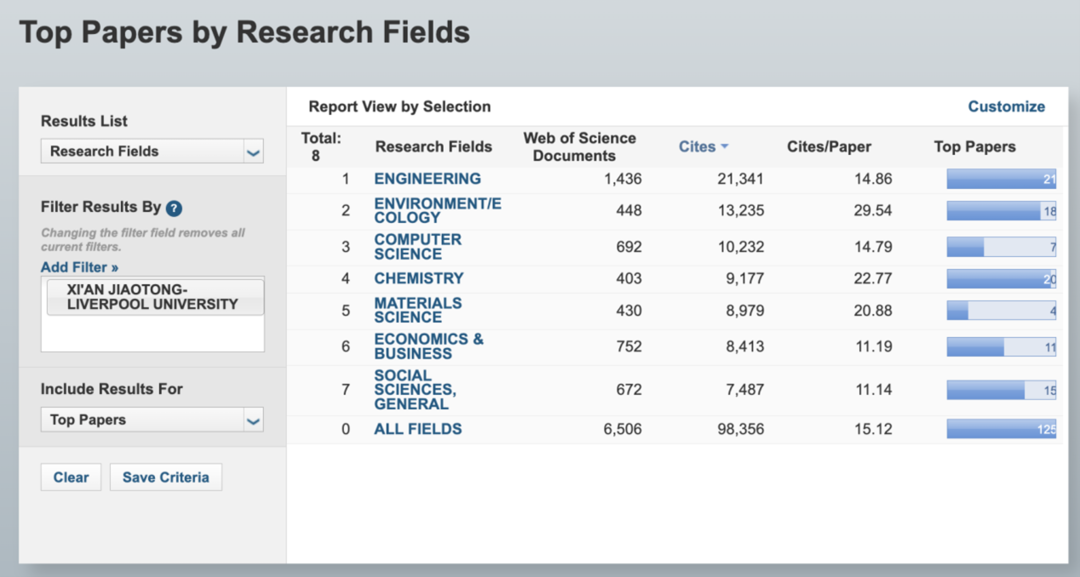
Core Insights - Xi'an Jiaotong-Liverpool University (XJTLU) has achieved a significant milestone by having its Materials Science discipline enter the top 1% of the Essential Science Indicators (ESI) globally, following the inclusion of its Chemistry discipline in November 2025 [1][3] Group 1: Academic Achievements - The ESI data, published by Clarivate, covers nearly a decade of citation impact for global institutions and disciplines, with the latest statistics spanning from January 2015 to October 2025 [1] - With the addition of Materials Science, XJTLU now has seven disciplines in the ESI top 1%, including Engineering, Environmental and Ecological Sciences, Computer Science, Economics and Business, Social Sciences, and Chemistry [1][2] Group 2: Research and Development Strategy - The achievement in Materials Science is seen as a validation of XJTLU's commitment to high-quality research, international standards, and interdisciplinary development [3] - The Chemistry and Materials Science departments are focusing on collaborative research themes such as sustainable materials and advanced new materials, leveraging a unified approach to talent acquisition and platform sharing [3] Group 3: Future Directions - The establishment of the Advanced Materials Research Center in 2024 aims to accelerate the development of AI-driven materials research paradigms, including the construction of an "AI Robot Scientist Platform" to enhance the efficiency of material discovery and optimization [3] - The department is concentrating on five key research areas: energy and functional materials, nanostructured materials, green chemistry and sustainable materials, computational and robotics-driven chemistry, and biomedical materials [3][4] - The educational framework includes a comprehensive system from undergraduate to doctoral levels, emphasizing research engagement and industry collaboration to support long-term talent development [4]
商道创投网·会员动态|材科源图·完成数千万元天使轮融资
Sou Hu Cai Jing· 2025-11-19 16:19
Core Insights - Suzhou Material Science Technology Co., Ltd. (referred to as "Material Science") has recently completed a multi-million yuan angel round financing led by Zhongke Chuangxing, with Yuanhe Holdings and Yihe Capital participating [1][2] Group 1: Company Overview - Material Science is a technology company focused on a "data × intelligent dual-driven material development platform" [1] - The company is located in Suzhou, China, and has established a research and development center in collaboration with the Gusu Laboratory, attracting top interdisciplinary talents in materials science and artificial intelligence [1] - Material Science aims to provide revolutionary solutions for the global industrial sector, accelerating the research and development of energy materials technology and promoting the intelligent and digital transformation of the materials industry [1] Group 2: Financing Purpose - The recent financing will primarily be used for core technology research and development, including database expansion, model development, high-throughput platform construction, and commercialization of application scenarios [2] - These investments are intended to solidify the company's leading position in the "AI for Materials" field, enhance material research efficiency, and reduce trial-and-error costs [2] Group 3: Investment Rationale - The investment in Material Science is based on its innovative "data × intelligent dual-driven material development platform," which integrates a high-fidelity material database, physical and chemical theoretical model constraints, large language models, and high-throughput synthesis technology [3] - This platform has reportedly increased material research efficiency by over 100 times, shifting material development from traditional trial-and-error experiments to an AI-driven intelligent design paradigm [3] - The company's top-tier team and clear commercialization path are also significant factors attracting investment [3] Group 4: Investment Perspective - The current government has introduced a series of policies to support entrepreneurial investment, with relevant departments actively promoting policy implementation [4] - From the perspective of venture capital managers, the technological innovation and market potential of Material Science have been fully recognized, and investing in this project is expected to yield considerable returns [4] - The entrepreneurial spirit demonstrated by Material Science and the broad prospects of its sector are commendable, with hopes for mutual benefits in this round of financing [4]