Token效率

Search documents
苹果CEO库克现身成都,不久前否认退休传闻;钉钉直播相机项目已暂停;微信正灰测折叠发图新功能;奇瑞汽车战略入局可控核聚变丨邦早报
创业邦· 2026-03-19 00:09
Group 1 - Apple CEO Tim Cook was spotted in Chengdu, denying retirement rumors and attending a special event for Apple's 50th anniversary [3] - Tencent's CEO Ma Huateng discussed the "shrimp" application concept, emphasizing its potential to integrate AI into various scenarios beyond traditional ChatBot applications [5] - Tencent's QClaw AI assistant announced a version update, enhancing its capabilities and expanding its internal testing [5] Group 2 - Chery Automobile announced a strategic entry into controllable nuclear fusion, aiming to harness fusion energy for long-term human use [9] - Tencent reported a record high in R&D investment of 857.5 billion yuan and capital expenditure of 792 billion yuan for 2025, with a 13% year-on-year revenue growth [9] - Ideal Auto's L series models have stopped accepting new orders as the company prepares to launch new versions [9] Group 3 - Baidu appointed He Jingzhou to lead the integration of large models with search and recommendation services, enhancing the application of cutting-edge technologies [10] - NetEase denied rumors of mass layoffs involving AI, stating that recent personnel changes were part of normal business adjustments [10] - NVIDIA's CEO Jensen Huang highlighted OpenClaw as a significant advancement in human-AI interaction, predicting it to be the next ChatGPT [10] Group 4 - GAC Group established a Powertrain Business Unit to integrate its core power business, aiming for a more agile and innovative operational model [10] - Elon Musk is negotiating a settlement with the SEC regarding undisclosed Twitter stock purchases prior to his acquisition offer [10] - Faraday Future announced a stock purchase plan for executives and employees, allowing them to defer part of their salaries for stock acquisition [10] Group 5 - Germany plans to significantly increase AI computing power by 2030, aiming to become a leading data center hub in Europe [10] - Warner Bros. Discovery's CEO David Zaslav is set to gain over $667.2 million from the sale of the company to Paramount [10] - Samsung's union announced a total strike in May, which is expected to impact chip production, particularly DRAM and NAND flash memory [10] Group 6 - Buick launched its first pure electric MPV, priced at 489,900 yuan, featuring advanced charging and driving assistance technologies [18] - ByteDance's security team released safety guidelines for OpenClaw and introduced ByteClaw for internal resource management [20] - China's semiconductor industry is projected to see an investment of approximately 784.1 billion yuan in 2025, reflecting resilience amid global industry adjustments [20]






OpenClaw放量万亿token,阿里云进击火山腹地
3 6 Ke· 2026-02-12 02:27
Core Insights - OpenClaw, an open-source AI Agent project, has rapidly gained popularity, with monthly user visits skyrocketing to 2.63 million, a 10,000% increase in just two weeks, leading to significant demand for cloud services and MaaS orders [1] - Major cloud providers like Alibaba Cloud, ByteDance's Volcano Engine, and Baidu Intelligent Cloud are competing fiercely to support OpenClaw deployments, indicating a shift in the cloud market dynamics [1][2] - The MaaS market is projected to grow significantly, with a year-on-year increase of 421.2% expected by mid-2025, driven by the rise of AI Agents and the associated token economy [2][3] Group 1: Market Dynamics - ByteDance's Volcano Engine leads the domestic market with a 46% share of the public cloud model market, actively expanding its sales team to capitalize on the growing demand for MaaS [2][8] - Baidu's Wenxin model has seen substantial growth, with daily API calls reaching 500 million in Q4 2023, and projected to exceed 1.65 billion by December 2024 [4] - The competition among cloud providers is intensifying as they seek to capture market share in the rapidly expanding MaaS sector, with Alibaba focusing on reclaiming lost ground [15][17] Group 2: Technological Advancements - The concept of "Token efficiency" is becoming crucial as the demand for AI applications grows, emphasizing the need for cloud providers to offer low latency, high stability, and transparent cost structures [3] - Companies are exploring new architectures to improve token efficiency, which is essential for handling complex tasks with fewer tokens [3] - The integration of AI models with cloud services and proprietary chips is seen as a strategic advantage for companies like Alibaba, aiming to create a comprehensive AI cloud ecosystem [17][18] Group 3: Future Projections - The token economy is expected to reach trillions in value as the demand for AI Agents increases, with OpenClaw serving as a catalyst for this growth [2][3] - By 2027, the daily token consumption for ByteDance's Doubao model is predicted to exceed 100 trillion, highlighting the immense potential for growth in the MaaS market [10] - The competition will not only be about token consumption but also about the ability to provide efficient and effective AI solutions that meet developer needs [21]


纳德拉懂张一鸣
Sou Hu Cai Jing· 2026-01-24 02:20
Group 1 - The core theme of the article revolves around the transformation of AI into a standardized industrial product, emphasizing efficiency and cost-effectiveness in AI production [5][30]. - Nadella's assertion that the future of AI competition will focus on the efficiency of "Token factories" highlights a shift from abstract discussions to concrete cost calculations in AI development [4][8]. - The article draws parallels between Nadella's views and Zhang Yiming's strategies at ByteDance, particularly in terms of aggressively lowering Token prices to drive usage and market penetration [10][15]. Group 2 - Nadella's perspective positions Microsoft as a global infrastructure provider, aiming to optimize energy efficiency across its data centers, while ByteDance operates as a major consumer of Tokens, leveraging its applications to drive down costs [20][22]. - The discussion indicates a shift in industry metrics from model parameters to Token production costs, suggesting that the quality and effectiveness of AI outputs will become more critical than sheer volume [27][28]. - The article concludes that as AI becomes a standardized product, companies that focus on maximizing the value of each watt of energy will thrive, while those fixated on technical complexities may struggle [30][31].

独家|上轮才过几周,Kimi开启新一轮融资!估值直冲48亿美元,机构正疯狂“抢配”月之暗面
Sou Hu Cai Jing· 2026-01-19 21:25
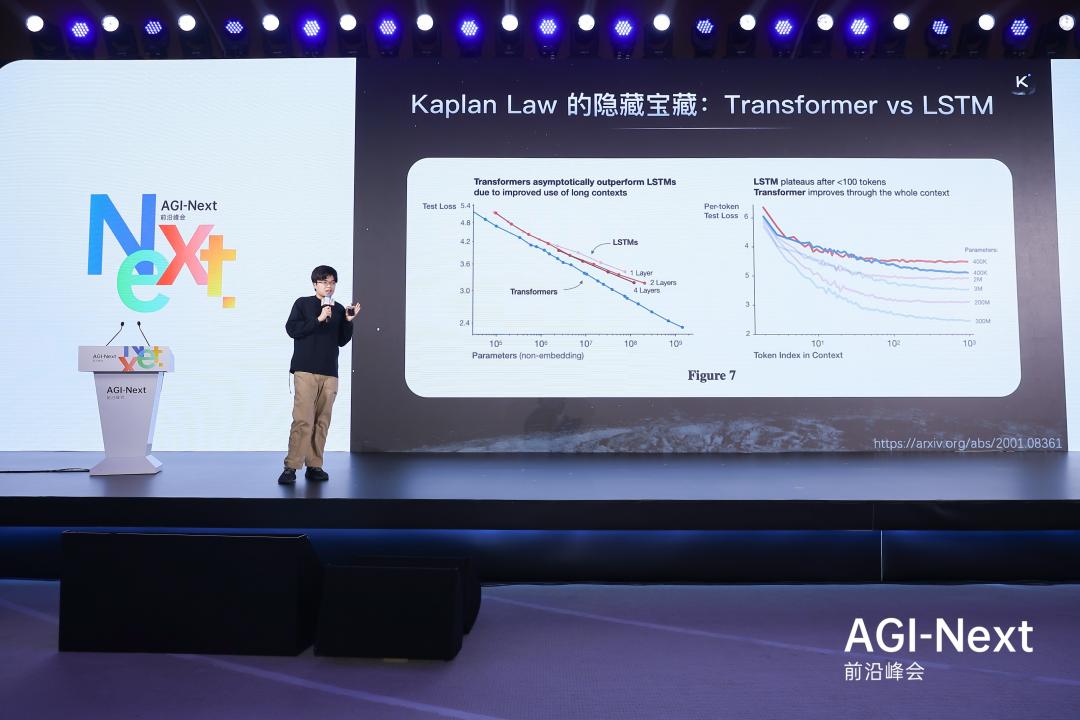
Core Insights - The company "Yue Zhi An Mian," one of China's AI "six little dragons," is currently undergoing a new round of financing with a pre-money valuation nearing $4.8 billion, up from a post-money valuation of $4.3 billion just weeks prior, indicating a $500 million increase in valuation within a month due to market enthusiasm for domestic AI stocks [2] - Following the successful listings of competitors "Zhi Pu" and "MiniMax," investors are showing unprecedented interest in "Yue Zhi An Mian," with many institutions eager to secure allocations in what is perceived as a top-tier non-listed unicorn [2] - The company is not rushing towards an IPO, as it holds over 10 billion RMB in cash reserves, allowing it to maintain its strategic pace without the pressure of short-term financial reporting [3] Company Strategy - The founder, Yang Zhilin, emphasizes the importance of focusing on the development of the next-generation reasoning model (K3 series) and expanding the underlying computing power, rather than rushing to market [3] - The company aims to enhance "Token efficiency" as a core strategy, with two key technological innovations: the "Muon second-order optimizer," which doubles Token efficiency, and the "Kimi Linear architecture," which significantly improves processing speed for long-context tasks [3][4] Market Position - With ongoing restrictions on American AI services in China, domestic AI leaders are experiencing unprecedented "home court advantages," positioning "Yue Zhi An Mian" at the center of this opportunity [4] - The company has not yet commented on the specifics of its $4.8 billion valuation, but it remains a standout entity that has maintained its independent pace amidst market fluctuations [4]

月之暗面,豪赌下一代AI范式
3 6 Ke· 2026-01-13 12:04
Core Viewpoint - The company "月之暗面" (Kimi) is focusing on advancing its AI technology while facing significant competition and challenges in the market, particularly from larger firms. The founder emphasizes the importance of maintaining a technological edge and finding a clear commercial path for sustainable growth [1][4][10]. Group 1: Company Strategy and Development - Kimi aims to enhance its models (K4, K5 to K100) over the next decade, indicating a long-term commitment to AI development [1]. - The company has shifted its focus to foundational technology for large models due to declining user engagement and competition from other AI applications [2][12]. - Kimi's strategy involves optimizing Token efficiency to achieve better performance with fewer resources, which is crucial for competing in the next generation of AI models [7][9]. Group 2: Market Position and Competition - Kimi's monthly active users have significantly decreased compared to last year, necessitating a strategic pivot to concentrate resources on core technology [2][12]. - The competitive landscape is intensifying, with major players like DeepSeek and Doubao gaining traction, leading to Kimi's reduced market presence [2][12]. - Kimi's past success included a peak monthly investment exceeding 100 million yuan, but it now faces challenges from larger companies that can afford aggressive marketing and free offerings [12][14]. Group 3: Financial and Investment Insights - Kimi has secured a $500 million Series C funding round, providing it with over 10 billion yuan in cash reserves, which supports its long-term research and development goals [5]. - The company is not in a rush to go public, allowing it to focus on long-term technological advancements without the pressure of short-term profitability [5][6]. - The capital market's perception of Kimi is positive, as indicated by its ability to attract significant investment, but the company must establish a sustainable business model to ensure long-term viability [11][14]. Group 4: Future Challenges and Opportunities - Kimi's strategy is seen as a "long-term gamble," with success dependent on achieving technological milestones and establishing a unique position in specific verticals [11]. - The AI industry is shifting from a focus on technology to results, emphasizing the need for Kimi to develop practical applications that can generate revenue [11][14]. - The competitive environment suggests that Kimi must adapt quickly to survive against larger firms that have substantial resources and market influence [10][14].