Token工厂

Search documents
中国有机会成为世界Token工厂?月之暗面、智谱、无问芯穹、小米这么说……
证券时报· 2026-03-27 10:25
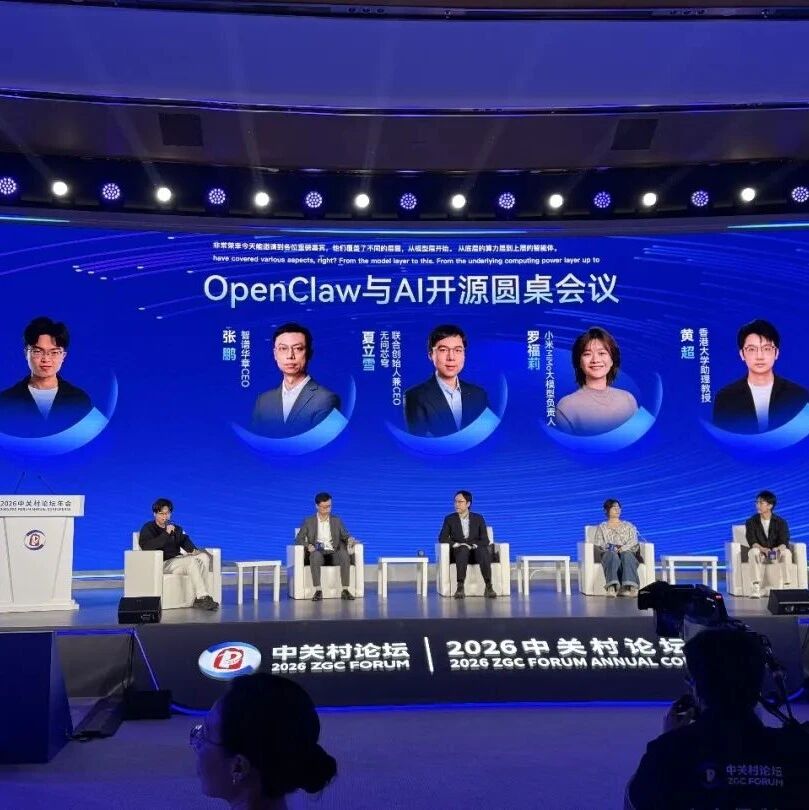
Core Insights - The article discusses the transformative impact of OpenClaw on the AI industry in China, highlighting a significant increase in token demand and the potential for China to become a global "Token factory" [1][4][13]. Group 1: OpenClaw and AI Models - OpenClaw has raised the ceiling for domestic open-source models, enabling them to perform at levels close to top-tier models like Claude [5]. - The framework of OpenClaw allows weaker models to excel in complex tasks through a sophisticated control framework and modular skills [5]. - The rapid growth in token usage, which has increased tenfold since late January, is likened to the surge in mobile data usage during the 3G era [6]. Group 2: Infrastructure and Future Challenges - The current cloud computing infrastructure is designed for human engineers rather than AI, indicating a need for future systems to evolve into intelligent agents capable of self-iteration [8]. - The challenge lies in the cost and speed of processing long contexts, which is essential for the self-evolution of models [10]. - There is a pressing need for sustainable and large-scale token production to support advanced models in various applications [11]. Group 3: Economic Implications and Global Positioning - The shift from "Made in China" to "AI Made in China" emphasizes the goal of leveraging China's advantages in energy and manufacturing to produce high-quality tokens for global distribution [13]. - The price adjustments for advanced models reflect the natural progression towards normalizing commercial value in the industry [9].

“词元”背后:新算力战争打响
财富FORTUNE· 2026-03-26 13:14
Core Insights - The article emphasizes that tokens are foundational to AI, marking a shift in productivity tools from mere software to entities capable of understanding and intervening in the physical world [1] - The rise of OpenClaw signifies a transformative moment in cloud computing, where new companies challenge traditional giants by focusing on efficiency and cost-effectiveness of tokens [4] Pricing Trends - Since March 2023, major cloud providers like Alibaba Cloud and Tencent Cloud have raised AI computing product prices by over 30%, with high-end GPU monthly rentals exceeding 50,000 yuan, indicating the end of the era of cheap computing [3] - Predictions suggest that global AI computing demand will grow by 58% year-on-year by 2026, with reasoning computing now accounting for over 70% of demand, and token consumption increasing by 2200% [3] OpenClaw and Token Dynamics - OpenClaw's rapid growth has positioned it as a potential new standard in AI tools, akin to Linux, and has catalyzed the emergence of token factories, shifting the focus from training to reasoning [6][7] - The introduction of OpenClaw has clarified token pricing, allowing it to be standardized and commercialized, moving away from the previous model where token value was highly variable [7] Cloud Computing Evolution - New cloud computing companies are emerging that focus solely on AI computing, optimizing for performance and cost efficiency, contrasting with traditional cloud giants that still carry the legacy of the internet era [4][12] - The transition to a "computing + skill" ecosystem is anticipated, with new cloud companies designed specifically for AI applications outperforming traditional ones in terms of efficiency [12][14] Competitive Landscape - Chinese new cloud companies are positioned to compete globally, leveraging a complete technology system, open-source contributions, and the ability to provide flexible computing solutions [18][19] - The competition between the US and China in the computing industry is expected to reach a dynamic balance, with both countries addressing their respective weaknesses [20]


通信周观点:GTC/OFC光互联技术迸发,国内云厂商AI服务调价-20260326
Changjiang Securities· 2026-03-26 10:12
Investment Rating - The industry investment rating is "Positive" and maintained [12] Core Insights - The communication sector rose by 1.96% in the 11th week of 2026, ranking first among major industries, and has increased by 6.8% since the beginning of the year, ranking seventh [2][5] - GTC 2026 sees NVIDIA's introduction of the "Five Cabinet" inference solution, leading to significant growth in Scale-out optical interconnects [6] - OFC 2026 anticipates exponential growth in the AI-driven optical communication industry, with leading companies accelerating capacity expansion and multiple technology paths such as CPO, NPO, OCS, and XPO being implemented [7][10] - Domestic cloud providers are adjusting AI service pricing due to surging AI demand and rising supply chain costs [9] Summary by Sections Market Performance - In the 11th week of 2026, the communication sector's performance was highlighted, with significant individual stock movements, including a 26.8% increase for Yuanjie Technology and a 15.5% decrease for Fenghuo Communication [5] GTC 2026 Developments - NVIDIA forecasts that orders for the Blackwell and Rubin platforms will reach $1 trillion by 2027, doubling the previous estimate of $500 billion for 2026 [6] - The hardware aspect includes the release of Groq 3 LPU chips and Groq 3 LPX inference cabinets, achieving a total cabinet computing power of 315 PFLOPS [6] OFC 2026 Projections - The optical communication industry is expected to grow exponentially, with AI optical communication's total addressable market (TAM) projected to increase from $18 billion to over $90 billion from 2025 to 2030, reflecting a CAGR of approximately 40% [7] - InP chip demand is expected to grow at a CAGR of 85% from 2026 to 2030, with significant capacity expansions planned by major players [7] Technology Advancements - The industry is on the brink of entering the single-channel 400G era, with companies like Zhongji Xuchuang and Xinyi Sheng launching new optical modules and products [8] Pricing Adjustments by Cloud Providers - Major cloud providers in China, including Tencent Cloud and Alibaba Cloud, have significantly raised prices for AI services, with increases ranging from 5% to 34% [9]



Token经济爆发,谁赚翻了
21世纪经济报道· 2026-03-21 02:29
Core Insights - The article discusses the rising importance of "Token" in the tech industry, particularly in the context of AI and its commercialization [1] - The shift from a "model-centric" era to a "Token-centric" era is highlighted, indicating a fundamental change in the business logic of AI [1] Group 1: Token Economy and Market Dynamics - The demand for Tokens has surged, with weekly usage increasing threefold compared to January 2023 [1] - NVIDIA's CEO Jensen Huang projected the market demand for Tokens to rise from $500 billion to $1 trillion by 2027 [2] - Major cloud service providers, including Tencent Cloud and Alibaba Cloud, have announced price increases for AI-related services, with Alibaba Cloud raising prices by up to 34% [2] Group 2: Competitive Landscape - Chinese AI model companies are benefiting from the Token consumption surge, with local models priced significantly lower than OpenAI's offerings, often at 10-20% of the cost [3] - MiniMax's M2.5 model has seen a sixfold increase in daily Token consumption from December 2025 to February 2026, indicating strong market traction [3] - Kimi's revenue has surpassed its entire 2025 earnings within just 20 days, showcasing rapid growth and market acceptance [3] Group 3: Infrastructure and Hidden Winners - AI Data Centers (AIDC) and communication networks are crucial for Token production and transmission, benefiting companies like Runze Technology and Guanghuan New Network [4] - The Token economy represents a restructuring of the value chain in the AI industry, akin to a gold rush where various players can profit [4] - The future of the Token economy will depend on who can produce, deliver, and maximize the value of Tokens most efficiently [4]


上海调降商业房首付比例,xAI大规模招募银行家 | 财经日日评
吴晓波频道· 2026-03-18 00:38
Group 1: Real Estate Market - Shanghai has lowered the minimum down payment ratio for commercial housing loans from 50% to 30%, marking the first adjustment in over a decade, aimed at stimulating the commercial real estate market [2][3] - The commercial real estate market is facing high inventory pressure due to overly optimistic early planning and weak demand absorption, necessitating the reduction in down payment requirements to enhance liquidity [2][3] - Beike's net income for 2025 showed a slight increase of 1.2% year-on-year to 946 billion yuan, despite a significant decline in Q4 revenue by 28.7% [8][9] Group 2: AI and Technology Developments - NVIDIA's CEO Jensen Huang announced that the flagship computing chips Blackwell and Rubin are expected to generate at least $1 trillion in revenue by the end of 2027, significantly up from the previous estimate of $500 billion by 2026 [4][5] - Alibaba has established the Alibaba Token Hub (ATH) to focus on the creation, delivery, and application of tokens, indicating a strategic shift towards AI and tokenization in its business model [6][7] - xAI is launching a large-scale recruitment drive for financial professionals to enhance its AI model Grok's capabilities in financial modeling, amidst a backdrop of high turnover among its founding team [10][11] Group 3: Financial Services and Market Trends - Ant Group's acquisition of Yao Cai Securities has been approved, allowing it to integrate securities trading services into its Alipay platform, thereby enhancing its financial service offerings [12][13] - The public fund distribution landscape is evolving, with Ant Fund leading in equity fund holdings, reflecting a shift in competitive dynamics among distribution channels [14][15] - The stock market experienced a decline, with the Shanghai Composite Index falling by 0.85%, as market sentiment remains cautious amid external uncertainties [16][17]


阿里重兵投入B端:CEO直管Token事业群,首发企业级龙虾“悟空”
格隆汇APP· 2026-03-17 07:38
Core Viewpoint - Alibaba has launched the world's first enterprise-level Agent platform, "Wukong," aiming to bridge the gap between AI capabilities and enterprise needs, focusing on security, control, and cost measurement [2][10][19]. Group 1: Recent Developments - Within 48 hours, Alibaba announced the establishment of the Alibaba Token Hub (ATH) and the launch of the "Wukong" platform, marking a significant move in the B2B AI landscape [2][3]. - The AI competition is shifting from model capabilities to reasoning and execution, with a focus on transforming data centers into "Token factories" [3][11]. Group 2: Market Context - The AI sector is experiencing intense competition, with significant growth in user engagement, as evidenced by the DAU of "Qianwen" reaching 73.52 million during the Spring Festival [6][11]. - Despite the hype around AI Agents, many remain in the "geek toy" phase, lacking the necessary integration into real business processes [7][11]. Group 3: Wukong's Unique Positioning - Wukong is embedded within DingTalk, which has over 20 million enterprise organizations, providing a solid foundation for its deployment [8][9]. - The platform features a command-line interface (CLI) for direct operations, enhancing execution efficiency significantly compared to traditional AI tools [9][10]. Group 4: Core Capabilities - Wukong incorporates three essential capabilities: permission inheritance, sandbox operation, and measurable Token costs, addressing key enterprise concerns regarding security and accountability [10][12]. - The establishment of the ATH aims to create a seamless Token supply chain, ensuring the integration of AI capabilities into enterprise workflows [12][13]. Group 5: Value Proposition - Wukong introduces the "One Person Team" (OPT) concept, allowing individuals to leverage AI for complex tasks, significantly reducing operational time from a week to an afternoon [20][22]. - The platform also aims to create an AI capability market, integrating various B2B skills from Alibaba's ecosystem, thus enhancing its competitive edge [24][25]. Group 6: Strategic Implications - Alibaba's dual approach, with "Qianwen" focusing on consumer engagement and "Wukong" on enterprise integration, positions the company to capitalize on both ends of the AI market [28][29]. - The rapid evolution of Wukong is expected to redefine productivity in enterprises, marking a significant shift in how businesses operate with AI [30][31].
至少营收1万亿美元!黄仁勋演讲炸场GTC,英伟达重新掌控AI生死局(附两万字实录)
Xin Lang Cai Jing· 2026-03-17 03:17
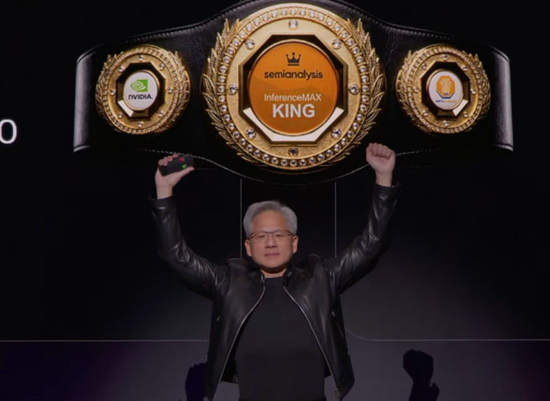
Core Insights - NVIDIA CEO Jensen Huang announced that the new AI chip architecture, Blackwell, and the next-generation Rubin products are expected to generate at least $1 trillion in revenue by the end of 2027, significantly exceeding previous forecasts of $500 billion [2][3][36] - Huang's confidence is backed by NVIDIA's latest financial report, which showed data center revenue reaching $62.3 billion, a 75% year-over-year increase, despite a recent decline in stock price [3][18] Group 1: Product Launches and Innovations - The Vera Rubin system was officially launched, featuring the NVL72 model with 72 GPUs interconnected via NVLink 6, emphasizing a modular design that reduces installation time from two hours to five minutes [5][6] - The Vera CPU will be sold as a standalone product, expected to contribute billions in revenue, with the first system already operational on Microsoft Azure [6] - NVIDIA's acquisition of Groq for approximately $20 billion has led to the introduction of the Groq 3 LPU, designed to accelerate inference tasks, achieving a memory bandwidth of 22 TB/s, significantly faster than competing GPUs [7][8] Group 2: Market Position and Strategy - Huang emphasized that NVIDIA is not just a chip company but a comprehensive platform provider, extending its reach into AI agents, software security, and autonomous driving [11][15] - The company is building a moat through a full-stack hardware approach (GPUs, LPUs, CPUs, DPUs) and a robust software ecosystem, which is becoming a significant competitive advantage [17][18] - NVIDIA's partnerships with major companies like Uber for autonomous vehicles and collaborations with various automotive manufacturers highlight its expanding influence in the automotive sector [14][15] Group 3: Financial Market Reactions - Following Huang's announcements, NVIDIA's stock price rose approximately 1.65%, indicating a positive market response, with analysts expressing renewed confidence in the company's growth trajectory [18][19] - Analysts from Wedbush and Cantor Fitzgerald highlighted the potential for NVIDIA to dominate the AI infrastructure market, with expectations of significant demand from enterprises, governments, and AI-native companies [18][19] Group 4: Future Outlook and Roadmap - Huang outlined a roadmap for future architectures, including the Feynman architecture set to launch in 2028, which will feature new GPUs, LPUs, and CPUs [12][13] - The company is also exploring the development of space-based AI data centers, aligning with trends from other tech giants [12][13] - The anticipated demand for AI infrastructure is expected to grow exponentially, with Huang projecting a $1 trillion market by 2027, driven by the increasing need for computational power in AI applications [36][38]
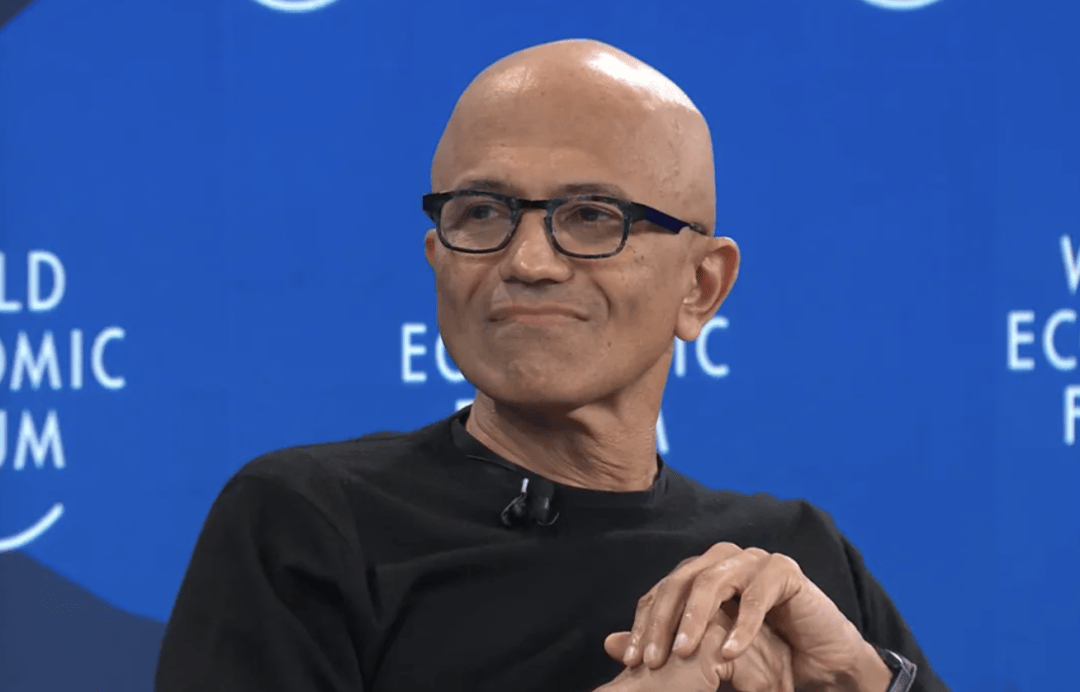
纳德拉懂张一鸣
Sou Hu Cai Jing· 2026-01-24 02:20
Group 1 - The core theme of the article revolves around the transformation of AI into a standardized industrial product, emphasizing efficiency and cost-effectiveness in AI production [5][30]. - Nadella's assertion that the future of AI competition will focus on the efficiency of "Token factories" highlights a shift from abstract discussions to concrete cost calculations in AI development [4][8]. - The article draws parallels between Nadella's views and Zhang Yiming's strategies at ByteDance, particularly in terms of aggressively lowering Token prices to drive usage and market penetration [10][15]. Group 2 - Nadella's perspective positions Microsoft as a global infrastructure provider, aiming to optimize energy efficiency across its data centers, while ByteDance operates as a major consumer of Tokens, leveraging its applications to drive down costs [20][22]. - The discussion indicates a shift in industry metrics from model parameters to Token production costs, suggesting that the quality and effectiveness of AI outputs will become more critical than sheer volume [27][28]. - The article concludes that as AI becomes a standardized product, companies that focus on maximizing the value of each watt of energy will thrive, while those fixated on technical complexities may struggle [30][31].