
2025中关村论坛

Search documents
中关村论坛发布“边想边干”的AI智能体AutoGLM沉思
Huan Qiu Wang· 2025-03-31 09:24
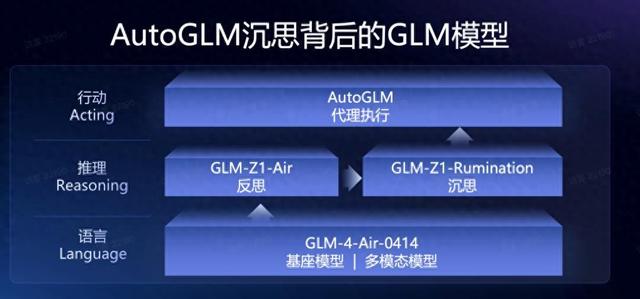
Core Insights - The 2025 Zhongguancun Forum showcased the AI agent AutoGLM, which integrates deep research capabilities with practical operations, marking a shift towards "thinking while doing" in AI technology [1][3]. Group 1: AI Agent Capabilities - AutoGLM is designed to perform complex tasks by understanding user intent through simple text or voice commands, enabling it to simulate human actions such as web browsing, data retrieval, and report generation [3][4]. - The AI agent's capabilities are powered by the "thinking model," which employs reinforcement learning to enable self-critique, reflection, and deeper thinking for improved outcomes [3][4]. Group 2: Technological Foundation - The thinking model is built on a proprietary full-stack large model technology developed by Zhiyuan AI, combining the general capabilities of GLM-4, reflective abilities of GLM-Z1, and the execution capabilities of AutoGLM [4]. - The thinking function has been officially launched on Zhiyuan's web, PC, and mobile platforms, providing free and unlimited access to global users, representing a significant advancement in deep research capabilities [4]. Group 3: Future Outlook - The CEO of Zhiyuan AI, Zhang Peng, predicts that 2025 will be a breakthrough year for AI agents, with ongoing development of models that possess logical reasoning and deep thinking capabilities [4].


中关村论坛
Hua Xia Shi Bao· 2025-03-31 05:57
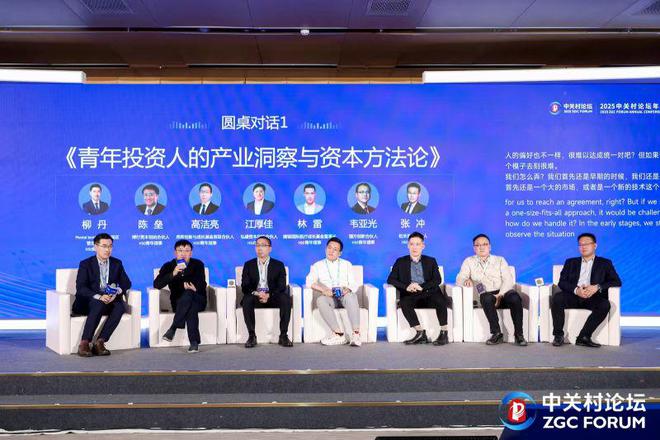
Core Viewpoint - The recent forum at the 2025 Zhongguancun Forum highlighted the transformative impact of AI and other advanced technologies on the healthcare industry, emphasizing a shift from efficiency enhancement to value creation in medical innovation [2][3]. Group 1: Technological Drivers - AI, gene editing, and cell therapy are identified as core drivers for the next five years, leading to a disruptive transformation in business models beyond just optimizing R&D processes [3]. - The integration of AI in healthcare has evolved from simple efficiency tools to generative tools, with significant implications for drug development timelines [3]. - The commercialization of AI in pharmaceuticals is approaching a tipping point, transitioning from efficiency improvements to value creation [3]. Group 2: Market Dynamics and Investment Strategies - In a challenging financing environment, companies should focus on cash flow and leverage AI to enhance original R&D models, creating opportunities for mergers and acquisitions [4]. - The domestic advancements in cell and gene therapy, particularly CAR-T and mRNA technologies, are nearing global standards, with supportive policies and faster approval processes boosting confidence in the sector [5]. - The ongoing pressure from cost control policies and centralized procurement is reshaping the industry landscape, favoring leading domestic companies while creating a competitive environment [6]. Group 3: Policy Implications - The continuous push for cost control in healthcare is seen as both a challenge and a mechanism for identifying top-tier companies, with a layered market emerging for innovative products [6]. - The current policy environment provides a window for domestic companies to capture market share through low-cost strategies before entering a phase of intense competition [6]. - Investment in healthcare should aim to enhance accessibility at the grassroots level, with a focus on innovative drugs and medical devices that lower costs and improve efficacy [7]. Group 4: Future Outlook - The next five years will witness a deep synergy between technology, policy adaptation, and capital empowerment in the healthcare sector, characterized by both the clearing of valuation bubbles and intensified competition [7]. - The healthcare industry is undergoing a comprehensive transformation, with each segment from cell therapy to AI pharmaceuticals reshaping industry norms [7]. - Investors must find a dynamic balance in technological insights, policy predictions, and portfolio management to capture growth amidst uncertainty [7].
中国医疗健康行业未来五年趋势展望:技术、政策与资本的协同进化|聚焦中关村论坛
Hua Xia Shi Bao· 2025-03-31 05:54
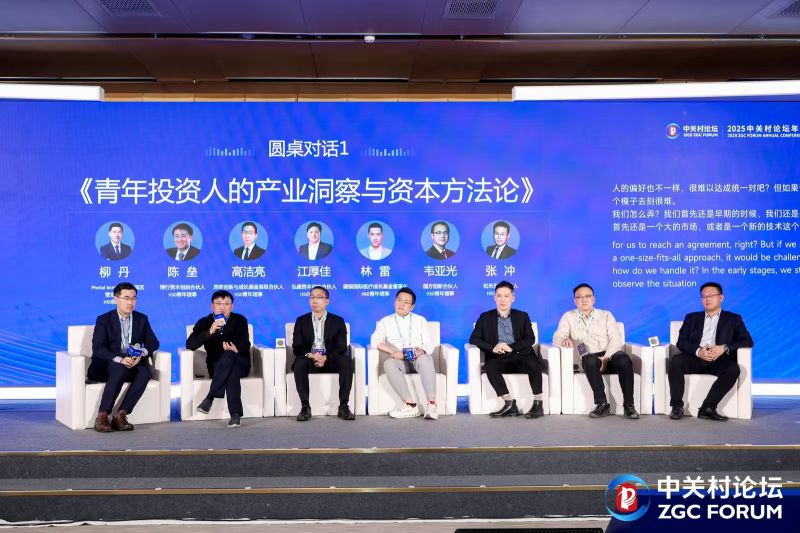
Core Viewpoint - The recent forum highlighted the transformative impact of AI and other advanced technologies on the healthcare industry, emphasizing a shift from efficiency enhancement to value creation in medical innovation [2][3]. Group 1: Technology-Driven Industry Restructuring - AI, gene editing, and cell therapy are identified as core drivers for the next five years, reshaping not only R&D processes but also business models [3]. - The integration of AI in healthcare has evolved from simple efficiency tools to generative tools, with significant implications for drug development timelines [3]. - The current valuation trends in AI healthcare projects may lead to market bubbles, necessitating a focus on revenue and profit to validate company value [3][4]. Group 2: Cash Flow and Business Models - In a challenging financing environment, companies should prioritize cash flow and leverage AI to enhance original R&D and business models for better acquisition or exit opportunities [4]. - The commercialization breakthroughs in CAR-T therapy and local applications of mRNA technology are expected to drive the next wave of innovation in cell and gene therapy [5]. Group 3: Policy and Market Dynamics - Ongoing cost control and centralized procurement policies are accelerating the stratification of the healthcare industry, presenting both challenges and opportunities for leading companies [6]. - The current policy environment favors domestic companies, providing a window for low-cost market penetration before the onset of intense competition [6][7]. - Investment strategies should focus on enhancing accessibility to primary healthcare through technological innovations that lower costs and improve efficacy [7]. Group 4: Future Outlook - The healthcare sector is poised for a deep synergy of technology, policy adaptation, and capital empowerment over the next five years, characterized by both valuation corrections and explosive growth in technologies like AI and CGT [7]. - Each segment of the industry, from cell therapy to AI drug development, is undergoing significant rule reformation, necessitating a balanced approach to investment that considers technological insights, policy forecasts, and portfolio management [7].
中关村论坛|丁洪院士:加强量子领域国际合作,推动人类共同进步
Huan Qiu Wang Zi Xun· 2025-03-30 10:21
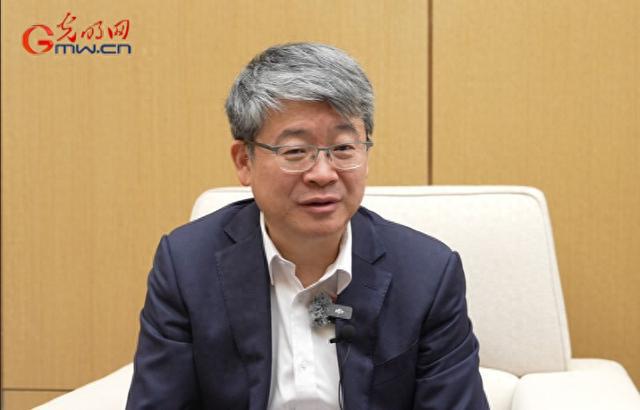
Group 1 - The theme of the 2025 Zhongguancun Forum is "New Quality Productivity and Global Technological Cooperation" [1] - International cooperation in quantum technology is essential for human progress, as highlighted by the historical collaboration among renowned scientists like Einstein and Bohr [1][3] - Current challenges in international cooperation in the quantum field include increased global technological competition and sensitivity, which hinder talent mobility and academic exchange [3] Group 2 - Investment in quantum technology is increasing as the field gains more attention, necessitating coordinated research efforts [3] - A research team of about 20 young talents, averaging under 35 years old, has been organized by the Shanghai Jiao Tong University to focus on topological qubits [3] - Quantum technology research is a long-term endeavor that should be approached with the mindset of contributing to human civilization rather than seeking quick financial returns [3]
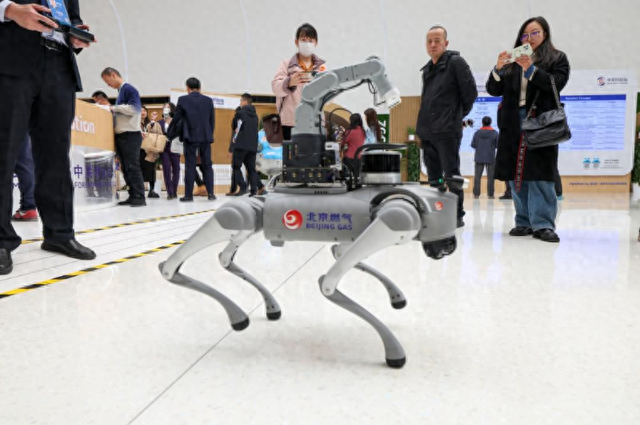
北京燃气“巡检精灵”亮相中关村论坛
Huan Qiu Wang· 2025-03-28 16:16
Core Viewpoint - Beijing Gas Group has unveiled the "Inspection Elf," an intelligent inspection robot designed for community gas inspection, which aims to transform gas safety management in urban areas and provide intelligent solutions for energy security [1][3]. Group 1: Product Features - The "Inspection Elf" is tailored for community scenarios, integrating key path planning algorithms, AI visual perception technology, motion compensation image stabilization algorithms, and multi-sensor data integration technology [3]. - The robot is designed to navigate complex inspection environments effectively, enhancing its ability to identify and understand various objects and operational states within inspection scenarios [3]. - Its compact and flexible design allows it to operate stably in common residential terrains such as wet soil, rubble, grass, and puddles, while high-precision sensors can detect minor gas leaks, enabling early warning of potential hazards [3]. Group 2: Development Status - The "Inspection Elf" has completed its first field sniffing test and is currently in the research and debugging phase [3]. - The development and application of the "Inspection Elf" represent a technological transformation in gas safety inspections, with expectations that technological maturity and cost reduction will significantly enhance social and economic benefits for the company [3].
北京再放大招!2025中关村论坛释放哪些信号?
Zhong Guo Qi Che Bao Wang· 2025-03-28 01:40
Group 1 - The 2025 Zhongguancun Forum in Beijing gathered global tech elites and innovators to discuss cutting-edge technology and promote new productivity development [2] - China is implementing an innovation-driven development strategy, with R&D expenditure reaching 3.6 trillion yuan in 2024 and an R&D intensity of 2.68% [3] - Beijing is enhancing its role as a strategic hub for technology innovation, with over 160 international tech cooperation agreements signed [3] Group 2 - Beijing has established 20 large scientific facilities and maintains an R&D intensity of over 6%, leading the nation in technology progress awards [4] - The city is developing a world-leading tech park in Zhongguancun and has set up a 100 billion yuan industrial guidance fund [6] - Beijing's technology contract transaction volume exceeded 900 billion yuan last year, forming three trillion-level industrial clusters [6] Group 3 - The forum highlighted significant technological advancements, including the "AI + new materials" application in Xiaomi's automotive sector [8] - Li Xiang, CEO of Ideal Auto, announced the open-sourcing of their in-house operating system, significantly reducing chip adaptation verification time [8] - Human-shaped robots are being developed for various applications, showcasing their potential in improving productivity and reducing labor costs [9] Group 4 - Quantum computing is emerging as a research hotspot, with applications in cryptography, materials science, and drug development [9] - Challenges in quantum computing include qubit stability and programming complexity, with global research teams exploring new solutions [9]
