
电梯

Search documents
广日股份(600894):Q4业绩恢复增长,持续推进数智化转型
China Post Securities· 2026-03-31 05:24
Investment Rating - The report maintains a "Buy" rating for the company, indicating an expected relative increase in stock price of over 20% compared to the benchmark index within six months [10][16]. Core Insights - The company reported a revenue of 7.246 billion yuan for 2025, a slight decrease of 0.2% year-on-year, with a net profit attributable to shareholders of 689 million yuan, down 15.07% year-on-year [5][12]. - In Q4 2025, the company achieved a revenue of 2.428 billion yuan, representing a year-on-year increase of 4.84%, and a net profit of 291 million yuan, up 9.34% year-on-year [5][6]. - The company is focusing on digital transformation, with over 250 million yuan invested in R&D in 2025, aimed at enhancing capabilities in artificial intelligence, IoT, and robotics [7]. Financial Performance - The company’s revenue from elevator machinery and aftermarket services reached 3.538 billion yuan and 3.539 billion yuan respectively, with year-on-year growth rates of 14.13% and a decline of 10.64% for elevator components [6]. - The gross margin increased slightly by 0.15 percentage points to 15.57%, while the expense ratio decreased by 1.67 percentage points to 12.34% [6]. - The company forecasts revenues of 7.820 billion yuan, 8.443 billion yuan, and 9.119 billion yuan for 2026, 2027, and 2028 respectively, with corresponding net profits of 706 million yuan, 784 million yuan, and 870 million yuan [8][12]. Market Position and Strategy - Despite a general decline in the elevator industry, the company’s order volume and shipment volume for elevator machinery have shown growth, attributed to successful strategic customer development and multiple public construction projects [7]. - The company’s joint venture with Hitachi Elevator continues to maintain a leading market share, with over 120,000 units signed and shipped in 2025 [7]. - The company is advancing its digitalization efforts, with significant commercial outcomes from high-end intelligent equipment and digital application solutions, achieving over 500 million yuan in signed contracts [7].

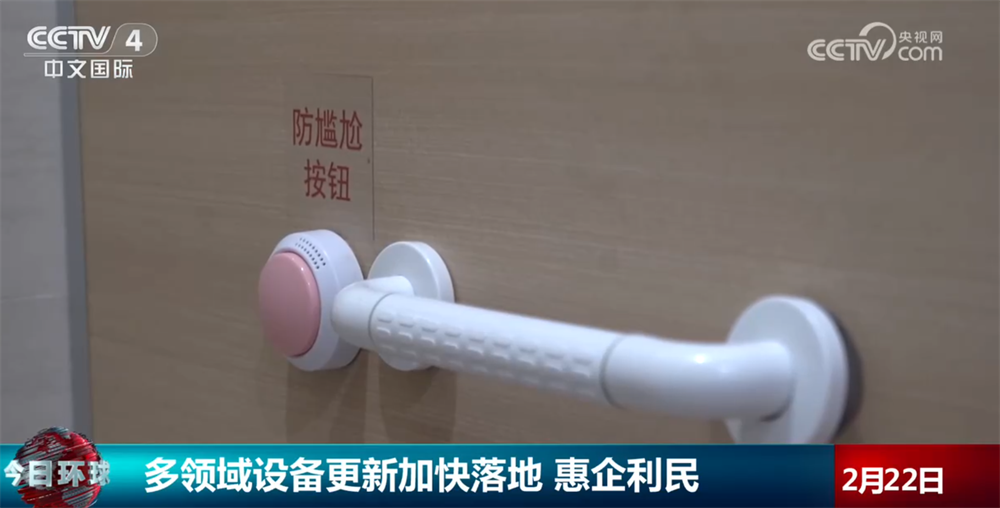
我国多领域设备更新加快落地“惠企利民” 为假日消费注入新动能
Yang Shi Wang· 2026-02-22 07:27
Group 1 - The core viewpoint of the articles highlights China's continued push for large-scale equipment upgrades across various sectors to stimulate holiday consumption and support social welfare [1][3][5][7] Group 2 - The offline commercial facilities' equipment upgrades have been included in the policy for the first time this year, with several commercial complexes in Shanghai, Zhejiang, and Sichuan showcasing new equipment during the Spring Festival [1] - In the grain and oil processing sector, new equipment for peanut oil production has been implemented to ensure market supply during the holiday period [3] - The policy for upgrading old elevators has been expanded to include the installation of new elevators in old residential communities, benefiting over 600 households in a Beijing community [5] Group 3 - A new round of equipment upgrades is set to launch in 2026 across 31 provinces and regions, covering approximately 20 sectors including industry, electronic information, and energy conservation [7] - The application conditions and review processes for equipment upgrade projects will be optimized, lowering the investment threshold and increasing support for small and medium-sized enterprises [7]

我国首部综合性电梯安全技术规范公开征求意见
Yang Shi Xin Wen· 2026-02-14 03:17
Core Viewpoint - The article discusses the draft of the "Elevator Safety Technical Regulations" aimed at enhancing the safety and quality standards of elevators in China, reflecting lessons learned from past accidents and international best practices [1] Group 1: Regulatory Framework - The draft is the first comprehensive elevator safety technical standard in China, incorporating lessons from recent elevator accidents and typical case studies [1] - It draws on regulations and standards from developed countries and regions such as Europe and the United States to create stricter safety requirements suitable for China's context [1] Group 2: Safety Requirements - The draft expands the quality requirements for "national subsidy" elevators to all newly installed elevators, imposing stricter safety technical requirements on key components [1] - It aims to curb the trend of low-cost, reduced specifications in the elevator industry, promoting improved safety performance for over 800,000 new elevators installed annually [1] Group 3: Lifecycle Safety Focus - The draft emphasizes essential safety throughout the entire lifecycle of elevators, proposing higher safety requirements in design risk assessment, manufacturing quality control, intelligent fault monitoring, and maintenance compliance management [1] - It aims to ensure the reliable operation of over 12 million existing elevators nationwide, safeguarding the safety of over 4 billion elevator rides daily [1]
优化“两新”政策实施 激发绿色转型新动能
Zhong Guo Huan Jing Bao· 2026-02-13 00:39
Core Viewpoint - The recent optimization of the "Two New" policy aims to systematically integrate green development concepts into the entire policy design, execution, and evaluation process, promoting a comprehensive green transformation of China's economic and social development [1][8]. Group 1: Policy Coverage and Implementation - The optimized policy significantly expands its support boundaries, creating a multidimensional green renewal system that encompasses production, daily life, and public services [2]. - It includes support for upgrading public safety and living conditions, such as installing elevators in old residential areas and upgrading firefighting equipment, which enhances public service quality and promotes low-carbon urban infrastructure [2]. - The policy explicitly supports energy-saving renovations in large commercial facilities, which can lead to substantial energy savings and serve as a model for green operations in the commercial sector [2]. Group 2: Subsidy Mechanism Optimization - The policy emphasizes a refined and differentiated subsidy mechanism, focusing on "rewarding excellence and promoting green" to enhance the environmental efficiency of fiscal funds [3]. - It introduces a more scientific and incentive-based approach to subsidies, such as tiered subsidies for residential elevator upgrades based on building floors and prioritizing electric vehicle replacements for old trucks [3]. - The design aims to lower the cost of green purchases for consumers, thereby stimulating immediate energy savings and sending clear market demand signals to production enterprises [3]. Group 3: Implementation Mechanism Enhancement - The policy aims to simplify processes and lower barriers for small and medium-sized enterprises (SMEs), which are crucial for equipment updates and green production [4]. - It introduces evaluations of local execution and auditing, along with a pre-allocation system for funds, to ensure that financial resources effectively support green transitions [4]. - A unified national standard for key category subsidies is established to maintain fairness and prevent fraudulent practices, ensuring that fiscal funds are used to incentivize green transformation [4]. Group 4: Recycling Network and Circular Economy - The policy emphasizes the importance of a smooth recycling and utilization chain, highlighting the need for a comprehensive management approach to resources [5][6]. - It supports the development of a three-tier recycling system and encourages new models like "Internet + Recycling" to create a convenient and standardized recycling network [6]. - The focus is shifting from mere recycling to high-value reuse and remanufacturing, aiming to maximize the value of "urban minerals" and reduce reliance on primary resources [6]. Group 5: Standards and Industry Upgrade - The policy underscores the role of standards in driving industrial progress and green development, aiming to elevate energy consumption and emission standards in key industries [7]. - It mandates stricter enforcement of vehicle scrappage and environmental inspection standards, promoting the timely update of appliances and combating fraudulent energy efficiency labeling [7]. - This combination of measures is designed to accelerate the elimination of outdated, high-energy-consuming equipment while purifying the market environment for green products [7]. Group 6: Overall Policy Integration - The optimization of the "Two New" policy is characterized by a clear logic: expanding coverage for precise guidance, optimizing subsidies for enhanced incentives, improving mechanisms for fairness, facilitating recycling for a closed loop, and elevating standards to drive upgrades [8]. - The comprehensive policy aims not only to stimulate current demand and industrial upgrades but also to shape long-term green production and consumption patterns, integrating ecological civilization into the entire economic and social development process [8].
梅轮电梯发布2025年业绩预告,净利润预计大幅下滑
Xin Lang Cai Jing· 2026-02-12 12:12
Core Viewpoint - Recent events surrounding Meilun Elevator (603321) focus on the company's earnings announcement and stock price fluctuations [1][6] Group 1: Earnings Performance - On January 23, 2026, Meilun Elevator announced an expected net profit attributable to shareholders for 2025 of between 30.5 million and 36.5 million yuan, representing a year-on-year decrease of 72.85% to 77.31% [2][7] - The expected net profit excluding non-recurring items is projected to be between 22 million and 27 million yuan, reflecting a year-on-year decline of 50.74% to 59.86% [2][7] - The performance changes are primarily attributed to a contraction in elevator industry demand, product pricing adjustments, and a decline in gross profit margins [2][7] Group 2: Company Status - On December 9, 2025, the company decided to repurchase and cancel a portion of the restricted stock options granted to three departing employees, totaling 160,000 shares, at a repurchase price of 3.19 yuan per share [3][8] - This matter has completed the review process [3][8] Group 3: Stock Performance - On February 6, 2026, Meilun Elevator's stock price increased by 2.03%, closing at 8.05 yuan per share, with a trading volume of 38.7078 million yuan and a net outflow of 3.3009 million yuan from main funds [4][9] - Since the beginning of 2026, the stock price has shown minimal fluctuations, maintaining an overall oscillating trend [4][9]

广日股份:2023年6月,国发广日基金配合公司完成了对怡达快速电梯有限公司控股权的收购
Zheng Quan Ri Bao Zhi Sheng· 2026-02-12 10:13
Group 1 - The core viewpoint of the article is that Guangri Co., Ltd. is actively engaging in investment and acquisition activities through the establishment of an industrial fund, focusing on high-end intelligent equipment, digital emerging industries, and modern services [1] - In June 2023, the Guofa Guangri Fund completed the acquisition of a controlling stake in Yida Rapid Elevator Co., Ltd., indicating the company's strategic direction in expanding its portfolio [1] - The company emphasizes its commitment to regulatory compliance, stating that it will fulfill disclosure obligations as required by regulations for any significant developments [1]
通用电梯股价波动引关注,机构评级中性
Jing Ji Guan Cha Wang· 2026-02-12 07:41
Group 1 - The stock price of General Elevator (300931) has shown volatility, with a recent decline of 0.38% on February 11, 2026, and a trading volume of 4.23 billion yuan, indicating a net outflow of 20 million yuan from main funds [1] - The stock experienced significant activity over the past week, with a notable increase of 13.36% on February 10, 2026, closing at 13.15 yuan, followed by a slight decline to 13.10 yuan on February 11, and further down to 12.92 yuan on February 12, reflecting a total drop of 1.37% [2] - Technical indicators suggest a bullish trend, with the stock price recently breaking through the upper Bollinger Band and a MACD indicator showing a positive trend, while the 5-day price change reached 13.83%, outperforming both the industry and the broader market [2] Group 2 - Institutional sentiment towards General Elevator is neutral, with all ratings categorized as neutral as of February 12, 2026, despite a forecasted net profit growth of 33.33% for 2025 [3] - The current price-to-earnings ratio (TTM) is negative, indicating pressure on profitability, and market interest appears limited, with a fund holding ratio of only 0.02% [3]

近六成日企计划今年扩大或维持对华投资
Di Yi Cai Jing Zi Xun· 2026-02-12 05:16
Group 1 - The latest survey by the China Japan Chamber of Commerce indicates a 3% improvement in companies' perception of their business conditions for the second half of 2025 compared to the previous survey [2] - 35% of member companies expect improvements in revenue and profit in the second half of 2025, an increase of 7% and 4% respectively from the last survey [2] - 59% of surveyed companies plan to increase or maintain their investments in China this year, reflecting a high level of satisfaction with the business environment [2] Group 2 - The bilateral trade volume between China and Japan remains above $300 billion, with a projected increase to $32.218 billion in 2025, representing a year-on-year growth of 4.5% [3] - Japanese companies are focusing their investments in China on ensuring competitiveness and developing new products and services [3] - Hitachi Elevator's president emphasized that their largest factory and R&D team are based in China, highlighting the importance of the Chinese market for their operations [3] Group 3 - Over 60% of manufacturing member companies are deploying AI energy management systems by 2025, with examples of Mitsubishi Electric and FANUC implementing AI to optimize energy consumption and reduce carbon emissions [4] - The establishment of Mizuho Securities' subsidiary in China is expected to enhance its capabilities in cross-border bond underwriting and corporate financing [4] Group 4 - There is an asymmetry in trade dependency, with Japan relying heavily on China for products like home appliances and agricultural goods, while exporting semiconductor equipment and precision components to China [5] - The ongoing economic security policies in Japan may lead to increased caution among Japanese companies regarding their investments in China [5] - Many Japanese firms recognize the significant costs of completely disengaging from the Chinese market, as it would result in missed growth opportunities [5]

近六成日企计划今年扩大或维持对华投资
第一财经· 2026-02-12 05:06
Group 1 - The core viewpoint of the article highlights the improving business sentiment among Japanese companies operating in China, with a 3% increase in positive outlook for the second half of 2025 compared to the previous survey [2] - 35% of surveyed companies expect revenue and profit growth in the second half of 2025, marking an increase of 7% and 4% respectively from the last survey [2] - 59% of respondents plan to increase or maintain their investments in China this year, reflecting a high level of satisfaction with the business environment [2] Group 2 - The bilateral trade volume between China and Japan remains robust, with a projected increase to $322.18 billion in 2025, up $13.91 billion or 4.5% year-on-year from 2024 [4] - Japanese companies are focusing their investments in China on maintaining competitiveness and developing new products and services [4] - Hitachi Elevator's president emphasized the importance of the Chinese market for their operations, highlighting the shift towards modernization and energy efficiency in the elevator sector [4] Group 3 - Over 60% of manufacturing member companies plan to deploy AI energy management systems by 2025, showcasing a trend towards digital transformation among Japanese firms in China [5] - Mitsubishi Electric has implemented AI to optimize energy consumption in injection molding machines, resulting in a carbon reduction of 12,000 tons annually [5] - FANUC is promoting an AI robot self-learning system in its Chinese factories to reduce production line debugging time by 50% [5] Group 4 - There is an asymmetry in trade dependency, with Japan heavily reliant on China for products like home appliances and agricultural goods, while exporting mainly semiconductor equipment and precision parts to China [7] - The ongoing economic security policies from Japan's government may introduce uncertainties in Sino-Japanese cooperation, despite most Japanese companies planning to maintain or expand investments in China [7] - Japanese firms recognize the significant costs of completely disengaging from the Chinese market, as highlighted by various economic research institutions [8]

报告:近六成日企计划今年扩大或维持对华投资
Di Yi Cai Jing· 2026-02-12 02:59
Group 1 - The core viewpoint of the articles highlights the increasing investment by Japanese companies in China, focusing on ensuring competitiveness, developing new products and services, and enhancing added value [1][2] - A recent survey by the Japan Chamber of Commerce indicates that 59% of member companies plan to increase or maintain their investments in China, with 35% reporting improved revenue and profit compared to the previous period [1][2] - The bilateral trade volume between China and Japan is projected to reach $322.18 billion in 2025, reflecting a year-on-year growth of 4.5% [2] Group 2 - Japanese companies are accelerating their digital transformation in response to the global shift towards AI and big data, with over 60% of manufacturing members deploying AI energy management systems by 2025 [3] - Hitachi Elevator emphasizes the importance of its operations in China, stating that its largest factory and R&D team are located there, and it is focusing on safety, intelligence, and sustainability in its products [2] - The ongoing economic security policies in Japan may create uncertainties in Sino-Japanese cooperation, leading some companies to adopt a more cautious investment approach [4] Group 3 - There is a significant interdependence in the supply chain between China and Japan, with many Japanese companies recognizing the high costs of completely disengaging from the Chinese market [5] - The establishment of Mizuho Securities' subsidiary in China is expected to enhance its competitive edge in cross-border bond underwriting and corporate financing [2]