考古

Search documents
访谈|李水城:考古学的真谛是人与人的历史
Xin Lang Cai Jing· 2026-02-27 04:23
Core Viewpoint - The book "Years Flowing Gold: In Memory of My Relatives, Teachers, and Friends" by Professor Li Shuicheng reflects on significant figures in archaeology and serves as both a personal academic history and a history of Chinese archaeology [1]. Group 1: Academic Journey - Professor Li Shuicheng recalls his experience of participating in the college entrance examination in 1977 and 1978, highlighting the challenges he faced due to his limited educational background [4][5]. - He was eventually admitted to Peking University, where he studied archaeology, influenced by notable professors such as Su Bingqi, Yan Wenming, and others [6][8]. Group 2: Influential Figures in Archaeology - The book discusses the profound impact of various scholars on Li's academic development, including their teaching styles and contributions to the field of archaeology [9][11]. - Notable figures mentioned include Yan Wenming, who provided clear and logical lectures, and Su Bingqi, who emphasized the importance of critical thinking in archaeology [16][19]. Group 3: Salt Archaeology - Professor Li Shuicheng is recognized as a pioneer in salt archaeology in China, filling a significant research gap in this field [23]. - His work in the Three Gorges area and subsequent projects led to the establishment of salt archaeology as a new sub-discipline, gaining international attention [25][29]. Group 4: Cultural Exchange and Artifacts - The research on scepters and their cultural significance illustrates the interaction and exchange between different cultures throughout history [30][32]. - The study of scepters reveals their evolution from ordinary tools to symbols of power, reflecting broader cultural dynamics [33].


改写东亚旧石器时代技术史 南阳西沟遗址发现东亚已知最早工具装柄技术
He Nan Ri Bao· 2026-02-02 23:38
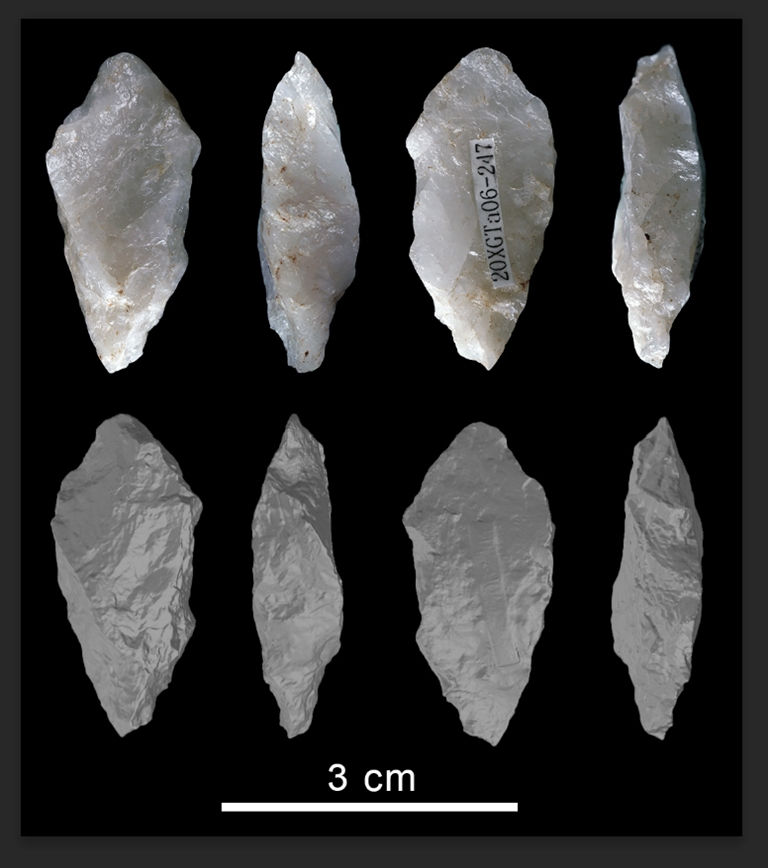
Core Insights - The archaeological research at the Xigou site in Nanyang, Xichuan, has made significant breakthroughs, confirming the existence of systematic stone tool production technology and the earliest known tool hafting techniques in East Asia, dating back 160,000 to 72,000 years ago, which challenges the long-held belief of a conservative cultural and technological landscape during the Paleolithic era in East Asia [3][4] Group 1 - The Xigou site, located at the southern foot of the Qinling Mountains, provides favorable conditions for ancient human survival and technological development due to its unique environmental setting [4] - Excavations from 2019 to 2021 revealed a total area of 243 square meters, providing clear stratigraphic evidence of ancient human technological levels [4] - A total of 2,601 stone artifacts were unearthed, including scrapers and drills, with 22 tools showing clear hafting traces, confirming at least two methods of hafting, representing the earliest verified composite tools in East Asia [4] Group 2 - The stone tools from the Xigou site exhibit multifunctionality, with some showing traces of plant processing, and were made from local quartz and quartzite, challenging the notion that quartz is unsuitable for fine tool production [4] - The findings at the Xigou site are supported by archaeological results from other contemporaneous sites, such as the Lingjing Xuchang site, indicating that ancient humans in East Asia had mastered various complex technologies [4] - The research team noted that the climate in East Asia during this period was highly variable, and the innovation in stone tool technology was a survival strategy adapted to environmental changes, closely linked to the cognitive advancements of prehistoric populations [5]
这些重大成果,彰显文明探源背后的科技力量
Xin Hua She· 2026-01-20 03:15
Group 1 - The integration of technology into archaeology enhances the understanding of history and civilization, as demonstrated by recent significant achievements in the field [1] - The Chinese Academy of Social Sciences has made substantial progress in building a technology archaeology resource standard library, including over 100,000 specimens from ancient and modern animals [2] - The successful restoration of precious artifacts, such as Tang Dynasty lacquered horse armor and bronze vessels, showcases innovative methods combining excavation, emergency protection, and restoration research [3] Group 2 - Research on dyed textiles from the Tang Dynasty has established the earliest known date for this technique, pushing the timeline back to around 750 AD [4][5] - Multidisciplinary studies have identified key time nodes in the origin and early development of dryland agriculture in northern China, with evidence dating back approximately 10,000 years [6] - The discovery of ancient myrtle trees at the Shia'an site indicates that myrtle was part of the diet during the Liangzhu culture period, marking a significant finding in the study of ancient flora [7] Group 3 - Research on prehistoric water management in China has pushed back the history of large-scale water engineering by nearly 3,000 years, indicating early complex water management systems [8]
微参考 │ 新加坡最吃香职业刷新 AI榜首,教师上榜!《自然》标定2026科学大事;古埃及文物在人工智能应用中“活”起来……
Sou Hu Cai Jing· 2026-01-19 13:18
Group 1: Scientific Developments - The article highlights significant scientific events anticipated for 2026, including breakthroughs driven by artificial intelligence (AI), new lunar exploration missions, and large-scale ocean drilling projects [1] - AI is expected to achieve major scientific milestones, potentially producing its first significant scientific results by 2026 [1] - Two clinical trials aimed at developing personalized gene therapies for children with rare genetic diseases are set to commence, with regulatory changes accelerating the availability of new drugs [1] Group 2: Space Exploration - NASA's Artemis 2 mission plans to send four astronauts to lunar orbit using the Orion spacecraft, while China aims to land on the Moon's south pole for research [1] - The European Space Agency is set to launch the planet-searching satellite Plato, and a major upgrade is expected for the Large Hadron Collider near Geneva in 2026 [1] Group 3: Political and Economic Context - The Trump administration has prioritized AI and quantum technology in U.S. research, with ongoing political battles in Congress regarding scientific funding and potential reductions in climate policy [1]

郑州考古亮出2025成绩单
Xin Lang Cai Jing· 2026-01-18 01:56
Core Viewpoint - Zhengzhou's archaeological achievements serve as a solid foundation for the city's cultural positioning as "the center of the world, the hometown of the Yellow Emperor, and the kung fu capital" [1] Group 1 - The recent report highlights both the accomplishments of past archaeological efforts and the beginning of a journey into deeper unknowns [1] - Zhengzhou archaeologists are committed to uncovering the origins of Chinese civilization and revealing more splendid chapters of history [1]
河北考古为中国北方万年农业文化史提供核心贡献
Xin Lang Cai Jing· 2026-01-16 23:10
Core Insights - The article highlights six major achievements in "scientific archaeology and cultural heritage protection" announced by the Chinese Academy of Social Sciences, with a focus on early dryland agriculture research in the Yanshan region [1][2] Group 1: Major Achievements - The six archaeological achievements include the establishment of a leading scientific archaeological resource standard library, innovative field archaeology methods, restoration of Tang Dynasty textiles, new findings on the history of agriculture in northern China, discovery of ancient myrtle trees, and digital archaeology revealing ancient water management systems [1][2] Group 2: Agricultural Research Findings - The research indicates that northern China is one of the centers of agricultural origin, with evidence of millet and sorghum cultivation dating back approximately 10,000 years at sites like the Donghulin site in Beijing [2][3] - Key archaeological sites such as Shangyi Sitai and Xuankua Zhengjiagou reveal the coexistence of settled life and agricultural origins, with evidence of organized housing and early agricultural practices [3] - Carbon and nitrogen stable isotope analysis shows that between 6,200 and 5,000 years ago, millet and sorghum constituted about 80% of the diet, supporting the development of a sustainable dryland agricultural economy [3]
开年首批!6 项考古领域重大成果发布
Xin Lang Cai Jing· 2026-01-16 10:50
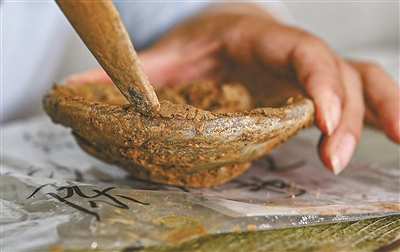
Group 1 - The China Academy of Social Sciences held a major achievement release conference, presenting six significant findings in archaeological and cultural heritage research [1][2] - A new integrated work paradigm for archaeological excavation and artifact protection was proposed, focusing on detailed excavation, emergency protection, and restoration research, leading to the scientific restoration of several precious artifacts [1] - Research established China's historical position as a major origin of the classical textile technique of warp-dyed fabric, based on findings from the Tang Dynasty [1] Group 2 - The identification of the earliest known ancient bayberry tree in China, dating back to the Liangzhu culture period around 2520 BC, was confirmed through scientific methods [2] - Innovative technologies such as satellite remote sensing and drone photography were utilized to study prehistoric water management systems, revealing how ancient civilizations managed water resources in response to climate change [2]
浙江宁波出土多个窑场混搭瓷片 实证宋元港口繁华贸易
Zhong Guo Xin Wen Wang· 2026-01-15 10:31
Core Viewpoint - The archaeological discovery at the Xiaojia Lane site in Ningbo, Zhejiang Province, reveals significant historical evidence of trade activities and cultural exchanges from the Han Dynasty to the Ming and Qing Dynasties, highlighting the importance of the Ningbo port in ancient maritime trade [1]. Group 1: Archaeological Findings - The Xiaojia Lane site consists of four cultural layers dating from the Han and Six Dynasties, Tang and Five Dynasties, Song and Yuan, to the Ming and Qing periods [1]. - Numerous artifacts were unearthed, including 477 complete or restorable specimens of pottery, porcelain, stone, copper, and wooden items, with a total of 251 archaeological remains such as pits, ditches, wells, house foundations, roads, and stone platforms [1]. Group 2: Trade Evidence - The discovery of various porcelain fragments from different kilns, including those from Fujian and Jiangxi, indicates the active trade at the Sanjiangkou port during the Song and Yuan periods, providing evidence for the study of port trade patterns [1]. - The Ningbo port was officially opened in 738 AD, marking the beginning of its significance in maritime trade [1]. Group 3: Historical Context - Artifacts from the Han and Six Dynasties primarily include wells, postholes, and ditches, with life-related items such as bowls, jars, and basins made of pottery and porcelain [1]. - A notable artifact is a brick inscribed with "Yongyuan Tenth Year" from the Eastern Han Dynasty, providing a clear chronological reference for the site's early remains [1].
我市多领域迎来“开门红”
Xi An Ri Bao· 2026-01-13 03:51
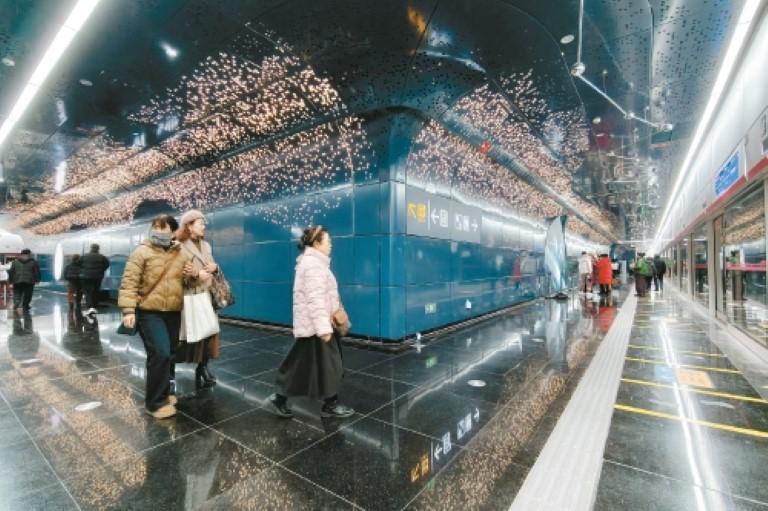
Group 1: Urban Development and Infrastructure - Xi'an Metro Line 15's Huangzipo Station has become a popular attraction due to its unique design featuring a deep blue dome adorned with "stars" and space-themed murals, creating a dreamlike travel environment [2] - Data shows that by 2025, the Xi'an port is expected to handle over 2 million inbound and outbound travelers, a nearly 50% increase year-on-year, with significant traffic from South Korea, Malaysia, and Russia [3] - The Xi'an Railway Bureau reported sending 2.636 million passengers during the five-day New Year holiday, averaging 527,000 passengers daily, highlighting improved travel experiences [3] - The construction of the largest high-speed railway station in Northwest China, Xi'an East Station, is progressing rapidly, aiming for completion in the first half of 2026 [3] Group 2: Cultural Initiatives - The "Tang Poetry Capital" initiative in Xi'an is advancing, with activities designed to integrate ancient poetry into contemporary life, including community and school interactions [5] - Recent archaeological findings in Xi'an, including the discovery of 19 Sassanian silver coins in a Tang Dynasty tomb, underscore the historical significance of the Silk Road and cultural exchanges [5] - The promotion of Xi'an's new space-themed metro on international social media has garnered attention, showcasing the city's modern developments [6] Group 3: Micro-Short Drama Industry - Xi'an's micro-short drama industry is thriving, producing approximately 1.2 to 1.3 times the output of Zhengzhou, with diverse themes including urban, family, and suspense genres [7] - The establishment of the first comprehensive short video service base in the western region of China in Xi'an marks a significant development in the industry, covering all aspects from creation to marketing [7] - Xi'an's micro-short dramas are gaining international traction, with productions reaching Southeast Asia and North America, and dedicated overseas filming bases being established [7]
让更多沉睡的文物“破土而出”
Hang Zhou Ri Bao· 2026-01-13 02:57
Core Viewpoint - Hangzhou has prioritized archaeological work as a core strategy for protecting cultural heritage while promoting urban development during the "14th Five-Year Plan" period, balancing the preservation of historical context with modern city growth [1]. Group 1: Archaeological Initiatives - Hangzhou has implemented a "pre-archaeology before land transfer" system, creating a coordinated archaeological framework across the city to support major projects and land reserve needs [2]. - Over the past five years, Hangzhou has undertaken 6,278 archaeological pre-emptive tasks, including 2,078 archaeological explorations and 251 excavations [2]. - In 2025, the city plans to accelerate archaeological pre-emptive work, with a target of 2,528 projects, marking a new record in workload [2]. Group 2: Significant Archaeological Discoveries - Notable archaeological sites have emerged, including the Wu-Yue Kingdom's Yijincheng, the Southern Song Dynasty's Lin'an City, and various ceramic sites, contributing to academic growth [3]. - Key archaeological projects such as the Southern Song Lin'an City and Southern Song Official Kiln have been recognized as "Top 100 Archaeological Projects of the Century" [3]. - Discoveries like the Lin'an Yijincheng city wall provide critical insights into historical urban planning and the relationship between humans and their environment [3]. Group 3: Cultural Heritage Preservation - Hangzhou has completed the restoration of 1,175 cultural relics and established archives for 6,086 relic specimens over the past five years, emphasizing the importance of heritage preservation [3]. - The city aims to enhance the techniques of relic restoration and innovate methods for utilizing archaeological findings, ensuring that historical narratives are accessible and appreciated [4].