稀土

Search documents
美国急寻稀土“替代品”,敲遍每个国家的门,欲打破中国垄断
Sou Hu Cai Jing· 2025-11-12 13:59
Core Insights - The U.S. is attempting to reduce its reliance on Chinese rare earth elements through various agreements and initiatives, indicating a strategic shift in its mineral sourcing policy [1][3][4] Group 1: Rare Earth Elements Overview - Rare earth elements, including lanthanum, cerium, and neodymium, are critical for modern industries and high-tech applications, such as smartphones, wind turbines, and military equipment [3] - China currently dominates the global rare earth supply chain, controlling over 80% of processing capacity and 90% of magnet production, which poses a strategic risk for the U.S. [3][4] Group 2: U.S. Domestic Challenges - The development of a domestic rare earth industry in the U.S. faces significant challenges, including environmental regulations and the need for substantial investment and time, potentially taking over a decade to achieve large-scale production [4] - The Mountain Pass mine in California, while being one of the largest rare earth mines, is constrained by pollution concerns and regulatory hurdles [4] Group 3: Global Cooperation and Agreements - The U.S. is seeking to diversify its supply chain by signing agreements with countries like Malaysia for processing capabilities and developing mineral resources in Central Asia, including tungsten in Kazakhstan [4] - These actions reflect a broader strategy to mitigate dependence on Chinese rare earths through international collaboration [4] Group 4: China's Competitive Advantage - China's advantages in the rare earth sector stem from its resource reserves and advanced processing technologies, making it difficult for the U.S. to find viable alternatives [6] - Recent Chinese export controls require U.S. companies to prove that their products are not used for military purposes, further complicating the U.S. efforts to reduce reliance on Chinese rare earths [6] Group 5: Future Outlook - The competition between the U.S. and China in the rare earth sector is expected to intensify, with the U.S. likely to accelerate domestic industry development and invest in alternative materials [6] - Despite U.S. efforts to diminish its dependence, China's dominant position in the rare earth market is unlikely to change in the short term [6]

一票否决权,中国的优势还不够大,还可以更大|地球知识局
Sou Hu Cai Jing· 2025-11-12 13:56
Core Points - The new export regulations on rare earths from China signify a strategic shift in the global resource competition, requiring foreign companies to adapt to Chinese standards [3][5][6] - China's dominance in the rare earth market is underscored by its control over over 90% of heavy rare earth resources and significant technological advantages in extraction and processing [9][17][28] - The recent regulations reflect a long-term strategy to enhance China's bargaining power in the global rare earth supply chain, which has historically been undervalued [41][55] Group 1: New Regulations - The new export control measures require all export license applications to be submitted in Chinese and in WPS format, a domestic software, rather than international formats like Word or PDF [3][5] - This regulatory change is part of a broader strategy to assert China's control over its rare earth resources and to ensure compliance from foreign companies [6][9] Group 2: Strategic Importance of Rare Earths - Rare earths are critical for modern industries, with applications in new energy, aerospace, and electronics, accounting for 70% of demand in emerging sectors [9][12] - The AI industry, in particular, relies heavily on rare earths for chip manufacturing, highlighting their strategic importance in technological advancements [12][56] Group 3: China's Resource Advantages - China possesses unique advantages in rare earth resources, being the only country with large-scale deposits of both light and heavy rare earths, controlling over 90% of heavy rare earth resources globally [17][26] - The Baiyun Obo mine in Inner Mongolia is noted as the world's largest light rare earth deposit, showcasing China's significant resource endowment [17][20] Group 4: Historical Context and Market Dynamics - China's rare earth industry has evolved from being a low-cost exporter to a more strategically controlled sector, especially after facing international legal challenges regarding export quotas [38][41] - The establishment of the China Rare Earth Group in 2021 aimed to consolidate the industry and enhance control over the supply chain, marking a significant shift in China's approach to rare earth management [52][55] Group 5: Challenges and Future Directions - Despite its strengths, China still faces challenges in high-end applications and needs to improve in areas like green mining and waste recovery [58][61] - The lack of a unified "Chinese price standard" in the international market indicates that China must continue to innovate and strengthen its position in high-value segments of the rare earth industry [61]
中国松绑稀土禁令,美国更寝食难安了,狂敲每个国家大门找稀土
Sou Hu Cai Jing· 2025-11-12 12:45
2025年11月,中国宣布暂停部分关键矿产出口限制,本以为美国该松口气了,结果反倒更焦虑了。 中国松绑,亮出一张"阳谋牌",让对手看得见,却摸不透。这一招让华盛顿坐立难安,全球那些原本指 望"去中国化"的稀土方案,如今一个个被打回原形。 美国喊了多年要摆脱中国稀土依赖,现实却是,门敲得越多,越发现离不开中国。问题来了,中国这 次"松绑",究竟是缓和,还是下一步更大的布局? 主动权还在中方手里 中国这次宣布暂停出口限制的,是镓、锗、锑、石墨这些关键矿产,不说取消,只说暂停,意思就是要 谈可以,但主动权还得握在中方手里。 从开采到提纯,每一步都是技术活。而美国,别说精炼,连开采都常年依赖进口。 这次稀土松绑,是在中国和美国刚刚在吉隆坡举行完贸易会谈之后宣布的。中方换来的是美方在部分关 税和技术出口限制上的"松一松"。 中方的姿态很清楚:可以谈,但要看诚意。禁令暂停一年,就是一年,不多不少,后面怎么走,看谈的 怎么样。 美国的焦虑,是被现实打醒的 特朗普政府一边高调宣布"去中国化",一边悄悄加紧从中国"曲线采购",这种操作说穿了就是两头堵。 美国国内的稀土矿不是没有,但开采成本高,环保约束多,几乎没有企业愿意真投进 ...
李迅雷专栏 | 把握“十五五”结构性机会,四大配置主线浮现
中泰证券资管· 2025-11-12 11:32
Global Landscape - The strategic interaction and policy choices between China and the US significantly impact global trade, industrial chain layout, and capital flows [4] - China is estimated to account for over 40% of global manufacturing capacity, reinforcing its influence in trade and industry [4] - The debt-driven growth model poses challenges but also reflects China's substantial policy resources and market development potential [4] Chinese Economy - The current economic situation is characterized as "high at the front and low at the back," with a GDP growth rate of 5.2% in the first three quarters, making the annual target achievable [6] - Consumption grew by 4.5%, supported by policies like "old-for-new" exchanges, while investment saw a decline of 0.5% [6] - Exports were a highlight, increasing by 6.1%, particularly strong in emerging markets like Africa and ASEAN [6] "14th Five-Year" Plan Highlights - The plan emphasizes accelerating "technological self-reliance," aiming to build a modern industrial system with advanced manufacturing as its backbone [8] - There is a strong push for consumption and increased social welfare spending, particularly in response to an aging population [8] - The establishment of a nationwide unified market is prioritized, optimizing resource allocation in energy, public services, and data [8] Asset Allocation Strategies - In a low-interest-rate environment, high-dividend assets are highlighted as scarce and valuable, with Hong Kong stocks offering a dividend rate 30% higher than A-shares [11] - Sectors like military, gold, and rare earths are recommended as strategic allocations in response to global geopolitical tensions [11] - Focus on AI technology sectors, including computing power and robotics, is essential as they represent a significant investment opportunity [11] - New consumption trends driven by younger demographics and single-person economies present emerging investment opportunities [11]
美国又被卡脖子了?中国开始恢复稀土供应,但必须答应一个条件
Sou Hu Cai Jing· 2025-11-12 10:46
Core Insights - China has announced a one-year suspension of export controls on rare earth metals to the U.S., but with additional conditions aimed at preventing military applications [1][5][21] - The U.S. heavily relies on China for rare earth imports, with approximately 80% of its imports coming from China in 2022, raising concerns about supply chain vulnerabilities [3][19] - China's new export mechanism includes a "Verified End User" system to screen buyers based on their intended use, particularly targeting military applications [7][9][11] Group 1: Strategic Importance of Rare Earths - Rare earths are not just resources but strategic assets, with China controlling nearly 70% of global mining and over 90% of refining capacity [1][3] - The shift in China's export policy reflects a strategic adjustment in the context of global power dynamics, moving from open exports to more controlled and targeted releases [3][5] Group 2: New Export Mechanism - The "Verified End User" system will categorize buyers based on their usage, allowing exports only to those who can prove they are not military suppliers [7][9] - This mechanism aims to prevent military-related exports while still allowing civilian use, thus maintaining a balance between trade negotiations and national security [9][11] Group 3: Implications for Global Trade - The adjustment in China's rare earth policy signifies a deeper upgrade in resource diplomacy, transitioning from simple export approvals to a more complex user classification management [11][19] - This could lead to a new set of global export control rules, affecting not only rare earths but potentially other strategic materials like lithium and cobalt [13][17] Group 4: Geopolitical and Economic Impact - The new conditions for rare earth exports signal a shift in China's role from a rule-taker to a rule-maker in global trade, establishing its own regulatory framework [19][21] - Companies involved in both military and civilian sectors may face increased compliance pressures, necessitating business restructuring to continue sourcing from China [17][19]

国运来了挡都挡不住!中国发现“可再生”稀土矿,反制再添新筹码
Sou Hu Cai Jing· 2025-11-12 08:39
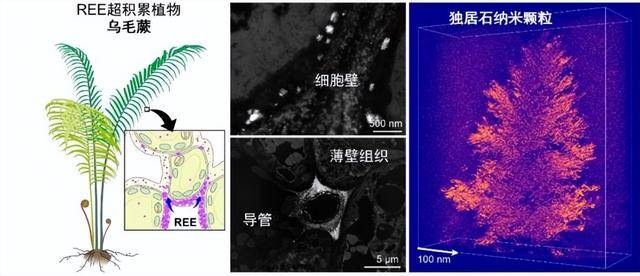
不出意外的话,西方这次肯定又要"破防了"! 11月7日《中国新闻网》报道:中国团队首次在"蕨类植物中"发现"稀土成矿"现象,专家表示:这一发 现或许有助力稀土可持续利用。 在美国以及其他国家还未完全开发出稀土产业链的当下,中国再次迈出一大步,真是"国运来了挡都挡 不住! 专家发现的蕨类植物 稀土未来可能是种出来的? 更关键的是,也这一过程在常温常压下完成,没有放射性,不带污染,这是传统稀土矿所无法比拟的优 势。 稀土,一直被称为"工业维生素",应用于电动汽车、风电、芯片、导弹等几乎所有高科技领域。 如今全球对稀土的依赖与日俱增,但开采过程带来的生态破坏也越来越难以忽视,传统稀土矿的开采不 仅伴生放射性元素,还会留下大量酸性尾矿和重金属污染,治理代价高昂。 这也是为什么中国团队(朱建喜团队)的发现如此"有杀伤力",朱建喜团队发现的蕨类植物名叫"乌毛 蕨"。 乌毛蕨不是什么稀罕植物,在南方很多山区都能见到,可这次,它的"本领"被发现了:能像"吸尘器"一 样,从土壤中高效吸收稀土离子,并在体内以"镧独居石"形式,自我"成矿"。 乌毛蕨分布地区 过去,我们的资源得靠"挖",现在,可能靠"种"就能产出,这背后的潜力非常 ...
研报掘金丨国元证券:予盛和资源“增持”评级,业绩有望持续增长
Ge Long Hui A P P· 2025-11-12 07:59
Core Viewpoint - Shenghe Resources achieved a significant increase in net profit attributable to shareholders, with a year-on-year growth of 748.07% for the first three quarters of 2025, reaching 788 million yuan [1] - The rise in rare earth product prices has driven strong performance, and the company's global resource layout enhances upstream resource security [1] Financial Performance - For Q3 2025, the net profit attributable to shareholders was 411 million yuan, reflecting a year-on-year increase of 154.48% [1] - The company's PE valuations based on the latest stock price are 46.30, 43.54, and 40.30 times for the respective periods [1] Resource Development - The Tajiri project has a resource volume of 268 million tons and is expected to commence production by the end of the year [1] - Progress on the Madagascar heavy sand mine is proceeding smoothly [1] Business Strategy - Zircon products are widely used in military and high-end manufacturing sectors, while titanium resources hold strategic value [1] - The company is forming a dual-line collaborative development pattern between rare earth and zircon-titanium businesses [1] Industry Outlook - The complete rare earth industry chain combines overseas high-quality resources with domestic quality industries, ensuring global resource layout and long-term supply security [1] - With the increase in production and stabilization of rare earth prices, the company's performance is expected to continue growing [1]

美国已经追不上中国?华尔街巨头得出结论:中国的重心正在改变
Sou Hu Cai Jing· 2025-11-12 02:57
Core Insights - The narrative surrounding China's economic growth has shifted, with trade with Belt and Road Initiative countries now accounting for nearly half of China's total trade, up from just over 30% a few years ago [2] - China's export growth is increasingly driven by emerging markets, with a significant transformation in export structure from low-value products to electric vehicles, photovoltaic equipment, energy storage products, and AI software systems [4][6] - The Regional Comprehensive Economic Partnership (RCEP) has led to a significant reduction in tariffs, boosting trade within the region to over 2.5 trillion RMB [7] Trade Dynamics - U.S. companies are facing challenges in reducing reliance on China, as many products shipped from Southeast Asia and Mexico are still produced by Chinese firms operating overseas [9] - China has shifted its soybean imports from the U.S. to Brazil and Argentina, highlighting the strategic importance of its agricultural and technological sectors [11] - China's semiconductor self-sufficiency is projected to reach over 30% by 2025, as the country accelerates its domestic R&D efforts [11] Economic Resilience - China's economy is showing resilience through internal vitality, with GDP growth of 5.2% year-on-year in the first three quarters of the year [15] - The manufacturing sector is evolving, with high-tech manufacturing accounting for 16.7% of industrial value added, and green energy consumption increasing by approximately 1.7 percentage points [17] - The "new economy" (new industries, new business models) is becoming a significant growth engine, with a projected growth rate of 6.7% in 2024, outpacing overall GDP growth [19] Global Economic Landscape - The global economic landscape is undergoing a transformation, with the dominance of the U.S. dollar gradually weakening, while China's manufacturing and market potential become more pronounced [21] - China's competitive edge is bolstered by its manufacturing resilience, renewable energy advantages, and market potential, positioning it as a leader in the new global economic arena [21]

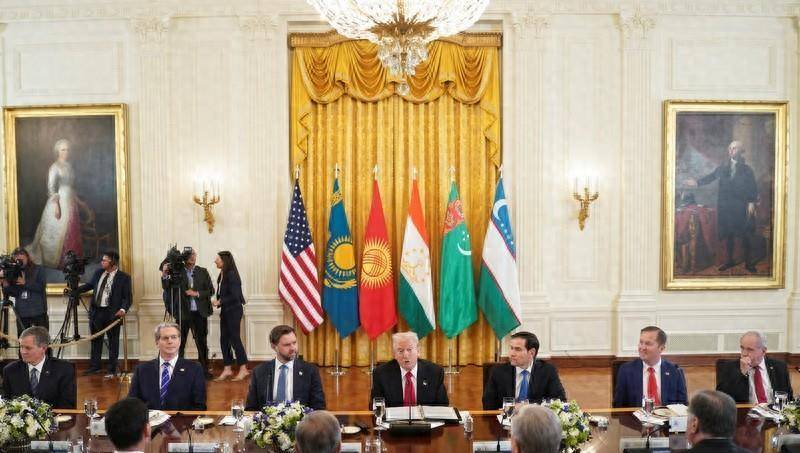
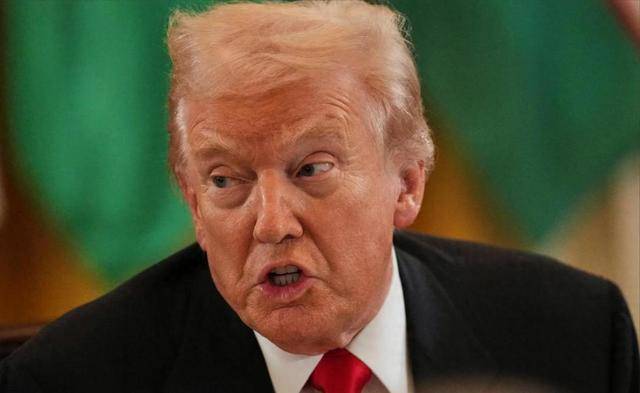
特朗普“完全疯了”!妄图在我们眼皮子底下,动摇中国的稀土地位!
Sou Hu Cai Jing· 2025-11-11 14:16
Group 1 - The U.S. government is dissatisfied with China's dominant position in the rare earth sector and is seeking new supply channels, particularly focusing on Myanmar after China's adjustment of its export policies [1][2] - The Trump administration is considering two plans to weaken China's control over the rare earth supply chain: one involves facilitating peace between the Myanmar military government and the Kachin Independence Army to engage in rare earth development, while the other aims to bypass the central government and directly collaborate with the Kachin Independence Army [1][2] Group 2 - Myanmar's rare earth production has significantly increased over the past five years, with projections indicating that over half of China's rare earth imports will come from Myanmar in 2024, presenting an opportunity for the U.S. [2][3] - However, the transportation conditions in Myanmar's rare earth mining areas are poor, and improving infrastructure will be costly. Additionally, China's close economic ties with Myanmar allow Chinese companies to provide convenient processing services [2][3] - The U.S. intervention plan poses significant challenges as it touches on China's geopolitical security concerns, and the global separation capacity for rare earths is predominantly located in China, representing a long-term technological barrier [2][3] - China needs to maintain its technological leadership and improve its industrial chain to safeguard its strategic position in the rare earth market [2][3]
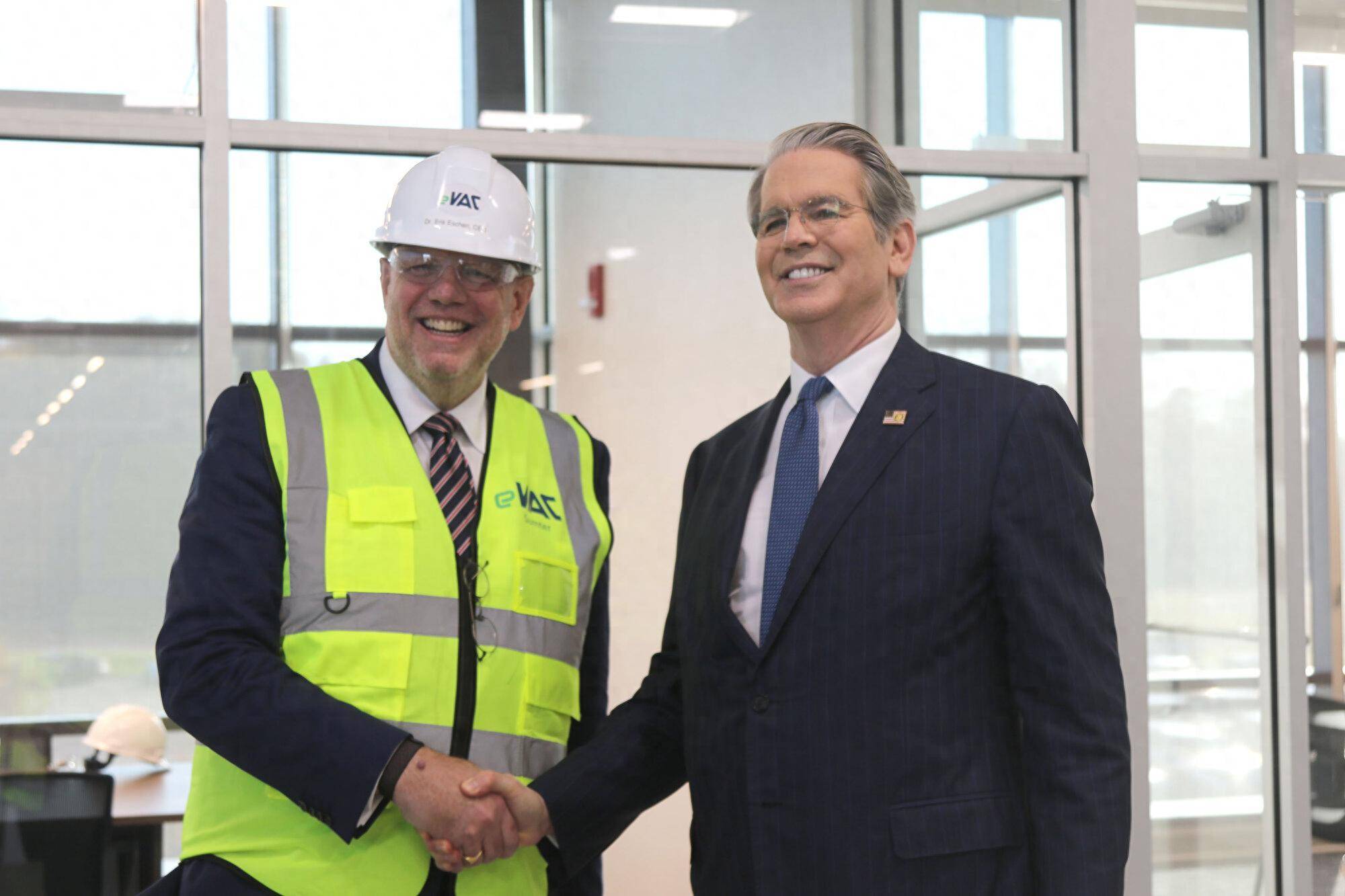
美国第一块稀土磁铁诞生,贝森特欢呼雀跃:再不怕中国卡脖子了
Sou Hu Cai Jing· 2025-11-11 14:05
Core Viewpoint - The announcement of the first rare earth magnet produced in the U.S. in 25 years is seen as a significant breakthrough for American supply chains, reducing reliance on China [3][5] Group 1: Announcement and Implications - U.S. Treasury Secretary Besant proudly announced the production of a rare earth magnet, emphasizing it as a key breakthrough for American supply chains and independence from China [3] - The magnet is crucial for various technologies, including AI chips, fighter jets, missile systems, and consumer electronics, indicating its importance in future industries [3] - Besant attributed the achievement to the Trump administration, suggesting a shift towards self-sufficiency in critical mineral resources [3] Group 2: Domestic Reactions and Criticism - The announcement faced skepticism from mainstream media, which criticized it as a political stunt rather than a genuine technological achievement [5] - Experts questioned the credibility of Besant, suggesting that the magnet sample may not have undergone rigorous testing and could merely be a model [5][7] - Concerns were raised about the urgency of the U.S. government to break China's technological barriers, leading to potential exaggerations in claims [5][7] Group 3: Production Challenges - The company involved, eVAC, plans to start production of sintered neodymium-iron-boron magnets in 2026, indicating a long road ahead before mass production [7][9] - The initial production target is only 1,200 metric tons, which is considered negligible in the global rare earth magnet market and insufficient for U.S. industrial and military needs [9] - The factory's workforce of 800 workers is viewed as inefficient within the context of American manufacturing standards [9] Group 4: China's Position - China's rare earth policies are characterized as consistent and focused on national defense rather than an intention to restrict others [9][12] - The Chinese perspective emphasizes that rare earth resources should serve civilian purposes and improve global living standards, contrasting with the U.S. narrative [12] - The announcement is perceived as a politically calculated move rather than a transformative technological revolution, highlighting U.S. strategic anxieties and challenges in revitalizing domestic manufacturing [12]