
物流

Search documents
1至11月物流运行总体平稳 服务质效持续优化
Yang Shi Wang· 2025-12-30 16:29
Core Insights - The China Logistics and Purchasing Federation reported that the total social logistics value in the country reached 331.2 trillion yuan from January to November, reflecting a year-on-year growth of 5.0% [1] Group 1 - The total social logistics value indicates the overall value of physical goods in logistics operations [1] - The growth rate of 5.0% suggests a positive trend in the logistics sector for the year [1]
资金融贯“天地人” 服务助力新发展——湖南银行业精准赋能新质生产力调查
Zheng Quan Ri Bao Zhi Sheng· 2025-12-30 16:07
本报记者 杨洁 在湖南省这片创新热土上,新质生产力正以前所未有的速度茁壮成长。从仰望星空的北斗产业,到深耕 大地的绿色物流枢纽和地热系统,再到投资于人的科创企业与人才培育,一场以金融赋能高质量发展的 生动实践正在三湘大地全面展开。 近期,《证券日报》记者跟随中国银行业协会到湖南省实地调研了解到,当地金融机构正以精准、创 新、前瞻性的金融服务,融贯"天地人"三大维度,为培育新质生产力注入源源不断的金融活水。 天空:北斗闪耀 金融赋能空天信息新赛道 "复移小凳扶窗立,教识中天北斗星。"自古以来,北斗七星便是中国人辨明方向、追寻时空的指引。如 今,北斗之光已悄然融入人们的寻常生活,无需仰首寻觅,近在身边的中国北斗产业,正以璀璨科技之 辉照亮千行百业。 北斗产业是指基于北斗全球卫星导航系统的产业。近年来,我国持续推动北斗与5G通信、大数据、物 联网等新兴技术领域深度融合,全面推动北斗系统规模应用示范,在重点行业、区域创新应用上进行示 范引导,发展形成更多"北斗+"和"+北斗"的新产业新业态新模式。湖南作为北斗技术创新的引领区,其 发布的《湖南省北斗产业发展规划(2023—2027年)》提出"力争到2027年全省北斗产 ...

“之江同心”赋能区域发展 投资近10亿元项目落地浙江衢江
Xin Lang Cai Jing· 2025-12-30 15:02
Core Insights - The article highlights the "Zhijiang Tongxin Economic Roundtable Meeting" and the Modern Service Industry Innovation Development Conference held in Qujiang District, Quzhou, Zhejiang, aimed at promoting high-quality regional economic development [1] - Three major projects were signed during the conference, with a total investment of nearly 1 billion yuan, which will inject new vitality into the development of modern service industries in Qujiang [1] Group 1: Economic Development Initiatives - The conference focused on gathering wisdom and strength from a unified front to drive regional economic growth [1] - The signed projects include the Zhejiang-Fujian-Jiangxi-Anhui Logistics Demonstration Park, Yunport IoT New Energy Supply Chain and Supercharging Station, and JLcool Refrigeration [1] Group 2: Service Industry Growth - Qujiang District has emphasized innovation in the service industry, developing four major sectors: port area, short dramas, commerce, and cultural tourism, establishing a robust framework for modern service industries [1] - Over the past three years, the average annual growth rate of the service industry's added value in the district has reached 6.2% [1]
裕程物流拟折价约19.70% 配售最多6000万股配售股份 净筹1530万港元
Zhi Tong Cai Jing· 2025-12-30 14:44
Core Viewpoint - The company, Yucheng Logistics (08489), has announced a conditional placement agreement to issue up to 60 million shares at a price of HKD 0.265 per share, representing a discount of approximately 19.70% from the market price of HKD 0.330 at the time of the agreement [1] Group 1: Placement Details - The placement will be made to no fewer than six independent third-party investors [1] - The maximum 60 million shares represent about 20.00% of the company's existing issued share capital as of the announcement date, and approximately 16.67% of the enlarged issued share capital post-placement [1] Group 2: Financial Implications - The estimated total gross proceeds from the placement are approximately HKD 15.90 million, with net proceeds expected to be around HKD 15.30 million after deducting applicable costs and expenses [1] - The net proceeds will be used for general working capital, including employee costs, professional fees, rent payments, and general administrative and operational expenses [1]
裕程物流(08489)拟折价约19.70% 配售最多6000万股配售股份 净筹1530万港元
智通财经网· 2025-12-30 14:38
Core Viewpoint - The company,裕程物流, has announced a conditional placement agreement to issue up to 60 million shares at a price of HKD 0.265 per share, representing a discount of approximately 19.70% from the market price on the date of the agreement [1] Group 1 - The placement will be made to no fewer than six independent third-party investors [1] - The maximum 60 million shares represent about 20.00% of the company's existing issued share capital as of the announcement date, and approximately 16.67% of the enlarged issued share capital post-placement [1] - The estimated total gross proceeds from the placement are approximately HKD 15.9 million, with net proceeds expected to be around HKD 15.3 million after deducting applicable costs and expenses [1] Group 2 - The net proceeds from the placement are intended to be used for general working capital of the group, including employee costs, professional fees, rent payments, and general administrative and operational expenses [1]
12月30日重要资讯一览
Zheng Quan Shi Bao Wang· 2025-12-30 13:52
Group 1 - The National Development and Reform Commission and the Ministry of Finance have allocated 62.5 billion yuan for the first batch of special long-term bonds to support the consumption of old goods replacement in 2026 [2] - The new policy will expand support for equipment updates in various sectors, including elderly care facilities and fire rescue equipment, to better meet public needs [2] - The Ministry of Industry and Information Technology aims to enhance the digital transformation of the automotive industry by 2027, with significant improvements in manufacturing capabilities and productivity [5] Group 2 - The Ministry of Finance and the State Taxation Administration announced a new VAT policy for personal housing sales, effective January 1, 2026, with a 3% tax rate for properties sold within two years and exemption for those sold after two years [4] - The Beijing Municipal Health Commission has introduced measures to support the innovation and development of the AI industry in healthcare, aiming to establish a comprehensive AI support system by 2027 [6] - Companies like Tianpu Co. have seen significant stock price increases, with a reported rise of 718.39% from August 22 to December 30, leading to a stock suspension for verification [8]

云铝股份(000807.SZ):拟向中铝物流转让云铝物流51%股权
Ge Long Hui A P P· 2025-12-30 13:33
格隆汇12月30日丨云铝股份(000807.SZ)公布,为推动云铝物流由企业物流向现代物流转型,助力云铝 股份及所属企业降低物流运输成本,云铝股份将向中铝物流转让云铝物流51%股权。本次转让完成后, 云铝股份持有云铝物流49%股权,云铝物流由中铝物流控股,未来将转型为集社会化运输服务、物流园 区开发运营、国际物流等为一体的综合型现代物流企业,进而提升云铝物流整体企业价值。根据中威正 信(北京)资产评估有限公司(简称"中威正信"或"评估机构")出具的资产评估报告,本次转让云铝物 流51%股权交易对价为人民币26,384.34万元。本次转让的标的企业资产评估报告正在履行国资备案程 序,公司最终转让价格将按照经国资备案的评估价值确定。 ...

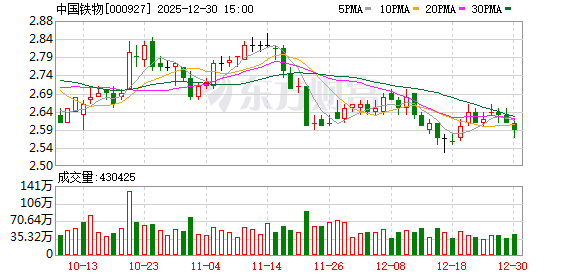
中国铁物:担保不存在逾期
Zheng Quan Ri Bao· 2025-12-30 12:05
证券日报网讯 12月30日,中国铁物发布公告称,截至本次公告披露日,公司为下属子公司申请银行授 信提供担保余额为0,控股子公司对合并报表范围内单位的担保余额为1100万元。上述担保不存在逾 期、涉及诉讼等情形。 (文章来源:证券日报) ...

嘉诚国际:2025年9月30日股东人数为13235户
Zheng Quan Ri Bao Wang· 2025-12-30 11:49
证券日报网讯12月30日,嘉诚国际(603535)在互动平台回答投资者提问时表示,公司每季度末通过定 期报告披露股东人数,2025年9月30日股东人数为13235户。 ...

六部门发文推动现代物流标准化建设 引领物流企业数字化转型
Zheng Quan Ri Bao Wang· 2025-12-30 11:27
Core Viewpoint - The issuance of the "Key Work Plan for Modern Logistics Standardization (2025-2027)" by six government departments is a significant step towards the high-quality development of China's logistics industry and digital transformation [1][2]. Group 1: Logistics Infrastructure Enhancement - The Work Plan emphasizes the development of standards for key logistics infrastructures such as national logistics hubs, logistics parks, and warehousing and distribution centers, aiming to improve connectivity and establish a modern logistics operation system [1]. - Standards for national logistics hubs are expected to clarify indicators for multi-modal transport efficiency and emergency material storage capacity, enhancing logistics timeliness and flexibility [1]. Group 2: International Competitiveness - The standardization of logistics infrastructure is crucial for China's logistics industry to align with international standards, thereby improving its competitiveness in the global logistics market [2]. - The Work Plan is anticipated to enhance the overall competitiveness of the logistics industry and facilitate its integration into the global logistics system, providing new development opportunities for logistics companies [2]. Group 3: Quality Improvement in Logistics Services - The Work Plan aims to accelerate the development of standards related to cold chain logistics, pharmaceutical logistics, multi-modal transport, and safety standards for hazardous goods, thereby supporting the resilience and safety of supply chains [3]. - The emphasis on digital transformation and the adoption of advanced technologies like big data, AI, and blockchain is expected to enhance operational efficiency and reduce costs for logistics companies, making them more attractive to investors [3].