
农机

Search documents
从家电到农机,“以旧换新”点燃国庆中秋假期消费热潮
Yang Shi Xin Wen Ke Hu Duan· 2025-10-03 03:03
Group 1 - The government has allocated 69 billion yuan for the fourth batch of subsidies to support the "old for new" consumption policy, which is expected to boost consumer spending during the National Day and Mid-Autumn Festival holidays [1] - Various regions have launched diverse "old for new" promotional activities, significantly increasing foot traffic in retail stores, with some locations reporting over a 100% increase compared to regular weekends [2][3] - The "old for new" policy has expanded its coverage to include a wider range of products, facilitating consumer participation and promoting the adoption of energy-efficient appliances, with over 80% of sales in some stores being high-efficiency products [2] Group 2 - The automotive and agricultural machinery markets are experiencing a sales surge during the "golden September and silver October" season, with local governments and banks offering combined subsidies exceeding 100 million yuan [3] - In Hubei, a comprehensive subsidy package for car purchases includes various incentives, potentially saving consumers up to 30,000 yuan on a new energy vehicle [3] - The agricultural machinery sector is also benefiting from the "old for new" policy, with sales increasing by 30% compared to previous years, as farmers take advantage of the subsidies to upgrade their equipment [5] Group 3 - The "old for new" initiative is effectively stimulating consumption among the elderly demographic, with tailored products and services being offered to meet their needs [5] - In Jinan, a senior-friendly economic center has seen a 40% increase in inquiries about subsidized products for the elderly, indicating a growing market for age-appropriate goods [6] - The government has allocated 300 billion yuan in long-term special bonds for the "old for new" subsidies, with 330 million people applying for these benefits from January to August, resulting in over 2 trillion yuan in related sales [6]
从家电到农机 “以旧换新”点燃假期消费热潮
Yang Shi Xin Wen Ke Hu Duan· 2025-10-02 10:59
Group 1 - The government has allocated 69 billion yuan for the fourth batch of long-term special bonds to support the "old for new" consumption policy, which has been distributed to various regions before the National Day and Mid-Autumn Festival holidays [1] - The "old for new" policy has significantly boosted consumer activity during the holidays, with some stores reporting a more than 100% increase in foot traffic compared to regular weekends [2] - In Anhui province, over 80% of energy-efficient appliances sold during the holiday period were part of the "old for new" program, indicating a shift towards smarter and greener products [2] Group 2 - In Jiangsu province, the "old for new" policy was implemented directly at popular markets, allowing consumers to save substantial amounts on new appliances, with one customer saving 12,000 yuan on a total purchase of 60,000 yuan [3] - The automotive and agricultural machinery markets have also seen a surge in sales due to combined subsidies from the government, banks, and enterprises, with some regions reporting a 40% increase in foot traffic at car dealerships [4] - In Hunan province, farmers are taking advantage of the "old for new" policy to upgrade their machinery, with one farmer receiving over 26,000 yuan in subsidies for purchasing new equipment [5][6] Group 3 - The "old for new" initiative has effectively activated the consumption potential of the elderly demographic, with targeted promotions and subsidies for products catering to their needs [7] - In Shandong province, a 30% subsidy is available for elderly-friendly products, leading to a 40% increase in inquiries at a local senior economic center [7] - The national government has allocated 300 billion yuan for "old for new" subsidies, with 330 million people applying for these benefits from January to August, resulting in over 2 trillion yuan in related sales [8]
假期消费火热!“国补+折扣+优惠”礼包加码发力激活“金九银十”消费新潜力
Yang Shi Wang· 2025-10-02 05:59
Core Insights - The Chinese government has allocated 69 billion yuan for the fourth batch of "trade-in" subsidies to stimulate consumer spending during the National Day and Mid-Autumn Festival holidays in 2025 [1] - The implementation of "trade-in" policies has significantly boosted consumer activity, with some retail locations experiencing a doubling of foot traffic compared to regular weekends [1][3] - The combination of government subsidies, bank loans, and corporate discounts has created a robust incentive structure for consumers to upgrade their appliances and vehicles [4][6] Consumer Behavior - In Jiangsu's Taizhou, the "trade-in" policy was directly applied at local markets, leading to significant purchases of home appliances, with one consumer saving 12,000 yuan on a total purchase of 48,000 yuan [3][4] - The integration of multiple discounts has lowered the barriers for consumers to upgrade to energy-efficient and smart products, with over 80% of sales in some areas being energy-efficient appliances [3] Automotive and Agricultural Markets - The automotive market is experiencing a peak sales season, with various local governments offering combined subsidies that exceed 100 million yuan to encourage new vehicle purchases [4][6] - In Hunan, the "trade-in" policy has led to a 30% increase in agricultural machinery sales compared to previous years, as farmers take advantage of the incentives to upgrade their equipment [13] Senior Consumer Segment - The "trade-in" initiative has also targeted the elderly demographic, with tailored activities and subsidies to stimulate spending among seniors [14] - In Jinan, seniors can receive up to 3,000 yuan in subsidies for purchasing home modifications and safety equipment, resulting in a 40% increase in inquiries about these products [15] Overall Impact - By August 2025, 330 million people had applied for "trade-in" subsidies, leading to over 2 trillion yuan in related sales, indicating a strong market response to the government's initiatives [15]

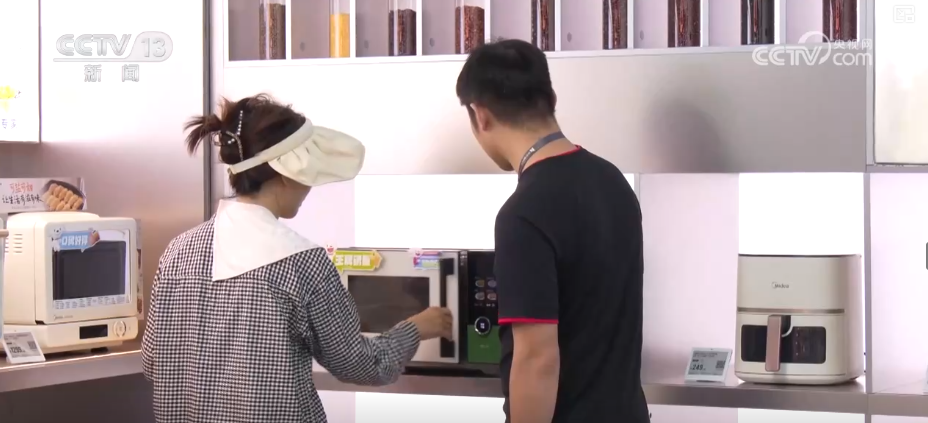
从家电到农机 “以旧换新”点燃国庆中秋假期消费热潮
Yang Shi Xin Wen· 2025-10-02 01:34
Group 1 - The government has allocated 69 billion yuan for the fourth batch of subsidies to support the "old for new" consumption policy, which has been distributed to various regions before the National Day and Mid-Autumn Festival holidays [1] - The implementation of the "old for new" policy has significantly boosted consumer activity during the holiday, with some stores reporting a doubling of foot traffic compared to regular weekends [2] - In Anhui, over 80% of energy-efficient appliances sold during the holiday were part of the "old for new" program, indicating a shift towards smarter and greener products [2] Group 2 - In Jiangsu, the "old for new" policy was directly implemented at popular consumer markets, allowing consumers to save significant amounts on their purchases, with one customer saving 12,000 yuan on a total purchase of 60,000 yuan [3] - Various regions have combined national subsidies with local incentives, resulting in comprehensive consumer benefits, such as in Hubei where total discounts for a new energy vehicle can reach nearly 30,000 yuan [4] - The agricultural machinery market has also seen increased sales, with one dealer reporting a 30% rise in sales due to the "old for new" policy [6] Group 3 - The "old for new" initiative has effectively activated the consumption potential of the elderly demographic, with targeted promotions and subsidies for age-appropriate products [7] - In Shandong, subsidies for elderly-friendly products have led to a 40% increase in inquiries at a senior economic center [7] - The national budget for "old for new" subsidies has reached 300 billion yuan, with over 330 million people applying for these subsidies, driving sales exceeding 2 trillion yuan from January to August [8]
稳中求进每月看 | 金秋启航势正劲——9月全国各地经济社会发展观察
Xin Hua She· 2025-09-29 13:45
Group 1: Agricultural Production - The autumn harvest season is crucial, with various regions working together to ensure a bountiful grain harvest, supported by favorable conditions for both summer and autumn crops [6] - The application of smart agricultural management systems is enhancing productivity, allowing farmers to monitor crop conditions and soil health in real-time, thus reducing potential losses [5] - Local governments are implementing measures to improve grain yield and quality, such as introducing better seeds and promoting efficient farming practices [6] Group 2: Intelligent Economy Development - The recent exhibitions, including the World Intelligent Industry Expo, reflect new trends in the intelligent economy, showcasing advancements in artificial intelligence and its integration into various sectors [8] - The number of artificial intelligence companies in China has surged from over 1,400 to more than 5,000 in five years, indicating rapid growth in this sector [9] - AI applications are becoming increasingly prevalent, with innovations such as multilingual interaction platforms and AI medical consultations being showcased at various trade fairs [9] Group 3: Consumer Policy Initiatives - New fiscal policies, including personal consumption loan interest subsidies, are being implemented to stimulate consumer spending and support economic growth [12] - Local governments are launching initiatives such as vehicle trade-in subsidies and consumer vouchers to boost spending in specific sectors [13] - A coordinated effort across various levels of government aims to enhance consumer confidence and drive economic activity [12][13] Group 4: Service Industry Growth - The "2025 China Service Industry 500" report indicates that the total revenue of the top service companies has reached 51.1 trillion yuan, marking a significant milestone in the sector's growth [15] - Various local policies are being introduced to support the innovation and development of the service industry, particularly in areas like technology and healthcare [16] - The service sector is evolving with new business models and increased integration with manufacturing, contributing to economic transformation [15][16]
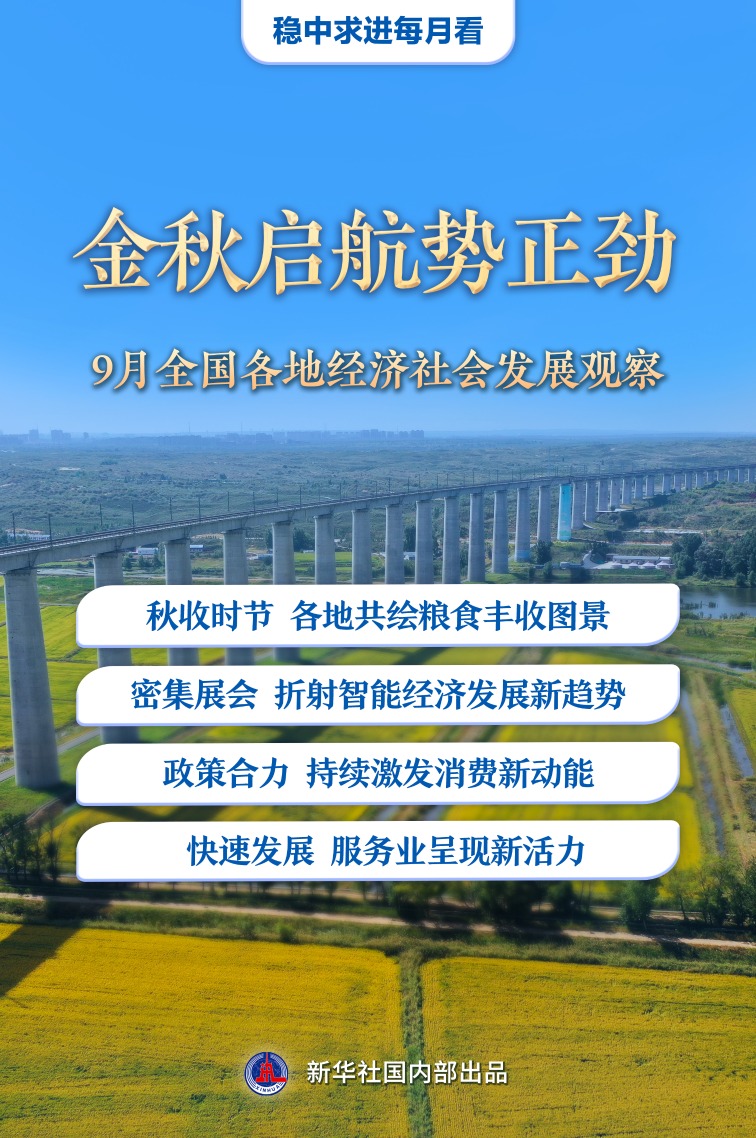
金秋启航势正劲——9月全国各地经济社会发展观察
Xin Hua She· 2025-09-29 13:38
Group 1: Agricultural Production - The autumn grain production is entering a critical phase, with various regions actively working to ensure a bountiful harvest, supported by advanced agricultural technologies such as IoT, big data, and AI [2][3] - National summer grain production reached 299.48 billion jin, with autumn grain area showing steady growth, indicating a solid foundation for a good harvest [2] - Local governments are implementing measures to enhance grain yield and quality, including introducing good seeds and improving disaster prevention strategies [2] Group 2: Intelligent Economy Development - The rapid development of the artificial intelligence industry is reflected in various exhibitions, showcasing new technologies and applications that are integrating into all sectors of the economy [4][5] - The number of AI companies in China has surpassed 5,000, growing from about 1,400 in five years, indicating a significant increase in innovation and entrepreneurship in this sector [4] - Smart products are increasingly being adopted across different industries, enhancing operational efficiency and user experience [4] Group 3: Consumer Policy Initiatives - Recent fiscal policies, including personal consumption loan interest subsidies, are aimed at stimulating consumer spending and supporting economic growth [6][7] - Various local governments are launching initiatives to promote consumption, such as expanding subsidies for vehicle and appliance upgrades, and providing consumer vouchers [7] - These policies are designed to unleash consumer potential and drive economic development [7] Group 4: Service Industry Growth - The "2025 China Service Industry Top 500" report indicates that the total revenue of these enterprises has reached 51.1 trillion yuan, with average revenue exceeding 100 billion yuan for the first time [8] - The service industry is transitioning to a new phase of high-quality development, with new business models and increased integration with manufacturing [8][9] - Local governments are implementing policies to support the growth of the service sector, contributing to economic growth and structural optimization [8][9]
吉峰科技:9月28日召开董事会会议
Mei Ri Jing Ji Xin Wen· 2025-09-28 08:35
Group 1 - The core point of the article is that Jifeng Technology announced a board meeting to discuss a proposal for bank credit application for its subsidiary, indicating ongoing financial activities and strategic planning [1] - For the fiscal year 2024, Jifeng Technology's revenue composition is as follows: agricultural machinery circulation accounts for 92.33%, agricultural machinery manufacturing accounts for 5.88%, and cargo vehicles account for 1.8% [1] - As of the report, Jifeng Technology has a market capitalization of 4.2 billion yuan [1]

“一带一路”俄罗斯农机市场发展环境及投资建议评估预测报告(2025版)
Sou Hu Cai Jing· 2025-09-28 02:37
Group 1 - The agricultural machinery industry is experiencing growth driven by urbanization, labor shortages, and the need for mechanization and automation in agriculture [2][3][4] - China's urbanization rate is projected to rise from 49.95% in 2010 to 67.00% in 2024, while the proportion of the population aged 65 and above is expected to increase from 8.90% to 15.60% during the same period, exacerbating labor shortages in agriculture [3] - The "14th Five-Year Plan" emphasizes enhancing comprehensive grain production capacity, marking the first time food security strategy is included in a five-year plan [2][4] Group 2 - The construction of high-standard farmland and the increasing mechanization rate in agriculture are laying the foundation for agricultural technology development [4][5][6] - The area of land transfer in China has grown from 2.7 million acres in 2012 to over 5.55 million acres in 2021, indicating a trend towards larger-scale agricultural production [5] - The government aims to build 10.75 million acres of high-standard farmland by 2025 and 12 million acres by 2030, with significant progress already made in various regions [6] Group 3 - The Beidou satellite navigation system is enhancing agricultural technology by providing high-precision positioning services, which are crucial for the automation of agricultural machinery [7] - The satellite navigation and positioning service industry in China reached a total output value of 469 billion yuan in 2021, growing by 16.29% from the previous year [7] - The application of Beidou technology in agricultural machinery is evolving from basic monitoring to advanced autonomous driving systems [7] Group 4 - The agricultural machinery automation market is rapidly growing, with the average sales price of automatic driving systems decreasing from 115,300 yuan per set in 2013 to 16,200 yuan in 2023, while sales volume increased from 618 sets to 134,100 sets during the same period [11][12] - The penetration rate of agricultural machinery automation systems in China remains low compared to developed countries, indicating significant future market potential [12][20] - The market for agricultural machinery automation systems is projected to reach 7.5 billion yuan by 2030, with a total market size of 36.5 billion yuan from 2024 to 2030 [21] Group 5 - The concept of smart farms, or unmanned farms, is emerging as a new agricultural model, utilizing technologies such as IoT, big data, and AI to automate agricultural processes [22][25] - The number of unmanned farm projects in China has significantly increased, with over 100 projects established by the end of 2022, covering more than 300,000 acres [27] - The government is promoting the commercialization of unmanned farms, transitioning from demonstration projects to broader implementation [25][26]

调研速递|威马农机接受多家投资者调研,聚焦转型与产能等要点
Xin Lang Zheng Quan· 2025-09-25 09:52
Group 1 - The company held an online investor meeting on September 25, 2023, to discuss its semi-annual performance and future strategies, attracting significant investor participation [1] - Investors inquired about the company's potential transition into emerging fields such as new energy power equipment and agricultural data services, especially given the low heat in the agricultural machinery industry [1] - The company indicated that it is focusing on its core business and enhancing its competitive strength, with shareholders committed to adhering to IPO application promises [2] Group 2 - Investors expressed interest in the company's global strategy, particularly regarding the capacity utilization and order acquisition of its Thailand factory, which is crucial for achieving breakeven and contributing positively to performance [2] - The company is advancing its research and development in agricultural robots and "AI + automated agricultural machinery products," with certain products entering trial phases [2] - The company aims for stable performance growth by actively promoting innovation in smart agricultural machinery, with full production expected at its Chongqing and Thailand manufacturing bases by 2025 [2]
威马农机(301533) - 2025年9月25日投资者关系活动记录表
2025-09-25 09:30
Group 1: Company Strategy and Market Position - The company is transitioning to become a provider of smart agricultural solutions while also developing new energy products, despite the overall low enthusiasm in the agricultural machinery industry [2] - There are considerations for expanding into emerging fields such as new energy power equipment and agricultural data services, contingent on existing core business consolidation [2] - The company is exploring potential mergers and acquisitions to enhance its supply chain and technical capabilities, particularly in core component integration and overseas channel expansion [3] Group 2: Production and Operational Updates - The Thailand factory officially commenced production on September 16, 2025, and is a key part of the company's global strategy [3] - The company is currently assessing the production capacity utilization and order acquisition of the Thailand facility, with expectations for breakeven and positive contributions to overall performance [3] - The company is advancing the development of AI-enabled agricultural machinery, with prototypes of autonomous systems undergoing testing [5] Group 3: Financial Performance and Future Outlook - The company aims to maintain stable performance growth through innovation in smart agricultural equipment and the introduction of competitive new technologies and products [5] - The Chongqing and Thailand manufacturing bases are set to be fully operational in 2025, alongside the establishment of overseas marketing channels [5] - The company is committed to enhancing its overall competitiveness and will adhere to commitments made during the IPO process [3]