小额贷款

Search documents
小贷整治步入深水区,互联网大厂、央企等纷纷退场
Guo Ji Jin Rong Bao· 2025-12-18 15:02
Group 1 - The small loan industry is undergoing a significant cleanup, with many companies being eliminated due to strong regulatory measures and market exit [1][2][4] - Over 350 small loan institutions have been announced for cancellation or withdrawal this year across various regions, including major players and internet-based companies [4][5] - The exit of prominent companies, such as Chongqing Renbao Small Loan Co. and Alibaba Small Loan Co., reflects a broader trend of consolidation and reduction in the industry [3][4] Group 2 - The industry is shifting towards a "quality survival" phase, focusing on compliance and effective governance, as mandated by regulatory authorities [5][6] - Future successful small loan companies are expected to concentrate on serving micro and small enterprises, as well as low-income urban populations, while enhancing risk management and operational transparency [6][7] - Analysts suggest that small loan institutions must leverage technology, such as big data and AI, to improve asset identification and pricing capabilities, while embedding themselves within industry ecosystems to complement traditional financial services [7]
女子借款13万,不到一年半要还近1300万!央视曝光“套路贷”
Xin Lang Cai Jing· 2025-12-18 14:24
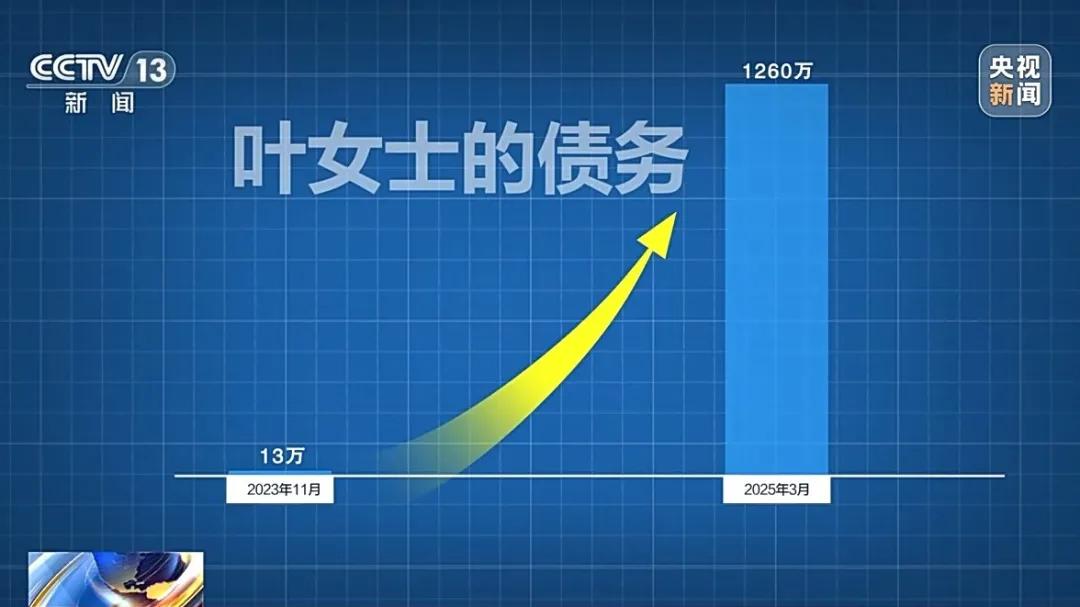
Core Insights - A criminal gang disguised as a housing rental company was dismantled by police in Chengdu, Sichuan, with five core suspects arrested, revealing a shocking debt trap where a victim's loan of 130,000 yuan ballooned to nearly 13 million yuan in less than a year and a half, leading to the forced mortgage of properties worth nearly 10 million yuan [1][12]. Group 1: Loan Scheme Details - The victim, Ms. Ye, received a call claiming to offer loans through an "internal green channel" in collaboration with financial management departments, accurately detailing her recent bank loan rejection and credit inquiries [2][13]. - Ms. Ye signed three contracts: a loan agreement for 130,000 yuan at a monthly interest rate of 1.5%, a housing management contract promising fixed monthly income of 23,000 yuan regardless of tenant occupancy, and an authorization letter with a clause imposing a 30% penalty on annual rent in case of default [3][14]. - Upon receiving the loan, Ms. Ye was charged 26,000 yuan in fees, leaving her with only 104,000 yuan from the original loan amount [4][15]. Group 2: Debt Escalation - By March 2024, Ms. Ye received a default notice claiming her property was classified as a group rental, requiring her to pay a penalty of 82,800 yuan [5][16]. - Attempts to terminate the contract led to demands for compensation of 331,200 yuan for the remaining four years of the management contract [6][17]. - To manage her escalating debt, Ms. Ye was introduced to another company offering a "debt optimization" plan, which involved borrowing an additional 450,000 yuan, causing her total debt to soar from 130,000 yuan in November 2023 to 12.6 million yuan by March 2025 [7][18]. Group 3: Company Operations and Revenue Structure - The involved rental company, established in 2018 with a registered capital of 10 million yuan, appeared compliant with regulations but operated beyond normal rental practices, generating 427.1 million yuan in penalty fees compared to only 6.32 million yuan in rental income over two and a half years [9][20]. - The company utilized rental data from housing authorities to target individuals with vacant properties and previous loan rejections, effectively preying on vulnerable borrowers [20]. - Contracts were designed to include hidden clauses that were difficult to contest legally, and the company collaborated with multiple small loan and guarantee companies, effectively charging exorbitant interest rates disguised as legitimate loans [10][21]. Group 4: Legal and Police Action - The criminal activities were exposed following a series of unusual arbitration cases in July 2025, where all defendants failed to appear, and the same company was involved in multiple claims [22]. - Police traced 49 million yuan in illegal lending back to the suspects, leading to the arrest of 73 individuals and the seizure of significant evidence, including servers and contract documents [22].

浩森金融科技(03848)附属授出3330万元贷款融资
智通财经网· 2025-12-17 12:23
Group 1 - The core point of the article is that Haosen Financial Technology (03848) has entered into a loan financing agreement with borrower Deng Jianhua, involving a loan amount of RMB 33.3 million at an annual interest rate of 9% for a term of 15 months, starting from the date of the agreement [1] Group 2 - The loan financing agreement is established through Haosen's indirect wholly-owned subsidiary, Haosen Microfinance [1] - The agreement is set to mature on December 17, 2025, indicating a medium-term financial commitment [1] - The interest rate of 9% reflects the company's pricing strategy in the microfinance sector [1]
浩森金融科技附属授出3330万元贷款融资
Zhi Tong Cai Jing· 2025-12-17 12:21
Group 1 - The core announcement is that Haosen Financial Technology (03848) has entered into a loan financing agreement with borrower Deng Jianhua, involving a loan amount of RMB 33.3 million [1] - The loan carries an annual interest rate of 9% and is set for a duration of 15 months from the date of the agreement [1]
浩森金融科技(03848.HK)授出3330万元贷款融资
Ge Long Hui· 2025-12-17 12:09
Core Viewpoint - Haosen Financial Technology (03848.HK) has announced a loan financing agreement involving a total amount of RMB 33.3 million with an annual interest rate of 9% for a duration of 15 months [1] Group 1 - The loan financing agreement was established between Haosen's wholly-owned subsidiary, Haosen Microfinance, and the borrower [1] - The loan amount is set at RMB 33.3 million, which is approximately USD 4.6 million based on current exchange rates [1] - The annual interest rate for the loan is fixed at 9%, which indicates a relatively high cost of borrowing [1]
双喜临门!中和农信斩获CNABS“金桂奖”两大奖项
Sou Hu Wang· 2025-12-16 08:28
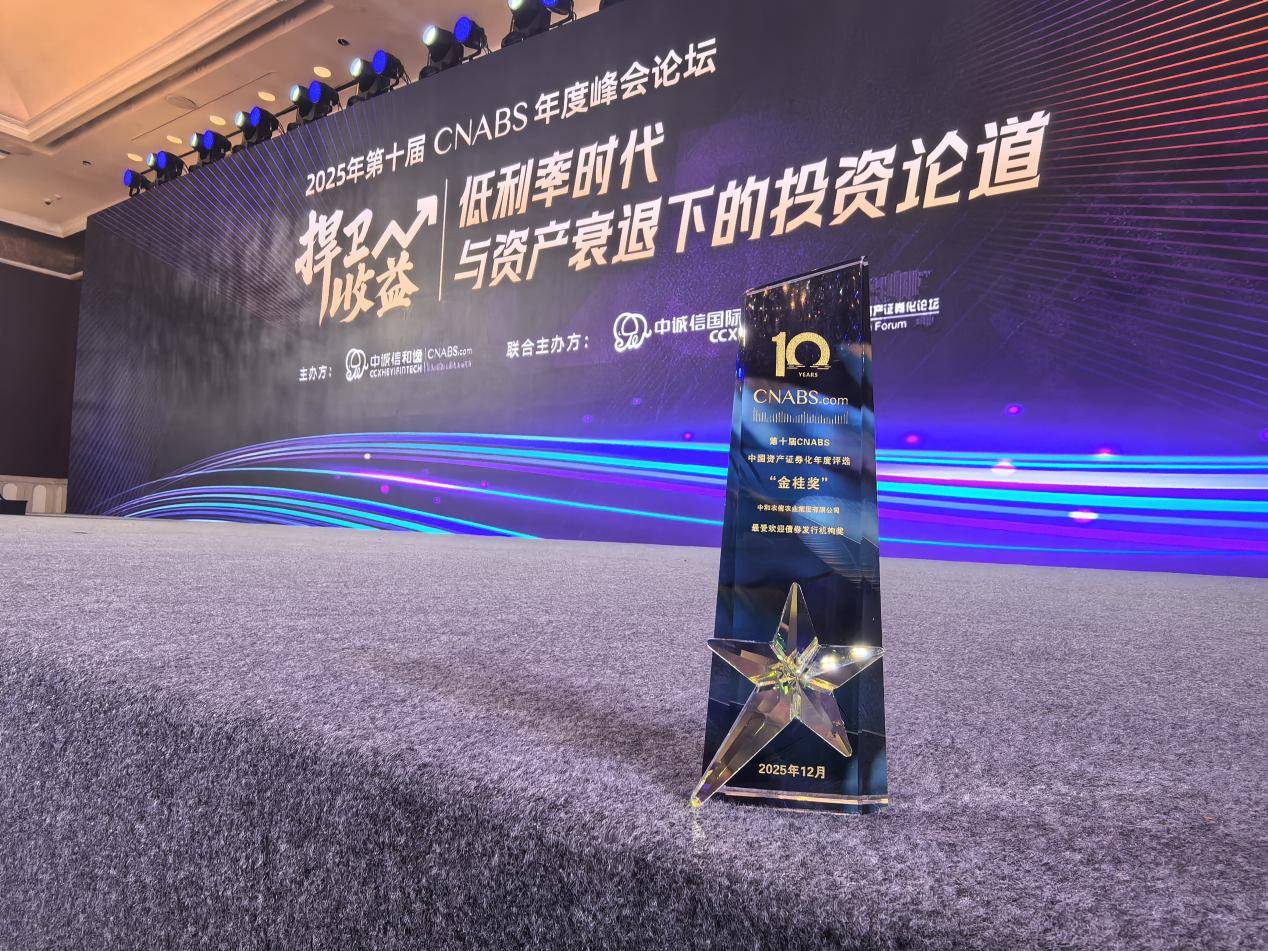
Group 1 - The 10th CNABS Asset Securitization Annual Conference was held in Shanghai, where Zhonghe Agricultural Credit Group won two awards: "Most Popular Bond Issuer" and "Most Innovative Product" for its targeted asset-backed notes series aimed at rural revitalization [1][4] - The CNABS awards, established in 2016, recognize outstanding institutions, experts, and products in the asset securitization field, with a rigorous evaluation system and high industry recognition [4] - The targeted asset-backed notes series issued by Chongqing Zhonghe Agricultural Credit Microfinance Co., Ltd. had an initial issuance scale of 500 million yuan and has successfully issued three phases, with the underlying assets being small loans to farmers [4][5] Group 2 - The funds raised from the notes will be used to provide loans to farmers, supporting their production and living needs, reflecting Zhonghe Agricultural Credit's commitment to the rural revitalization strategy [5] - The notes are structured with mechanisms such as priority/subordinated tranching and excess spread to effectively manage risks and provide stable returns to investors [5] - As of November 2025, Zhonghe Agricultural Credit has issued a total of 47 products with an issuance scale of approximately 20.3 billion yuan and raised 18.5 billion yuan, significantly broadening the funding channels for rural inclusive finance [5]

人保小贷退出行业 中国人保再失一牌照
Xi Niu Cai Jing· 2025-12-15 10:12
Group 1 - The Chongqing Financial Regulatory Bureau announced that 21 microloan companies, including Chongqing Renbao Microloan Co., Ltd., are exiting the industry and will no longer engage in microloan-related businesses [2][3] - Among the 21 companies, 20 were identified as "lost contact" or "shell" companies after investigations by local financial regulatory authorities, leading to the decision to revoke their microloan pilot qualifications [3] - Chongqing Renbao Microloan was the only company that voluntarily applied for the cancellation of its microloan pilot qualification [3] Group 2 - Chongqing Renbao Microloan was established in November 2017 and aimed to explore a "technology + insurance + credit" business model, integrating insurance and lending to support the development of the parent company, China Renbao Group [3] - In July, the People's Bank of China updated its list of canceled licensed institutions, which included the payment license holder under China Renbao Group, Renbao Payment Technology (Chongqing) Co., Ltd., which also announced the cancellation of its payment business license [3]


腾讯给“分付”备了百亿“弹药”
3 6 Ke· 2025-12-15 04:03
Core Viewpoint - Tencent's subsidiary, Shenzhen Financial Payment Network Small Loan Co., Ltd. (referred to as "Financial Payment Small Loan"), has received regulatory approval for a capital increase of 4.5 billion yuan, raising its registered capital to 15 billion yuan, marking a 50-fold increase over five years through six rounds of capital increases [1][4]. Group 1: Capital Increase and Regulatory Impact - The increase in registered capital allows Financial Payment Small Loan to leverage a maximum of 750 billion yuan in lending capacity based on the regulatory "1+4" financing leverage rule [1]. - Following the capital increase, Financial Payment Small Loan ranks second among national online small loan institutions, only behind ByteDance's Zhongrong Small Loan Co., Ltd., which has a registered capital of 19 billion yuan [2]. - The capital increase trend among internet small loan companies is driven by both regulatory logic and business needs, with 12 companies having registered capital exceeding 5 billion yuan as of July 2025 [2]. Group 2: Regulatory Framework - The regulatory framework for online small loans has evolved since the draft of the "Interim Measures for the Management of Online Small Loan Business" was released in November 2020, establishing a capital requirement of 5 billion yuan for cross-provincial operations [4]. - The new regulations, effective January 2025, focus on business norms and regional management, tightening requirements for the capital contribution ratio in joint loans with banks to a minimum of 30% [4]. Group 3: Product Development and Market Position - Financial Payment Small Loan offers two main products: "Fenfu," which allows for flexible repayment with a daily interest rate of 0.04%, and "Fengqi," which is designed for larger payments with fixed repayment terms [5][6]. - The "Fenfu" product has evolved from a consumption credit service to a cash loan service, allowing withdrawals to bank accounts, thus broadening its product offerings [7][8]. - As of June 2024, the loan balance for Financial Payment Small Loan was approximately 12.9 billion yuan, while the loan balance for WeChat's "Fenfu" reached 120 billion yuan by June 2025 [7]. Group 4: Financial Ecosystem and Performance - Tencent's financial ecosystem includes WeBank, which has become a significant profit contributor, with a net profit of 10.9 billion yuan in 2024, surpassing the combined net profits of 18 other private banks [9]. - The financial technology and enterprise services segment contributed 168.6 billion yuan in revenue in the first three quarters of 2025, becoming the second-largest revenue pillar for Tencent [11]. - The gross margin for the financial technology and enterprise services segment improved from 28% in 2020 to 50% in the third quarter of 2025, indicating a positive shift in revenue structure [10].


多地持续出清 高压下的小贷“生死局”
Bei Jing Shang Bao· 2025-12-15 00:53
Core Viewpoint - The small loan industry is undergoing a significant "clearing wave," with many companies exiting the market due to regulatory pressures and a shift from quantity expansion to quality survival [1][3][4]. Group 1: Industry Trends - The number of small loan institutions and the loan balance are continuously declining, indicating a transition towards compliance and differentiated competitiveness as key survival factors [1][3]. - As of September 2025, there are 4,863 small loan companies in China, with a loan balance of 722.9 billion yuan, reflecting a decrease of 31.9 billion yuan in the first three quarters of the year [3]. Group 2: Regulatory Actions - Multiple regions, including Guangxi and Chongqing, have published lists of "missing" and "shell" financial organizations, with a total of 30 institutions identified, including 19 small loan companies [1][2]. - The Chongqing local financial management bureau announced the exit of 21 small loan companies from the industry, emphasizing the regulatory focus on companies with no actual operations [2][3]. Group 3: Market Dynamics - The exit of small loan companies is attributed to rising risks in micro and consumer credit, the pressure from licensed financial technology platforms, and tightening regulatory policies that demand higher compliance and operational standards [3][4]. - Analysts suggest that the industry is shifting from a phase of quantity expansion to one of quality survival, where compliance and differentiated competitiveness are crucial for future development [4].
多地持续出清,高压下的小贷“生死局”
Bei Jing Shang Bao· 2025-12-14 10:58
Core Viewpoint - The small loan industry in China is undergoing a significant "clearing wave," with many institutions being identified as "missing" or "shell" companies, indicating a shift from quantity expansion to a focus on quality and compliance in operations [1][3][4]. Group 1: Industry Trends - The number of small loan institutions and the total loan balance are continuously declining, reflecting an industry transition towards compliance and differentiated competitiveness as key survival factors [1][4]. - As of September 2025, there are 4,863 small loan companies in China, with a total loan balance of 722.9 billion yuan, showing a decrease of 31.9 billion yuan in the first three quarters of the year [4][5]. Group 2: Regulatory Actions - Multiple regions, including Guangxi and Chongqing, have published lists of small loan companies exiting the industry, with a total of 30 institutions identified in Guangxi alone [3][4]. - The recent regulatory actions are characterized by a shift from broad cleaning to precise clearing, targeting companies with high registered capital but no actual operations [4][6]. Group 3: Market Dynamics - The reduction in small loan companies is attributed to rising risks in micro and consumer credit, the encroachment of licensed financial technology platforms, and tightening regulatory policies that demand higher compliance standards [5][6]. - Analysts suggest that the industry is in a deep reshuffle, emphasizing the need for small loan institutions to focus on serving the real economy and enhancing technological innovation and product functionality [6].