小额贷款

Search documents
大中华金融拟出售和锋有限公司
Zhi Tong Cai Jing· 2026-02-27 14:37
Core Viewpoint - The company intends to sell all issued share capital of a subsidiary to Mr. Guo Guangxiong for HKD 1.00, aiming to alleviate financial burdens and reallocate resources more efficiently to its remaining tobacco flavor business [1] Group 1: Sale Details - The sale involves a subsidiary that holds full ownership of nine companies established in China, primarily engaged in financial guarantee, loan financing, micro-lending, loan referral, and consulting services [1] - The subsidiary has ceased its loan financing operations in Beijing due to adverse impacts from the Chinese economy and business environment, and has not generated any revenue since 2024 [1] Group 2: Financial Implications - The board believes that the proposed sale will help reduce the financial burden on the group, which has recorded losses for several consecutive years and is in a net debt position [1] - The sale is expected to free up working capital that was previously allocated to the subsidiary, allowing for more efficient resource distribution to the company's other business segments [1]
大中华金融(00431)拟出售和锋有限公司
智通财经网· 2026-02-27 14:27
Core Viewpoint - Great China Financial (00431) plans to sell all issued share capital of He Feng Limited to Mr. Guo Guangxiong for HKD 1.00, aiming to alleviate financial burdens from its loss-making subsidiary [1] Group 1: Sale Details - The sale involves a subsidiary that holds full ownership of nine companies established in China, primarily engaged in financial guarantee, loan financing, micro-lending, loan referral, and consulting services [1] - The subsidiary has ceased its loan financing operations in Beijing due to adverse impacts from the Chinese economy and business environment, and has not generated any revenue since 2024 [1] Group 2: Financial Implications - The board believes that the proposed sale will help reduce the financial burden on the group, which has recorded losses for several consecutive years and is in a net debt position [1] - The sale is expected to free up working capital that was previously allocated to the subsidiary, allowing for more efficient resource allocation to the group's remaining business, specifically in the tobacco flavoring sector [1]
汇鑫小贷贷款协议与行业监管动态持续影响市场关注
Jing Ji Guan Cha Wang· 2026-02-13 07:37
Core Viewpoint - Huixin Microfinance (01577.HK) has not reported any significant new events recently, but its historical loan agreements and the changing regulatory environment in the industry remain focal points for the market [1] Group 1: Operating Conditions - As of the announcement at the end of December 2025, Huixin Microfinance and its subsidiaries signed multiple loan agreements totaling RMB 270 million in the second quarter of 2025, with an annual interest rate of 18%. These loans have not yet been settled as of the announcement date. The repayment progress and potential credit risks of these agreements may become key points of focus in future financial reports [2] Group 2: Industry Policies and Environment - The microfinance industry is facing ongoing stringent regulations in 2026. Data shows that as of the end of September 2025, the number of microfinance companies and the loan balance nationwide are both in a shrinking trend. Additionally, relevant management guidelines require a gradual reduction in the comprehensive financing costs of newly issued loans, with some localities accelerating the exit of non-compliant institutions. Such policies may have long-term impacts on Huixin Microfinance's interest rate pricing, profit model, and compliance operations [3] Group 3: Capital Movements - In terms of market liquidity, southbound funds in early February 2026 primarily flowed into technology stocks, with the microfinance sector not receiving significant capital attention. The industry is experiencing increased differentiation, with leading institutions enhancing their strength through capital increases, while smaller institutions face pressure to exit. Huixin Microfinance needs to pay attention to the dynamics of the funding landscape [4]
购金热催生市场乱象,中消协点名“一口价”黄金与纯度造假
Sou Hu Cai Jing· 2026-02-09 12:28
Group 1 - The core issue highlighted is the prevalence of disputes related to "fixed-price" gold products, with reports of misleading information regarding the material and purity of gold jewelry sold online [2][3] - Consumers have experienced significant financial losses due to discrepancies in the actual weight and purity of gold items compared to what was advertised, leading to economic damages [2] - The China Consumer Association (CCA) emphasizes the need for gold retailers to adhere to clear pricing regulations, ensuring that key information such as weight, material, and purity is accurately disclosed [3] Group 2 - In 2025, the CCA received over 2 million consumer complaints, marking a 14.45% increase from the previous year, and successfully resolved over 1 million cases, recovering approximately 9.25 billion yuan for consumers [4] - Complaints have surged in various sectors, including automotive, emotional consumption, home decoration, travel, online skill training, second-hand platform transactions, and non-bank financial credit [4] - The CCA calls for non-bank financial institutions to recognize the importance of compliance and consumer protection as foundational to sustainable development, advocating for clearer information disclosure and ethical marketing practices [5]


小贷“套娃游戏”迎围剿,牌照租借没戏了
3 6 Ke· 2026-02-02 12:05
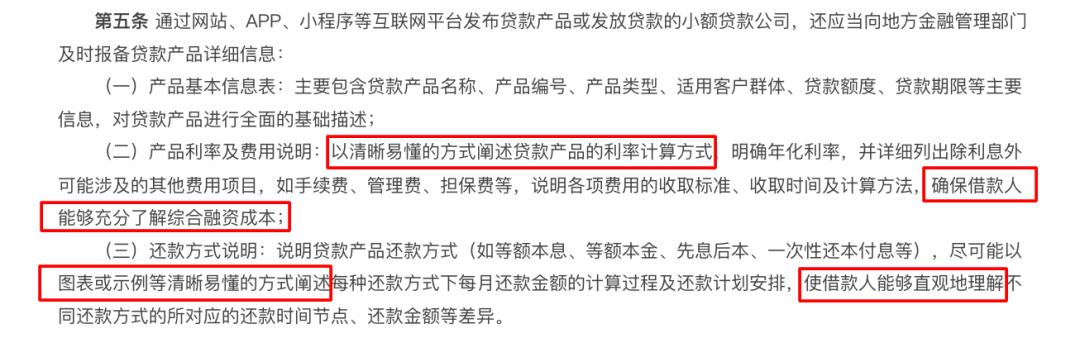
Core Viewpoint - The implementation of the "Shanghai Small Loan Company Internet Platform and Product Information Filing Guidelines" will significantly impact small loan companies in Shanghai, focusing on compliance and addressing gray operations such as license leasing [1][2]. Group 1: Compliance and Consumer Protection - The filing guidelines target the two critical aspects of small loan companies' internet operations: interest rates and repayment methods, ensuring that products are compliant for listing [3][4]. - The guidelines require clear and understandable disclosure of interest rate calculations, fees, and repayment plans, aimed at enhancing consumer understanding of financing costs [4]. - Local regulatory authorities are mandated to review filing materials within ten working days, ensuring that any issues are addressed promptly, thereby enhancing product compliance oversight [4][5]. Group 2: License Leasing and Gray Operations - The guidelines also aim to combat the rampant issue of license leasing, which has allowed small loan companies to connect with underground lending platforms, thereby reducing the space for financial gray operations [6]. - Despite the prohibition of license leasing since 2025, some companies continue to engage in risky practices, highlighting the need for stringent oversight [6][7]. - The article provides examples of platforms that obscure their operations through shell companies and unregistered WeChat service accounts, complicating regulatory enforcement [10][12]. Group 3: Regulatory Impact and Future Outlook - The new guidelines are seen as a critical step in tightening the regulatory framework for small loan companies, with expectations that similar measures will be adopted by other provinces, leading to a systematic cleanup of gray operations [14]. - The guidelines represent a detailed implementation of the interim measures for small loan company supervision, aiming to effectively transmit regulatory intent to the market [14].
小贷「套娃游戏」迎围剿,牌照租借没戏了
Xin Lang Cai Jing· 2026-02-02 10:52
Core Viewpoint - The implementation of the "Shanghai Small Loan Company Internet Platform and Product Information Reporting Guidelines" will significantly impact small loan companies in Shanghai, focusing on product compliance and addressing issues like license leasing [1][12]. Group 1: Compliance and Consumer Protection - The guidelines emphasize consumer protection by requiring small loan companies to clearly disclose interest rates, fees, and repayment methods, ensuring borrowers understand the total financing costs [2][13]. - Small loan companies must submit detailed reports on their products, and regulatory authorities are mandated to review these reports within ten working days, ensuring compliance and addressing any deficiencies [3][14]. - If there are changes to the reported information, companies are required to resubmit within ten working days, creating a robust compliance framework that helps protect consumers from non-compliant products [3][14]. Group 2: License Leasing Issues - The guidelines aim to combat the rampant issue of license leasing, which has allowed small loan companies to connect with underground lending platforms, thereby reducing the space for financial gray areas [4][15]. - Despite the prohibition of license leasing since the 2025 "Interim Measures for the Supervision and Administration of Small Loan Companies," some companies continue to engage in risky practices by colluding with unlicensed platforms [4][15]. - The guidelines require detailed reporting of all platforms used for marketing and lending, which is expected to limit the ability of companies to engage in illicit activities [4][15]. Group 3: Broader Implications and Future Actions - The guidelines are part of a broader regulatory effort, with other provinces also beginning to implement similar measures to address the connections between small loan companies and underground platforms [11][22]. - The introduction of these guidelines is seen as a critical step in tightening regulatory oversight and ensuring that small loan companies operate within legal frameworks, thereby reducing consumer complaints related to unfair practices [11][22].
利率红线逐步压降至12%,小贷公司迎大考
Xin Lang Cai Jing· 2026-01-28 03:10
Core Viewpoint - The implementation of the 12% interest rate cap has prompted small loan companies to adjust their lending practices, with many now keeping new loan products below 24% as they prepare to meet the requirement of reducing comprehensive financing costs to within four times the one-year Loan Prime Rate (LPR) by the end of 2027 [1][11]. Regulatory Guidelines - The People's Bank of China and the Financial Regulatory Administration issued guidelines mandating local financial management institutions to guide small loan companies in gradually reducing their comprehensive financing costs to within four times the LPR [1][5]. - Key points in the guidelines include strict monitoring of new loans exceeding a 24% interest rate, with regulatory measures to be taken against non-compliant companies [12][13]. Current Industry Adjustments - Many small loan companies have reported that their interest rates are now strictly controlled below 24%, with some stating that they have been operating under this threshold since 2022 [2][12]. - The industry is experiencing a transition period, with companies adopting a "wait and see" approach regarding the implementation of the 12% cap, indicating a gradual adjustment process [6][11]. Financial Challenges - The requirement to lower interest rates to 12% poses significant challenges for small loan companies, as their funding costs are around 5%-6%, and the new cap could severely compress profit margins [16][17]. - Analysts predict that companies heavily reliant on high-interest income and lacking robust risk management may struggle to survive until the 2027 deadline [16][17]. Industry Consolidation - The number of small loan companies in China has decreased to 4,863, with a total loan balance of 722.9 billion yuan, reflecting a contraction in the industry [19][20]. - Regulatory actions have led to the cancellation of licenses for "ghost" or "shell" companies, further indicating a trend towards industry consolidation [20]. Future Outlook - The ongoing tightening of regulations is expected to continue, with the potential for structural opportunities arising from the industry's reshaping [20]. - Companies that survive will likely need to focus on compliance, efficiency, and localized services, with potential pathways including deepening involvement in supply chain finance and partnerships with banks [20].
多地持续清退这类金融机构→
Jin Rong Shi Bao· 2026-01-15 02:24
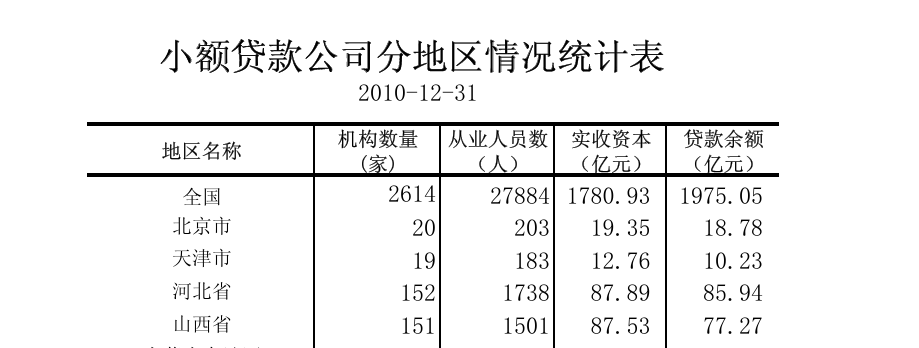
Core Viewpoint - The small loan industry in China is undergoing significant restructuring due to stringent regulations and market changes, leading to the exit of numerous non-compliant companies and a shift towards high-quality, compliant operations [2][3][11]. Group 1: Industry Restructuring - The Shandong Provincial Financial Management Bureau has announced the cancellation of trial qualifications for eight small loan companies, including Vanke and Huatian Tong [1]. - The implementation of the "Interim Measures for the Supervision and Administration of Small Loan Companies" in January 2025 marks a new phase for the industry, focusing on compliance and high-quality development [2][5]. - The industry is experiencing a "shuffle," with many companies being eliminated due to non-compliance and operational inefficiencies [3][6]. Group 2: Company Statistics - As of September 2025, there are 4,863 small loan companies in China, a decrease of 111 from the second quarter of 2025, with a total loan balance of 7,229 billion yuan, down by 319 billion yuan [8][9]. - The number of employees in the small loan sector has also seen changes, with a total of 40,752 employees across the remaining companies [9]. Group 3: Financing and Capitalization - In 2025, over 30 small loan companies have completed capital increases to strengthen their financial positions, with notable examples including WeChat Pay's small loan company increasing its registered capital from 10.526 billion yuan to 15 billion yuan [12]. - The industry is witnessing a trend where companies are diversifying their financing channels, including bank loans and asset-backed securities, to enhance their capital strength [12][13]. - Major internet-based small loan companies are leading the way in financing activities, with several raising over 10 billion yuan through asset-backed securities [13]. Group 4: Future Outlook - Experts suggest that the ongoing industry cleanup is not yet complete, and small loan companies must align with regulatory requirements and develop differentiated competitive advantages to survive [11]. - The trend of "the strong getting stronger and the weak getting weaker" is expected to continue, emphasizing the need for compliance and innovation in product offerings [13].
严监管下小贷行业加快清退步伐 迈向合规经营新阶段
Jin Rong Shi Bao· 2026-01-15 01:35
Core Viewpoint - The small loan industry in China is undergoing significant restructuring due to stringent regulations and a shift towards compliance-based high-quality development, leading to the exit of numerous non-compliant companies [2][3][4]. Group 1: Regulatory Changes and Industry Restructuring - The Shandong Provincial Financial Management Bureau has announced the cancellation of pilot qualifications for eight small loan companies, including Vanke and Huatiantong [1]. - The implementation of the "Interim Measures for the Supervision and Administration of Small Loan Companies" in January 2025 aims to standardize operations and enhance risk management within the industry [2][3]. - A nationwide cleanup action has been initiated, resulting in the exit of many "lost" and "shell" small loan companies, with significant cancellations reported in regions like Hunan and Chongqing [3][4]. Group 2: Industry Exit and Company Statistics - By the end of September 2025, there were 4,863 small loan companies in China, a decrease of 111 from the second quarter of 2025, with total loan balances dropping by 319 billion yuan [4]. - The exit of major players, such as Alibaba's small loan company and Sohu's Fox Loan, signifies the end of an era dominated by internet giants in the small loan sector [4]. Group 3: Capital Strengthening and Financing Trends - Over 30 small loan companies have increased their capital in 2025, with notable examples including the capital increase of Tencent's small loan company from 10.526 billion yuan to 15 billion yuan [5]. - The financing activities of small loan companies have accelerated, particularly among internet-based firms, with several companies raising over 10 billion yuan through asset-backed securities [6]. - The trend of "the strong getting stronger and the weak getting weaker" is becoming more pronounced in the small loan industry as leading companies enhance their financial capabilities while weaker firms exit [6].


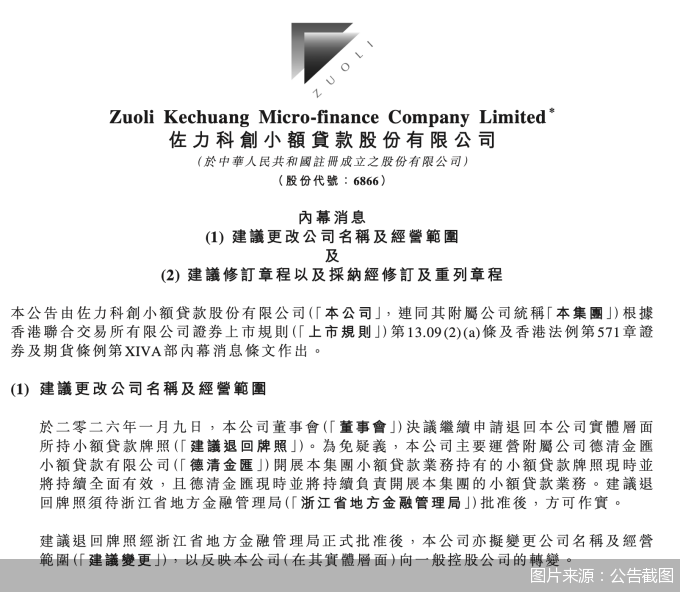
裁撤冗余整合资源,佐力小贷拟退回一张牌照
Bei Jing Shang Bao· 2026-01-13 13:17
Core Viewpoint - The company Zuo Li Xiao Dai has announced its decision to return its small loan license, indicating a strategic shift towards resource consolidation and operational efficiency in response to industry trends [1][4]. Company Summary - Zuo Li Xiao Dai plans to change its name to "Zuo Li Ke Chuang Co., Ltd." after returning the small loan license, pending approval from the Zhejiang Provincial Financial Management Bureau [4]. - Established in 2011 with a registered capital of 1.18 billion yuan, Zuo Li Xiao Dai became the first pure small loan company listed on the Hong Kong Stock Exchange in January 2015 [4]. - The company acquired a 96.9298% stake in Deqing Jinhui Small Loan Co., which was later increased to 99.7557% after restructuring [4]. Industry Context - The decision to return the small loan license aligns with a broader industry trend, as over 400 small loan companies have exited the market this year, primarily due to regulatory pressures [6]. - The move reflects an "elimination of the weak" mechanism within the industry, promoting consolidation and efficiency by reducing ineffective licenses and focusing on core business operations [6]. - The number of small loan licenses in China has decreased from nearly 9,000 to under 5,000, indicating a clear regulatory direction towards limiting license holdings and ensuring capital adequacy [7]. Financial Impact - Zuo Li Xiao Dai reported a net profit of 51.694 million yuan for the first three quarters of 2025, a year-on-year decline of 11.3% [7]. - The company anticipates that returning the small loan license will not adversely affect its business operations or financial status, as most related assets and liabilities were transferred to Deqing Jinhui during a restructuring in 2018 [5].