IT

Search documents
特朗普签了,10万美元/人!关税冲击加大,中国再减美债257亿美元
Sou Hu Cai Jing· 2025-09-21 17:58
Group 1: H-1B Visa Policy Changes - The Trump administration has signed an executive order significantly increasing the annual fee for H-1B visa applicants to $100,000, raising the entry barrier for foreign skilled workers [1][5] - The H-1B visa is crucial for attracting global talent, particularly in the tech industry, where companies like Google, Microsoft, and Amazon rely heavily on it to recruit foreign professionals [3][5] - The new policy aims to address the alleged abuse of the H-1B program by companies using cheaper foreign labor to replace American workers, which is claimed to harm the U.S. economy and national security [5][7] Group 2: Impact on Tech Companies - The increased visa fees may lead to significantly higher labor costs for U.S. tech companies, potentially prompting them to relocate research and development operations to countries with lower labor costs, such as India and Ireland [8][11] - Critics argue that the policy could backfire, making it more difficult for U.S. tech firms to attract talent and potentially stifling innovation within the industry [7][11] Group 3: Gold Market Reactions - The U.S. has implemented a 39% tariff on Swiss goods, severely impacting Swiss gold exports to the U.S., which plummeted from over 30 tons to just 0.3 tons, a drop of over 99% [13][15] - This sudden halt in gold exports has created challenges for U.S. gold traders, who are now seeking alternative sources, but other countries like Canada and the UK cannot meet the demand [17] Group 4: China's U.S. Treasury Holdings - China has reduced its holdings of U.S. Treasury bonds by $25.7 billion, bringing its total to $730.7 billion, the lowest level since 2009 [19][21] - This trend of reduction has been ongoing since 2022, with significant decreases in holdings each year, which could lead to increased U.S. Treasury yields and higher borrowing costs for the U.S. government [21][24] - The decline in Chinese holdings may also weaken the dollar's international standing and create instability in global financial markets, affecting capital flows and exchange rates in emerging markets [24][26][27]


Forget Perfection, Prioritize Speed: The 'Spray and Pray' Strategy That Finally This Job Seeker Landed An IT Job
Yahoo Finance· 2025-09-20 19:01
Group 1 - The core strategy for job searching has shifted from perfection to speed, with a focus on applying quickly rather than customizing resumes for each application [1][2][3] - The advice from a recruiter highlighted that companies often shortlist candidates from the first five to ten resumes they review, emphasizing the importance of being among the first applicants [3][4] - The job seeker adopted a day trader mentality, refreshing job search pages frequently and applying only to jobs posted within the last 24 hours to maximize chances of being noticed [4][5] Group 2 - The use of LinkedIn's "Easy Apply" feature was prioritized to streamline the application process and save time [5] - The job seeker maintained a dual-monitor setup to monitor job alerts and search terms simultaneously, enhancing their efficiency [5] - A controversial aspect of the strategy involved using three sets of resumes without extensive customization, allowing for rapid applications as opportunities arose [6]
Donald Trump's H-1B visa order: Infosys, Wipro take a hit; here's how Indian stock markets will be impacted
DNA India· 2025-09-20 13:58
Group 1 - Trump's immigration clampdown includes a significant increase in the H-1B visa application fee to USD 100,000, impacting Indian tech firms heavily [1][2][4] - Indian tech companies, particularly Infosys and Wipro, experienced a decline in their American Depository Receipts (ADRs) following the announcement, with Infosys down 3.41% and Wipro down 2.10% on the NYSE [3][4] - The H-1B visa is crucial for Indian tech firms as it allows them to hire skilled foreign professionals, and the increased fees are expected to adversely affect their operations in the US [4] Group 2 - Cognizant, a US tech firm with significant operations in India, saw its ADRs drop by 4.75% in response to the visa fee increase [3] - Tata Consultancy Services (TCS), India's largest IT firm, has not yet faced market repercussions as it does not have an ADR listing in the US, but the overall impact on Indian markets will become clearer when trading resumes [4] - The visa fee hike is anticipated to negatively influence the stock performance of Indian tech companies when the Indian markets open [2][3]


特朗普扔出H-1B“炸弹”:企业急拦员工出境,返美机票价格大涨
Di Yi Cai Jing· 2025-09-20 06:06
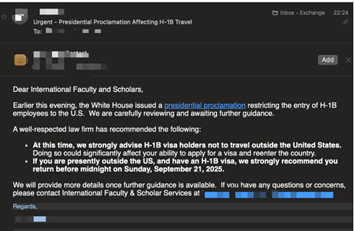
多家美国高校、科技大厂在当地时间周五晚10点后给员工发送了紧急邮件,要求国际员工不要离境美 国。 当地时间19日,白宫发布的一则关于H-1B签证公告震动了各大企业和留学生群体。 公告的核心大意在于,雇主在为一个在美国境外的外籍人士提交H-1B申请之前,必须获得并保留证明 他们已支付10万美元的文件,否则将无法入境。 但是,众多已在美国境内工作的H-1B签证持有者也惴惴不安。一位H-1B签证持有者对第一财经称:"这 实际上就是'H-1B旅行禁令'。如果签证持有者离开美国后再次入境时,大概率每次每人也需要雇主支付 10万美元。中国人的H-1B签证是一年过期一次,如果你一直在美国境内待着不出去,那就不需要从境 外进入美国,雇主也不需要支付10万美元,但若要旅行、出差或探亲,则每年需要重新签证,入境时则 必须支付10万美元。" 在美国工作的华人和留学生群体瞬间炸开了锅。一位回国探亲的网友表示:"已经紧急改签了今日的航 班,希望能赶上10万美元生效前的最后一班飞美国的直飞航班。" 由于事发突然,更有网友表示:"先订一班飞往夏威夷的航班,尽快赶回美国境内后再想办法转机。"数 据显示,若从上海飞往美国,最近的美国属地州就是 ...
徐直军:华为对于为人工智能提供充裕算力充满信心
Sou Hu Cai Jing· 2025-09-18 22:16
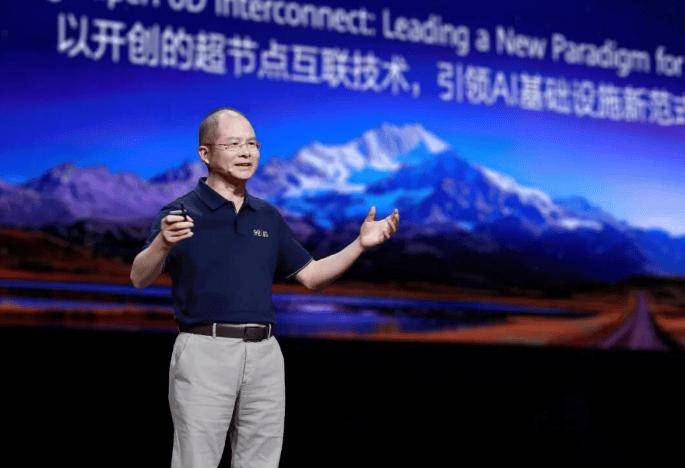
Core Insights - Huawei has launched the world's strongest computing supernodes and clusters at the 2025 Huawei Connect Conference in Shanghai, emphasizing the importance of computing power for artificial intelligence [1][3] Group 1: Supernode and Cluster Technology - The newly released supernodes, Atlas 950 SuperPoD and Atlas 960 SuperPoD, support 8192 and 15488 Ascend cards respectively, leading in key metrics such as card scale, total computing power, memory capacity, and interconnect bandwidth [3] - Huawei's superclusters, Atlas 950 SuperCluster and Atlas 960 SuperCluster, exceed 500,000 and reach one million cards, making them the strongest computing clusters globally [3] Group 2: AI Infrastructure and Future Development - Huawei aims to meet the growing demand for computing power with its "supernode + cluster" solution, which is crucial for the long-term rapid development of artificial intelligence in China [3] - The introduction of the TaiShan 950 SuperPoD marks Huawei's entry into general computing, designed to replace various large and small machines, including Exadata database integrated machines [4] Group 3: Innovation and Ecosystem - Huawei has developed a unified interconnect protocol, Lingqu (UnifiedBus), to address the challenges of large-scale supernode interconnectivity, and is opening the Lingqu 2.0 technical specifications for industry partners to develop related products [4] - The company is committed to continuously meeting the rapidly growing demand for computing power based on Lingqu technology, promoting the sustainable development of artificial intelligence and creating greater value [4]
Omdia:中国财富500强的企业中正在部署或已经使用GenAI技术达到74.6%
智通财经网· 2025-09-18 06:59
Group 1 - The adoption rate of GenAI technology among China's Fortune 500 companies has reached 74.6%, driven by full-stack solutions from GenAI cloud giants and the rise of open-source models and tools [1] - Leading GenAI providers in China include Alibaba Cloud and DeepSeek, serving 40% and 38% of Fortune 500 companies respectively, with a trend towards multi-vendor strategies where companies use an average of 2.1 GenAI suppliers [1] - Open-source models play a crucial role in the rise of GenAI in China, providing openness, transparency, customization, and flexibility for rapid deployment of large models [1] Group 2 - Adoption rates of GenAI vary significantly across industries, with 100% in telecommunications, automotive, and IT, 90% in financial services, and 80% in manufacturing, influenced by digital infrastructure maturity and regulatory environments [2] - Companies are actively applying GenAI in various scenarios, including enhancing employee productivity, customer service, sales and marketing, and process optimization, with notable examples such as NIO generating 30% of its software code through GenAI [2] - In customer service, companies like FAW Group improved query resolution rates from 37% to 84% using GenAI, while Ctrip saved 10,000 work hours daily through virtual assistants [2] Group 3 - By 2025, the largest verticals for GenAI software revenue in China will be IT, healthcare, retail, consumer, and professional services, with continued growth expected through 2029 [3] - Conversational tools are anticipated to be the most popular use case in the coming years due to the availability of language and text data and the maturity of language processing [3] - Companies are encouraged to ensure that GenAI deployments provide a return on investment while prioritizing trustworthy, secure, and robust solutions, and many are beginning to embrace the benefits of agent-based AI [3]
紫光股份20250917
2025-09-17 14:59
Summary of Unisplendour Corporation's Conference Call Company Overview - **Company**: Unisplendour Corporation (紫光股份) - **Core Subsidiaries**: Unisplendour Cloud (紫光云), New H3C (新华三), Unisplendour Digital (紫光数码), Unisplendour Software (紫光软件), Unisplendour Western Data (紫光西部数据) [5][9] Financial Performance - **2025 H1 Revenue**: 47.425 billion CNY, up 24.96% YoY [2][6] - **Net Profit**: 1.041 billion CNY, up 4% YoY; Non-recurring net profit: 1.118 billion CNY, up 25.10% YoY [2][6] - **New H3C Revenue**: 36.4 billion CNY, up 37.7% YoY [2][6] - **Gross Margin**: Maintained around 20% since 2019; ICT infrastructure business gross margin between 20%-30% [7] Market Position and Strategy - **New H3C's Market Share**: Second only to Huawei in the switch market; ranked sixth globally in Q3 2023 [11] - **Product Focus**: Primarily 400G switches, with future plans for 800G, liquid-cooled switches, silicon photonic switches, and CPU switches [2][3] - **International Expansion**: Established 22 overseas subsidiaries covering over 180 countries; launched sub-brand Anomic to target overseas SMB market [8] Technological Innovations - **New Product Launches**: Uni-Power supercomputing nodes and DDC architecture solutions; 800G switch domestic production rate exceeds 95% [12] - **AI Development**: Continued benefits from AI advancements in servers, GPUs, and supercomputing nodes; participation in major cloud projects [13] Future Outlook - **Market Trends**: Anticipated easing of US-China tensions may lift sales restrictions, boosting domestic chip production and supply [3] - **Unisplendour Cloud**: Ranked third in the government cloud market with a 13.8% market share; expected to turn profitable soon [14] - **Unisplendour Digital**: Revenue of 22.784 billion CNY in 2023, with plans to expand ICT distribution business [15] Investment Opportunities - **Super Point Strategy**: Transitioning from simple assembly to higher value-added products, enhancing the value chain in servers and switches [2][3] - **Equity Stake**: Unisplendour holds a 19% preferential purchase right in New H3C, with options to exercise or forgo this right [4]

Apple, Dell, others in focus as Bernstein sees AI providing long-term benefits (AAPL:NASDAQ)
Seeking Alpha· 2025-09-16 12:42
Group 1 - Near-term concerns regarding an AI-bubble exist, but long-term benefits from artificial intelligence are anticipated for the IT sector [1] - Companies such as Apple, Dell Technologies, and HP Enterprise are highlighted as key players in the IT industry [1]



ASUS Listed on TIME’s World’s Best Companies 2025 for the Second Time
Globenewswire· 2025-09-11 16:26
Core Insights - ASUS has been recognized for the second time in TIME magazine's list of the World's Best Companies, highlighting its performance in employee satisfaction, revenue growth, and sustainability practices [3][4][7] - The ranking emphasizes the importance of companies that lead with responsibility and resilience, providing insights into modern corporate success [4][9] Employee Satisfaction - ASUS's inclusion in the ranking reflects its commitment to fostering a great workplace and driving employee satisfaction through an employee-centric approach [5][7] - The evaluation of employee satisfaction was based on respondents' willingness to recommend their employer and satisfaction with work-related factors [9] Revenue Growth - The recognition also underscores ASUS's strong revenue growth, which was assessed through both relative and absolute growth metrics [9] - This financial performance is a key indicator of the company's overall success and stability in the market [9] Sustainability Practices - ASUS is acknowledged for its robust Environmental, Social, and Governance (ESG) practices, which include efforts towards sustainability and transparency [4][9] - The company aims to achieve a Net Zero goal by 2050, integrating responsible practices across its operations and growth strategies [5][7] Global Recognition - In addition to TIME's recognition, ASUS has received accolades from other esteemed organizations, including being named one of Newsweek's World's Most Trustworthy Companies and Fortune's World's Most Admired Companies [8] - These achievements validate ASUS's vision of becoming a leading technology enterprise in the digital era [8][11]

Wipro surges 2.83% as IT sector rallies on Infosys buyback boost
BusinessLine· 2025-09-10 08:26
Company Performance - Wipro Limited shares increased by 2.83% to ₹256.21 during Tuesday's trading session, making it one of the top gainers in the IT sector [1] - The stock opened at ₹249.30 and reached a high of ₹257.17, with trading volumes of 117.62 lakh shares worth ₹300.29 crore [1] Sector Overview - The gains for Wipro coincided with a broader recovery in the IT sector, as the Nifty IT index rose over 2%, with all constituents trading positively [2] - Wipro was the second-best performer in the IT sector, following Infosys, which led the rally with nearly 4% gains after announcing share buyback plans [2] Corporate Actions - On September 9, Wipro allotted 61,954 equity shares under the ADS Restricted Stock Unit Plan 2004 and 163,524 shares under the Restricted Stock Unit Plan 2007 following ESOP exercises [3] Market Sentiment - The sector-wide rally was initiated by Infosys' board decision to consider a share buyback proposal, which boosted investor sentiment across IT stocks [4] - Market analysts suggest that the buyback announcement has raised expectations for similar shareholder-friendly actions from other large IT companies [4] Economic Factors - The weakening rupee, which recently reached an all-time low of 88.36 against the dollar, is providing additional support for IT companies that generate significant revenues from US markets [5] - Despite the recent gains, the Nifty IT index remains down 19% year-to-date, reflecting ongoing concerns over potential US tariffs on software exports and global tech spending softness [5]