
低空经济

Search documents
广西首个设区市级低空飞行服务中心落地北海
Guang Xi Ri Bao· 2025-10-02 02:42
Core Insights - The establishment of the Beihai Low Altitude Flight Service Center marks the first city-level low altitude flight service hub in Guangxi, indicating a significant development in the region's low altitude infrastructure [1] - The center features a digital twin platform that efficiently manages low altitude activities through real-time monitoring of airspace status, flight trajectories, and meteorological data [1] - The center's core capabilities include online application for temporary airspace, intelligent flight plan approval, automatic coordination of flight schedules, real-time reporting of flight dynamics, and comprehensive monitoring of operations [1][2] Group 1 - The Beihai Low Altitude Flight Service Center is positioned as a pilot city for the coastal low altitude flight service guarantee system, injecting strong momentum into the construction of the flight service guarantee system in Beihai [1] - The center has successfully integrated with the manned aircraft monitoring system, enabling comprehensive monitoring of air traffic in Beihai, facilitating integrated management of manned and unmanned aircraft [1] Group 2 - With the gradual improvement of the regulatory system, Beihai's low altitude economy is expected to experience explosive growth [2] - By 2025, Beihai will introduce six key projects in the low altitude economy category, focusing on cutting-edge areas such as drone logistics and production [2] - The planning of low altitude take-off and landing networks is advancing, with the first seven sites identified in popular areas, laying the groundwork for the opening of low altitude flight routes [2]
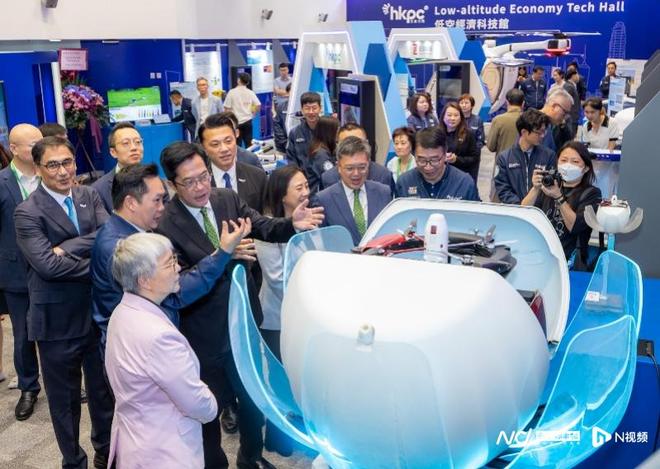
香港首个低空经济科技馆开幕,展示近20项尖端技术成果
Nan Fang Du Shi Bao· 2025-10-01 06:41
Core Insights - The opening of the "Low Altitude Economy Technology Museum" aims to promote the industrialization of Hong Kong's low altitude economy, providing a one-stop platform for research results transformation, technology validation, standard setting, and application implementation [1][3]. Group 1: Museum Overview - The museum is located in the Hong Kong Productivity Building and showcases nearly 20 cutting-edge technological achievements from Hong Kong and mainland China, covering the entire industry chain [3]. - Key areas of focus include technology standard setting, materials and manufacturing technology, eVTOL, medium-sized drone technology, testing, low altitude digital infrastructure, air traffic management, geographic information systems, and various application scenarios [3][4]. - The museum also offers hands-on experiences with small drones, allowing visitors to engage with advanced technologies [3]. Group 2: Government Initiatives - The Hong Kong government is actively promoting the development of the low altitude economy and emphasizes the need for collaboration with partners across various sectors [3][4]. - In March, the government announced the first batch of 38 "regulatory sandbox" pilot projects, with 17 projects already in testing and an expectation to have 28 projects operational by the end of October [3]. Group 3: Strategic Goals - The museum serves not only as a space for showcasing innovative technologies but also as a testing ground for institutional innovation [3][4]. - The goal is to gather the strengths of government, industry, academia, and research to explore airspace management models and application scenarios suitable for high-density urban environments, aiming to create a "low altitude economy model" unique to Hong Kong [3]. Group 4: Economic Potential - Hong Kong possesses unique advantages, being "backed by the motherland and connected to the world," and has multiple high-value scenarios for low altitude economy development, including high-end logistics, emergency response, cultural tourism integration, industrial applications, public services, and unmanned driving [4].

城市24小时 | “工业第一城” 继续“拥抱”传统产业
Mei Ri Jing Ji Xin Wen· 2025-09-30 15:59
Core Insights - Shenzhen aims to leverage its rich innovation resources and diverse industrial categories to upgrade traditional industries, targeting a total scale of over 700 billion yuan within three years [1] - The city plans to implement 12 policy measures, including the establishment of various investment funds to support mergers and acquisitions in traditional industries [1][2] - Shenzhen's advanced manufacturing and high-tech manufacturing sectors account for 68.2% and 58.2% of the city's industrial added value, respectively [1] Group 1: Traditional Industry Development - Shenzhen has a strong presence in traditional industries such as high-end women's clothing, jewelry, and eyewear, with the jewelry industry holding a national industrial output value lead [2] - The city will implement an action plan to integrate artificial intelligence into various traditional sectors, aiming to digitize over 100 traditional enterprises within three years [2][3] - The government recognizes both traditional and emerging industries as essential components of a modern industrial system, promoting a blend of technology and traditional manufacturing [3] Group 2: Investment and Policy Measures - The city will create a multi-faceted investment support model involving government-guided funds, listed company capital, and professional investment institutions [1] - Shenzhen aims to cultivate over 100 cross-industry fusion fashion products and popular national trend products by 2027 [3] - The approach of "policy guidance + market leadership + technology empowerment" is expected to serve as a replicable model for traditional industry transformation across the country [3]
城市24小时 | “工业第一城”,继续“拥抱”传统产业
Mei Ri Jing Ji Xin Wen· 2025-09-30 15:52
Core Insights - Shenzhen aims to leverage its rich innovation resources and diverse industrial categories to upgrade traditional industries, targeting a total scale of over 700 billion yuan in three years [1][2] - The city plans to implement 12 policy measures, including the establishment of various investment funds to support mergers and acquisitions in traditional industries [1][2] - Shenzhen's advanced manufacturing and high-tech manufacturing account for 68.2% and 58.2% of the city's industrial added value, respectively [1] Group 1: Traditional Industry Development - Shenzhen has a strong presence in traditional industries such as high-end women's clothing, jewelry, and eyewear, with the jewelry industry leading the nation in annual industrial output [2] - The city will implement an action plan to integrate artificial intelligence into various traditional sectors, aiming to digitize over 100 traditional enterprises within three years [2][3] - The government encourages the fusion of traditional manufacturing with new technologies and high-performance materials, targeting the creation of over 100 cross-industry fashionable products by 2027 [3] Group 2: Investment and Policy Measures - Shenzhen will utilize strategic emerging industry funds to support state-owned enterprises and traditional industry leaders in establishing acquisition funds [1] - The investment model will combine government guidance, listed company capital, and professional investment institutions to nurture high-potential enterprises [1] - The city has previously recognized the importance of both traditional and emerging industries as components of a modern industrial system, indicating a balanced approach to industrial development [5]

最高奖励3000万元!深圳“加码”低空经济
Shang Hai Zheng Quan Bao· 2025-09-30 13:40
在发力低空经济上,深圳再次"出招"。 9月30日,深圳市交通运输局起草《深圳市交通运输局<深圳市支持低空经济高质量发展的若干措施>实 施细则》(简称《细则》),明确的资助项目有4个,并提出了资助对象、条件及标准等。具体看,资 助项目分别为: 一是载人eVTOL航空器和无人驾驶航空器适航取证资助项目。 企业若获准并在深圳经营,每年可获得奖励合计不超过3000万元。其中,载人eVTOL航空器一次性奖 励1500万元;大型无人驾驶航空器一次性奖励500万元;中型无人驾驶航空器一次性奖励300万元。 符合条件的企业每年获得的新开航线奖励与总飞行架次奖励之和不超过2000万元。其中,小型无人驾驶 航空器每条新开航线年度飞行架次达到5000架次以上的,一次性奖励20万元,首年企业年度总飞行架次 达到2万架次奖励40万元,之后每增加2万架次奖励40万元;大中型无人驾驶航空器每条新开航线年度飞 行架次达到1000架次以上的,一次性奖励35万元,首年企业年度总飞行架次达到2万架次奖励80万元, 之后每增加2万架次奖励80万元。 二是做大低空物流市场规模资助项目。 获国家民航主管部门认定授牌的民航重点实验室落地深圳,按总投资的3 ...
新华财经晚报:国家发展改革委下达今年第四批690亿元超长期特别国债支持消费品以旧换新资金
Xin Hua Cai Jing· 2025-09-30 13:35
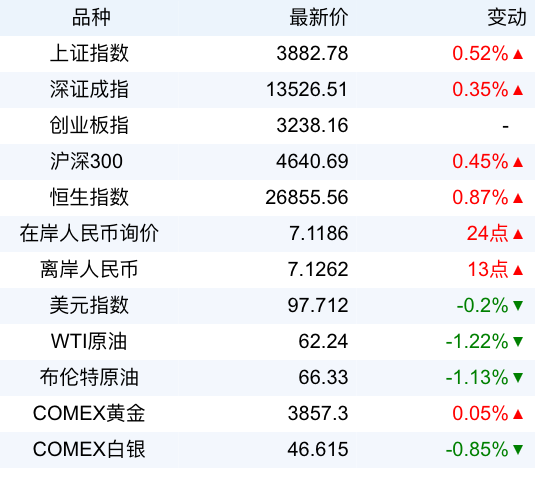
Domestic News - The National Development and Reform Commission has allocated 69 billion yuan in special long-term bonds to support the consumption of old goods for new ones, completing the annual allocation of 300 billion yuan in central funds [1] - The Ministry of Finance and the Ministry of Commerce have issued a notice to support pilot projects for new consumption formats, encouraging collaboration between quality consumer resources and well-known IPs [2] - The National Financial Supervision Administration has released guidelines for the high-quality development of health insurance, focusing on enhancing sustainability and regulatory oversight [2] Economic Indicators - In the first eight months of 2025, the software industry reported a revenue of 96,409 billion yuan, a year-on-year increase of 12.6%, with total profits reaching 13,186 billion yuan, up 13.0% [3] - The manufacturing Purchasing Managers' Index (PMI) for September was recorded at 49.8%, an increase of 0.4 percentage points from the previous month, indicating continued improvement in manufacturing activity [3] Market Overview - The Shanghai Composite Index closed at 3,882.78, up 0.52%, while the Shenzhen Component Index rose by 0.35% to 13,526.51 [8] - The onshore RMB was quoted at 7.1186, appreciating by 24 points, while the offshore RMB stood at 7.1262, up by 13 points [8]
探索产业金融服务新模式,平安银行上海分行协办“AI赋能低空经济”论坛
Guan Cha Zhe Wang· 2025-09-30 11:17
Core Insights - The forum held on September 23 focused on the integration of AI and the low-altitude economy, highlighting the evolving role of financial institutions in supporting technology-driven industries [1][3] Group 1: Financial Institution's Role - Ping An Bank showcased its tailored financial service system for technology innovation enterprises, covering a range of products from credit loans for startups to cross-border mergers and acquisitions for mature companies [1][3] - The bank's participation signifies a shift from traditional credit providers to active participants in the industrial ecosystem, addressing the financing needs of technology and capital-intensive industries [1][3][4] Group 2: Industry Characteristics and Financial Strategies - Financial institutions need to adjust their service approach to meet the unique characteristics of the low-altitude economy, which is driven by technology and primarily relies on intellectual property and R&D equipment [2][3] - Ping An Bank's strategy includes a comprehensive financial support system throughout the enterprise lifecycle, emphasizing a "pragmatic" attitude, "long-termism," and "open innovation" to adapt to industry needs [2][3] Group 3: Industry Trends and Applications - The low-altitude economy is recognized as a strategic emerging industry, with commercial applications in logistics, inspection, and urban management already in pilot projects, although large-scale implementation faces challenges [3][4] - The integration of AI technology is expected to significantly enhance the intelligence and operational efficiency of low-altitude vehicles, with ongoing improvements in regulatory frameworks and infrastructure investment [2][3] Group 4: Collaborative Ecosystem Development - Ping An Bank aims to strengthen collaboration with government, associations, and research institutions to build an "industry + finance + technology" ecosystem, aligning with national policies supporting the low-altitude economy and AI [3][4] - The evolving role of financial institutions is shifting from passive policy responders to proactive participants in the industrial chain, which may accelerate the maturity of the low-altitude economy [3][4]

AI“大脑”点亮低空经济
2 1 Shi Ji Jing Ji Bao Dao· 2025-09-30 10:53
Core Viewpoint - The rapid development of AI technology is driving significant changes in the low-altitude economy, which encompasses drone logistics, emergency rescue, and future manned transportation, positioning AI as a fundamental "operating system" for creating an efficient and safe low-altitude transportation system [1] Group 1: AI's Role in Low-altitude Economy - AI is not only an auxiliary tool but also plays a central role in macro management and infrastructure development within the low-altitude economy [2] - Effective Unmanned Traffic Management (UTM) is crucial as the number of drones increases, requiring AI algorithms for complex decision-making from long-term route planning to real-time updates [2][3] Group 2: Infrastructure Development - The establishment of a unified national time-space standard and a "traffic light" system for low-altitude transportation is essential, integrating data collection, transmission, and scheduling [3] - Advanced network technologies like 5G-A combined with AI algorithms are foundational for achieving precise perception and automated coverage of flying vehicles [3] Group 3: Challenges Ahead - Significant challenges exist in terms of computing power, safety, and talent development for the low-altitude economy [4] - A robust computing infrastructure is necessary to handle the complexity of low-altitude scenarios, requiring a "center-edge" computing architecture for strategic and tactical execution [5] Group 4: Technical and Safety Considerations - The core technology and safety of flying vehicles, particularly eVTOLs, face challenges in balancing vertical takeoff and landing flexibility with high-speed cruising efficiency [6] - Safety in the low-altitude economy encompasses flight safety, air defense against unauthorized incursions, and industrial safety to prevent overheating and supply chain disruptions [6][7] Group 5: Talent Development - There is a shortage of interdisciplinary talent who understand both AI algorithms and low-altitude operations, necessitating collaboration among industry, academia, and research to accelerate talent cultivation [8] Group 6: Economic Viability of Low-altitude Logistics - The economic feasibility of low-altitude logistics, particularly in urban delivery, is a critical hurdle that must be overcome for the industry to transition from concept to reality [9] - Efficient scheduling and scaling of drone operations are essential to achieve a balance between cost and efficiency, with AI playing a key role in optimizing logistics [10] Group 7: Collaborative Models - A new model of integrated air-ground delivery is proposed, where drones handle trunk transportation while ground riders manage the last-mile delivery, optimizing both speed and flexibility [10][11] - AI algorithms are necessary for planning the collaborative paths of trucks and drones to maximize economic efficiency [12] Group 8: Future Outlook - AI technology is empowering the low-altitude economy with unprecedented depth and breadth, indicating a shift towards a more intelligent, safe, and efficient low-altitude economic era [13]
第四届数贸会采购金额翻番,AI船舶与低空经济“加速起航”
2 1 Shi Ji Jing Ji Bao Dao· 2025-09-30 08:47
Group 1: Event Overview - The fourth Global Digital Trade Expo concluded with a procurement amount of 30.9 billion yuan, doubling from the previous year, with AI, cultural exports, and cross-border e-commerce orders accounting for 82% of total orders [1] - The event featured 1,812 participating companies, a 17% increase from the last edition, with 381 international exhibitors, 4.2 million professional buyers, and over 11,000 international buyers [1] Group 2: Company Highlights - Aolian New Energy Technology (Hangzhou) Co., Ltd. showcased its AI-driven smart shipping app and received the "Most Investment Value Award" at the expo [1] - Founded in 2022 by Lou Junlong, Aolian focuses on smart ship manufacturing and aims to create an ecosystem around its ROBO BOAT robotic yacht [3] - Aolian's strategy includes combining smart driving technology with hydrogen power and aims to position itself in the emerging market of new energy vessels, similar to Tesla's approach in land-based smart driving [3] Group 3: Industry Developments - Hangzhou is the only city in China undertaking the low-altitude "3+1" pilot demonstration task, with over 400 low-altitude economy-related enterprises contributing to a complete industrial chain [4] - The low-altitude economy in Hangzhou is projected to exceed 32.9 billion yuan in output value by 2024, with a year-on-year growth of 26.54% [4] - The city plans to enhance urban efficiency and public services through innovative applications in low-altitude flying, including integration with high-speed rail and medical services [4]
香港财政司副司长黄伟纶:10月底低空经济沙盒项目测试将增至28个
智通财经网· 2025-09-30 08:15
黄伟纶称,香港低空经济未来发展会涉及跨境物流,并会有大型载人的无人机,届时安全要求亦会增 加;他表示,政府协助发展低空经济最不能妥协的是安全问题,而当中未获批的项目原因亦是安全未达 标。 香港生产力促进局今日启用"低空经济科技馆",生产力局首席数码总监黎少斌表示,展期暂定为6个 月,首批参展企业包括深圳美团低空物流科技、广州汽车集团、云圣智科技、Wisson万勋科技。在已知 的参展商中,在38个低空经济沙盒项目有10个会参展。 智通财经APP获悉,9月30日,香港财政司副司长黄伟纶出席"低空经济科技馆"开幕礼时透露,目前当 中已有17个沙盒项目进行测试,并预告至10月底,沙盒项目测试会增加11个至28个。 据悉,本月早些时候,香港运输及物流局局长陈美宝出席电台节目时表示,低空经济方面,当局批出38 个沙盒项目,今年内全部可启动,亦希望结合科研学术机构做研究,发展全方位多层次管控系统。 ...