医药制造业

Search documents
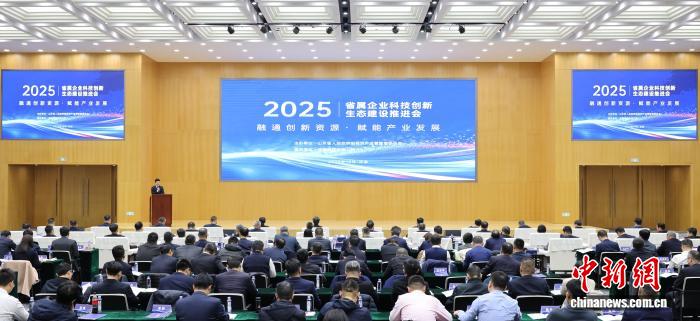
山东省属国企强化科创属性 赋能产业高质量发展
Zhong Guo Xin Wen Wang· 2025-12-26 14:08
Core Insights - The conference held on December 26 in Jinan focused on enhancing the technological innovation attributes of state-owned enterprises in Shandong Province, aiming to drive high-quality industrial development through deep integration of technology and industry [1][2]. Group 1: Technological Innovations - Shandong Heavy Industry Weichai Group invested 120 million RMB to develop methanol engines, addressing industry challenges such as oil emulsification and low-temperature cold starts, achieving full-scenario coverage in various applications [2]. - Shandong Gold Group developed a third-generation tailings filling technology that reduces energy consumption by 70% and has been recognized with the 2024 Shandong Provincial Science and Technology Progress Award for its international leading level [2]. Group 2: Collaborative Initiatives - Shandong High-speed Group and Shandong University established Qilu Transportation College, fostering talent and achieving over 10 billion RMB in economic benefits through collaborative innovation and technology transfer [3]. - Shandong Xinhua Pharmaceutical Co., Ltd. built a high-end talent team and established a national-level intelligent manufacturing demonstration factory, achieving breakthroughs in key technologies in various pharmaceutical fields [3]. Group 3: AI and Resource Sharing - The "Artificial Intelligence+" industry and technological innovation resource sharing platform was launched to support digital transformation and collaborative innovation among state-owned enterprises in Shandong [3][5]. - The platform will regularly publish typical application scenarios in technology research and production, aiming to enhance cooperation opportunities for small and medium-sized enterprises [5]. Group 4: R&D Investment Growth - R&D investment by Shandong state-owned enterprises increased from 25.57 billion RMB in 2020 to 52.91 billion RMB in 2024, with a compound annual growth rate of 20% [5]. - In the first 11 months of 2025, 26 state-owned enterprises invested 42.01 billion RMB in R&D, ranking first among provincial-level regulated enterprises in China [5].

2026年1月,这些新规将影响你我生活
Xin Lang Cai Jing· 2025-12-26 12:21
Group 1 - The People's Bank of China will implement a one-time credit repair policy for specific historical personal small overdue records starting January 1, 2026, applicable to overdue records from January 1, 2020, to December 31, 2025, with a maximum overdue amount of 10,000 yuan [1][10] - The China Securities Regulatory Commission has revised the Corporate Governance Code to further regulate the behavior of directors, senior management, and controlling shareholders of listed companies, effective January 1, 2026 [2][11] - Brokerage firms are required to disclose optimal brokerage quotes and transaction information in real-time, accurately, and completely, starting January 1, 2026, as per the new management measures from the People's Bank of China [3][12] Group 2 - The Financial Regulatory Bureau has revised the management measures for trust companies, effective January 1, 2026, to enhance regulatory frameworks and risk management in the trust industry [4][12] - Financial leasing companies must establish due diligence systems and management frameworks, ensuring the independence and effectiveness of due diligence processes, starting January 1, 2026 [5][13] - The Ministry of Commerce and other departments will strictly control the export of new cars under the guise of used cars, with new regulations effective January 1, 2026 [6][14] Group 3 - The revised Cybersecurity Law will support research and development in artificial intelligence and key technologies, effective January 1, 2026, promoting infrastructure development and ethical standards in AI [7][15] - The new management measures for oil and gas infrastructure will encourage investment and technological innovation in the sector, effective January 1, 2026 [8][16] - The new national standard for electric vehicle energy consumption will require technical upgrades for new vehicles, aiming to improve the average driving range by approximately 7%, effective January 1, 2026 [9][17] Group 4 - The updated National Medical Insurance Drug List will include 114 new drugs, enhancing coverage for critical areas such as cancer and chronic diseases, effective January 1, 2026 [10][18] - New regulations on kindergarten fee policies will prohibit third-party institutions from directly charging parents, effective January 1, 2026 [11][19]
金城医药:12月26日召开董事会会议
Mei Ri Jing Ji Xin Wen· 2025-12-26 09:45
每经AI快讯,金城医药(SZ 300233,收盘价:14.29元)12月26日晚间发布公告称,公司第六届第十九 次董事会会议于2025年12月26日在公司会议室以现场和通讯相结合的方式召开。会议审议了《关于补选 公司第六届董事会董事长的议案》等文件。 每经头条(nbdtoutiao)——对话马斯克脑机接口"一号受试者":大脑植入芯片23个月,我正重新夺回 人生的独立 2024年1至12月份,金城医药的营业收入构成为:医药制造业占比100.0%。 (记者 曾健辉) 截至发稿,金城医药市值为55亿元。 ...

华兰股份:12月26日召开董事会会议
Mei Ri Jing Ji Xin Wen· 2025-12-26 09:30
每经AI快讯,华兰股份(SZ 301093,收盘价:48.57元)12月26日晚间发布公告称,公司第六届第九次 董事会会议于2025年12月26日以现场会议结合通讯形式召开。会议审议了《关于部分募集资金投资项目 延期的议案》等文件。 每经头条(nbdtoutiao)——对话马斯克脑机接口"一号受试者":大脑植入芯片23个月,我正重新夺回 人生的独立 (记者 贾运可) 2025年1至6月份,华兰股份的营业收入构成为:医药制造业占比99.07%,其他业务占比0.93%。 截至发稿,华兰股份市值为80亿元。 ...
宣泰医药:拟向激励对象64人授予限制性股票623万股
Mei Ri Jing Ji Xin Wen· 2025-12-25 11:25
每经头条(nbdtoutiao)——对话马斯克脑机接口"一号受试者":大脑植入芯片23个月,我正重新夺回 人生的独立 2024年1至12月份,宣泰医药的营业收入构成为:医药制造业占比99.89%,其他业务占比0.11%。 截至发稿,宣泰医药市值为45亿元。 每经AI快讯,宣泰医药(SH 688247,收盘价:10.02元)12月25日晚间发布公告称,本激励计划首次授 予的激励对象总人数不超过64人,涉及的标的股票来源为公司向激励对象定向发行公司A 股普通股股票 及/或从二级市场回购的公司A 股普通股股票;拟向激励对象授予不超过623万股,约占本激励计划草案 公告时公司股本总额约4.53亿股的1.37%;限制性股票的首次授予价格为每股5.71元,即满足授予条件 和归属条件后,激励对象可以每股5.71元的价格购买公司向激励对象增发或从二级市场回购的公司A 股 普通股股票,有效期自限制性股票首次授予之日起至激励对象获授的限制性股票全部归属或作废失效之 日止,最长不超过72个月。 (记者 曾健辉) ...

中金 • 联合研究 | 中国商业健康险系列2):由医保改革,看多层次保障体系建设之路
中金点睛· 2025-12-24 23:37
Core Viewpoint - The article emphasizes the increasing pressure on basic medical insurance in China, highlighting the need for a multi-tiered healthcare financing system where commercial insurance can play a crucial role in addressing funding gaps and meeting rising healthcare demands [2][3]. Summary by Sections Current State of Medical Insurance - The medical insurance fund is under significant pressure, with a projected total expenditure of 5.8 trillion yuan in 2024, where medical insurance accounts for 51%, commercial insurance for 7%, and out-of-pocket expenses for 42% [4][6]. - The income growth of medical insurance has been declining, with a year-on-year increase of only 3.9% in 2024, which is lower than the growth rate of expenditures [6][11]. Challenges in Medical Insurance - The income side faces challenges due to rising retirement rates, local fiscal pressures, and declining consumer willingness to spend, impacting the basic medical insurance revenue [11]. - On the expenditure side, the aging population and increasing number of retirees are expected to heighten the pressure on medical insurance payments [11][17]. Reform and Cost Control Measures - The article discusses the nationwide rollout of cost control measures inspired by the Sanming model, which has successfully reduced medical costs while maintaining service quality [11][12]. - Significant measures include the promotion of centralized drug procurement and adjustments to medical service pricing, which have led to a noticeable decrease in overall medical expenditures [13][16]. Future Outlook for Commercial Insurance - The article anticipates a golden development period for commercial insurance as it becomes a vital supplementary payment method to meet the growing demand for high-quality medical services [3][21]. - By 2035, a comprehensive and sustainable multi-tiered healthcare system is expected to emerge, with commercial insurance playing a key role in financing and innovation within the healthcare sector [3][24]. Integration of Commercial Insurance - The integration of commercial insurance into the healthcare payment system is being accelerated through initiatives like one-stop settlement processes, which aim to simplify claims and enhance the role of commercial insurance in hospitals [21][23]. - The introduction of a commercial insurance drug list is expected to facilitate reasonable pricing for innovative drugs, thereby supporting pharmaceutical companies and enhancing the overall healthcare ecosystem [24][30]. Comparative Analysis with Developed Countries - The article draws comparisons with developed countries, noting that the U.S. healthcare system, which is primarily driven by commercial insurance, has established a market-oriented pricing mechanism that incentivizes innovation [28][30]. - In contrast, the UK's National Health Service (NHS) model, while providing universal coverage, has faced challenges in service delivery, leading to increased demand for commercial insurance as a supplementary option [31][32]. Conclusion - The article concludes that the evolution of commercial insurance in China is essential for creating a robust healthcare financing system that can adapt to the changing demographics and healthcare needs of the population [3][24].

12月24日晚间公告 | 华秦科技签订2.54亿元航空器材料合同;春光科技获4300万元机器人订单
Xuan Gu Bao· 2025-12-24 12:22
Suspension and Resumption - Jiaheng Jiahua's controlling shareholder is planning a change in the company's control, leading to a suspension of its stock [1] Buybacks and Increases - Guangqi Technology's controlling shareholder proposed a share buyback of between 50 million to 100 million yuan [2] - Sentai Co., Ltd.'s controlling shareholder intends to increase its stake in the company by no less than 100 million yuan [3] Mergers and Acquisitions - Gaozheng Minexplosion is acquiring 100% equity of Heilongjiang Overseas Explosive Materials Co., Ltd. for a total of 510 million yuan, which includes transferring 31,000 tons of industrial explosive production capacity to Tibet to address production capacity constraints [4] External Investments and Daily Operations - Huaqin Technology signed a contract worth 254 million yuan for special functional materials for aircraft fuselage [5] - Wankai New Materials' subsidiary signed a business contract with Lingxin Qiaoshou to provide lightweight components for humanoid robot arms [5] - Chunguang Technology received a procurement order for robot products worth 43.26 million yuan from Lexiang Technology [6] - Chalco International signed a total EPC contract for a 2.909 billion yuan project to upgrade electrolytic cells in Qingtongxia [7] - Longpan Technology plans to increase the production capacity of its "new energy vehicle power and energy storage battery cathode material" project from 62,500 tons/year to 100,000 tons/year [7] - Heng Rui Pharmaceutical's injectable SHR-A1904 has been included in the list of breakthrough therapeutic varieties, with no similar products approved globally [8] - Huakang Clean signed a pre-bid for a 157 million yuan procurement project for special hospital departments [9] - Xingyuan Zhuomei received a supplier designation notification from a domestic new energy vehicle manufacturer, with expected sales of approximately 575 million yuan over four years from 2027 to 2030 [9] - Samsung Medical's subsidiary signed a contract for the Brazil CPFL smart meter project, totaling 106 million reais, approximately 135 million yuan [9] - Enhua Pharmaceutical's subsidiary signed an exclusive commercial cooperation agreement with Green Leaf Pharmaceutical and its subsidiary Green Leaf Jiaao [10]

亚太药业:12月24日召开董事会会议
Mei Ri Jing Ji Xin Wen· 2025-12-24 11:17
截至发稿,亚太药业市值为55亿元。 每经头条(nbdtoutiao)——左手"欠款"右手"豪购"!杨陵江收购"国内酒庄第一股",1919是否重启上 市?"吹太多牛都实现了,但千亿还没实现,我很着急" 每经AI快讯,亚太药业(SZ 002370,收盘价:7.33元)12月24日晚间发布公告称,公司第八届第八次 董事会会议于2025年12月24日在公司办公楼三楼会议室以现场表决与通讯表决相结合的方式召开。会议 审议了《关于补选第八届董事会审计委员会委员的议案》等文件。 2025年1至6月份,亚太药业的营业收入构成为:医药制造业占比99.33%,其他业务占比0.67%。 (记者 曾健辉) ...

西藏自治区涉税经营主体超39万户
Zhong Guo Xin Wen Wang· 2025-12-24 11:04
Group 1 - The number of tax-related business entities in Tibet Autonomous Region has exceeded 390,000, showing a year-on-year growth of 20% from January to November, with over 70,000 new entities added, reflecting a 77.1% increase [1] - Tax revenue collected by the tax authorities in Tibet reached over 80.6 billion yuan, marking an 11.1% year-on-year increase, with tax revenue (excluding export tax rebates) exceeding 42.9 billion yuan [1] - The industrial economy in Tibet saw a sales revenue growth of 17.8% year-on-year, driven by traditional and emerging industries, with significant contributions from the non-ferrous metal mining and pharmaceutical manufacturing sectors [2] Group 2 - The non-ferrous metal mining sector reported a sales revenue increase of 31.4%, while the pharmaceutical manufacturing sector saw a 14.5% rise, highlighting them as key growth drivers [2] - The textile and apparel industry, along with the food manufacturing sector, experienced a remarkable sales revenue growth of 52.3%, indicating enhanced market recognition and brand competitiveness [2] - The tax authorities in Tibet have implemented a "first violation not punished" policy for certain tax violations, benefiting over 5,900 taxpayers from January to November [2] Group 3 - The tax authorities maintained a strict stance against tax fraud, identifying 50 cases of fraudulent tax invoicing and recovering 81.94 million yuan in tax payments [3] - High-risk gas stations were also targeted, with 84 cases identified and 19.86 million yuan in tax payments recovered [3] - One individual classified as high-risk was found guilty, resulting in a recovery of 1.34 million yuan [3]
重磅!前中金研究所董事总经理带队,企业IPO申请火速获受理!董秘也来自中金!
Xin Lang Cai Jing· 2025-12-24 02:28
Core Viewpoint - Suzhou Xinnowei Pharmaceutical Technology Co., Ltd. has received acceptance for its IPO application on the Sci-Tech Innovation Board, with Guotai Junan Securities serving as the sponsor [1][31]. Company Overview - The company was established on May 17, 2017, with a registered capital of RMB 370.17 million [6][36]. - The actual controller of the company is Qiang Jing, who holds 47.0448% of the voting rights [32][28]. - The company focuses on innovative drug development to address significant unmet clinical needs globally, particularly in oncology and infectious diseases [7][29]. Business and Product Pipeline - The company has developed a pipeline of 10 innovative drugs targeting major diseases, including three drugs in the oncology field (XNW5004, XNW27011, XNW28012) currently in Phase III or critical clinical research stages [8][38]. - The drug XNW5004 is an EZH2 inhibitor, while XNW27011 and XNW28012 are targeted ADCs for treating various cancers [8][39]. - In the infectious disease sector, the injectable imipenem-cilastatin (XNW4107) is under review for treating hospital-acquired bacterial pneumonia and ventilator-associated bacterial pneumonia, with approval expected in 2026 [8][39]. Financial Data - As of June 30, 2025, the total assets of the company were RMB 1.12 billion, with a net loss of RMB 373.74 million for the first half of 2025 [17][47]. - The company has consistently reported losses, with net losses of RMB 46.26 million, RMB 42.69 million, and RMB 38.60 million for the years 2022, 2023, and 2024, respectively [30][47]. - The company has a high debt ratio, with a consolidated debt ratio of 89.05% as of June 30, 2025 [17][47]. Research and Development - The company has invested significantly in R&D, with a total of RMB 121.90 million in R&D expenditures over the last three years, representing a substantial portion of its revenue [14][44]. - R&D personnel constitute 73.67% of the total workforce, indicating a strong focus on innovation [14][44]. Future Plans and Fundraising - The company plans to raise approximately RMB 294 million through its IPO, with funds allocated primarily for new drug development and working capital [19][49]. - The company aims to enhance its R&D capabilities and expand its product offerings to meet clinical needs effectively [20][21].