电气机械及器材制造业

Search documents
——出口思辨系列之一:出口与PMI为何分歧?两个结构视角
Huachuang Securities· 2026-03-26 07:27
1. Report Industry Investment Rating No information about the industry investment rating is provided in the report. 2. Core Viewpoints - From the perspective of bond market investors, the strong export is a "mixed blessing." The "good news" is that if exports maintain a strong pull, the requirement for domestic investment and consumption growth will be relatively lower, and the probability of macro - policy stimulus will decline. The "worry" is whether the strong export can contribute to the "internal cycle" repair, especially the transmission from corporate profits to household income and the acceleration of consumption growth [3][5]. - The current strong export's impact on the macro - economic climate is limited. The export structure is tilted towards the mid - stream manufacturing industry, and the benefits of export are concentrated in large enterprises and a few industries, so it is difficult to drive the overall improvement of PMI and the repair of domestic demand [3][9][29]. 3. Summary According to the Directory 3.1 Industry Perspective: Where Does the Divergence between PMI and Exports Come from? - Since the beginning of 2025, there has been a divergence between the PMI new export orders and export growth, and the divergence has further widened in early 2026. PMI is a sentiment survey reflecting the breadth of economic improvement, while exports are essentially about volume and price, so a strong export does not necessarily lead to an overall improvement in PMI [3][6]. - The PMI sample distribution is linked to the weight of industrial added value, and the export advantages are concentrated in the mid - stream manufacturing industry. The top five industries affecting exports are mainly mid - stream technology - intensive industries, while the top five industries affecting PMI cover a wider range. This leads to the limited contribution of exports to the overall economic climate and the slow repair of PMI [9][11]. - In 2025, the export advantages of industries are further concentrated. The industries with the largest increase in export weight also have a relatively high proportion of export delivery value, indicating that the export advantages at the industry level are becoming more concentrated [14]. 3.2 Enterprise Type: Who Benefits from Exports? - In terms of enterprise size, the PMI of medium - sized enterprises has been declining, and the contraction has intensified since 2025. Small - sized enterprises have remained stable at around 48% without obvious improvement, while large - sized enterprises have maintained stable expansion, indicating that the export advantages are mainly reflected in the operation improvement of large - sized enterprises and have limited impact on small and medium - sized enterprises [17]. - From the perspective of listed companies' overseas revenues, the head - effect is prominent. In the "computer, communication and other electronic equipment manufacturing" industry, large - sized enterprises account for 97% of the industry's overseas revenues and 93% of domestic revenues. The overseas revenue of large - sized enterprises accounts for about 44% of their own revenues, higher than 23% of small and medium - sized enterprises. In other major export industries, the overseas revenues of CR20 also account for 70% - 90% of the industry's total overseas revenues [17][19][23]. - Currently, the strong export has a "concentrated" impact on the manufacturing industry. The profit divergence between upstream and mid - stream, large and small enterprises may be expanding due to exports. The industries driving the strong export are mainly technology - intensive, and the overseas revenues in the four advantageous industries are further concentrated in large and head enterprises, while the export share of small and medium - sized enterprises is relatively low [26]. 3.3 Conclusion - For the bond market, PMI has a stronger guiding effect on macro - expectations and is one of the key indicators at the monetary policy level. However, the export's driving effect on PMI is limited, and the repair of domestic demand remains to be observed. It is difficult for the upstream manufacturing and small and medium - sized enterprises to improve their business climate solely based on the strong export, and the effect of profit growth on domestic income and consumption also needs further observation [3][29].
2026年通胀框架:权重微扰、PPI早转正,资金宽松支撑债市震荡
Western Securities· 2026-03-19 12:05
1. Report Industry Investment Rating The document does not provide the industry investment rating. 2. Core Views of the Report - Since the beginning of the year, inflation has shown the characteristics of "CPI increase under the influence of the Spring Festival effect and PPI price increase accelerated by imported inflation". The government work report during the Two Sessions maintained the target of the consumer price increase at 2%, and pointed out that promoting stable economic growth and reasonable price recovery should be important considerations for monetary policy. With the repeated geopolitical conflicts and high oil prices recently, the market sentiment remains cautious under the expectation of inflation turning positive. Looking forward, inflation is mainly affected by two factors: on one hand, the domestic supply is abundant, and the consumer price trend is relatively stable; on the other hand, affected by the intensifying geopolitical risks in the Middle East, the global inflation rate may rise significantly, increasing the risk of imported inflation in the later stage. Coupled with the relatively low base in 2025, it is expected that the CPI growth rate will continue a moderate recovery, and the turning point of the PPI year - on - year growth rate to positive will be advanced. The cost - performance of bonds has increased, and it is difficult for the 10 - year Treasury bond yield to break through the previous high, and it may maintain a volatile trend [6]. - The impact of the base period rotation on the CPI year - on - year index is limited, and the CPI is expected to have a moderate recovery, with the annual central value at about 0.8% [6]. - The turning point of the PPI year - on - year growth rate to positive may be advanced under the impact of oil prices. If the oil price drops to $65 per barrel and remains stable, the PPI is likely to turn positive in the second half of Q2; if the oil price remains at about $80 per barrel or rises to $108 per barrel, the PPI may turn positive rapidly in Q2, or even in March. Based on the EIA assumption, the PPI may turn positive in March, and the central value of the PPI in 2026 will be about 1.07% [7]. - When the inflation center rises, the interest rate center does not necessarily rise, and the monetary policy does not necessarily tighten. This round of inflation recovery is mainly driven by the cost side, and the probability of monetary policy tightening is low. The cost - performance of bonds has increased, and it is difficult for the 10 - year Treasury bond yield to break through the previous high, and it may maintain a volatile trend. It is recommended to moderately participate in long - term bonds during the adjustment. With the continuous loosening of the capital side, the short - end is more certain, and at the same time, pay attention to the opportunities for spread compression, such as the spread between China Development Bank bonds and Treasury bonds, and the spread between local government bonds and Treasury bonds [8]. 3. Summary by Directory 3.1. The Impact of Base Period Rotation on CPI Is Limited, and CPI Shows a Moderate Recovery - **Base Period Rotation and Classification Adjustment**: China conducts a base period rotation for CPI and PPI every five years. On February 11, 2026, the National Bureau of Statistics released CPI data based on the 2025 base period. The number of major categories and basic classifications remains unchanged, with 8 major categories and 268 basic classifications. New commodity and service classifications reflecting new consumption content have been added, and some category names have been modified. A travel service price index has been newly calculated [14]. - **Weight Changes**: Compared with the 2020 base period, the overall weight changes of each CPI classification in this base period are not significant. Structurally, the weight of services in CPI has increased, while the weight of consumer goods has decreased. In terms of classification, the weights of five major categories, including food, tobacco, alcohol and dining out, transportation and communication, education, culture and entertainment, medical care, and other supplies and services, have increased. In the category of food, tobacco, alcohol and dining out, the weight of food has decreased, while the weight of dining out has increased. The weights of three major categories, including clothing, housing, and household goods and services, have decreased [16][18]. - **Impact on CPI Year - on - Year Index**: The National Bureau of Statistics pointed out that the average impact of this base period rotation on the monthly year - on - year index of CPI and PPI is about 0.06 and 0.08 percentage points respectively, which is relatively small. The calculation shows that the impact of CPI weight changes on the monthly CPI year - on - year index is about 0.04 percentage points, which is highly consistent with the data released by the National Bureau of Statistics in terms of direction and order of magnitude, indicating that the impact of CPI weight adjustment on the CPI year - on - year trend is limited and controllable [20]. - **CPI Recovery Trend**: From January to February 2026, the average CPI year - on - year increase was 0.75%, showing a moderate recovery trend. Affected by the Spring Festival misalignment effect, consumer demand pulsed in February, pushing the CPI up from 0.2% in January to 1.3%. The core CPI also showed a significant upward trend. Overall, CPI operation is mainly dominated by historical seasonal laws. With the marginal improvement of food and energy prices and the high - level volatility of international oil prices, CPI is expected to continue the recovery trend. In 2026, the CPI center is expected to rise moderately compared with 2025, with the annual central value at about 0.8% [23]. 3.2. The Turning Point of PPI Year - on - Year Growth Rate to Positive May Be Advanced under the Impact of Oil Prices - **PPI Industry Weights**: PPI is calculated by the weighted average of 40 industry prices. Using the average operating income share of corresponding industries from 2017 to 2025 as a substitute for weights, it is found that industries such as computer, communication and other electronic equipment manufacturing (11.1%), automobile manufacturing (7.5%), electrical machinery and equipment manufacturing (7.2%), and chemical raw materials and chemical products manufacturing (6.6%) have relatively high weights. Since 2021, the weights of electrical machinery and equipment manufacturing, computer, communication and other electronic equipment manufacturing, and power and heat production and supply industries have increased significantly [27]. - **PPI Industry Contribution**: The contribution of high - weight industries to PPI is not necessarily large. The top 7 industries with high contribution rates to PPI fluctuations, including oil, coal and other fuel processing, ferrous metal smelting and rolling processing, chemical raw materials and chemical products manufacturing, coal mining and washing, non - ferrous metal smelting and rolling processing, non - metallic mineral products, and oil and gas extraction, contribute about 80% of the total fluctuations [29][31]. - **Core Influencing Factors of PPI**: Crude oil, coal, ferrous metals, and non - ferrous metals are the core influencing factors of PPI. They are widely used in the upstream, mid - stream, and downstream industrial chains. The top 10 industries with high contribution rates to PPI fluctuations are mostly directly related to these four factors, and the relevant industries with high correlations to them contribute about 90% of the PPI fluctuations [32][36]. - **Analysis of Crude Oil Price Trends**: Affected by the continuous geopolitical conflicts in the Middle East, international oil prices have continued to rise. In March 2026, oil prices experienced a roller - coaster trend of "soaring - plummeting - rebounding". Although the International Energy Agency coordinated the release of strategic petroleum reserves, the market still worried that the scale and rhythm of the release might not be able to make up for the supply gap in the Middle East, so international oil prices continued to rise [41][44]. - **Impact of Crude Oil Prices on PPI**: Crude oil is widely used in the upstream, mid - stream, and downstream industrial chains, and the relevant industries account for about 12.4% of PPI. A 10% increase in oil prices may push up PPI by about 0.4 percentage points. The actual impact of oil prices on China's inflation depends on the subsequent development of the conflict. Different scenarios of oil price changes have different impacts on China's PPI, and the EIA predicts that the PPI may turn positive in March, with the central value in 2026 at about 1.07% [47][50][53]. 3.3. The Impact of Inflation Center Rise on the Bond Market - **Fundamental Reasons for Interest Rate Center Rise**: According to the causes, inflation can be divided into demand - pull inflation, cost - push inflation, and structural inflation. Since the 21st century, there have been six obvious inflation processes in China. When the inflation center rises, the interest rate center does not necessarily rise, and the monetary policy does not necessarily tighten. Demand - pull inflation often drives the interest rate center up, while cost - type and structural inflation do not necessarily [58]. - **Analysis of Previous Inflation Rounds**: The first four rounds of inflation were mostly demand - pull inflation, accompanied by rising interest rates. The central bank tightened the money supply through measures such as raising the reserve requirement ratio and interest rates. The last two rounds of inflation were more in line with cost - push inflation, and interest rates remained flat or declined. The central bank implemented a relatively loose monetary policy to maintain economic growth [59][70]. - **Analysis of the Current Round of Inflation**: This round of inflation recovery is mainly driven by the cost side. Affected by geopolitical factors, the prices of commodities such as crude oil have risen significantly, pushing the PPI year - on - year to recover rapidly. The government work report in 2026 clearly stated to continue implementing a moderately loose monetary policy, so the probability of monetary policy tightening is low. The cost - performance of bonds has increased, and it is difficult for the 10 - year Treasury bond yield to break through the previous high, and it may maintain a volatile trend. It is recommended to moderately participate in long - term bonds during the adjustment, pay attention to the short - end with higher certainty, and also pay attention to the opportunities for spread compression [74].
星云股份:5600万元闲置募集资金现金管理到期赎回,并继续用3600万元用于现金管理
2 1 Shi Ji Jing Ji Bao Dao· 2026-02-27 09:25
Core Viewpoint - The company has redeemed a total of 56 million yuan from bank deposits and has reinvested 36 million yuan of idle raised funds for cash management, ensuring no impact on project progress or normal operations [1] Group 1 - The company redeemed 36 million yuan from China Merchants Bank's 7-day notice deposit and 20 million yuan from China Construction Bank's structured deposit, totaling 56 million yuan [1] - The company achieved a financial return of 30,500 yuan from the redeemed deposits, with both principal and returns already credited [1] - The reinvestment of 36 million yuan in idle raised funds for cash management will not affect the progress of investment projects or the company's normal production and operations [1]

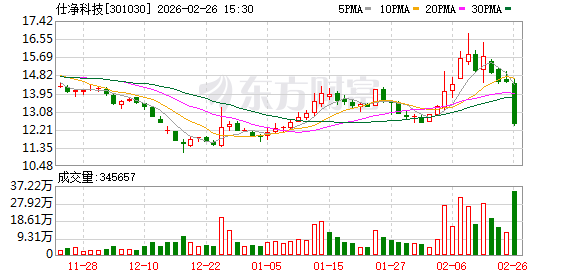
入场审计不到一个月,会计师事务所火速辞任 仕净科技怎么了?
Mei Ri Jing Ji Xin Wen· 2026-02-26 09:53
Core Viewpoint - Shijin Technology (SZ301030) announced the resignation of its auditor, Suya Jincheng, just one month after their appointment, citing unmet expectations regarding audit progress and payment issues [2][5]. Group 1: Auditor Resignation - Suya Jincheng submitted a resignation letter on February 13, 2024, stating that the audit progress did not meet their expectations and that the company failed to provide necessary materials and pay audit fees on time [5]. - Shijin Technology had appointed Suya Jincheng as the auditor for the 2025 annual report on January 19, 2024, after dismissing the previous auditor, Zhongshun Yatai, due to scheduling conflicts [2][3]. Group 2: Financial Performance - Shijin Technology projected a net loss of between 970 million yuan and 770 million yuan for 2025, compared to a loss of 771 million yuan in the previous year [3]. - The company's performance is significantly impacted by a temporary oversupply in the photovoltaic industry, leading to reduced demand and lower prices for their products [5][6]. Group 3: Business Operations - The company’s main business segments include process pollution control equipment and photovoltaic products, with the latter facing high costs that exceed revenue, resulting in significant financial strain [6][7]. - As of mid-2025, Shijin Technology's inventory and accounts receivable were notably high, with accounts receivable at 1.836 billion yuan and inventory at 2.532 billion yuan [7][8]. Group 4: Project Developments - The company has a significant ongoing project for a solar cell production facility, which has reached 100% completion but has over 600 million yuan in uncapitalized costs [7]. - The project budget is 1.5 billion yuan, with only a small amount transferred to fixed assets, indicating potential inefficiencies in capital allocation [7].

输入性通胀、物价口径修正、AI传导、PPI何时转正
Sou Hu Cai Jing· 2026-02-12 03:38
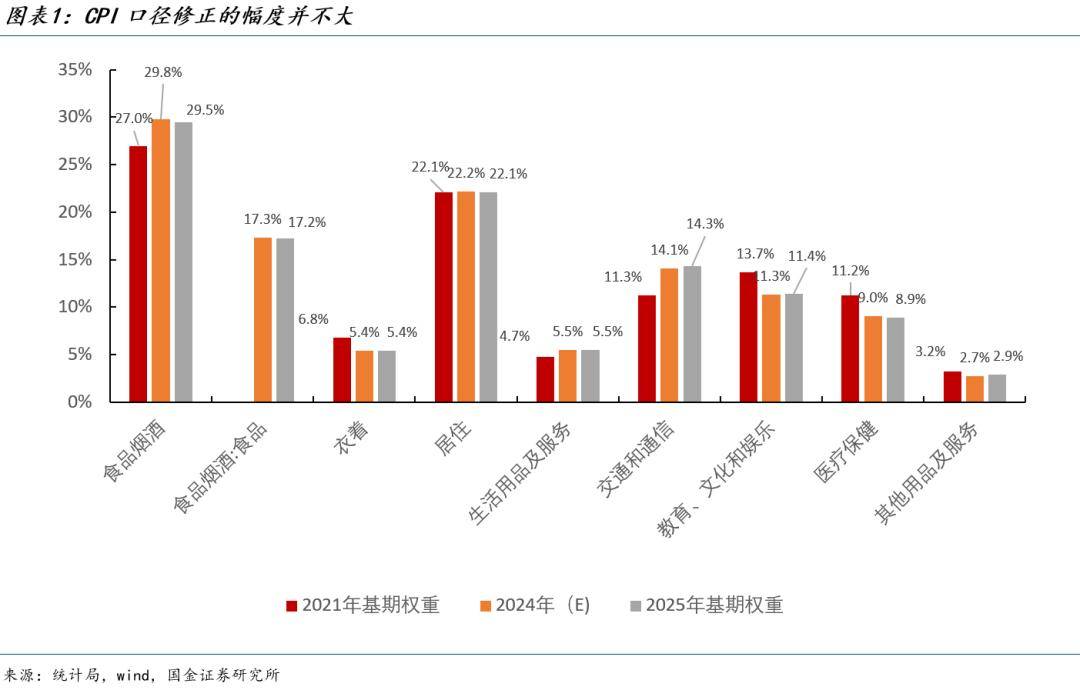
Core Viewpoint - The Producer Price Index (PPI) may turn positive in some months of the second quarter due to low base effects and sustained demand in AI-related industries, but its sustainability depends on whether real estate investment stabilizes [1][12]. Group 1: Price Data Overview - In January 2026, the Consumer Price Index (CPI) decreased by 0.6 percentage points year-on-year to 0.2%, while the PPI increased by 0.5 percentage points to -1.4% due to input inflation [2]. - The impact of the price data revision is minimal, with the average effect on CPI and PPI year-on-year indices being approximately 0.06 and 0.08 percentage points, respectively [3]. - The weight distribution of CPI categories remains largely unchanged, with food, clothing, housing, and other categories maintaining their respective weights [3]. Group 2: Industry Contributions to PPI - The weight of midstream industries, such as electrical machinery and computer manufacturing, has steadily increased, while the share of downstream industries has slightly decreased [5]. - Gold prices have significantly supported CPI, contributing 0.3 percentage points, while AI-related investments have driven PPI up by 0.9 percentage points [7]. - In January, the PPI for non-ferrous metal mining and smelting industries increased by 22.7% and 17.1% year-on-year, respectively, contributing 1.1 percentage points to the PPI increase [8]. Group 3: Future PPI Outlook - The PPI is expected to turn positive in the second quarter of this year, with tailwind factors contributing to a potential increase from -1.5 percentage points at the beginning of the year to around +0.4 percentage points by July [12]. - If the PPI month-on-month average stabilizes above 0%, it could lead to a positive year-on-year PPI starting in June [12]. - The sustainability of price increases depends on downstream demand and the stabilization of real estate investments, which have been a drag on PPI due to negative growth in recent years [13].
输入性通胀、物价口径修正、AI传导、PPI何时转正(国金宏观孙永乐)
雪涛宏观笔记· 2026-02-12 03:22
Core Viewpoint - The PPI may turn positive in certain months of Q2 2026 due to low base effects and sustained demand in AI-related industries, but its sustainability depends on whether real estate investment stabilizes [2][17]. Group 1: Price Data Overview - In January 2026, the CPI decreased by 0.6 percentage points year-on-year to 0.2%, while the PPI increased by 0.5 percentage points to -1.4% due to input inflation [4]. - The impact of the price data revision is minimal, with the average effect on CPI and PPI year-on-year indices being approximately 0.06 and 0.08 percentage points, respectively [5]. - The weight distribution of CPI categories remains largely unchanged, with food, clothing, and housing accounting for significant portions of the index [5]. Group 2: Industry Contributions to PPI - The weight of midstream industries like electrical machinery and electronic equipment manufacturing, as well as non-ferrous metals, has steadily increased, while the share of black-related and downstream industries has slightly decreased [6]. - Gold prices have significantly supported CPI, contributing 0.3 percentage points, while AI-related investments have driven PPI up by 0.9 percentage points [8]. - In January, the PPI for non-ferrous metal mining and smelting industries rose by 22.7% and 17.1% year-on-year, respectively, contributing 1.1 percentage points to the PPI increase [8]. Group 3: Future PPI Trends - The PPI is expected to turn positive in Q2 2026, with tail effects contributing to this change, potentially moving from -1.5 percentage points at the beginning of the year to around +0.4 percentage points by July [13]. - If the PPI's month-on-month average stabilizes above 0%, it could lead to a positive year-on-year PPI by June, with a potential increase of around 1% [16]. - The sustainability of price increases will depend on downstream demand and the stabilization of real estate investments, which have been a drag on PPI due to declining property investments [17].

天南电力筹备北交所上市:58岁董事长姚建生兼任总经理,儿子、小舅子均任副总
Sou Hu Cai Jing· 2026-02-11 01:46
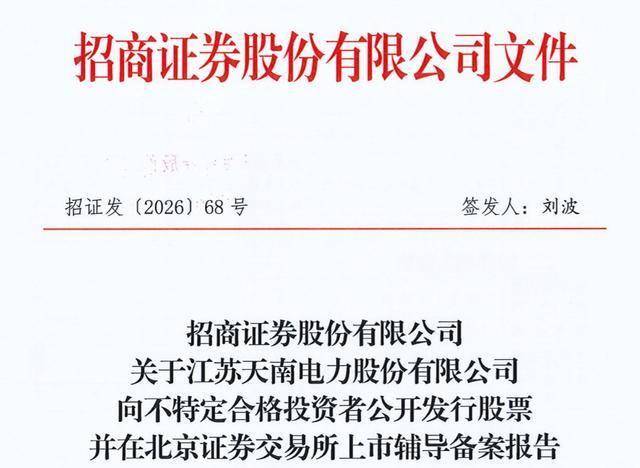
Core Viewpoint - Jiangsu Tiannan Electric Power Co., Ltd. has initiated the IPO counseling record with the Jiangsu Securities Regulatory Bureau, aiming to list on the Beijing Stock Exchange, with China Merchants Securities as the counseling institution [2] Company Overview - Jiangsu Tiannan Electric Power was established on August 5, 1999, with a registered capital of 54.3 million yuan [3] - The company is primarily engaged in the research, design, production, and sales of electrical fittings, focusing on the construction and operation of ultra-high voltage and high voltage power grid main lines [3] - The controlling shareholder, Yao Jiansheng, directly holds 88.88% of the company's shares [4] Financial Performance - In the first half of 2025, the company achieved an operating income of 367.49 million yuan, a year-on-year increase of 41.67% [4] - The net profit attributable to shareholders reached 96.81 million yuan, reflecting a significant year-on-year growth of 234.83% [4] - For the year 2024, the company reported an operating income of 733 million yuan, up 49.69% year-on-year, and a net profit of 118 million yuan, an increase of 51.98% [4] Shareholding Structure - The actual controllers of the company are Yao Jiansheng and his spouse, Mao Songlan, who together hold 93.56% of the shares [5] - Yao Jiansheng serves as the chairman and general manager, while Mao Songlan is a board member [5] Management Background - Yao Jiansheng, born in June 1968, has extensive experience in the industry, having founded multiple companies and held various managerial positions since 1988 [6] - Mao Songlan, born in December 1968, has also been involved in the industry since the 1990s, holding various roles within the company [6] - Their son, Yao Dongyu, and Mao Songlan's brother, Mao Songhua, are also involved in the company's management [7]
中原证券河南资本市场月报-20260115
Zhongyuan Securities· 2026-01-15 09:37
Economic Performance - In November 2025, Henan's industrial production maintained strong momentum with a year-on-year growth of 8.0%, surpassing the national average by 3.2 percentage points [21][24] - The province's social retail sales reached 2691.99 billion yuan, growing by 4.4% year-on-year, which is 3.1 percentage points higher than the national average [22][24] - Fixed asset investment in Henan increased by 4.3% year-on-year, outperforming the national average by 6.9 percentage points [23][24] Market Overview - In 2025, the Henan Index rose by 44.02%, outperforming the Shanghai Composite Index by 25.61 percentage points and the CSI 300 Index by 26.36 percentage points [55][57] - The top three A-share performers in Henan were Shijia Photon (442.55%), Litong Technology (217.20%), and Guojin Precision (212.43%) [60] - The top three H-share performers were Lingbao Gold (527.26%), Weiye Holdings (407.63%), and Luoyang Molybdenum (281.05%) [60] Company Listings - As of the end of 2025, Henan had a total of 138 listed companies, including 113 A-shares and 31 H-shares, maintaining its rankings at 12th and 9th nationally [65] - In 2025, only one new company was added to the listings in Henan, which was Aerospace Hongtu, migrating from Beijing to Hebi [65] - There were no IPOs completed in Henan in 2025, with only Shenglong Co. passing the review and awaiting issuance [65] Investment Opportunities - The report suggests focusing on three key themes for investment in 2026: the integration of the real economy and digital economy, strategic mergers and acquisitions driven by state-owned enterprise reforms, and companies related to the health and elderly care industries [6]




宁波弘讯科技股份有限公司关于股票交易风险提示公告
Shang Hai Zheng Quan Bao· 2026-01-12 18:13
Core Viewpoint - Ningbo Hongxun Technology Co., Ltd. has experienced significant stock price fluctuations, with a cumulative increase of over 20% in closing prices over two consecutive trading days, raising concerns about potential risks associated with short-term price volatility [2][3]. Group 1: Stock Price Fluctuations - The company's stock price increased by 34.51% on January 9 compared to January 5, indicating a substantial short-term price rise [2][3]. - The trading volume over the last three trading days reached 1.317 billion yuan, with a high turnover rate of 13.88% on January 9, compared to an average turnover rate of 3.01% in the previous four trading days [3]. - The company has issued a warning regarding the risks of potential price declines following significant short-term increases [2][3]. Group 2: Business Operations and Revenue - The company primarily operates in three sectors: automation, digitalization, and new energy, and does not engage in humanoid robot business [2][6]. - The Italian subsidiary, EQUIPAGGIAMENTI ELETTRONICI INDUSTRIALI S.P.A. (EEI), only provides components for fusion devices, which contributes a small portion to the company's overall revenue [2][7]. Group 3: Financial Performance - For the first nine months of 2025, the company reported a revenue of 608.8041 million yuan, a decrease of 5.65% year-on-year, and a net profit attributable to shareholders of 32.0491 million yuan, down 35.18% year-on-year [4]. - As of January 9, 2026, the company's stock price was 17.11 yuan, with a rolling price-to-earnings (P/E) ratio of 148.98, significantly higher than the industry average P/E ratio of 24.55 [5]. Group 4: Market Perception and Media Reports - The market has categorized the company as a "fusion concept stock" and "humanoid robot concept stock," which the company has clarified is inaccurate as it does not engage in humanoid robotics [2][6]. - The company emphasizes that the revenue from its fusion-related business is limited and does not significantly impact its short-term performance [2][7].

李迅雷专栏 | 大国博弈,科技领航——2026年中国经济展望
中泰证券资管· 2026-01-07 12:15
Core Viewpoint - The GDP growth target for 2026 is expected to remain around 5%, with macro policies aimed at promoting consumption and expanding investment to ensure a good start for the "14th Five-Year Plan" [1][6] Export Performance - China's exports are expected to maintain resilience, with a projected nominal growth of 3.4% year-on-year in 2026, supported by factors such as strong external demand and stable Sino-US tariffs [8][12][32] - In 2025, China's export performance exceeded expectations, with nominal year-on-year growth rates of 5.4% in USD and 6.2% in RMB for the first 11 months [9] - The contribution of net exports to GDP growth in the first three quarters of 2025 was 1.5 percentage points, accounting for 29% of the total GDP growth [9] Manufacturing Investment - Manufacturing investment is expected to recover slightly from 1% in 2025 to around 2% in 2026, supported by resilient exports and policy support for advanced manufacturing [2][62] - The decline in manufacturing investment observed since Q3 2025 is attributed to factors such as "strong supply, weak demand" and trade uncertainties [41][47] - The government is likely to continue supporting advanced manufacturing through fiscal, credit, and industrial policies, emphasizing the importance of technological independence [40][52] Real Estate Sector - The direct drag of the real estate sector on the economy is expected to weaken, with a projected year-on-year decline of 5% in housing sales area for 2026 [63][64] - Real estate investment is anticipated to decline by approximately 11% year-on-year in 2026, an improvement from a 16% decline in 2025 [63][66] - Policies aimed at stabilizing the real estate market are being strengthened to prevent negative spillovers to other sectors [66][68] Consumption and Investment - Expanding domestic demand is crucial for achieving the 5% GDP growth target in 2026, with a focus on promoting consumption and investment [70][75] - The government is expected to maintain support for consumption through long-term special bonds, with a focus on enhancing consumer sentiment and addressing high baseline effects from previous consumption incentives [4][73] - Infrastructure investment is projected to rebound to around 8% year-on-year in 2026, supported by previously announced policies [4][70]