
核电

Search documents
中国风电锚定“50亿千瓦”新目标,央企现代能源ETF(561790)备受关注,石化油服涨停
Xin Lang Cai Jing· 2025-10-22 05:54
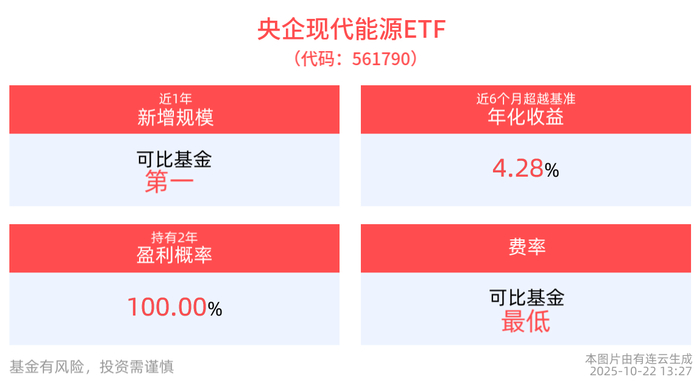
Core Insights - The China Securities National New State-Owned Enterprises Modern Energy Index has seen a slight decline of 0.13% as of October 22, 2025, with mixed performance among constituent stocks [3] - The "Wind Energy Beijing Declaration 2.0" was released on October 20, 2025, at the International Wind Energy Conference, setting ambitious targets for wind power installation during the 14th and 15th Five-Year Plans [3] Group 1: Market Performance - The top-performing stocks include PetroChina Oilfield Services, which rose by 10.00%, and China Nuclear Engineering, which increased by 4.10% [3] - The recent trading volume for the National Modern Energy ETF was 161.57 million yuan, with a turnover rate of 3.62% [3] - Over the past year, the National Modern Energy ETF has seen an average daily trading volume of 615.35 million yuan [3] Group 2: Policy Changes - Starting November 1, 2025, the 50% VAT refund policy for onshore wind power will be canceled, while the policy for offshore wind power will continue until the end of 2027 [4] - The cancellation of tax incentives for onshore wind power is expected to impact net profits by approximately 19%, creating short-term pressure on profitability [4] Group 3: Industry Outlook - Despite the short-term challenges, the long-term outlook for the wind power industry remains robust due to China's commitment to its "dual carbon" strategy [4] - The wind power supply chain is anticipated to enter a recovery phase, with a focus on leading turbine manufacturers and offshore expansion [4] - The "Two Seas" strategy for wind power equipment is expected to enhance market share and overall profitability for companies in the sector [4] Group 4: Index Composition - As of September 30, 2025, the top ten weighted stocks in the index include Changjiang Electric Power and China Nuclear Power, accounting for 47.72% of the index [6]


连连突破彰显能源科创硬实力(锐财经)
Ren Min Ri Bao Hai Wai Ban· 2025-10-21 23:02
Core Achievements in China's Energy Sector - On October 16, multiple significant breakthroughs were achieved in China's energy sector, including the successful cold test of the world's first commercial modular small reactor "Linglong No. 1," the inauguration of the first national deep-water oil and gas emergency rescue base, and the full commissioning of the first million-kilowatt peak-shaving thermal power project in Northwest China [2][3][4]. Breakthroughs in Nuclear Energy - "Linglong No. 1" is the first land-based commercial modular reactor to pass the International Atomic Energy Agency's safety review, marking a major advancement in China's nuclear power innovation. The successful cold test demonstrates China's comprehensive capabilities in new nuclear energy system design and high-end equipment manufacturing [3]. Emergency Response Enhancements - The establishment of the national deep-water oil and gas emergency rescue base in Hainan significantly reduces emergency response times in southern China's offshore oil and gas sector. This base, developed over seven years, complements the Tianjin base, enhancing the overall emergency response framework [4]. Accelerated Project Development - Recent months have seen rapid advancements in energy projects, including the world's first "dual-tower one-machine" solar thermal storage power station entering trial operation, and the completion of the first coal-to-natural gas demonstration project in Northeast China [4]. Technological Innovations - China's energy sector has seen the completion of several major projects, such as the Baihetan Hydropower Station and the third-generation nuclear power plants "Hualong One" and "Guohe One." These projects highlight China's technological prowess in energy innovation [5][6]. Strengthening Energy Independence - The country is enhancing its energy independence through major technological projects and energy engineering, achieving breakthroughs in various fields, including renewable energy generation and advanced nuclear power [7]. New Energy Infrastructure Development - By the end of 2027, China plans to establish 28 million charging facilities with over 300 million kilowatts of public charging capacity, as part of a three-year action plan to enhance electric vehicle charging infrastructure [8]. Integration of AI in Energy Sector - Artificial intelligence is increasingly being applied in the energy sector, enhancing capabilities in areas such as renewable energy generation and oil and gas resource discovery, thus driving new vitality in the industry [9].

优势产业逐绿而行
Jing Ji Ri Bao· 2025-10-21 22:00
Group 1 - The core viewpoint highlights the transition of Dalian's traditional industries towards green energy, with significant contributions from offshore wind power and nuclear energy, leading to an increase in the share of clean energy [1][2] - Dalian's power grid has established the world's largest vanadium flow battery energy storage station with a total capacity of 200,000 kW, enhancing grid resilience and ensuring rapid power restoration during extreme weather conditions [1] - By the end of 2024, Dalian's total installed capacity of clean energy is expected to exceed 10 million kW, with both installed capacity and power generation accounting for over 60% [1] Group 2 - The first batch of 1000 kW battery-powered locomotives, developed by CRRC Dalian, has been put into operation, marking a significant breakthrough in replacing old diesel locomotives with clean energy alternatives [2] - The battery-powered locomotives utilize high-capacity lithium iron phosphate batteries, achieving a charging time of 70 minutes and reducing energy costs to only 12.7% of traditional diesel locomotives, with each locomotive capable of reducing carbon emissions by 362 tons annually [2] - Dalian's industrial sector has seen substantial achievements in green development, with 12 enterprises recognized as national green factories and 23 as provincial green factories [2]
如何评估风电与核电增值税政策调整的影响?
2025-10-21 15:00
Summary of Key Points from the Conference Call Industry Overview - The conference call primarily discusses the impact of VAT policy adjustments on the wind power and nuclear power industries [1][2]. Core Insights and Arguments - **Nuclear Power Impact**: - Existing operational nuclear units are unaffected by the VAT policy changes. However, approved but not yet operational units will see a reduction in the VAT refund period from 15 years to 10 years, with a refund rate lowered to 50%. New approved projects will not benefit from any VAT incentives [1][2]. - The financial impact on approved but not operational nuclear units is estimated to be between 350 million to 400 million yuan, primarily affecting years 6 to 15. New approved projects may face around 500 million yuan in financial impact [3]. - **Wind Power Impact**: - For onshore wind power, profitability per GW is expected to decrease by approximately 0.11 yuan, representing a 6% decline. Offshore wind power will see a more significant reduction, with profitability per GW decreasing by 0.41 yuan. The competitiveness of onshore wind power will drop by 0.3 percentage points, while offshore wind power will decrease by 0.6 percentage points [1][3][4]. - **Market Reaction**: - The market's response to these policy changes has been relatively stable, with only a few companies significantly affected by the tax refund changes experiencing noticeable declines. Overall, most wind power operators and major nuclear power operators have shown stable performance due to low valuations of green electricity and nuclear power, with limited fundamental impacts [5]. - **Long-term Outlook for Nuclear Sector**: - The VAT policy changes are not expected to significantly impact the long-term investment value of the nuclear sector. Despite uncertainties from the pressure to decarbonize thermal power and rising coal prices, these factors may limit the decarbonization process of thermal power, which could benefit clean energy sources [6]. Additional Important Insights - **Green Energy Trends**: - The "Document No. 136" protects the tax rates of older projects. High-energy-consuming industries are mandated to use green energy, with sectors like aluminum required to purchase a certain percentage of green energy starting in 2025. Other industries such as steel, cement, data centers, and polysilicon may also be included in this system in the coming years. Significant subsidy funds released in August and September have alleviated some overdue payment issues, indicating that green energy has left-side investment value [7]. - **Investment Potential in Fujian Coastal Operators**: - Fujian coastal operators, such as Funiu and Zhongmin, are expected to benefit from two favorable factors: improved performance since the third quarter and the anticipated distribution of projects as part of the 14th Five-Year Plan, which may address valuation issues due to a lack of growth [8].
中核资本与辽宁金控签署战略合作框架协议
Zheng Quan Shi Bao Wang· 2025-10-21 12:21
Core Viewpoint - The strategic cooperation framework agreement signed between China National Nuclear Corporation (CNNC) and Liaoning Financial Holdings Group marks a significant step towards enhancing nuclear technology innovation and clean energy projects in Liaoning province, aiming to transform it from a supporting province to a strong nuclear industry province [1] Group 1: Agreements and Collaborations - CNNC signed a strategic cooperation framework agreement with Liaoning Financial Holdings Group [1] - The China National Nuclear Power Research Institute and Liaoning Provincial Department of Science and Technology signed a comprehensive cooperation framework agreement in the field of technological innovation [1] Group 2: Future Goals and Initiatives - Liaoning's provincial secretary expressed the intention to leverage the agreements to accelerate the development of nuclear technology innovation platforms and nuclear power industry clusters [1] - The collaboration aims to support the revitalization of Northeast China and Liaoning province by enhancing the nuclear industry [1]

新能源板块延续涨势,关注储能电池ETF(159566)、新能源ETF易方达(516090)等投资价值
Sou Hu Cai Jing· 2025-10-21 11:14
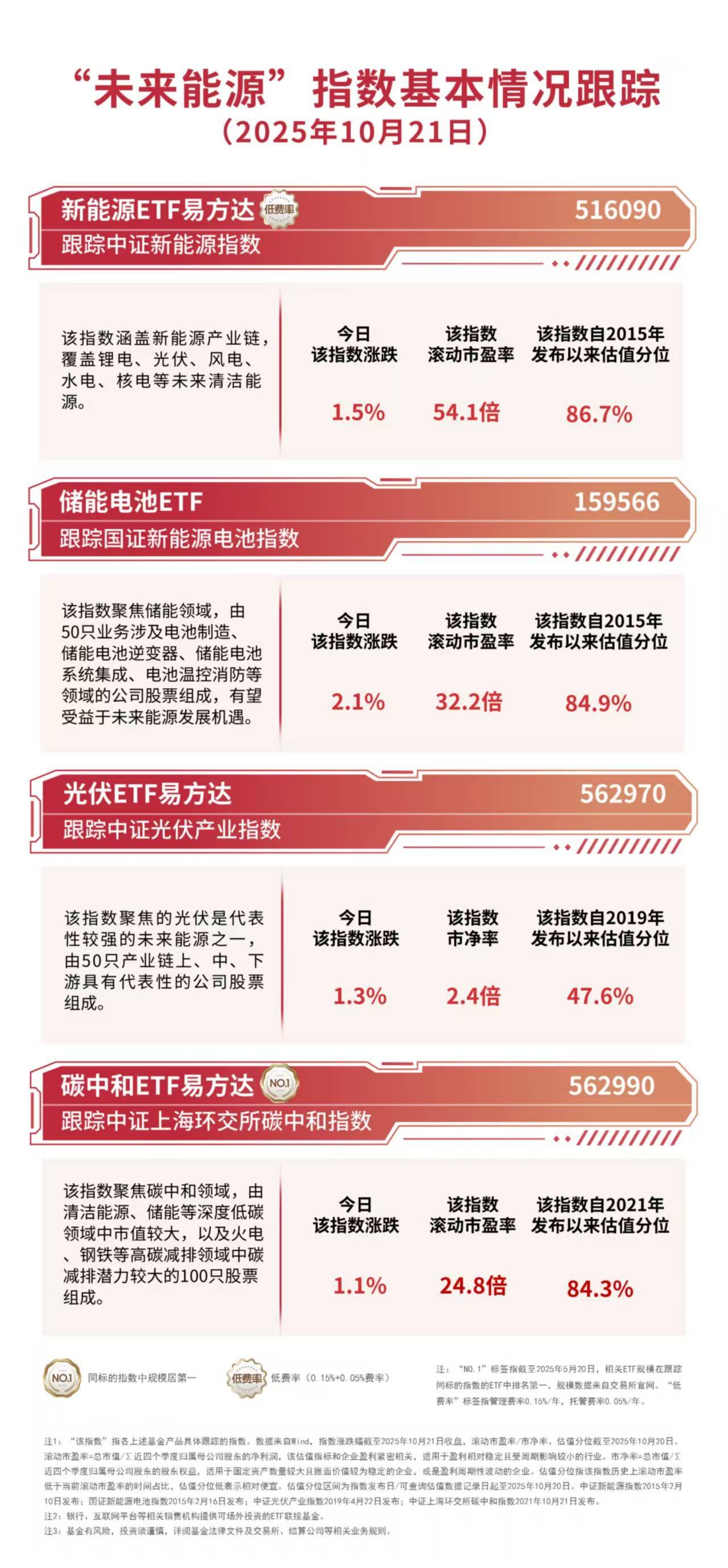
Group 1 - The E Fund New Energy ETF tracks the China Securities New Energy Index, covering the entire new energy industry chain, including lithium batteries, photovoltaics, wind power, hydropower, and nuclear power [1] - The index has shown a performance increase of 1.5% since its inception, with a rolling price-to-earnings ratio of 54.1 and an estimated return of 86.79% [1] - The E Fund Energy Storage Battery ETF tracks the National Securities New Energy Battery Index, focusing on the energy storage sector, comprising 50 companies involved in battery manufacturing and related technologies [1] - This index has experienced a performance increase of 2.1% since its inception, with a rolling price-to-sales ratio of 32.2 and an estimated return of 84.9% [1] Group 2 - The photovoltaic sector is highlighted as a strong representative of future energy, consisting of 50 representative companies across the upstream, midstream, and downstream of the industry chain [2] - The photovoltaic index has recorded a performance increase of 1.3% since its inception, with a price-to-book ratio of 2.4 and an estimated return of 47.69% [2]
中国缩减风电与核电增值税退税影响-China – Clean Energy-China Scales Back VAT Refunds for Wind and Nuclear Power
2025-10-21 01:52
Solar: 50% VAT refund has not been extended since 2018. October 20, 2025 12:40 AM GMT China – Clean Energy | Asia Pacific China Scales Back VAT Refunds for Wind and Nuclear Power Key Takeaways China's Ministry of Finance, State Taxation Administration and General Administration of Customs announced VAT refund policy changes: Wind Nuclear We estimate VAT refund removal for onshore wind will save the government ~Rmb25bn in subsidy payments each year. Longyuan got VAT refunds of Rmb901mn in 2024 and Rmb481mn i ...
风电和核电增值税优惠调整,弹性测算
2025-10-20 14:49
Summary of Key Points from the Conference Call Industry Overview - The conference call discusses the impact of VAT policy adjustments on the wind power and nuclear power industries, effective from November 2025 [1][2]. Core Insights and Arguments - **VAT Policy Changes**: - Onshore wind power will lose its VAT exemption and will be subject to a full 13% VAT starting November 2025. Offshore wind power will enjoy a 50% immediate refund from November 2025 until the end of 2027, after which it will also be fully taxed [1][2]. - **Profit Impact**: - The VAT adjustment is estimated to reduce profit by approximately 0.017 CNY per kilowatt-hour (kWh) for wind power projects. For a 1 GW wind project, this translates to a profit decrease of about 40 million CNY [1][3][4]. - **Company-Specific Performance**: - Different companies will experience varying impacts: - Longyuan Power: Expected profit decline of 11% - Zhongmin Energy: Expected decline of 5% - Huaneng New Energy: Expected decline of 4% - Jieneng Wind Power: Expected decline of 7% - Three Gorges Energy: Expected decline of 3% [1][6]. - **Long-term Investment Outlook**: - Despite a slight decrease in overall investment returns (0.5-1 percentage points) and capital returns (1-2 percentage points), onshore wind resources remain attractive with a central return level around 15%, higher than offshore wind (9%) and solar (7.5%) [7][8]. Additional Important Content - **Impact on Equipment Manufacturers**: - Companies like Goldwind Technology may see a 5-10% impact on overall performance due to the policy changes, but the overall demand for new installations remains strong due to clear planning for renewable energy capacity [3][12]. - **Nuclear Power Specifics**: - The VAT policy for nuclear power is divided into three categories, with existing operational units maintaining the original policy and new projects post-October 2025 not receiving any VAT refunds. The short-term impact on nuclear profits is expected to be limited [10][11]. - **Market Reaction**: - The overall sentiment suggests that while there will be some performance impact on the renewable energy sector, it is not expected to lead to significant downturns. The market's overreaction could present investment opportunities [13]. This summary encapsulates the key points discussed in the conference call regarding the VAT policy changes and their implications for the wind and nuclear power industries.
中国核电:公司核电项目增值税返还基本按照权责发生制核算,一般在正常结算周期内均可收到返还资金
Zheng Quan Ri Bao· 2025-10-20 13:17
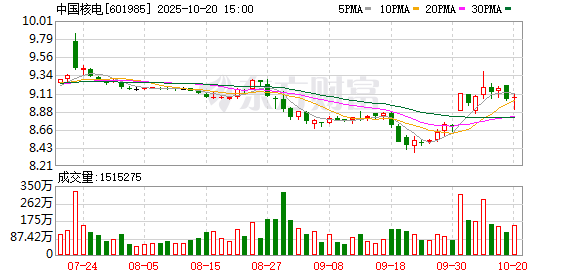
Core Insights - China Nuclear Power stated on October 20 that the value-added tax (VAT) refunds for its nuclear power projects are generally received within the normal settlement cycle, based on the accrual basis of accounting [2] Company Summary - The company has clarified its accounting practices regarding VAT refunds, indicating a structured approach to financial management [2]
中国核电:通过数智化建设智慧电厂,赋能传统能源产业升级,持续增强企业核心竞争力和价值创造能力
Zheng Quan Ri Bao Wang· 2025-10-20 13:13
Core Viewpoint - The company aims to enhance its core competitiveness and value creation capabilities through a new strategy focused on "intensification, standardization, and digitalization" [1] Group 1: Strategic Initiatives - The company plans to integrate resources intensively to reduce costs and improve efficiency [1] - It will establish unified management standards to strengthen safety foundations and continuously enhance operational efficiency [1] - The company is committed to building smart power plants through digitalization to empower the traditional energy industry's upgrade [1] Group 2: Policy Support and Collaboration - The company will continue to collaborate with other nuclear power groups to seek policy support from national ministries, particularly regarding electricity pricing [1] - This effort aims to provide strong support for the healthy development of the nuclear power industry [1]