
种植业

Search documents
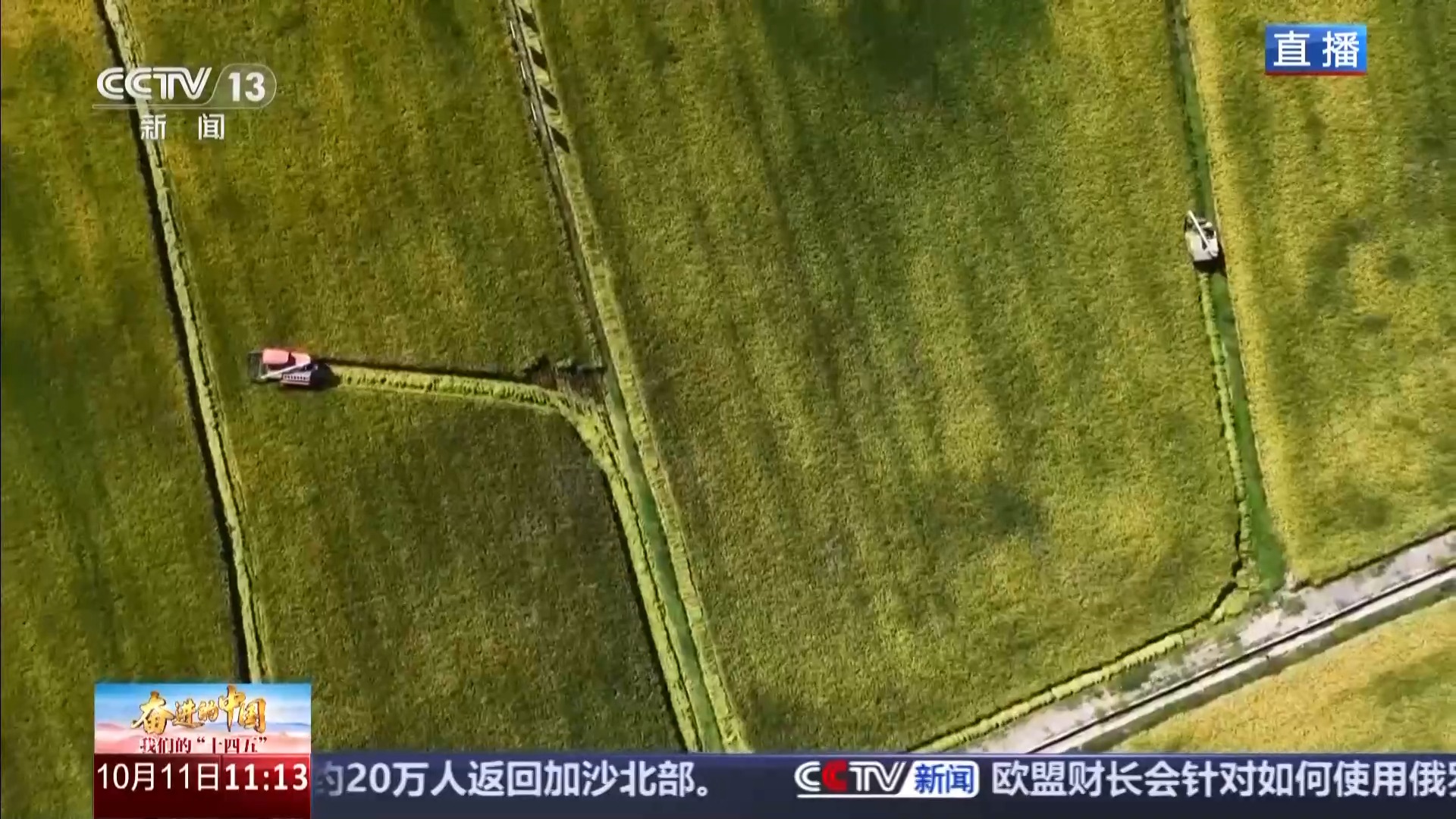
科技赋能单产提升 记者探访“大国粮仓”第一线
Yang Shi Xin Wen Ke Hu Duan· 2025-10-11 11:55
Core Insights - China's high-standard farmland area has exceeded 1 billion mu, with over half of the arable land capable of irrigation and drainage, ensuring that over 95% of the crops are grown from domestically bred varieties [1] - The promotion of integrated yield-increasing technologies is essential for enhancing grain production capacity, which includes good land, good seeds, good timing, and good methods [1] - The implementation of yield-increasing actions for rice has been expanded in 2023, following successful initiatives for corn and soybeans in 2022, and for wheat and rapeseed in 2024 [1] Group 1: High-Standard Farmland - High-standard farmland provides a solid foundation for increasing yields, characterized by its flatness which facilitates the operation of harvesting machinery and reduces losses [5] - The flat terrain allows for precise irrigation and drainage, essential for the varying water needs of rice at different growth stages [5][7] Group 2: Technological Innovations - The introduction of high-quality seed varieties with high seed-setting rates and disease resistance is crucial for yield improvement [9] - Innovative sowing techniques, such as "precision strip sowing," enhance seed efficiency and increase seedling rates compared to traditional methods [9] - Improved soil quality, with enhanced water and nutrient retention capabilities, is vital for successful rice cultivation [9] Group 3: Comprehensive Agricultural Services - Establishment of agricultural service centers provides full-process socialized services, ensuring efficient drying and management of harvested rice [11] - The comprehensive management from seedling to harvesting ensures that every grain is accounted for and quality is maintained [11] Group 4: Nationwide Impact - The yield-increasing actions are being implemented in 702 counties across the country, aiming to elevate the production levels of large fields to match those of experimental fields [13]

河北:多点发力抢收秋粮 科学指导小麦播种
Xin Hua She· 2025-10-11 10:46
在河北省邯郸市,农业部门在调度多台履带式收割机投入抢收的同时,组织技术人员对现有收割机进行 现场改装,通过加装"双轮并行"或辅助驱动装置,提升农机在湿软地面的通过性。 "你看地里,履带式收割机正在抢收,收下来的湿粮,立马运到我边上的烘干塔。"邯郸市魏县种粮大户 牛永飞指着正在作业的机械和自家的烘干塔说,"这样抢出来的粮食,品质有保证,损失能降到最低。" 连日来,河北省大部分地区出现连续降水过程,局地农田出现积水。针对气象条件和生产形势,河北各 地采取一系列有力措施,将秋粮收获到手,抢抓农时播种小麦。 受阴雨天气影响,河北省衡水市500余万亩秋粮收获、晾晒、存储面临挑战。衡水市各级各部门把握秋 季农业生产关键节点,分区分类开展抢收、烘干、收购和收储工作,确保秋粮丰收到手。 衡水市阜城县组建青年党员抢收服务队,根据抢收技术要点和气象预警信息,精准对接零散地块组织人 工辅助收获。同时,联系收储企业开辟湿粮收购绿色通道,协调烘干企业满负荷提供"成本价代烘干"服 务,有效减少秋粮损耗。 "在古城镇蒋庄村西头地势低洼,地里存水较多,收割机不能下地作业。我们和村民一起帮忙抢收了蒋 庄村10余亩玉米地。"阜城县青年党员抢收服 ...
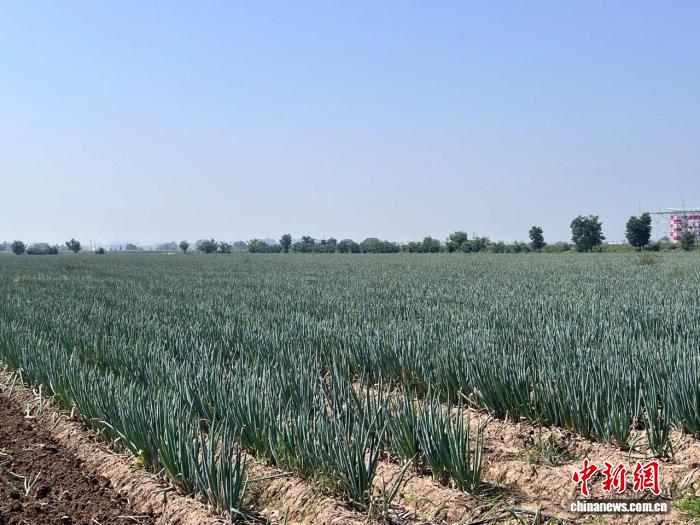
(乡村行·看振兴)山西长治潞城区:700亩旱地大葱错峰上市 助农增收
Zhong Guo Xin Wen Wang· 2025-10-11 10:11
Core Viewpoint - The article highlights the successful cultivation and marketing of drought-resistant scallions in Shanxi's Changzhi Lucheng District, which has significantly increased farmers' income through a staggered planting model and effective sales strategies [1][2]. Group 1: Agricultural Practices - The base has planted over 700 acres of drought-resistant scallions, using high-quality varieties and implementing scientific fertilization and green pest control measures to ensure quality and yield [2]. - The staggered planting model, initiated last year, allows for planting after soil thawing in March, which helps avoid peak harvest periods and gives farmers control over sales [2]. Group 2: Yield and Market Dynamics - The new scallion variety has shown excellent growth, achieving a yield of approximately 15,000 pounds per acre, with reduced transportation losses ensuring better profitability for farmers [2]. - Despite a decrease in market prices this year, high yields allow farmers to remain profitable, with prices around six cents per pound [2]. Group 3: Sales and Distribution - The company has established a mature production and sales network, enabling real-time updates on harvest times, progress, and planting scale, which enhances sales efficiency [2]. - Buyers from various regions, including Henan, have returned for purchases due to the high quality and suitability of the scallions for long-distance transport, contributing to a stable market [4].
重大突破!北京植保站新技术助力对抗“入侵杀手”番茄潜叶蛾
Xin Jing Bao· 2025-10-11 09:52
Core Insights - The Beijing Plant Protection Station has successfully developed a comprehensive pest control technology for the tomato leaf miner, which has been recognized as a key agricultural technology for the coordinated development of Beijing-Tianjin-Hebei [1][2] - The tomato leaf miner is a highly destructive pest that can cause significant yield losses in tomato production, with potential reductions of 20% to 30% and severe cases leading to 80% to 100% losses [1] Summary by Sections Technology Development - The newly developed technology integrates various pest control methods, including agricultural, physical, biological, and chemical strategies, creating a green, efficient, and sustainable pest management system [1] - A collaborative agreement has been established with Tianjin for monitoring and controlling the tomato leaf miner, enhancing regional cooperation [1] Effectiveness of Control Measures - The overall effectiveness of the pest control measures is maintained at over 90%, with significant reductions in pest damage observed in greenhouses, where the average affected plant rate decreased from 23.8% to 7.6%, and the average fruit damage rate dropped from 6.8% to 2.6% [2] - This comprehensive control technology provides solid technical support for preventing the spread of the tomato leaf miner in the Beijing-Tianjin-Hebei region, contributing to the high-quality development of the local tomato industry [2]
河南秋作物收获已过9000万亩
Xin Hua Cai Jing· 2025-10-11 08:32
Core Insights - As of October 10, 2023, Henan Province has harvested 91.06 million acres of autumn crops, accounting for 77% of the total, with a daily harvesting progress of 3.74 million acres [1] Summary by Categories Harvest Progress - The harvested autumn crops include 59.63 million acres of grain crops, with specific figures of 48.63 million acres of corn, 6.46 million acres of rice, and 2.81 million acres of soybeans [1] - Groundnut has been harvested from 15.17 million acres [1] Regional Performance - The cities with over 80% harvesting progress include Nanyang, Shangqiu, Kaifeng, Zhoukou, Pingdingshan, Puyang, and Luohe [1] - Cities with over 70% progress are Xinyang, Zhengzhou, Zhumadian, and Xuchang, while Anyang and Xinxiang have over 60% [1] - Luoyang and Sanmenxia have over 50%, Hebi over 40%, Jiyuan over 30%, and Jiaozuo over 20% [1] Weather Impact - Continuous rainy weather in Henan has negatively affected the timely harvesting and drying of autumn grain, prompting emergency measures for harvesting and drying to ensure a good harvest [1]
新华时评丨迎战连阴雨,秋收秋种抓好“抢”和“保”
Xin Hua She· 2025-10-11 08:03
Core Viewpoint - The article emphasizes the urgent need for effective measures to ensure the successful autumn harvest and planting amidst continuous rainy weather affecting key agricultural regions in China, particularly Henan, Shandong, and Anhui [1][2]. Group 1: Current Challenges - Continuous rainy weather has led to waterlogging in farmlands, hindering both the progress of autumn harvest and the planting of winter crops [1][2]. - The agricultural sector has faced various natural disasters this year, including droughts and floods, but has managed to stabilize summer grain production and increase early rice yields [1]. Group 2: Response Measures - The Ministry of Agriculture and Rural Affairs has established a task force to coordinate the emergency deployment of harvesting and drying machinery across provinces, alongside financial support for disaster relief [2]. - Local authorities are utilizing every opportunity during breaks in the rain to organize round-the-clock harvesting efforts, aiming to minimize losses in the fields [2]. Group 3: Future Planning - There is a focus on ensuring the stability of autumn grain prices and securing reasonable profits for farmers through coordinated efforts in grain purchasing and insurance claims [3]. - Long-term strategies include enhancing agricultural disaster prevention and mitigation capabilities, addressing shortcomings in grain drying and storage facilities, and improving comprehensive agricultural service centers [3].
中国气象局:气象风险预警助力冬小麦增收83亿斤
Xin Lang Cai Jing· 2025-10-11 07:46
Core Insights - The Chinese government is focusing on high-quality completion of the "14th Five-Year Plan" with an emphasis on agricultural production and economic crop stability [1] Group 1: Agricultural Weather Risk Management - The China Meteorological Administration is collaborating with agricultural and rural departments to conduct agricultural meteorological disaster risk warnings [1] - Since the beginning of the "14th Five-Year Plan," risk warnings for dry hot winds affecting winter wheat have contributed to an increase in grain production by 8.3 billion jin [1] Group 2: Food Security Initiatives - During the "14th Five-Year" period, meteorological departments have initiated a new round of agricultural climate resource surveys and zoning work [1] - A global food security meteorological risk monitoring and early warning system is being established and continuously improved to ensure national food security [1]
人工智能如何重塑农业新局
Huan Qiu Wang Zi Xun· 2025-10-11 07:43
Group 1: AI in Agriculture - Artificial intelligence is transforming agriculture by integrating into breeding, planting, and breeding processes, leading to a significant shift from traditional methods to data-driven decision-making [1][2][3] - The Chinese government has initiated the "AI+" action plan to promote the deep integration of AI with various sectors, including agriculture, aiming for a profound digital transformation [1][2] Group 2: Smart Breeding Techniques - High-throughput molecular breeding technology allows for the simultaneous detection of tens of thousands of samples, significantly speeding up the breeding process compared to traditional methods [2][3] - The breeding accelerator can reduce the growth cycle of crops like soybeans from 120 days to as little as 60 days, enabling multiple generations of breeding within a year [4][6] Group 3: Smart Farming Practices - Digital farm management tools are being utilized to optimize agricultural practices, providing real-time data on weather, soil conditions, and crop management [7][9] - AI-driven smart machinery is enhancing efficiency in farming operations, with automated systems for planting, harvesting, and soil management [10] Group 4: Fruit Harvesting Innovations - The introduction of robotic systems for apple picking is revolutionizing the harvesting process, making it safer and more efficient [11][12] - Advanced sorting technologies using AI are improving the quality control of harvested fruits, ensuring only the best products reach the market [13][15] Group 5: Intelligent Pig Farming - The modern "high-rise pig farming" model incorporates AI and IoT technologies to enhance efficiency and animal welfare, significantly reducing disease rates and improving meat quality [17][18][20] - AI systems are being developed to optimize feeding and health monitoring of pigs, allowing for personalized care and management [20] Group 6: Challenges and Future Directions - The integration of AI in agriculture faces challenges such as data interoperability, talent shortages, and high application costs, which need to be addressed for widespread adoption [21][22][24] - Collaborative efforts among government, research institutions, and industry are essential to create a supportive ecosystem for AI in agriculture, ensuring that innovations are effectively implemented [22][24]
新华时评|迎战连阴雨,秋收秋种抓好“抢”和“保”
Xin Hua She· 2025-10-11 07:41
Core Viewpoint - The article emphasizes the urgent need for coordinated efforts to ensure the successful autumn harvest and planting amidst recent continuous rainy weather affecting key agricultural regions in China, particularly Henan, Shandong, and Anhui [1][2]. Group 1: Current Situation - Continuous rainy weather has led to waterlogging in farmlands, hindering both the autumn harvest and planting processes [1]. - As of now, over 50% of the national autumn grain has been harvested, but there are still risks of further rain and waterlogging in some areas [2]. Group 2: Immediate Actions - The Ministry of Agriculture and Rural Affairs has established a task force to coordinate the emergency deployment of harvesting and drying machinery across provinces [1]. - Local authorities are utilizing every opportunity during breaks in the rain to organize round-the-clock harvesting efforts to minimize losses [1][2]. Group 3: Long-term Strategies - There is a need to enhance agricultural disaster prevention and mitigation capabilities, particularly in grain drying and storage, to address shortcomings revealed by the recent weather [2]. - The article highlights the importance of improving infrastructure such as drainage systems and storage facilities to support stable production and supply of essential agricultural products in the face of extreme weather [2].
迎战连阴雨,秋收秋种抓好“抢”和“保”
Xin Hua She· 2025-10-11 07:38
Core Viewpoint - The recent continuous rainy weather in the Huanghuai region, particularly in Henan, Shandong, and Anhui, has impacted the autumn harvest and sowing, making it crucial to ensure a successful autumn grain harvest and timely sowing [1][2]. Group 1: Current Situation - Over 50% of the national autumn grain has been harvested, but there are still risks of continuous rain and farmland waterlogging in some areas [2]. - The Ministry of Agriculture and Rural Affairs has established a task force to coordinate emergency machinery and subsidies for disaster relief [1][2]. Group 2: Response Measures - Local departments are actively organizing efforts to maximize harvests during breaks in the rain, utilizing machinery and manpower to minimize losses [1]. - There is a focus on enhancing the availability and functionality of emergency machinery, including the purchase and modification of equipment to improve performance in wet conditions [2]. Group 3: Long-term Strategies - The response to the recent weather highlights the need to improve agricultural disaster prevention and mitigation capabilities, particularly in grain drying and storage [2]. - Future strategies include strengthening the construction of comprehensive agricultural service centers to support stable production and supply of essential agricultural products [2].