Cloud Computing

Search documents
未知机构:中信科技产业海外AI叙事或重回乐观情形重视海外算力链新一轮上涨机遇-20260202
未知机构· 2026-02-02 02:15
Summary of Conference Call Records Industry Overview - The focus is on the overseas AI industry, particularly the demand for computing power related to AI inference and training, which has recently strengthened. [1][2] Core Insights and Arguments - Recent price increases by Amazon Cloud and Google Cloud indicate a rising demand for AI computing power, with TSMC revising its capital expenditure (Capex) upwards. [1] - Despite limited visibility for large-scale commercialization of AI applications, the demand for computing power is expected to rise further in the next 3-6 months, alleviating concerns about a "computing power bubble." [1] - The emergence of new generation agents like MoltBot is significantly increasing the consumption of inference computing power, enhancing capabilities for complex tasks. [1] - Anthropic is expanding its product offerings with Claude Code and Agent Skills, broadening the application scenarios for agents. [1] Training Demand Insights - The token call volume has been rapidly increasing since early January 2026, indicating a strong upward trend in inference demand, with Anthropic and its cloud service providers likely to be key beneficiaries. [2] - A new wave of models is expected to be released in Q1 2026, with advancements in language models like Grok-5 and GPT-6, as well as rapid iterations in multimodal models such as Veo-4, which will place higher demands on training computing power. [2][3] Financial Catalysts - The upcoming earnings reports from major companies like Meta, Google, and Amazon are anticipated to validate the trends in computing power demand and Capex. [3] - Nvidia's earnings report and the GTC conference in March are expected to further reinforce the investment outlook for computing power throughout the year. [3] Investment Strategy - The demand for computing power is expected to maintain an upward trajectory, leading to a potential recovery in sector sentiment. [3] - Three key investment opportunities are identified: 1. **Cloud Providers**: Companies like Amazon and Google are expected to benefit from increased inference demand driven by agents. [3] 2. **Overseas Computing Power Chain**: Companies such as Nvidia, Zhaoyi Innovation, and others are recommended due to their potential for revaluation amid model iteration. [3] 3. **Model Companies**: Firms like Meta, Google, Alibaba, Tencent, and Minimax are highlighted for potential valuation reappraisal due to exceeding expectations in model capabilities. [3]



甲骨文计划年内筹资至高500亿美元加码云业务投资
Xin Lang Cai Jing· 2026-02-01 23:57
Core Viewpoint - Oracle plans to raise between $45 billion to $50 billion by 2026 through a combination of debt and equity financing to expand its cloud infrastructure capacity [1] Group 1: Financing Strategy - The company aims to raise half of the target amount through equity-linked instruments and common stock issuance, including mandatory convertible preferred stock and an ATM stock issuance plan of up to $20 billion [1] - The remaining funds will be raised through a single bond issuance planned for early 2026 [1] Group 2: Client Demand - Oracle is raising funds to meet the contractual demands of its largest cloud infrastructure clients, which include AMD, Meta, NVIDIA, OpenAI, TikTok, and xAI [1]

Cramer handicaps the collision of 2 more Big Tech earnings and the jobs report
CNBC· 2026-02-01 23:46
Group 1: Alphabet - Alphabet is expected to report strong earnings, with a focus on its self-driving ride service Waymo, valued at $110 billion, which could attract consumer interest [1] - Ruth Porat, Alphabet's president and chief investment officer, is recognized as a highly effective executive, contributing to the company's positive image and performance [1] - The reversal of a previous antitrust ruling has strengthened Google's market position, allowing it to maintain its dominance in the internet space [1] - The launch of Gemini 3 has positioned Google favorably in the consumer AI market, enhancing its competitive edge against other AI products [1] - YouTube and Google Cloud are highlighted as key growth drivers, with YouTube becoming a leading video platform and Google Cloud gaining traction as a viable alternative to AWS and Azure [1] Group 2: Amazon - Amazon's upcoming earnings report is anticipated to impact market sentiment, with analysts expressing mixed feelings about the company's performance [2] - The company has successfully navigated challenges posed by the pandemic, but Wall Street remains skeptical about its consumer-focused business model [2] - Amazon Web Services (AWS) is facing scrutiny regarding its growth rate, but recent improvements may help regain investor confidence [2] - The potential for Amazon to outperform expectations hinges on its ability to deliver a strong earnings report amidst broader economic indicators, such as the upcoming jobs report [2]



Oracle plans to raise $45 billion to $50 billion in 2026
Reuters· 2026-02-01 23:40
Core Viewpoint - Oracle expects to raise between $45 billion and $50 billion by 2026 to enhance its cloud infrastructure capacity for customers [1] Summary by Relevant Categories - **Financial Projections** - Oracle anticipates raising $45 billion to $50 billion in 2026 [1] - **Strategic Initiatives** - The funds will be utilized to build additional capacity for cloud infrastructure customers [1]

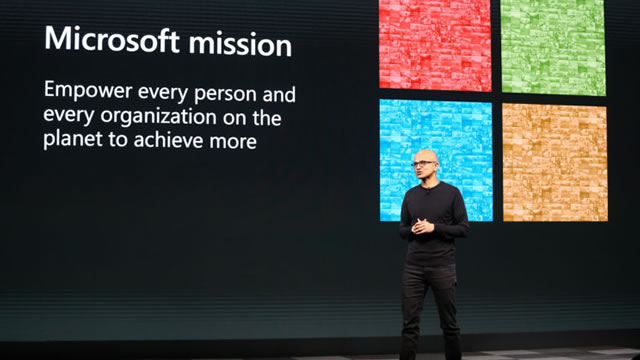
Microsoft's historic plunge: Why the company lost $357 billion in value despite strong results
GeekWire· 2026-02-01 21:29
Core Viewpoint - Microsoft experienced its largest single-day dollar loss in history, with a decline of $357 billion in market value despite reporting strong earnings for Q2 of fiscal 2026, raising questions about investor confidence and future growth prospects [1]. Financial Performance - Revenue for the quarter increased by 17% to $81.3 billion, with adjusted earnings reaching $4.14 per share, surpassing the consensus estimate of $3.91 [1]. - Operating margin stood at 47.1%, and Microsoft Cloud revenue exceeded $50 billion for the first time [1]. Market Reaction - Microsoft shares fell by as much as 12% during intraday trading, closing down 10% at $433.50, marking the seventh-largest percentage decline since the company went public in 1986 [1]. - The stock's performance post-earnings report was notably stagnant, indicating persistent investor concerns [1]. Growth Concerns - Azure cloud platform growth was reported at 38% in constant currency, but fell short of Wall Street's whisper number of 39.4%, contributing to market unease [1]. - Capital expenditures surged to $37.5 billion, a 66% increase year-over-year, highlighting the competitive pressures in the AI and cloud sectors [1]. AI Business Insights - Microsoft 365 Copilot, the AI assistant integrated into Office apps, has 15 million paid users, which is only about 3% of the 450 million paid seats in Microsoft 365 [1]. - Concerns were raised regarding 45% of Microsoft's $625 billion in remaining performance obligations being tied to OpenAI, with $281 billion of that backlog committed to a single customer [1]. Analyst Perspectives - Analysts expressed skepticism about Microsoft's ability to prove the value of its investments in AI, despite a 16% increase in Microsoft 365 commercial revenue [1]. - Some analysts maintained a positive outlook, with Morningstar keeping a $600 fair value estimate and noting that demand for AI and cloud services continues to outpace supply [1]. - Other analysts, like Wedbush, acknowledged the friction between long-term investments and short-term investor expectations, suggesting that 2026 could be a pivotal year for Microsoft [1].

Commodity Volatility, Earnings and Other Key Things to Watch
Yahoo Finance· 2026-02-01 18:00
Employment Data and Economic Indicators - The January employment report is crucial for assessing labor market health amid a new Fed chair nominee, with nonfarm payrolls, unemployment rate, and wage growth data being key indicators [1] - The ADP employment report and JOLTS job openings will provide insights into private sector employment and labor demand trends, while initial jobless claims will complete the employment picture [1] - Strong employment numbers could complicate the new Fed chair's policy stance, suggesting persistent economic strength, while significant weakness could allow for a dovish approach [1] Market Reactions and Economic Context - February begins with a volatile market following January's trading, influenced by unexpected inflation data and the new Federal Reserve chair nominee [2] - Precious metals, particularly silver, experienced significant selloffs, with silver dropping over 27% after a rally, indicating market turbulence [2] - The upcoming week features critical employment data and earnings reports from major companies, creating a complex backdrop for market positioning [2] Technology Sector Insights - Earnings reports from Alphabet and Amazon are critical for evaluating the health of digital advertising and cloud infrastructure investments [3] - Alphabet's performance will be analyzed for trends in search advertising and YouTube, while Amazon's results will provide insights into e-commerce margins and AWS performance [3] - Both companies' commentary on AI integration and enterprise cloud spending will be vital for technology sector sentiment [3] Pharmaceutical Sector Developments - Earnings from Eli Lilly and Novo Nordisk will shed light on the GLP-1 weight loss drug market, which has significantly impacted their market capitalizations [4] - Key metrics such as patient demand, production capacity, and insurance coverage trends will be scrutinized to assess market sustainability [4] - Broader pharmaceutical earnings from Pfizer and Merck will provide context on drug pricing and healthcare spending trends [4] Semiconductor Sector Analysis - Earnings from AMD, Qualcomm, and Arm Holdings will offer insights into the semiconductor sector following recent volatility in AI infrastructure [5] - AMD's results will be critical for understanding its competitive position against Nvidia in the data center GPU market [5] - The earnings will also provide perspectives on consumer electronics demand through smartphone and mobile computing trends [6] Manufacturing and Services Sector Data - The ISM Manufacturing PMI and Manufacturing PMI will provide initial economic data for February, focusing on industrial sector health and pricing pressures [7] - Services sector assessments through Services PMI and ISM Non-Manufacturing PMI will offer insights into the economy's largest sector [7] - The convergence of manufacturing and services data will help determine the economic momentum entering 2026, influencing Fed policy considerations [7]
东南大学发布国内首个混凝土材料科学大模型,已应用于南京北站建设
Xin Lang Cai Jing· 2026-02-01 16:12
2月1日,重大基础设施工程材料全国重点实验室理事会2026年第一次会议及2025年度学术委员会在南京召开。现场,东南大学 全球首发"砼真砼知"混凝土材料科学大模型。该大模型已应用在南京北站建设项目中。 会议现场 该模型由重大基础设施工程材料全国重点实验室联合东南大学大数据中心、阿里云计算有限公司共同打造,是国内首个混凝土 材料科学大模型。 相较于通用大模型在专业领域的"幻觉"与不确定性,"砼真砼知"大模型以"深度专业化"构建核心竞争力。其不仅能实现专家级、 可溯源的智能问答,精准解答混凝土材料研发、设计、工程应用中的复杂问题,更集成四大知识处理工具——智能数据提取、 数据多维对比、文献综述生成、知识图谱构建,将传统需数日甚至数月完成的文献调研、数据分析工作压缩至分钟级,极大解 放科研与工程人员生产力。 尤为关键的是,模型打造的开放式智能体广场,推出性能预测、配比设计、开裂风险评估三大核心智能体,通过"大模型+小模 型"协同,实现从参数输入到方案生成的端到端闭环,为"从性能目标到最优配方""从结构参数到开裂风险评估"等依赖经验的复 杂问题,提供标准化、高精度的量化决策工具,填补混凝土材料智能设计领域的技术空白。 ...

The Best Tech ETF to Invest $2,000 in Right Now
Yahoo Finance· 2026-02-01 15:13
Core Insights - The tech sector has significantly expanded over the past two decades, leading to the recommendation of investing in tech exchange-traded funds (ETFs) for efficient exposure to various industries [1] Group 1: Investment Strategy - A well-chosen tech ETF serves as a convenient option for investors seeking exposure to tech companies without the complexity of selecting individual stocks [2] - The Invesco Nasdaq 100 ETF (NASDAQ: QQQM) is highlighted as a suitable investment choice, particularly for those with $2,000 to invest, due to its built-in hedge and alignment with investor needs [2] Group 2: ETF Composition - QQQM mirrors the Nasdaq-100 index, which tracks approximately 100 of the largest non-financial companies on the Nasdaq stock exchange, excluding banks, insurance companies, and REITs [4] - The tech sector constitutes over 63% of QQQM, with nine of its top ten holdings being tech companies, indicating a strong focus on leading tech firms [4] - The top holdings in QQQM include Nvidia (8.63%), Apple (7.19%), Microsoft (6.65%), and Amazon (4.85%), among others, showcasing a concentration in major tech players [5] Group 3: Performance History - The Nasdaq-100 has delivered an average annual return of over 19% over the past decade, with a $2,000 investment growing to approximately $12,250 by January 27 [7] - Since its inception in October 2020, QQQM has averaged 15.5% annual returns, positioning it as a potentially consistent market-beating ETF [7] - A hypothetical average return of 10% annually would result in doubling the investment every 7.2 years, although past performance does not guarantee future results [8]
1 Brilliant Stock That Nvidia Owns That You Should Buy Hand Over Fist in 2026
Yahoo Finance· 2026-02-01 14:50
Core Insights - Demand for AI data center capacity is extremely high, with hyperscalers and AI companies utilizing all available resources, leading to significant growth in CoreWeave's revenue backlog [1] - CoreWeave provides dedicated AI data center capacity to major clients like Microsoft, Meta Platforms, and OpenAI, primarily utilizing Nvidia's GPUs for parallel processing [2] Investment and Growth - Nvidia has expanded its relationship with CoreWeave, committing $6.3 billion to purchase unsold data center capacity through April 2032, and investing an additional $2 billion at a share price of $87.20 [4] - The investment will enable CoreWeave to accelerate the construction of over 5 gigawatts of AI factories by 2030, enhancing global AI adoption [5] Financial and Operational Strategy - Proceeds from Nvidia's investment will be directed towards research and development, workforce improvement, and data center-related expenses, rather than purchasing Nvidia hardware, addressing potential investor concerns [6] - Nvidia's support will also enhance CoreWeave's software capabilities, positioning the company as a full-stack AI solutions provider [7] Revenue Backlog - CoreWeave's revenue backlog reached nearly $56 billion by the end of Q3 2025, a substantial increase from $15 billion the previous year, driven by significant contracts from major clients [8]

华为云CEO周跃峰:以场景驱动创新,让医疗AI真正普惠
Huan Qiu Wang· 2026-02-01 14:14
Core Viewpoint - Huawei emphasizes the transformative potential of AI in reshaping traditional medical service models, aiming to enhance the efficient utilization of scarce quality medical resources in China [1]. Group 1: Strategic Initiatives - Huawei Cloud has launched the "Industry AI Dream Factory" smart medical section and the RuiPath smart pathology integrated machine, marking a significant step in the practical application of medical AI [1][5]. - The company has served over 1,800 tertiary hospitals across China, building a solid understanding and practical experience in the healthcare sector [5]. Group 2: Technological Framework - The RuiPath smart pathology integrated machine utilizes a "cloud-edge-end" collaborative architecture, enabling advanced pathology capabilities from top hospitals to be accessible at the grassroots level, thus lowering the barriers for AI pathology technology adoption [5]. - Huawei's smart medical section integrates clinical experiences from top medical institutions with its expertise in ICT, cloud computing, and AI, creating an end-to-end medical AI support system covering "scenarios-models-platforms-communities" [6]. Group 3: Collaborative Ecosystem - The development of medical AI is presented as a collective effort requiring participation from various stakeholders, including medical institutions, tech companies, research units, and developers [7]. - Huawei aims to simplify medical AI innovation, ensuring that every hospital, doctor, and patient can benefit from these advancements [7].